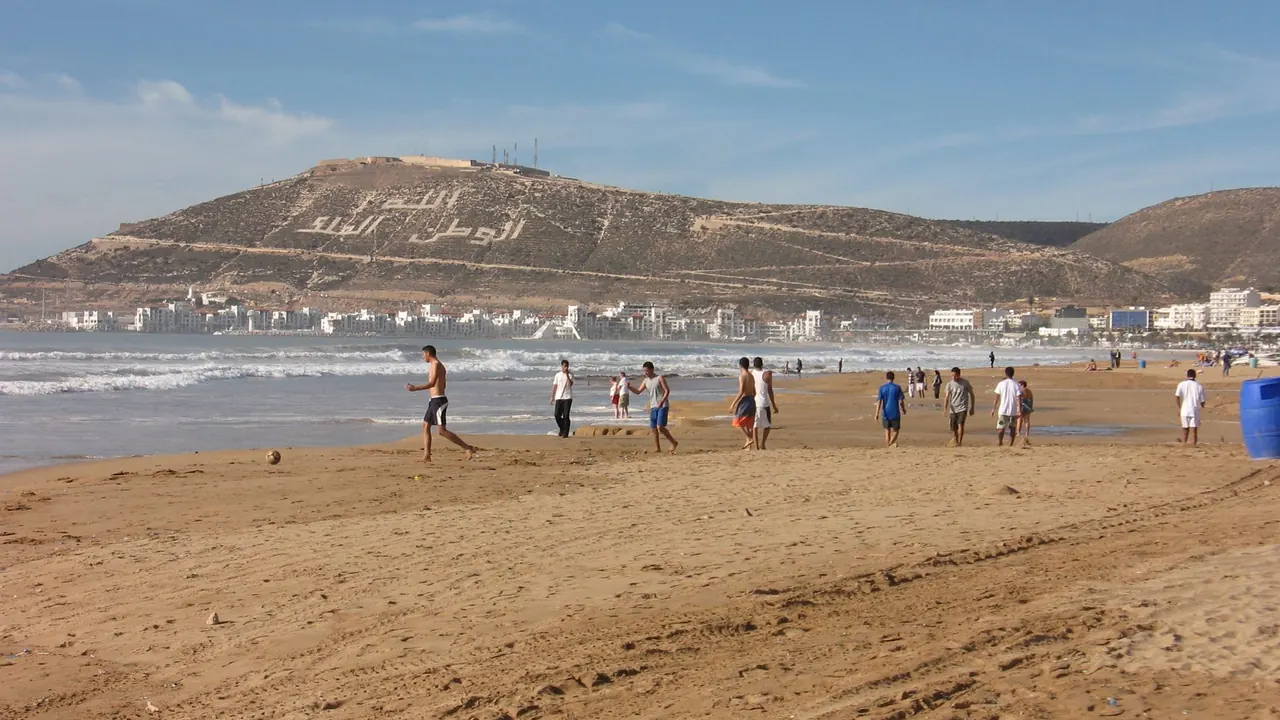
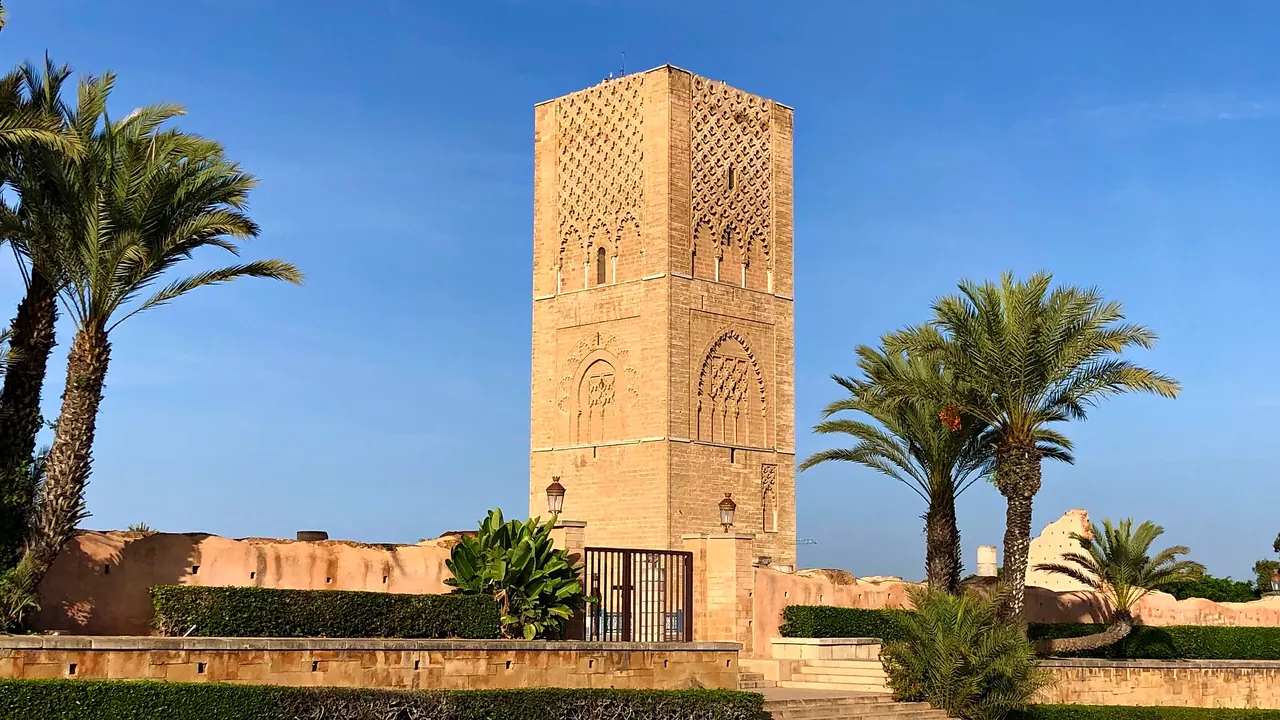
Photos: Agadir by michiel1972, CC BY-SA 3.0, cropped; Rabat by Aemazy, CC BY-SA 4.0, cropped.
Agadir or Rabat?
Our verdict in twelve categories, each scored against the same fixed benchmark cities, and the climate month by month, so you can choose for your trip.
Choose Agadir for
- beaches
- nature and the outdoors
- nightlife
Agadir is the choice for a week of sun and sand. It has a long, sheltered bay where swimming is easy and sunshine holds even in winter. Family hotels with pools sit behind the promenade, and the surf coast and argan country of the Souss are close by. The trade-off is that the town itself was rebuilt after the 1960 earthquake and has little history to explore.
Choose Rabat for
- culture and sights
- day trips
- live music and the arts
Travellers who want Morocco's history without the hustle should pick Rabat. The kasbah, the Hassan Tower and the Chellah lie a short walk or tram ride apart, and the capital's theatres and festivals put far more on stage. The rail line also brings Casablanca, Meknes and Tangier within a day's reach. Its beaches are good for an afternoon but not for a whole week.
Scoreboard
Twelve categories on one fixed scale from 0 to 100. The shaded stretch is the gap between the two.
Your match
Pick a travel style or drag the sliders, and both match scores follow your weighting.
Wins on beaches and nature and the outdoors with your weighting.
Wins on culture and sights and day trips with your weighting.
What matters to you?
Category by category
What the scores mean for a trip.
Beaches & swimming
The beach is the whole point of Agadir. Close to 10km of fine sand curves around a bay that softens the Atlantic swell, and the surf beaches at Tamraght and Taghazout are half an hour north. Rabat's city beach below the Kasbah of the Udayas is a lively local spot for football and surfing, but the swell and currents keep swimmers close to shore.
Rabat's calmer sand is further south at Harhoura and Skhirat, a taxi ride away, and beachwear there is more modest. It makes a pleasant afternoon out, while in Agadir you can plan the whole trip around the sea.
Food & drink
Neither city is worth the trip for food alone, but they eat differently. In Agadir the best meals are grilled sardines at the fishing port and Souss dishes made with argan oil and amlou. Most other eating is uneven resort cooking in the hotels and along the promenade.
Rabat has more of an everyday Moroccan table, with Friday couscous, harira, snail broth from evening stalls and a real café culture on the terraces of the Ville Nouvelle. Agdal adds French and Lebanese cooking. In both cities, alcohol is hard to find outside hotels and licensed places.
Culture & sights
This is where the two differ most. The 1960 earthquake left Agadir with little beyond the kasbah walls on Agadir Oufella, which are worth the climb for the view, plus the rebuilt Medina Polizzi and a small Amazigh museum. One day covers all of it.
Rabat's UNESCO-listed core runs from the Roman and Marinid ruins of the Chellah through the Almohad gate of the Udayas and the Hassan Tower to the French-era boulevards, with a modern art museum as well. Allow two or three days and expect to see it all without crowds or pressure.
Nightlife
Neither is a place for a big scene, but Agadir has more for anyone who wants to dance. Its beachfront has nightclubs, lounges around the marina and beach clubs with music at sunset, and these can run late in summer.
Rabat's evenings are about cafés, the Bou Regreg promenade and families strolling the medina. Drinks are found in hotel bars and a few lounges in Agdal. For clubbing, people in Rabat go to Casablanca.
Nature & outdoors
Agadir has the wilder surroundings. North of town are the surf points of Taghazout and Imsouane, inland is the palm gorge of Paradise Valley with its rock pools, and the argan plains have goats climbing the trees. Souss-Massa National Park to the south shelters the rare bald ibis. Inland summers are very hot, so it suits winter and spring best.
Rabat's outdoors are gentler: paddling on the estuary, surf schools at the river mouth, and walking or cycling among the cork oaks of the Maamora forest. The mountains are several hours away, so hikers will find more around Agadir.
Day trips
From Agadir, the good days out are few, and all of them are by road. The pick is Taroudant, about an hour and a half inland, a walled market town where shopping in the souks feels far more relaxed than in Marrakech or Fez. Tiznit, the silversmiths' town to the south, makes a similar outing, and the surf villages of Taghazout and Imsouane fill a half day. Marrakech and Essaouira are too far for a comfortable return trip, so they need a night away.
Rabat offers several whole cities rather than a couple of small towns, and you reach them by train instead of taxi or tour. Casablanca and its Hassan II Mosque are about an hour away and imperial Meknes about two, while the high-speed line puts Tangier and the strait within about an hour and a half, with Asilah on the same route. Salé's older medina is a short tram ride across the river.
Good for families
Agadir suits children better because the beach does most of the work. The water is gentle, the sand is wide, the promenade is flat enough for buggies, and all-inclusive hotels have pools and kids' clubs. The crocodile park and the Vallée des Oiseaux fill the odd spare afternoon.
Rabat is calm and easy with children, and its large national zoo, with African animals in open enclosures, beats anything in Agadir. Its beaches need close supervision in the waves, though, so Rabat works better as one stop on a wider family trip.
Getting around
Rabat is easier to see on foot. The medina, the kasbah, the Hassan Tower and the Ville Nouvelle are close together on flat streets, a tram covers Agdal and Salé, and trains from the central station make a car unnecessary even for day trips.
In Agadir you can walk the length of the promenade, but the souk, the kasbah hill and the port are spread out, so each one usually means a petit taxi with a fare agreed in advance. Paradise Valley and the surf coast need a grand taxi, a hire car or a tour.
Shopping & style
Rabat has the edge, mainly because of Rue des Consuls, a covered medina street of carpets, brass and embroidery. Rabat has its own deep-pile carpet tradition, Salé is known for pottery, and the haggling is gentle.
Agadir's Souk El Had is bigger but more practical, a walled market where locals buy their food and household goods. It is still the place for argan oil from the Souss cooperatives and for Amazigh silver. The malls in both cities are useful rather than interesting.
Affordability
Day-to-day costs are low in both cities, and alcohol is the expensive item in each. The difference is in where you stay. Off-season beach hotels and all-inclusive packages in Agadir can be very cheap, though the seafront restaurants charge more.
Rabat has more business hotels than budget riads, so rooms and the restaurants in Agdal cost more. That is offset by a cheap tram and major sights that charge little or nothing.
Live music & performing arts
Rabat has the national stages: the Mohammed V National Theatre and the Grand Theatre on the Bou Regreg. It also hosts Mawazine, which fills open-air stages across the city with international, Arab and Gnawa acts. Shows run irregularly and are mostly in Arabic or French, but there is something to find.
Agadir's one big event is the summer Timitar festival of Amazigh music. For the rest of the year, live performance mostly means hotel entertainment and folk shows put on for visitors.
Wellness & relaxation
Both offer the classic hammam ritual of a black-soap scrub and an argan-oil massage, but the setting differs. Agadir is a resort built around rest, with hotel spas, seawater thalassotherapy centres on the bay, and yoga and surf retreats up the coast.
Rabat's calm is that of a city. You get neighbourhood bathhouses in the medina and Salé, the Andalusian garden inside the kasbah and long evening walks by the river, and the pace is slower than in Morocco's other big cities.
When should you go?
Pick your month. The climate figures are measured averages, not a forecast.
Agadir in July
Rabat in July
Daytime high, °C
Rainfall in the month, mm
Temperature and rainfall are climate normals, averaged over the years shown. Agadir: 1945-2025, 15 years observed (sunshine 1981-2010, rainfall 1981-2010) normals, Agadir (4.5 km from centre). Rabat: 1991-2020 normals, Rabat-Sale (7.6 km from centre).
Agadir is the better winter escape. January highs are around 21°C, it gets more winter sunshine than Rabat, and its rain from November to February is light. Rabat is cooler and much wetter in the same season, with close to 100mm falling in each of November and December, so sightseeing there is best from April to June and in September and October.
From May to September both cities are dry, and neither gets too hot for walking by the coast, since highs peak at about 28°C. Rabat's summer is the sunnier of the two, and its sea warms to 23°C in August. Agadir's sea stays near 20°C even at its warmest, so summer swims there are fresh.
Which traveller are you?
On a beach and sun trip, Agadir wins easily. Its sheltered, sandy bay allows calm swimming, the sunshine barely lets up even in winter, and resort hotels with pools and spas sit right behind the promenade. Rabat's beaches are rougher and better for an afternoon.
For a culture and arts trip, Rabat is the clear choice. Roman Sala in the Chellah, the Almohad kasbah, the Hassan Tower and the art deco boulevards sit close together, the national theatres stage music and drama, and Meknes is a train ride away.
On an outdoors trip, Agadir has much more to explore. You get surf breaks at Taghazout and Imsouane, the rock pools of Paradise Valley, birdwatching in Souss-Massa and trekking in the Anti-Atlas. Rabat offers only estuary paddling and easy walks in the cork forest.
Before you go
| Measure | Agadir | Rabat |
|---|---|---|
| Official language | Arabic, Standard Moroccan Tamazight | Arabic, Standard Moroccan Tamazight |
| Currency | Moroccan Dirham (MAD) | Moroccan Dirham (MAD) |
| Sockets | CE50 Hz | CE50 Hz |
| Driving side | Right | Right |
| Time zone | UTC+1 | UTC+1 |
| Emergency number | Police 19/112, ambulance 15, fire 15 | Police 19/112, ambulance 15, fire 15 |
| Elevation | 74 m | 87 m |
| Main airport | Al Massira Airport (AGA)20 km from centre75 non-stop destinations | Rabat-Salé Airport (RBA)9 km from centre45 non-stop destinations |
| Public holidays this year | 11 days | 11 days |
By the numbers
| Measure | Agadir | Rabat |
|---|---|---|
| City population | 538,000 | 515,619 |
| People per km² | - | 4,370 |
| Museums within 10 km | 1 | 7 |
| UNESCO World Heritage sites within 50 km | 0 | 1 |
| Swim season, months above 21 °C | None | 4 months |
Where else could you go?
Every comparison below shares a destination with this one, so you can follow Agadir or Rabat somewhere new.