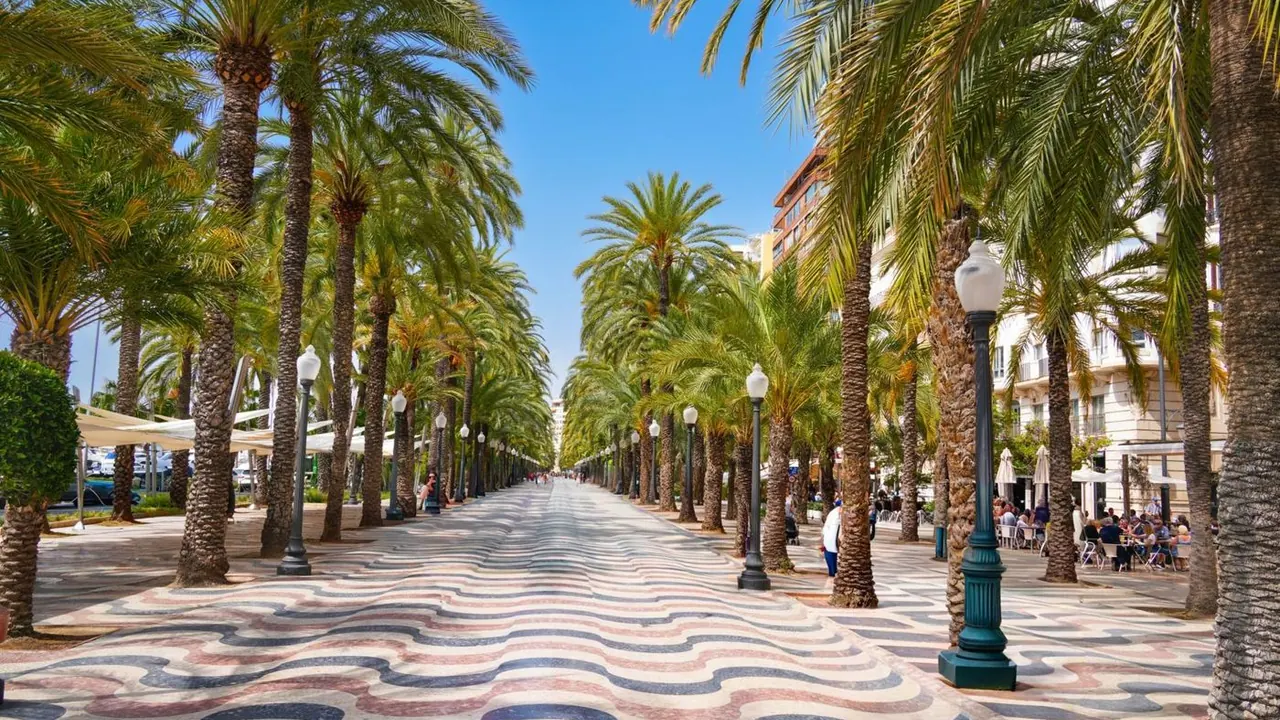
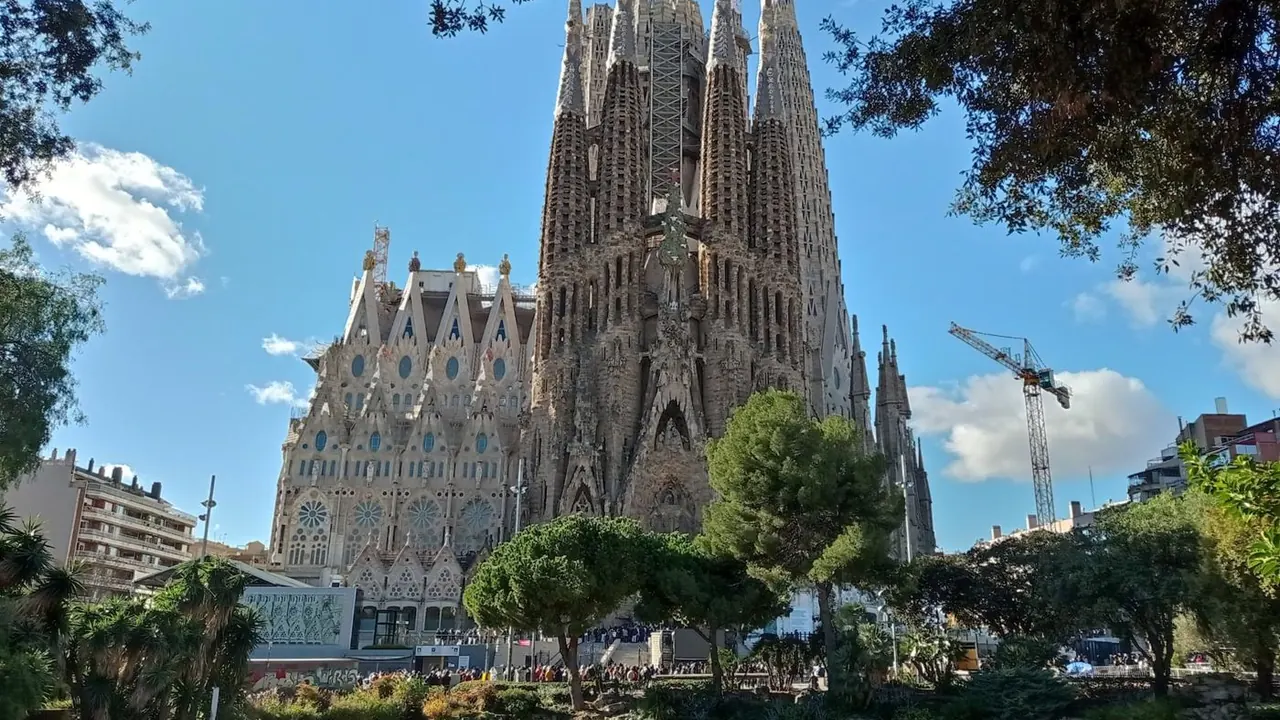
Photos: Alicante by Emilio Sánchez Hernández, Pexels License; Barcelona by Canaan, CC BY-SA 4.0, cropped.
Alicante or Barcelona?
Our verdict in twelve categories, each scored against the same fixed benchmark cities, and the climate month by month, so you can choose for your trip.
Choose Alicante for
- prices
- beaches
- wellness
Alicante suits a slow, sunny vacation built around the sea. Its beaches are the better ones, from Postiguet under the castle to the long natural sands of San Juan. Meals and rooms cost less, and the sights fit into a couple of days, which leaves the rest for swimming, long rice lunches and evenings in the bars of El Barrio. Its milder, brighter winter also makes it the easier choice for an off-season escape.
Choose Barcelona for
- culture and sights
- live music and the arts
- shopping
Barcelona is for travellers who want a whole city to explore. Gaudí's buildings, the Gothic Quarter, an opera house, serious markets and restaurants, and nights that run until dawn easily fill a week, and fast trains reach Girona and Tarragona. You pay more for all this and share it with bigger crowds, but the beach is still only a metro ride away.
Scoreboard
Twelve categories on one fixed scale from 0 to 100. The shaded stretch is the gap between the two.
Your match
Pick a travel style or drag the sliders, and both match scores follow your weighting.
Wins on prices and beaches with your weighting.
Wins on culture and sights and live music and the arts with your weighting.
What matters to you?
Category by category
What the scores mean for a trip.
Beaches & swimming
Alicante wins on the sand. Playa de San Juan gives you about 7km of natural, fine pale beach with calm, shallow water, Postiguet sits right under the castle for a quick swim, and the boat to Tabarca adds clear water and rocky swimming spots. The sea also runs a degree or so warmer than in Barcelona.
Barcelona's beaches, from Barceloneta to Mar Bella, are man-made, and in summer they come with pickpockets and hawkers as well as crowds. Their strength is that they sit right at the edge of a major city, and Sitges and the Maresme give you more room under an hour away by train. Both cities' town beaches are packed in July and August.
Food & drink
Barcelona has the broader and more serious food scene. Catalan cooking is a cuisine of its own, from suquet to calçots with romesco, and alongside it come the vermouth hour, neighbourhood markets like Santa Caterina and Sant Antoni, and one of Europe's leading tasting-menu scenes. Eating well means avoiding the Rambla and heading for Gràcia, Poble Sec or the Eixample.
Alicante is narrower but very good at what it does, which is rice. Arroz a banda, black rice and arroz con costra are lunchtime dishes made for sharing, and the Mercado Central's red prawns and mojama make a fine morning visit. For everyday tapas, go to the old town rather than the seafront.
Culture & sights
There is a wide gap here. Barcelona has the Sagrada Família, Casa Batlló, La Pedrera and Park Güell, all part of a Modernista collection found nowhere else, along with a Gothic Quarter on Roman foundations, Santa Maria del Mar and strong museums from the Picasso to the MNAC's Romanesque frescoes. A week goes quickly.
Alicante's sightseeing centres on the Castillo de Santa Bárbara and its view over the bay, the flowerpot-lined steps of the Barrio de Santa Cruz and the well-presented MARQ archaeology museum. It is pleasant, but two days covers it.
Nightlife
Barcelona's nights are longer and more varied. Each district has its own scene: cocktail cellars in the Born, scruffy bars in the Raval, outdoor drinking in Gràcia's squares, pintxos along Blai street, and a serious electronic club culture that runs until dawn, with beach clubs at the Port Olímpic on top.
Alicante goes out late too, but on a smaller scale. The evening means small bars spilling onto the steps of El Barrio, dressier venues by the marina and beach terraces at San Juan in summer. The Hogueras in late June is the big party, and anyone looking for proper clubbing will find little.
Nature & outdoors
Barcelona has the edge because its outdoors starts at the city limits. The Collserola trails begin from Sarrià and Gràcia, the Carretera de les Aigües gives a flat run with views over the city, and Montserrat's pinnacles and the Costa Brava cliffs are within easy reach by train or car.
Alicante's landscape is drier and more rugged, with real mountain hiking on Puig Campana and the Sierra de Aitana, climbing at Sella, flamingos on the Santa Pola salt lagoons and the best snorkelling and diving of the two around the Tabarca marine reserve. The catch is that most trailheads need a car.
Day trips
Barcelona is better for day trips thanks to fast trains. Girona's walled old town is under forty minutes away by high-speed rail, and Dalí's museum in Figueres, Roman Tarragona, Montserrat, Sitges and the cava cellars of the Penedès are all easy outings.
Alicante still has plenty to offer. Elche's UNESCO-listed palm grove is half an hour away, the coastal tram reaches the painted houses of Villajoyosa and the white town of Altea, and Guadalest perches above its reservoir inland. Valencia is about two hours away by train for a longer day.
Good for families
Barcelona has more for children within the city itself: the aquarium at the old port, CosmoCaixa's hands-on science, the zoo in the Ciutadella and the old funfair on Tibidabo, reached by funicular. The drawbacks are crowded old-town streets that are hard going with a pushchair, and the need to watch your bags.
Alicante is easier but has less to do. The shallow water at San Juan and the flat palm-lined promenade make beach days simple, but the city has few attractions built for children, so the theme and water parks mean a drive towards Benidorm.
Getting around
Barcelona is the easier city to get around overall. A simple metro, with buses, trams and local trains on the same tickets, plus bike lanes along the flat stretches, links a city far larger than Alicante. The uphill sights such as Park Güell and Tibidabo need a funicular, a cable car or a steep walk.
Alicante works differently: almost everything a visitor needs is within about fifteen minutes' walk, and a lift inside the rock takes you up to the castle. Beyond the centre, the coastal tram is slow and a car helps for the mountain villages.
Shopping & style
Barcelona is a real shopping destination. The Passeig de Gràcia has fashion houses set among Modernista façades, the Born has independent designers and concept stores, Gràcia has craft shops, the Raval has vintage and record shops, and the Els Encants flea market is worth a browse.
Alicante is practical, with Spanish chains around Avenida Maisonnave and turrón, saffron and olive oil at the Mercado Central. Its one special draw is the shoe factory outlets in nearby Elche.
Affordability
Alicante is clearly cheaper. Rooms cost less, especially outside July, August and the Hogueras festival, the castle grounds are free or nearly so, and a rice lunch away from the seafront is good value.
In Barcelona, hotels near the old town and the seafront are expensive, and the tourist tax and Gaudí entry fees quickly add to the cost of a sightseeing trip. Eating like a local at set lunches and market counters helps, and transport passes are fair value.
Live music & performing arts
Barcelona is far ahead here. The Liceu stages a full season of opera and ballet, the Palau de la Música makes even an ordinary concert an occasion, and Sónar, Primavera Sound and the Grec festival on Montjuïc fill the summer, with jazz cellars and flamenco stages for the rest of the year.
Alicante has the Teatro Principal for touring drama and musicals, and the ADDA auditorium for the provincial orchestra and visiting jazz performers. Most of the programme is in Spanish, and there is no opera.
Wellness & relaxation
Neither city has a bathing tradition of its own, so they are broadly level, but the rest they offer is different. Barcelona has Arab-style bath houses with warm pools in the old town, though the streets outside are noisy and the nights late, and real calm means escaping to the Collserola paths or the Montjuïc gardens.
Alicante has fewer spa facilities, but the city itself is quieter outside high summer, with a slow routine of seafront walks and siestas on the shaded Explanada. Roman-era thermal springs at Archena and Fortuna are about an hour away by car.
When should you go?
Pick your month. The climate figures are measured averages, not a forecast.
Alicante in July
Barcelona in July
Daytime high, °C
Rainfall in the month, mm
Temperature and rainfall are climate normals, averaged over the years shown. Alicante: 1991-2020 normals, Alicante (2.8 km from centre). Barcelona: 1991-2020 normals, Barcelona / Aeropuerto (14.4 km from centre).
Alicante is the warmer, drier and sunnier of the two for most of the year. Summer days reach about 31°C in August with almost no rain, and the sea stays around 25°C from July to September, so swimming is comfortable from June into October. September is its wettest month, at about 52mm, but that is still well below what Barcelona gets at the same time. Winter days are mild, around 17°C in January, with plenty of sun, so October to May suits walking the streets. In July and August it is better to sightsee in the morning and evening.
Barcelona is a few degrees cooler all year, with winter days in the mid-teens and a sea that is pleasant from June to late September. Its wet season is longer and heavier. Rain picks up in August and reaches about 83mm in both September and October, so autumn is when Alicante has the clearer advantage. In Barcelona, May and June are the most comfortable months for sightseeing. High summer makes long walks tiring in both cities, though Barcelona's peak is a couple of degrees lower.
Which traveller are you?
On a beach and sun trip, Alicante is the better choice. San Juan's long, shallow natural beach is a tram ride from the centre, Postiguet is a walk from the old town, and the drier, sunnier weather lengthens the swimming season at both ends.
For a culture and arts trip, Barcelona is far ahead. Gaudí's Modernista buildings, the Gothic Quarter, the Picasso Museum and the MNAC fill a week, and in the evenings there is opera at the Liceu and concerts under the glass ceiling of the Palau de la Música.
On a trip on a tight budget, Alicante goes further. Rooms are cheaper, especially from October to May, set lunches and tapas are fair value, and the castle grounds cost little or nothing, where Barcelona adds a tourist tax and steep Gaudí entry fees.
Before you go
| Measure | Alicante | Barcelona |
|---|---|---|
| Official language | Spanish | Spanish |
| Currency | Euro (EUR) | Euro (EUR) |
| Sockets | CF230 V, 50 Hz | CF230 V, 50 Hz |
| Driving side | Right | Right |
| Time zone | UTC+1, UTC+2 in summer | UTC+1, UTC+2 in summer |
| Emergency number | 112 | 112 |
| Elevation | 3 m | 9 m |
| Main airport | Alicante-Elche Miguel Hernández Airport (ALC)10 km from centre126 non-stop destinations | Josep Tarradellas Barcelona-El Prat Airport (BCN)13 km from centre235 non-stop destinations |
| Public holidays this year | 13 days | 14 days |
By the numbers
| Measure | Alicante | Barcelona |
|---|---|---|
| City population | 366,221 | 1,731,649 |
| People per km² | 1,819 | 17,094 |
| Museums within 10 km | 8 | 95 |
| UNESCO World Heritage sites within 50 km | 2 | 3 |
| Swim season, months above 21 °C | 5 months | 3 months |
Where else could you go?
Every comparison below shares a destination with this one, so you can follow Alicante or Barcelona somewhere new.