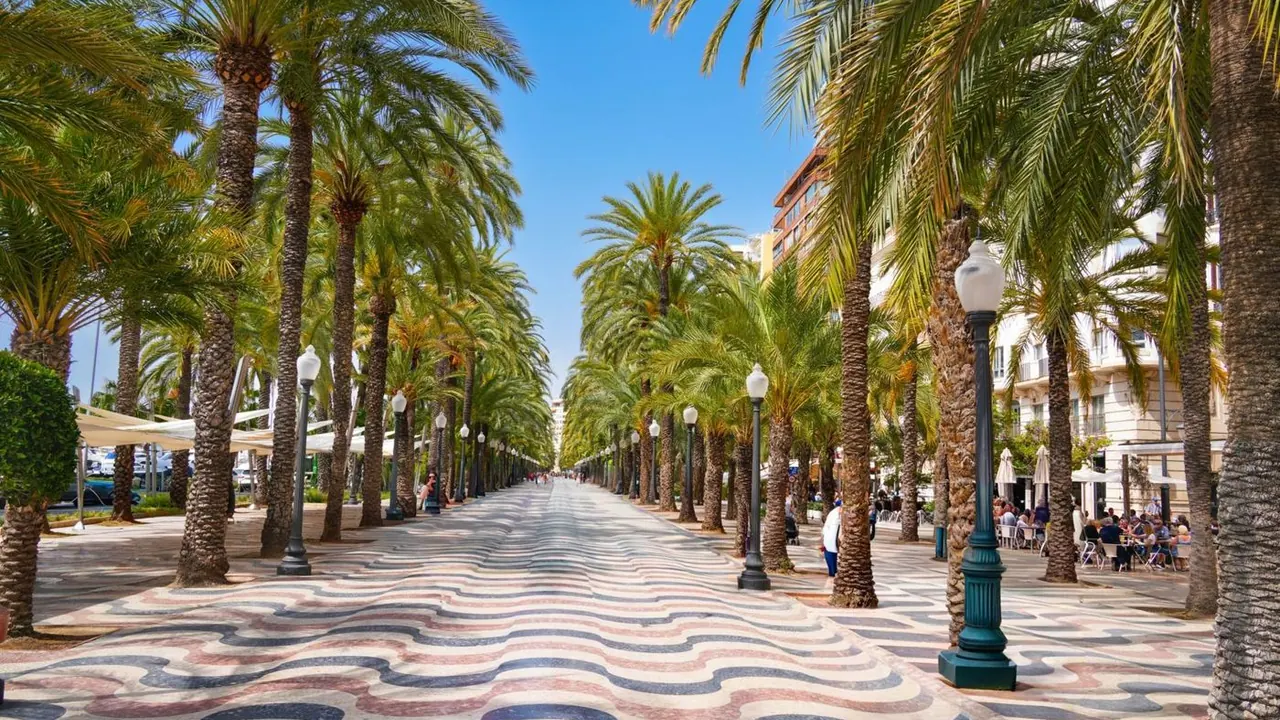
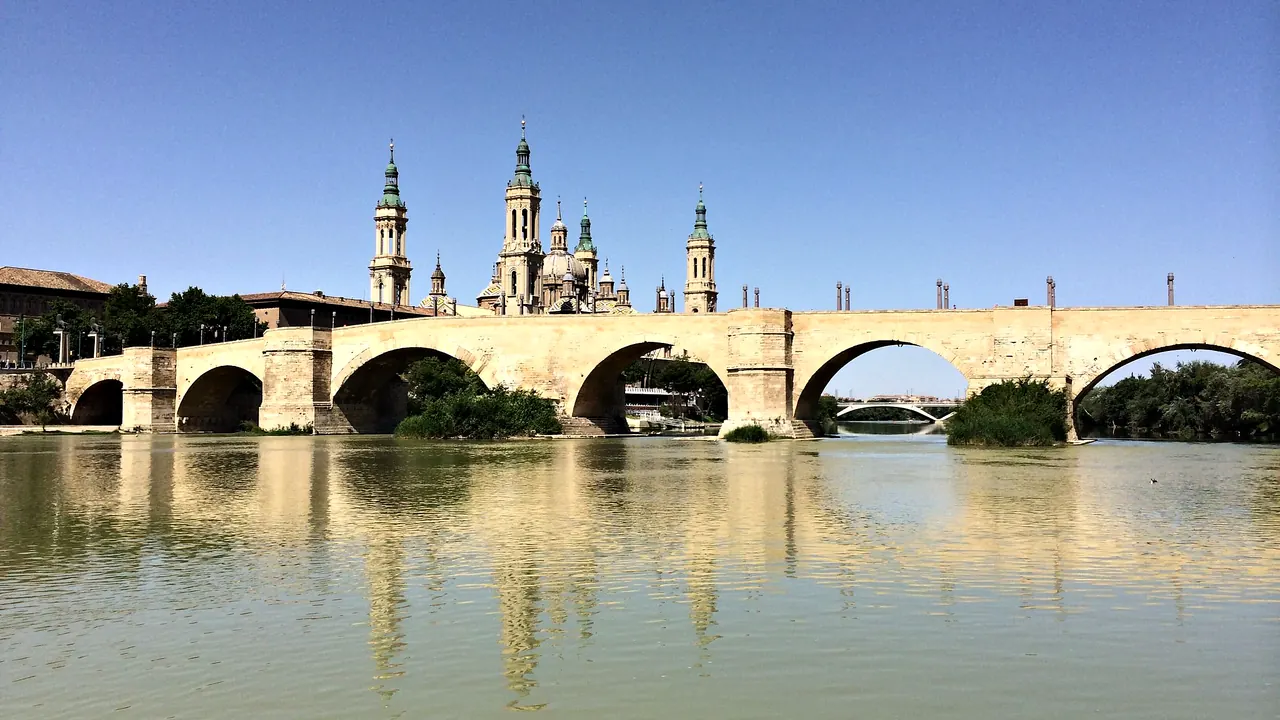
Photos: Alicante by Emilio Sánchez Hernández, Pexels License; Zaragoza by Pablo Alejandro Araujo Granda, CC BY-SA 2.0, cropped.
Alicante or Zaragoza?
Our verdict in twelve categories, each scored against the same fixed benchmark cities, and the climate month by month, so you can choose for your trip.
Choose Alicante for
- beaches
- families
- food and drink
Alicante is the choice when the sea is part of the plan. It suits travellers who want a swim before lunch, a long rice lunch near the market and an evening in El Barrio, with the castle and the old quarter close at hand and the Costa Blanca's coves and Tabarca within reach. It is also the easier pick for children, thanks to shallow, calm beaches, and for a winter escape, since it stays mild all year.
Choose Zaragoza for
- culture and sights
- live music and the arts
- prices
Zaragoza rewards people who travel for history and buildings rather than sand. The Pilar basilica, La Seo, the Aljafería and the Roman remains under the old town give it far more to see, and a tapas crawl through El Tubo costs less than a coastal evening. With Madrid and Barcelona about an hour and a half away by fast train, it is also a sensible stop on a longer journey through Spain.
Scoreboard
Twelve categories on one fixed scale from 0 to 100. The shaded stretch is the gap between the two.
Your match
Pick a travel style or drag the sliders, and both match scores follow your weighting.
Wins on beaches and families with your weighting.
Wins on culture and sights and live music and the arts with your weighting.
What matters to you?
Category by category
What the scores mean for a trip.
Beaches & swimming
These two are as far apart as Spanish cities get on this. In Alicante the beach is part of daily life: Postiguet is a short walk from the old town, the tram reaches the 7km of pale sand at San Juan, and Tabarca and the Costa Blanca coves add clearer water further out. The one drawback is the crowding in high summer.
Zaragoza sits inland on the Ebro plain, nobody swims in the river, and summer cooling off means municipal or hotel pools. Anyone who needs the sea should add a few days on the coast.
Food & drink
Both cities are built around tapas and a modernist Mercado Central, but Alicante eats a little better and with more range. Its rice dishes, arroz a banda, black rice and the egg-crusted arroz con costra, are a reason to plan lunch, and the market's red prawns and salted fish give it a seafood depth that the inland city lacks.
Zaragoza's strength is the bar-to-bar crawl through El Tubo, where each counter has its single speciality, followed by hearty Aragonese plates such as ternasco lamb and borage with clams. Its Cariñena and Somontano reds are generous, but variety and fine dining are limited.
Culture & sights
Zaragoza has much the deeper layers of history. It runs from Roman Caesaraugusta, whose forum, port and baths you visit underground, through the Islamic Aljafería palace to the vast Pilar basilica and the Mudéjar wall of La Seo. The Goya Museum adds a painter with roots just down the road.
Alicante is a shorter visit. It has the Santa Bárbara castle above the bay, the flower-potted lanes of Santa Cruz and the well-presented MARQ, and its tiled Explanada is a sight in its own right, but two days covers it comfortably.
Nightlife
The two are roughly level, and both run late in the Spanish way, but the settings differ. Alicante's nights spill out of El Barrio's small bars onto the castle steps, move to dressier bars and clubs at the marina, and in summer carry on at the beach terraces of San Juan.
Zaragoza is a student city whose evenings start in El Tubo and end around Plaza San Felipe and Santa Marta, busiest from Thursday to the weekend. Each city has one great festival: the Hogueras in late June in Alicante, and the Fiestas del Pilar in October in Zaragoza.
Nature & outdoors
Alicante comes out a little ahead, mostly because it has the sea as well as mountains. The Tabarca marine reserve is good for snorkelling and diving, the bay suits paddleboarding and sailing, and the peaks of Puig Campana and Aitana and the crags at Sella lie within an hour inland.
Zaragoza's surroundings are starker steppe swept by the cierzo, with the Ebro paths and Parque del Agua for in-town walks. A car opens up Moncayo's beech forests, the Mallos de Riglos, the Bardenas badlands and the Pyrenees valleys about two hours north.
Day trips
The two are about level here, but the outings are different. Alicante's are mostly short, and many follow the coast. Elche's UNESCO palm grove is half an hour away, the tram runs to painted Villajoyosa and white Altea, and the boat to Tabarca makes an easy half day. Inland, the castle village of Guadalest stands on its rock above a turquoise reservoir, and Valencia is about two hours away by train.
Zaragoza's trump card is the high-speed line, which puts Madrid or Barcelona about an hour and a half away. Closer in are castles and Mudéjar towns such as Loarre and Tarazona, and the ruined old town of Belchite, all much easier with a hired car. Albarracín and Teruel are the longer trip, about two hours each way.
Good for families
Alicante is the easier place to bring children, and the beaches are the reason. Shallow, calm water at San Juan, a promenade made for scooters and the boat to Tabarca give the days a simple shape, and Benidorm's theme, water and marine parks are within driving distance.
Zaragoza is calm, flat and welcoming, with the river aquarium, the Parque del Agua playgrounds and the funfairs and giants' parades of the Pilar fiestas. Without a beach, the summer heat is harder to escape.
Getting around
Both centres are compact and easy to walk, but their trams do different jobs. Alicante's tram network runs out of the centre along the coast to San Juan and on to Villajoyosa, Benidorm and Dénia, slowly but with sea views. On foot, the only steep part is the climb to the castle, and the lift in the rock takes care of that.
Zaragoza has a single tram line running north to south through a centre that is flat all the way, with bike-share stations as well. Its Delicias station puts the rest of Spain within easy reach by fast train.
Shopping & style
Neither is a shopping destination, and both offer the usual Spanish chains and a department store. The best souvenirs are edible in each case: Jijona turrón and saffron from Alicante's market, candied frutas de Aragón and Muel ceramics in Zaragoza. Alicante's one extra is the shoe outlets of nearby Elche.
Affordability
Zaragoza stretches a budget further. Central hotels stay good value for most of the year, and the local wines and generous tapas cost little, with the October fiestas as the one expensive time.
Alicante is moderate for the coast, and its set lunches and lunchtime rice are fair, but rooms near the beaches climb steeply in July, August and during the Hogueras. Coming between October and May evens things out.
Live music & performing arts
Zaragoza offers somewhat more. Its large Auditorio brings touring orchestras and jazz, small old-town venues host local bands, and the jota, Aragon's leaping folk dance, gives it a tradition worth seeing, especially at the Pilar fiestas.
Alicante's Teatro Principal and ADDA hall cover drama and classical concerts, but the programme is thinner, mostly in Spanish, and has no local form that visitors seek out.
Wellness & relaxation
Neither has a bathing culture of its own, and the thermal springs nearest to each, Archena and Fortuna for Alicante and Alhama de Aragón for Zaragoza, are excursions of about an hour. The difference is the setting for doing nothing: Alicante's seafront walks and palm-shaded Explanada against Zaragoza's Ebro strolls and shady Parque Grande, with the cierzo as an added discomfort there in summer.
When should you go?
Pick your month. The climate figures are measured averages, not a forecast.
Alicante in July
Zaragoza in July
Daytime high, °C
Rainfall in the month, mm
Temperature and rainfall are climate normals, averaged over the years shown. Alicante: 1991-2020 normals, Alicante (2.8 km from centre). Zaragoza: 1991-2020 normals, Zaragoza / Aeropuerto (11.2 km from centre).
Alicante has the longer season. The sea is warm enough to swim from June into October, peaking at about 26°C in August, and the summers are hot and almost dry. September brings the year's heaviest rain, around 52mm, though it falls in few days. Winter days stay mild at about 17°C and are among the sunniest on the coast, so walking the streets is comfortable all year, with midsummer afternoons as the only exception.
Zaragoza has the stronger contrasts of an inland city. July reaches about 33°C on the open plain, which makes sightseeing a morning and evening affair, while winter highs sit near 11°C and the cierzo wind makes them feel colder. Spring and early autumn suit it best: April and May are warm but bring some showers, and late September and October are drier, settled and pleasant for walking.
Which traveller are you?
On a beach and sun trip, Alicante wins easily. The Mediterranean is warm enough to swim from June into October, the sand starts at the edge of the old town, and Zaragoza can offer only swimming pools, with the coast more than 200km away.
For a culture and arts trip, Zaragoza is the stronger base. The Aljafería palace, the Pilar basilica with its Goya ceilings, La Seo and the Roman forum and theatre fill two or three days, and its concert season is fuller than Alicante's.
On a family trip with children, Alicante is easier to time. A morning swim gets you through the hot months, and the mild winters suit school breaks. Zaragoza's plain bakes in July and August, so families do better there in spring or autumn.
Before you go
| Measure | Alicante | Zaragoza |
|---|---|---|
| Official language | Spanish | Spanish |
| Currency | Euro (EUR) | Euro (EUR) |
| Sockets | CF230 V, 50 Hz | CF230 V, 50 Hz |
| Driving side | Right | Right |
| Time zone | UTC+1, UTC+2 in summer | UTC+1, UTC+2 in summer |
| Emergency number | 112 | 112 |
| Elevation | 3 m | 200 m |
| Main airport | Alicante-Elche Miguel Hernández Airport (ALC)10 km from centre126 non-stop destinations | Zaragoza Airport (ZAZ)13 km from centre12 non-stop destinations |
| Public holidays this year | 13 days | 12 days |
By the numbers
| Measure | Alicante | Zaragoza |
|---|---|---|
| City population | 366,221 | 693,091 |
| People per km² | 1,819 | 712 |
| Museums within 10 km | 8 | 22 |
| UNESCO World Heritage sites within 50 km | 2 | 1 |
| Swim season, months above 21 °C | 5 months | - |
Where else could you go?
Every comparison below shares a destination with this one, so you can follow Alicante or Zaragoza somewhere new.