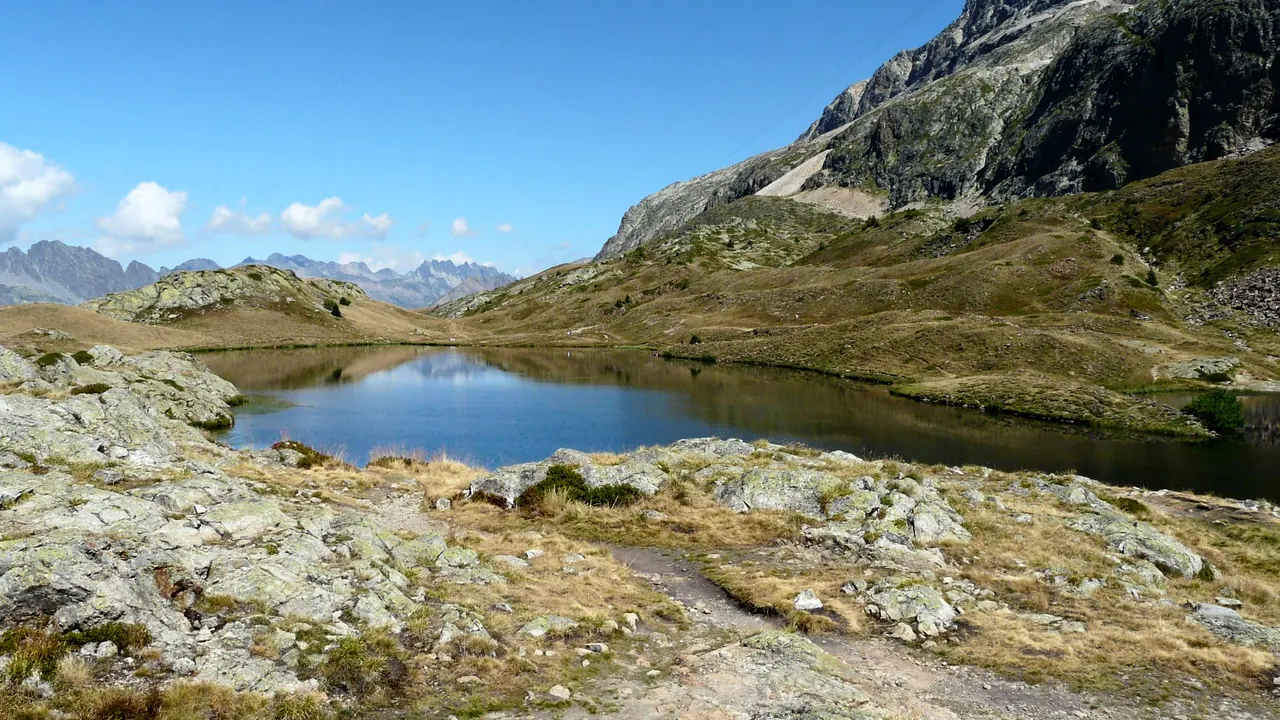
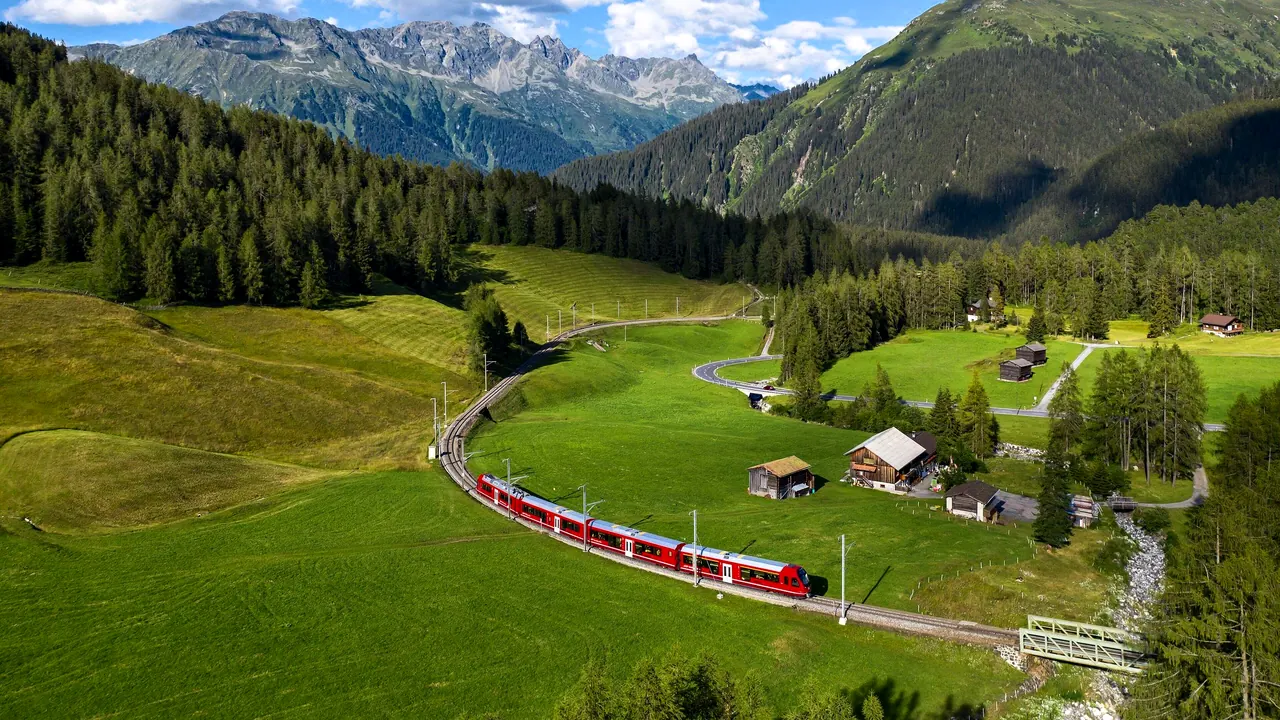
Photos: Alpe d'Huez by Beany, CC BY-SA 3.0, cropped; Davos by Kabelleger / David Gubler, CC BY-SA 4.0, cropped.
Alpe d'Huez or Davos?
Our verdict in twelve categories, each scored against the same fixed benchmark cities, and the climate month by month, so you can choose for your trip.
Choose Alpe d'Huez for
- prices
- nightlife
- families
Alpe d'Huez is the better choice for a classic ski week, whether with friends or with children. The beginner slopes are right by the village, and the après-ski crowd moves from the bars by the lower runs on to the pubs. Nowhere in the Alps is cheap, but a self-catered apartment here costs far less than a week in a Swiss resort. In summer, road cyclists come for the famous hairpins and mountain bikers for the lift-served trails.
Choose Davos for
- getting around
- wellness
- culture and sights
Davos suits travellers who want a real town around their mountain days. It has railway stations, free buses, the Kirchner Museum and the sanatorium history behind The Magic Mountain. Evenings are quieter and everything costs more. In return it is easier to get around without a car, better for spa days and cross-country skiing, and the Rhaetian Railway makes outings to St Moritz or Chur a pleasure in themselves.
Scoreboard
Twelve categories on one fixed scale from 0 to 100. The shaded stretch is the gap between the two.
Your match
Pick a travel style or drag the sliders, and both match scores follow your weighting.
Wins on prices and nightlife with your weighting.
Wins on getting around and wellness with your weighting.
What matters to you?
Category by category
What the scores mean for a trip.
Beaches & swimming
Neither is a place to plan swimming around. At Alpe d'Huez the only outdoor option is a quick, cold dip in the small lakes on the Lac Besson plateau, so the sports centre pool does most of the work. Davos has a little more to offer: the Davosersee has a proper lido with lawns and a jetty, though the water stays around 16°C to 18°C even in high summer.
Food & drink
Both serve hearty mountain food at a similar level, and in both the best meal is a long lunch on a sunny terrace on the slopes. What changes is the cooking. Alpe d'Huez is Savoyard: tartiflette, diots with polenta, Beaufort and Reblochon, and génépi to finish.
Davos is Graubünden: capuns, pizokel, barley soup, air-dried Bündnerfleisch and Engadiner Nusstorte, best found in the huts of the side valleys. Neither has much range over a week. Self-caterers at Alpe d'Huez rely on the resort's supermarkets.
Culture & sights
Davos has a clear lead. Its history as a tuberculosis cure town is the setting of Thomas Mann's The Magic Mountain, and you can still see it in the sun balconies of former sanatoria such as the Schatzalp. The Kirchner Museum holds the largest collection of the Expressionist painter's work, which makes for a day or two of sightseeing.
Alpe d'Huez was built for skiing and has little more than an afternoon's worth. There is the tent-shaped church of Notre-Dame des Neiges, a small local museum and, in summer, the ruins of the medieval silver-mining village of Brandes.
Nightlife
Alpe d'Huez makes the livelier ski-season night out. The music starts in the après-ski bars by the lower runs as the lifts close. A young crowd of British, Dutch and French skiers then moves on to the village pubs, and a few late bars and small clubs stay open past midnight.
Davos runs on a similar pattern, from the Jakobshorn and Parsenn runs to hotel bars and a couple of small clubs on the Promenade, but it is quieter and only stays loud at weekends and in the peak weeks. In summer both come down to dinner and a drink on a terrace.
Nature & outdoors
Both are outstanding mountain bases, and the difference is in how you spend your days outdoors. Alpe d'Huez has one large linked ski area on sunny, south-facing slopes. The lifts reach the Pic Blanc at 3,330m and the long Sarenne black run. In summer road cyclists come for the famous hairpins up from Bourg d'Oisans, and the Écrins massif is close by for hiking.
Davos spreads across five separate ski areas and adds more than 100km of cross-country trails along the valley floor and into the Sertig and Dischma valleys. In summer its quiet side valleys end below glaciers, with marmots, chamois and ibex, and the Swiss National Park is within reach for a day.
Day trips
Davos is the better base for outings, mainly because of the train. The Rhaetian Railway crosses the Landwasser Viaduct and follows the UNESCO-listed Albula line to St Moritz. Medieval Chur and the painted houses of Guarda are each about an hour or a little more away.
From Alpe d'Huez every trip starts with the long, winding drive down the hairpins. Grenoble, with its cable car to the Bastille, is the main outing, and the Château de Vizille, La Grave and Vauban's fortified upper town at Briançon add a few more.
Good for families
Alpe d'Huez is the more practical choice for a family ski week. Kids' clubs and wide beginner slopes sit close to the village, and the sunny slopes make cold days easier for small children. The steep layout is hard with pushchairs.
Davos is flatter and calmer, with the long toboggan run from the Schatzalp, skating on the big natural rink and an indoor pool with slides for bad weather. Teenagers who are not into sport may get bored there.
Getting around
Davos is much easier to reach and to move around. Trains from Zurich take a little over two hours, with stations at both Dorf and Platz. The guest card usually gives free rides on the local buses, and the Parsenn funicular and Jakobshorn cable car leave from the town itself.
Alpe d'Huez has no railway, so you arrive by coach, transfer or car up the hairpins, and in snow the road can mean chains. Once there, free shuttles and a small gondola link the quarters, but walking between them on the steep slope with skis is tiring.
Shopping & style
Neither is somewhere to go shopping, and both mainly sell what a ski or hiking week needs. Alpe d'Huez sticks to rental shops, technical clothing and delicatessens selling cheese and charcuterie, so serious shopping means a trip to Grenoble. The Promenade in Davos adds Swiss watch and jewellery shops and a few fashion boutiques, and makes a pleasant evening stroll.
Affordability
Alpe d'Huez costs clearly less, though a peak-season week with a lift pass, equipment hire and lessons is still expensive. It has more modest places to stay than the grandest French resorts, self-catering apartments keep costs down, and summer is much cheaper.
Davos charges Swiss resort prices for nearly everything, from hotel rooms to hut lunches. Rooms are scarce and even pricier during the World Economic Forum in January. The free buses help a little, but early summer and autumn are the only easier times, and some places close then.
Live music & performing arts
Both have very little, and in each the main performances happen in churches. At Alpe d'Huez it is organ concerts at Notre-Dame des Neiges and a few outdoor gigs, with Grenoble the nearest place for a real programme. Davos has its summer classical festival, where young musicians play in churches, hotels and unusual spots around the valley, while serious theatre means going to Zurich.
Wellness & relaxation
Davos is the better place to unwind. It became famous in the late nineteenth century as a place of recovery, the dry, clear air is still part of its appeal, and its leisure pool has a sauna and wellness area open to day visitors. The thermal baths at Scuol are about an hour away through the Vereina tunnel.
Alpe d'Huez has no bathing tradition, so wellness means hotel and residence spas with saunas and hot tubs after skiing, plus the sports centre pool. Its quiet early summer is restful all the same, with empty terraces and open views.
When should you go?
Pick your month. The climate figures are measured averages, not a forecast.
Alpe d'Huez in July
Davos in July
Daytime high, °C
Rainfall in the month, mm
Where the figures come from
Alpe d'Huez has no weather station within reach, so its figures come from a gridded climate model rather than a measured record, and read a broad area rather than one spot.
Davos's temperatures are measured 53 km from the centre, at S. Valentino Alla Muta.
Davos has no rain gauge within 25 km of the centre, so its rainfall comes from a gridded climate dataset read at the destination rather than from a gauge further away.
Temperature and rainfall are climate normals, averaged over the years shown. Alpe d'Huez: 2001-2020 normals, NASA POWER reanalysis grid, no weather station within 90 km. Davos: 1991-2020 normals, S. Valentino Alla Muta (53.4 km from centre).
Alpe d'Huez sits higher and is noticeably colder. Daytime highs stay below freezing from December to February, around -3°C in January, which means good snow but cold chairlift rides. Its summer is short, with highs of about 18°C in July and August. Those months are fairly dry, so July to September is the time for hiking and cycling there. May and November are the wettest months, at close to 90mm each.
Davos is a few degrees milder all year. Midwinter afternoons rise just above freezing, and summer is a little warmer than at Alpe d'Huez. Its rain works the other way round, though. June to August is the wet season, peaking at about 142mm in August, so hikers should plan around wet days. September is clearly drier, and October drier still at 87mm, with afternoons still mild, so early autumn is the settled time for walking in Davos. Swimming in the Davosersee is possible in high summer, but the water is cool and the season short. Go to either place in winter for snow, and choose your summer or autumn weeks by each town's rain pattern.
Which traveller are you?
On a family trip with young children, Alpe d'Huez has the edge. Its ski schools and kids' clubs sit beside wide, gentle beginner slopes close to the village, and the ice rink, sledging and pool fill the afternoons. Pushchairs struggle on its steep, spread-out layout, though.
For a relaxing and wellness trip, Davos is the better fit. The town was built around recovery in clear mountain air. Its hotels have pools and treatment rooms, the leisure pool's sauna is open to day visitors, and Scuol's mineral baths are within reach by train.
On a tight budget, Alpe d'Huez stretches your money much further. Neither resort is cheap, but there are more modest places to stay here, self-catering apartments are common, and a week in a French resort avoids the Swiss prices that make Davos so expensive.
Before you go
| Measure | Alpe d'Huez | Davos |
|---|---|---|
| Official language | French | French, German, Italian, Romansh |
| Currency | Euro (EUR) | Swiss Franc (CHF) |
| Sockets | CE230 V, 50 Hz | CJ230 V, 50 Hz |
| Driving side | Right | Right |
| Time zone | UTC+1, UTC+2 in summer | UTC+1, UTC+2 in summer |
| Emergency number | 112 | 112 |
| Elevation | 1,860 m | 1,559 m |
| Main airport | Grenoble Alpes Isère Airport (GNB)65 km from centre16 non-stop destinations | Zürich Airport (ZRH)122 km from centre226 non-stop destinations |
| Public holidays this year | 11 days | 9 days |
By the numbers
| Measure | Alpe d'Huez | Davos |
|---|---|---|
| Population | - | 10,738 |
| People per km² | - | 38 |
| Museums within 10 km | 1 | 3 |
| UNESCO World Heritage sites within 50 km | 0 | 2 |
Where else could you go?
Every comparison below shares a destination with this one, so you can follow Alpe d'Huez or Davos somewhere new.
- Klostersvs Davos
- Les Deux Alpesvs Alpe d'Huez
- Arosavs Davos
- Lenzerheidevs Davos
- St. Moritzvs Davos
- Serre Chevaliervs Alpe d'Huez