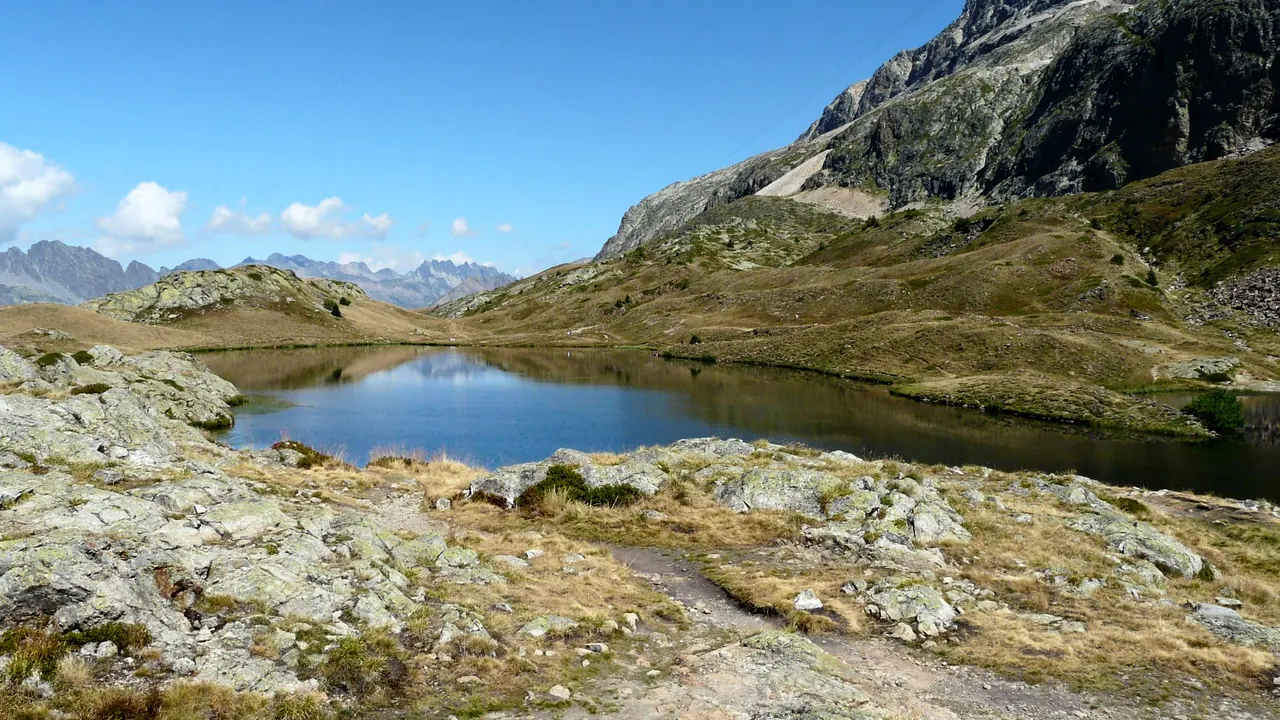
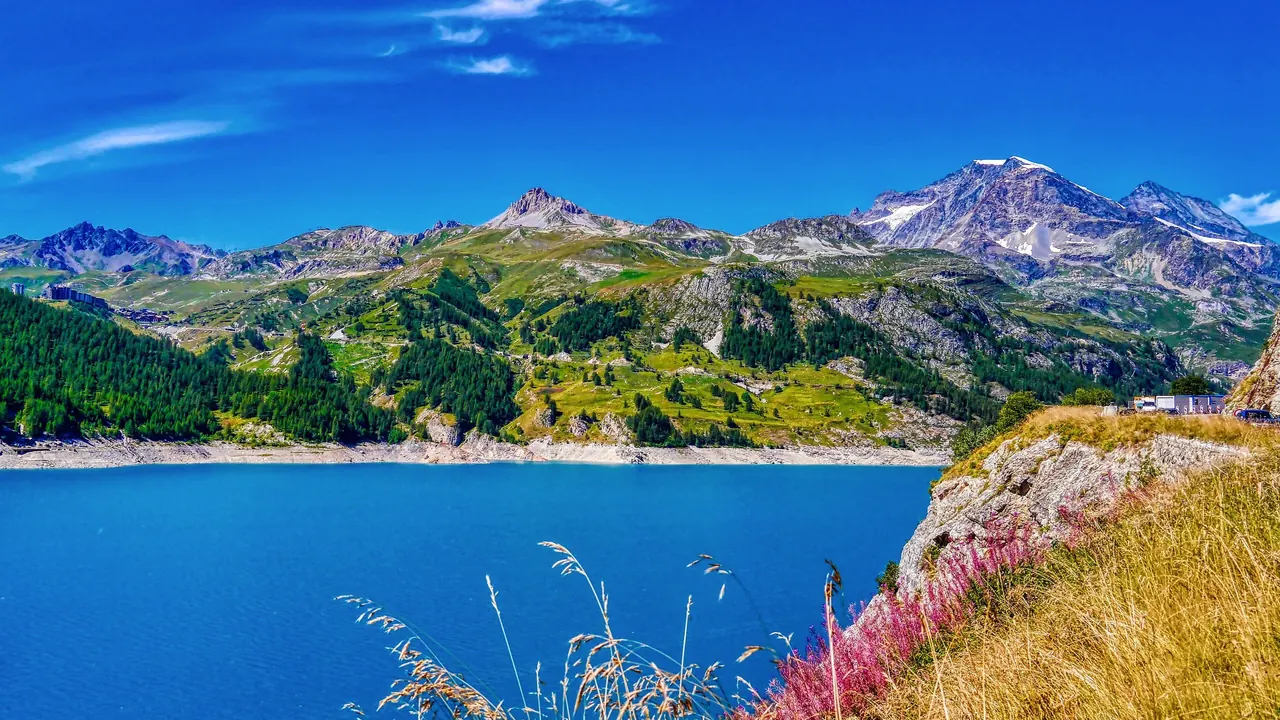
Photos: Alpe d'Huez by Beany, CC BY-SA 3.0, cropped; Tignes by Zairon, CC BY-SA 4.0, cropped.
Alpe d'Huez or Tignes?
Our verdict in twelve categories, each scored against the same fixed benchmark cities, and the climate month by month, so you can choose for your trip.
Choose Alpe d'Huez for
- day trips
- families
- prices
Alpe d'Huez suits a family ski week, or a summer of cycling and hiking where you also want something beyond the resort. Gentle beginner areas, kids' clubs and sunny slopes make it the easier choice with children. It is also a little kinder to the budget. When the weather closes in, Grenoble, Vizille and Briançon are all within a drive.
Choose Tignes for
- nightlife
- beaches
- getting around
Pick Tignes if the mountain is the whole point and you want lively evenings too. Its lifts link with Val d'Isère, and the Grande Motte glacier keeps the season long. Après-ski in Val Claret runs louder and later, and the villages are compact and well connected, so getting around takes little planning. Expect to stay up high, though, because there is little to visit down the valley.
Scoreboard
Twelve categories on one fixed scale from 0 to 100. The shaded stretch is the gap between the two.
Your match
Pick a travel style or drag the sliders, and both match scores follow your weighting.
Too close to call, 1 point apart
Wins on day trips and families with your weighting.
Wins on nightlife and beaches with your weighting.
What matters to you?
Category by category
What the scores mean for a trip.
Beaches & swimming
Neither is a place to swim, but Tignes offers a little more. In July and August a supervised bathing area with a small sandy shore opens on the Lac de Tignes. Its indoor aquatic centre, with a lagoon pool and slides, works in any season.
Alpe d'Huez has only the cold lakes of the Lac Besson plateau and slightly milder ones down in the Romanche valley. A real swim there means the sports centre pool or a hotel.
Food & drink
The menus are near twins: raclette, fondue and tartiflette made with Beaufort and Reblochon, and long lunches on sunny terraces on the slopes. Alpe d'Huez adds diots with polenta and a glass of génépi. Tignes is the better place to stock up on cheese, charcuterie and Savoie wine from the delicatessens for the apartment.
Culture & sights
There is little to see in either resort, so the difference lies in what little there is. Alpe d'Huez has a tent-shaped modern church, a small local museum and the ruins of the medieval silver-mining village of Brandes on the plateau. Tignes has one strong story instead: the old village drowned by the Chevril dam in 1952, told at the dam and on its giant mural.
Nightlife
Tignes goes out harder. Après-ski moves from the mountain terraces to the bars of Val Claret and Le Lac. Seasonal workers keep things loud until the small clubs close well after midnight, and people drink beer and shots and dance in their ski boots.
Alpe d'Huez follows the same pattern on a smaller scale, from the bars by the lower runs to the village pubs and a few late spots. Outside the ski season, both resorts quieten down to dinner and a drink.
Nature & outdoors
For mountain scenery the two are evenly matched, so the choice comes down to the kind of mountain you want. Alpe d'Huez is the sunnier one, with south-facing slopes that drop from the Pic Blanc in long runs such as the Sarenne. In summer, road cyclists come for the 21 hairpins up from Bourg d'Oisans, and the Écrins massif is close by for hiking.
Tignes sits higher, around its lake. The Grande Motte glacier above it gives a ski season that starts in autumn and keeps a little skiing going into early summer. The link with Val d'Isère makes one of the largest ski areas in the Alps, with plenty of off-piste. In summer the Vanoise National Park next door adds paragliding and trails where you may see ibex and marmots.
Day trips
Alpe d'Huez gives you far more to do off the mountain. Grenoble, with its Bastille cable car, fine-arts museum and old town, makes a realistic day out, and the Château de Vizille is on the way. Over the Col du Lautaret lie La Grave and Vauban's fortified Briançon.
From Tignes, the road down the long Tarentaise valley leads to Bourg-Saint-Maurice, Conflans and Beaufort. Aosta is only within reach in summer, when the Little St Bernard Pass is open.
Good for families
Alpe d'Huez is the better family resort overall. Besides ski schools and gentle beginner areas near the village, it has an ice rink, sledging and the lift up to the lakes. Its sunny slopes also help small children through cold days.
Tignes does the essentials well. Ski-in, ski-out apartments mean less carrying of small skis, and the aquatic centre is there for white-out days. Families who stay in the lower hamlets are well away from the bar noise. In both resorts, the altitude and cold are hard on very young children.
Getting around
Tignes is easier both to reach and to move around in. Each of its villages is small enough to walk, and free shuttles and the lifts connect them. The nearest railway station, at Bourg-Saint-Maurice, is about forty minutes below.
Alpe d'Huez has no railway, so you arrive by coach, transfer or the hairpin road. Its quarters climb steeply up the slope, so even with the shuttles and the small gondola, walking between them with skis is hard work.
Shopping & style
Both resorts are for buying gear, not for a shopping trip, with streets of rental shops and outdoor clothing. Tignes adds mountain honey to the usual cheese and cured sausage. From Alpe d'Huez, a proper day of shopping in Grenoble is a realistic drive.
Affordability
A ski week costs a lot in either resort once you add up the lift pass, equipment hire and lessons. Alpe d'Huez has a wider choice of plainer places to stay, though, so your room does not have to take up most of the budget. Off-peak winter weeks and summer bring the price down sharply.
Tignes charges high prices for hotel rooms and apartments in the peak school weeks. Summer lodging is cheaper, and the activities around the lake are free or cheap, but a meal out costs much the same in July as it does in February.
Live music & performing arts
Neither resort has a theatre or concert hall, but Alpe d'Huez has one real asset: the organ at Notre-Dame des Neiges, used for concerts during the seasons. Grenoble's stages are also within reach. In Tignes, live music means bands in après-ski bars, DJs on the terraces and the odd free outdoor concert.
Wellness & relaxation
Both resorts rely on hotel and apartment spas with saunas and hot tubs, and neither has a bathing tradition of its own. Tignes has more of it in one place, with a hammam and massage at its lakeside aquatic centre, and Brides-les-Bains about an hour down the valley. Alpe d'Huez looks instead to Uriage-les-Bains near Grenoble, and both resorts are calmest in early summer.
When should you go?
Pick your month. The climate figures are measured averages, not a forecast.
Alpe d'Huez in July
Tignes in July
Daytime high, °C
Rainfall in the month, mm
Where the figures come from
Alpe d'Huez has no weather station within reach, so its figures come from a gridded climate model rather than a measured record, and read a broad area rather than one spot.
Tignes has no weather station within reach, so its figures come from a gridded climate model rather than a measured record, and read a broad area rather than one spot.
Temperature and rainfall are climate normals, averaged over the years shown. Alpe d'Huez: 2001-2020 normals, NASA POWER reanalysis grid, no weather station within 90 km. Tignes: 2001-2020 normals, NASA POWER reanalysis grid, no weather station within 90 km.
Both resorts are high enough that their climates are almost identical. From December to February the days stay below freezing, which is weather for skiing rather than strolling. May is the wettest month in each. From late June to early September the days are mild, peaking around 18°C. That is good for hiking and cycling, but never warm enough to make a lake swim comfortable.
The differences are small. Tignes is a degree colder in deep winter, down to -4°C in January, and wetter in summer, with about 79mm in July against 58mm at Alpe d'Huez, and over 100mm in May. Alpe d'Huez is the safer bet for a dry week of summer walking or riding. Tignes, slightly colder through the winter, holds onto its snowy feel a little longer.
Which traveller are you?
On a family trip with young children, Alpe d'Huez makes the week easier to fill. Small legs often give up by lunchtime, and here the afternoons off the snow are easier to plan. Bring a carrier rather than a pushchair for the steep streets.
For a food and nightlife trip, Tignes suits a group of friends who want to stay out late. You will eat much the same fondue in either resort, so the difference comes after dinner, with a younger, rowdier crowd. Light sleepers should book away from Val Claret.
On a trip on a tight budget, Alpe d'Huez stretches further, but timing matters. Avoid the school-break weeks, cook in a self-catering apartment and pack a picnic from the village bakeries instead of paying for lunch on the slopes.
Before you go
| Measure | Alpe d'Huez | Tignes |
|---|---|---|
| Official language | French | French |
| Currency | Euro (EUR) | Euro (EUR) |
| Sockets | CE230 V, 50 Hz | CE230 V, 50 Hz |
| Driving side | Right | Right |
| Time zone | UTC+1, UTC+2 in summer | UTC+1, UTC+2 in summer |
| Emergency number | 112 | 112 |
| Elevation | 1,860 m | 1,440 m |
| Main airport | Grenoble Alpes Isère Airport (GNB)65 km from centre16 non-stop destinations | Geneva International Airport (GVA)105 km from centre150 non-stop destinations |
| Public holidays this year | 11 days | 11 days |
By the numbers
| Measure | Alpe d'Huez | Tignes |
|---|---|---|
| Population | - | 1,919 |
| People per km² | - | 24 |
| Museums within 10 km | 1 | 0 |
| UNESCO World Heritage sites within 50 km | 0 | 0 |
Where else could you go?
Every comparison below shares a destination with this one, so you can follow Alpe d'Huez or Tignes somewhere new.
- Val d'Isèrevs Tignes
- Les Deux Alpesvs Alpe d'Huez
- Les Arcsvs Tignes
- La Rosièrevs Tignes
- La Plagnevs Tignes
- Val Cenisvs Tignes