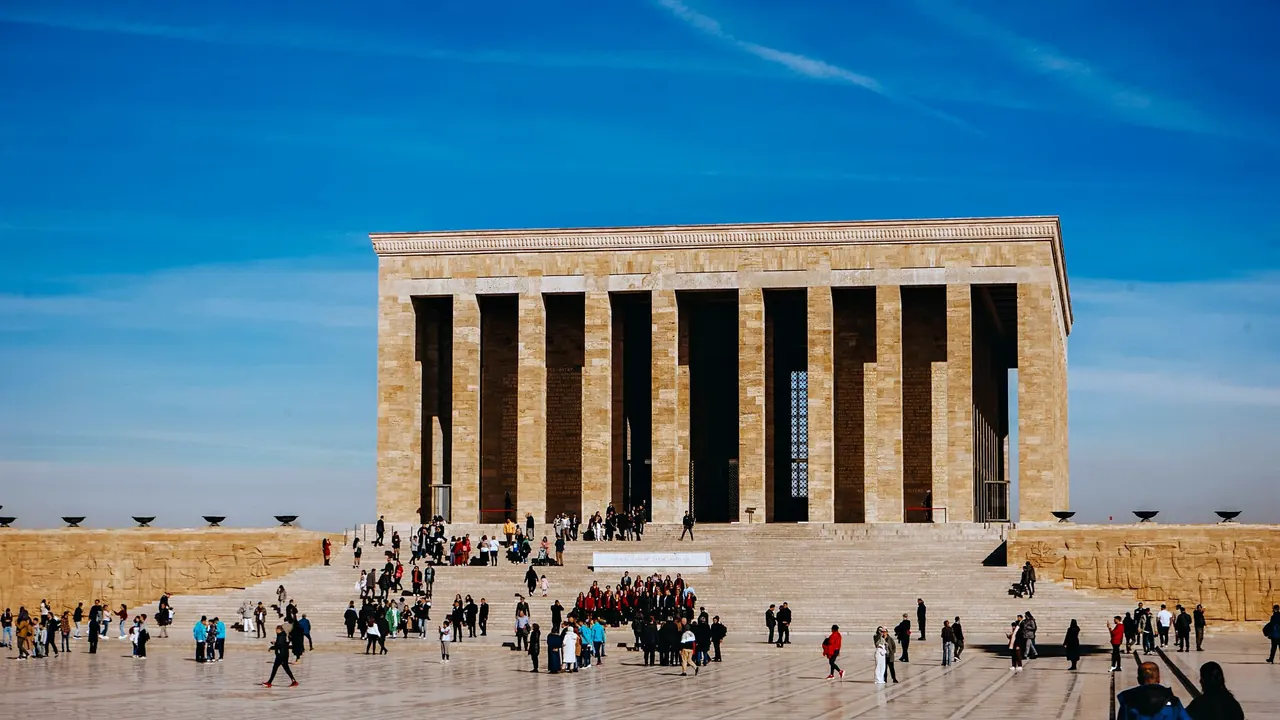
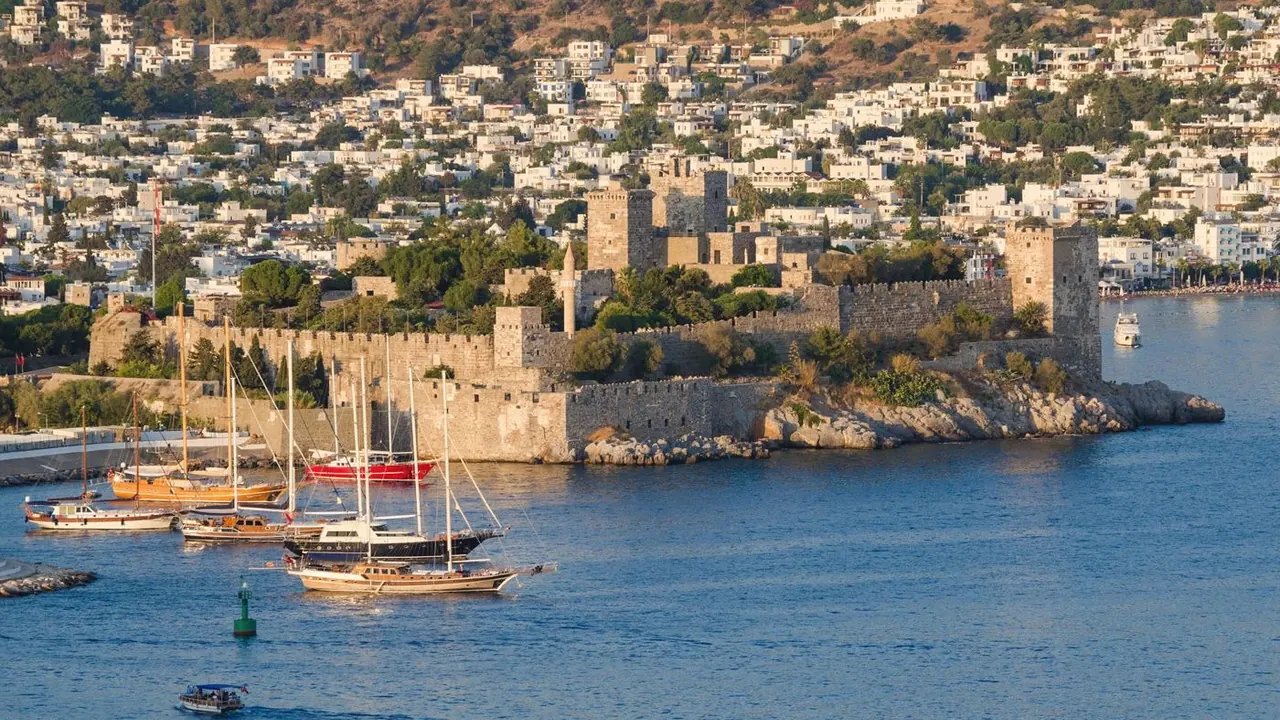
Photos: Ankara by Batuhan Kocabaş, Pexels License; Bodrum by Serhio Magpie, CC BY 4.0, cropped.
Ankara or Bodrum?
Our verdict in twelve categories, each scored against the same fixed benchmark cities, and the climate month by month, so you can choose for your trip.
Choose Ankara for
- prices
- live music and the arts
- culture and sights
Ankara suits a traveller who wants Turkish history and the life of a working capital rather than a resort. The Museum of Anatolian Civilizations and Anıtkabir carry more weight than anything in Bodrum. The state opera, orchestras and theatres give the evenings a formal side, and everyday costs stay low. It also works all year, with a metro to get around and fast trains to Konya and Eskişehir.
Choose Bodrum for
- beaches
- nature and the outdoors
- nightlife
Choose Bodrum for a summer by the sea. The bays, the clear water and the boat days are the whole point. Nights in the harbour bar street and at Türkbükü run late, and Didyma, Miletus and Kos are easy outings. Families on a resort stay do well here too. Expect to pay far more, especially on the north coast, and expect much of the town to be shut out of season.
Scoreboard
Twelve categories on one fixed scale from 0 to 100. The shaded stretch is the gap between the two.
Your match
Pick a travel style or drag the sliders, and both match scores follow your weighting.
Wins on prices and live music and the arts with your weighting.
Wins on beaches and nature and the outdoors with your weighting.
What matters to you?
Category by category
What the scores mean for a trip.
Beaches & swimming
There is no contest here. Ankara lies far inland on the plateau. Lakes Eymir and Mogan are for rowing, not swimming, so a swim means a pool, and the sea is a separate trip.
Bodrum is built around its bays. There is shallow water at Bitez and Ortakent, jetties and decks on the north coast at Türkbükü and Yalıkavak, and breezier, emptier shores to the west. Boat days to Kara Ada reach coves that no road gets to. The sand is often coarse and beach clubs hold the best stretches, but the water is clear and warm all summer.
Food & drink
Both places eat well, in different styles. Ankara's strength is everyday cooking: steam-tray stews in the esnaf lokantası canteens, kebab and pide houses, long breakfasts and the city's own Ankara tava. Tunalı Hilmi and Çankaya add cafés and meyhanes. It is dependable all year, but the range is narrow and there is little seafood.
Bodrum cooks Aegean food: olive-oil vegetable dishes, wild greens and octopus. In town you choose fish at the market and have it cooked at the tables around it, and at Gümüşlük there are slow fish meals by the water. The catch is the season. Outside summer the choice thins, and harbour menus are written for tourists.
Culture & sights
Ankara has the stronger sights. The Museum of Anatolian Civilizations traces Anatolia from Çatalhöyük through the Hittites and Phrygians. Anıtkabir shows the Republic at its most monumental, and the citadel, the Temple of Augustus and the Roman baths fill out the old quarter of Ulus.
Bodrum has one sight of that weight, the Castle of St Peter, with its Museum of Underwater Archaeology and the shipwrecks raised from the coast. The Mausoleum of Halicarnassus survives only as foundations. A couple of days covers the town, and most of the region's archaeology is reached on day trips.
Nightlife
In summer Bodrum is by far the bigger night out. The bar street behind the harbour, the louder clubs of Gümbet and the beach clubs of Türkbükü and Yalıkavak often keep going until dawn. From late autumn to Easter most of it closes.
Ankara's evenings are smaller and led by students. They happen in the multi-storey beer and rock bars off Kızılay and the more grown-up streets of Tunalı Hilmi, often around rakı at dinner. It suits long, talkative evenings rather than clubbing, and it is busiest during term time, when Bodrum's season has ended.
Nature & outdoors
Bodrum's outdoors is mainly the sea. There are gulet trips around the islands, sailing east into the greener Gulf of Gökova, clear water for snorkelling and diving, and the meltem wind for windsurfing off Bitez. Inland, stretches of the Carian Trail make good walks in spring and autumn.
Ankara's steppe is open and bare. The Atatürk Forest Farm and the lakes give room to walk and cycle, Soğuksu National Park has pine forest about an hour north, and flamingos gather on Tuz Gölü in spring. For proper hiking you have to travel much further.
Day trips
Bodrum has more within easy reach. Didyma, Miletus and Priene fit into one day. Euromos, Iasos and Herakleia on Lake Bafa are closer in, and the ferry to Kos adds a Greek island town in under an hour.
Ankara does better than its inland position suggests, thanks to fast trains to Konya and Eskişehir, with Gordion and Beypazarı a short drive away. The sites are more spread out, though. Hattusa makes a long day, and Cappadocia needs a night away.
Good for families
Bodrum is the easier choice with children, as long as the trip is a beach stay. It has shallow water at Bitez and Ortakent, resort hotels with kids' clubs and slides, and big water parks. A quiet bay is a better base than noisy Gümbet.
Ankara welcomes children just as warmly but has nothing big built for them. The dinosaur skeletons at the MTA Natural History Museum, the vehicles children can climb into at the Rahmi M. Koç Museum and Gençlik Parkı fill a few days. The malls help in winter cold.
Getting around
Ankara is simpler to get around. The metro lines and the Ankaray light rail meet at Kızılay and run the length of the Ulus to Çankaya spine on one card. Taxis fill the gaps, though the distances and hills make walking between districts tiring.
Bodrum's centre is easy on foot, but the rest of the peninsula relies on dolmuş minibuses that mostly run back through town. That makes it slow to hop from one bay to another. Summer traffic and taxi fares lead many visitors to hire a car or a scooter.
Shopping & style
Neither place is worth visiting for the shopping, and the difference is in the kind of shop. Ankara's most interesting buying is in the old quarter below the citadel: Samanpazarı's coppersmiths, carpets, dried fruit and angora wool. Large malls and Tunalı Hilmi's boutiques and bookshops cover the rest.
Bodrum offers leather sandals made to measure, a covered bazaar and busy weekly markets. At the top end there are luxury boutiques at Yalıkavak marina, with very little in between.
Affordability
Ankara is much the cheaper stay. As a government city rather than a resort, it prices hotels, canteens, the metro and taxis for the people who live there. Only alcohol, the international chains in Çankaya and museum entry add much.
In midsummer Bodrum is Türkiye's most expensive resort area, with Yalıkavak, Türkbükü and Gölköy the costliest, and sunbeds and taxis add up fast. Package hotels in Gümbet and Turgutreis, dolmuş rides and simple pide places keep it workable. May, June and late September are noticeably cheaper.
Live music & performing arts
Ankara has a real season because it is the capital. The State Opera and Ballet performs near Ulus, the Presidential and Bilkent symphony orchestras give concerts, and the State Theatres stage a wide repertoire, though plays are in Turkish. Kızılay's bars add Turkish rock and folk.
Bodrum's performances happen in summer and in the open air. There are concerts in the ancient theatre and the castle, a ballet festival inside the castle walls and chamber music in a stone quarry at Gümüşlük. Outside the season there is almost nothing.
Wellness & relaxation
The two are about even for slowing down, but the rest comes in different forms. Ankara's bathing is part of everyday life rather than something put on for visitors. A few old neighbourhood hammams in Ulus and Hamamönü still give the full scrub and foam, mostly to locals, and the thermal hotels and mineral-water pools of Kızılcahamam and Haymana are about an hour away. In the city itself, the tea gardens and lakeside parks are where you unwind.
Bodrum has a few simple hammams in town but no historic bathhouse tradition of its own. Its spa days happen mainly in resort hotels, and the most lavish are around Türkbükü and Yalıkavak. So Ankara suits a traditional bath or a thermal soak, while Bodrum suits a hotel spa between beach days. How restful Bodrum feels depends on where and when you stay. Gümüşlük and the western villages are calm in May, June and late September, while August is crowded and loud.
When should you go?
Pick your month. The climate figures are measured averages, not a forecast.
Ankara in July
Bodrum in July
Daytime high, °C
Rainfall in the month, mm
Where the figures come from
Bodrum's temperatures are measured 43 km from the centre, at Kos Airport.
Bodrum has no rain gauge within 25 km of the centre, so its rainfall comes from a gridded climate dataset read at the city rather than from a gauge further away.
Temperature and rainfall are climate normals, averaged over the years shown. Ankara: 1991-2020 normals, Ankara / Central (4.1 km from centre). Bodrum: 1993-2020 (rainfall 1991-2020) normals, Kos Airport (42.7 km from centre).
The two climates run on different calendars. Ankara sits high on the steppe, so winters are cold, with daytime highs around 5°C in January and snow fairly common. Spring brings the most rain, in April and May, then July and August turn dry and very sunny. At 31°C the wide boulevards are hard work on foot in high summer, so May, June, September and October are the best months for walking the city.
Bodrum's winters are mild but wet, with about 176mm of rain in January. June, July and August are almost completely dry, and May and September see only a few showers before the rain returns from October. The sea is still cool in May, warms to 25°C in August, and stays comfortable for swimming from June into October. High summer suits the beach better than the ruins, so spring and autumn are better for sightseeing and walking. Both places reach the same summer heat, but Ankara is far colder in winter, while Bodrum is far wetter.
Which traveller are you?
For a beach and sun trip, Bodrum is the only real choice. Ankara is hours from any coast and its lakes are not for swimming. Bodrum has shallow bays at Bitez and Ortakent, jetty swimming on the north coast and boat days to Kara Ada.
On a culture and arts trip, Ankara gives more. The Museum of Anatolian Civilizations and Anıtkabir outweigh Bodrum's castle, and the capital's opera, ballet and two symphony orchestras perform through the year. Bodrum's stage life is a handful of open-air summer festivals.
On a tight budget, Ankara makes money go much further. Hotels, canteen meals, metro rides and taxis are priced for the people who live and work there. Bodrum is Türkiye's priciest resort area and only cheap in Gümbet's package hotels or in May, June and late September.
Before you go
| Measure | Ankara | Bodrum |
|---|---|---|
| Official language | Turkish | Turkish |
| Currency | Turkish Lira (TRY) | Turkish Lira (TRY) |
| Sockets | CF230 V, 50 Hz | CF230 V, 50 Hz |
| Driving side | Right | Right |
| Time zone | UTC+3 | UTC+3 |
| Emergency number | 112 | 112 |
| Elevation | 938 m | 10 m |
| Main airport | Esenboğa International Airport (ESB)25 km from centre92 non-stop destinations | Milas Bodrum International Airport (BJV)32 km from centre83 non-stop destinations |
| Public holidays this year | 14 days | 14 days |
By the numbers
| Measure | Ankara | Bodrum |
|---|---|---|
| City population | 5,803,482 | 175,000 |
| People per km² | - | 314 |
| Museums within 10 km | 51 | 4 |
| UNESCO World Heritage sites within 50 km | 0 | 0 |
| Swim season, months above 21 °C | - | 5 months |
Where else could you go?
Every comparison below shares a destination with this one, so you can follow Ankara or Bodrum somewhere new.