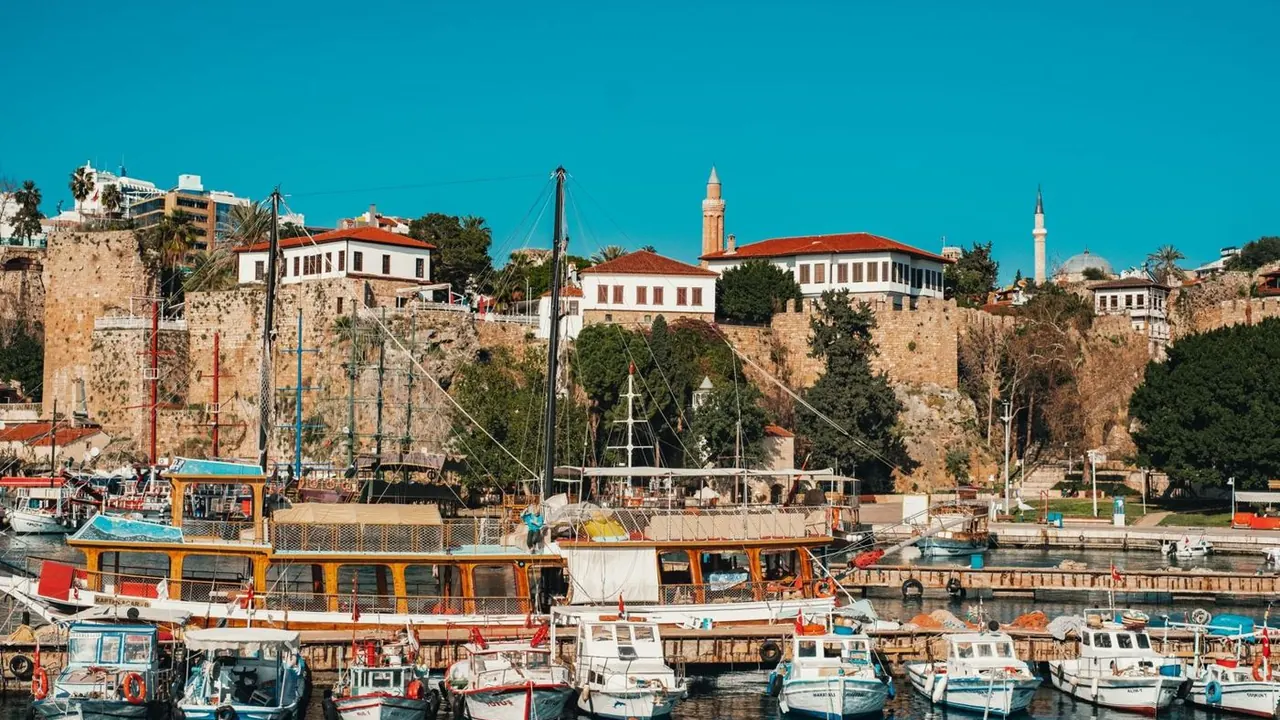
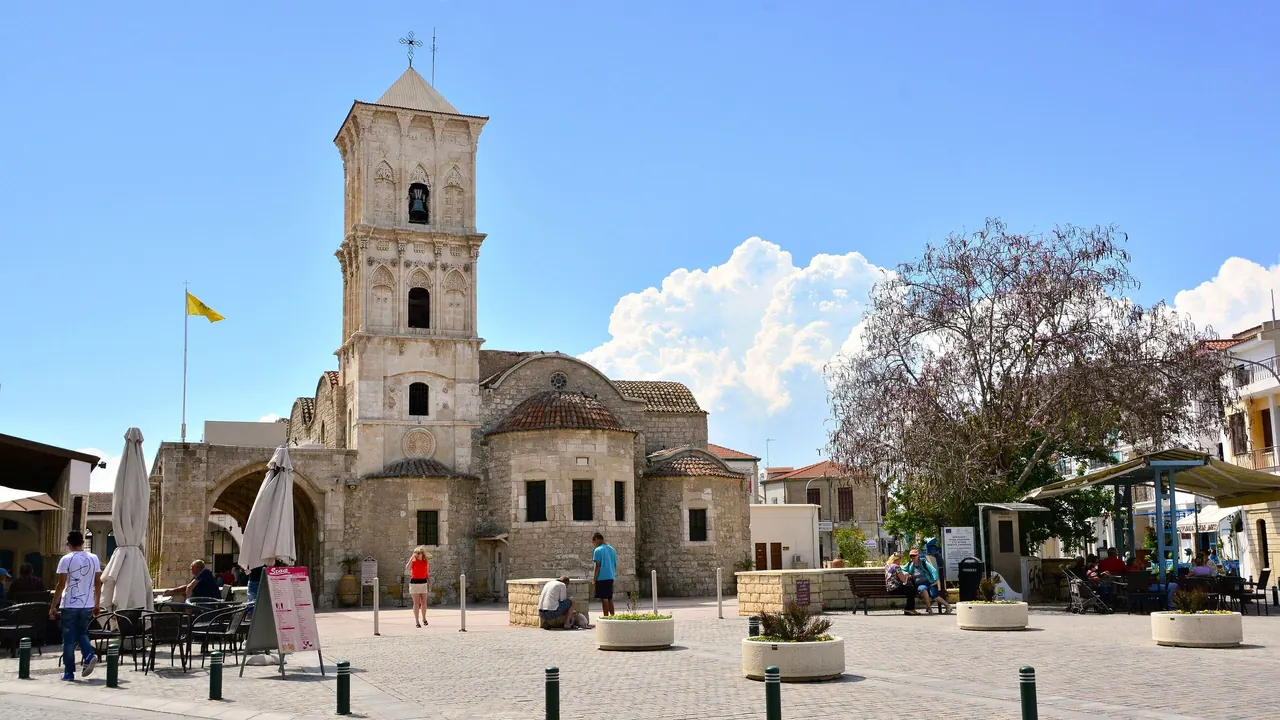
Photos: Antalya by Furkan Tumer, Pexels License; Larnaca by Mike McBey, CC BY 2.0, cropped.
Antalya or Larnaca?
Our verdict in twelve categories, each scored against the same fixed benchmark cities, and the climate month by month, so you can choose for your trip.
Choose Antalya for
- nature and the outdoors
- wellness
- culture and sights
Antalya is the stronger choice for most travellers. It offers more variety: mountains falling straight into the sea, a walled old town above a Roman harbour, and a ring of ancient cities such as Aspendos and Termessos. Families get large resorts built around children, and people who want to be pampered get the hammam. Choose it if you want each day to be different, and if you don't mind travelling between beach, ruins and trails.
Choose Larnaca for
Larnaca does not lead in any category we score.
Larnaca suits a smaller, quieter trip. Its sandy town beach is right in front of the old centre, the airport is minutes away, and the flat seafront can be walked in an afternoon. Winters are drier and sunnier than across the water. It works for an unhurried week of swimming, meze and coffee, for divers who want the famous Zenobia wreck, and as a base for seeing the rest of Cyprus.
Scoreboard
Twelve categories on one fixed scale from 0 to 100. The shaded stretch is the gap between the two.
Your match
Pick a travel style or drag the sliders, and both match scores follow your weighting.
Wins on nature and the outdoors and wellness with your weighting.
Has no clear advantage with the weighting you have chosen.
What matters to you?
Category by category
What the scores mean for a trip.
Beaches & swimming
The two are close on beaches, but the sea feels different in each. Antalya gives you range. Konyaaltı is a long pebble shore under the mountains, where the water deepens quickly. Lara has sand backed by resorts, and the pine-ringed coves towards Kemer and Phaselis are under an hour away. The catch is crowding on the main beaches in July and August.
Larnaca's strength is convenience. Finikoudes is fine grey sand right in front of the old town, and the water is shallow enough to wade far out. The town beaches are pleasant rather than beautiful, though. For white sand and turquoise water you travel to Ayia Napa or Protaras.
Food & drink
Antalya has more to explore at the table. Grilled şiş köfte comes with piyaz in a tahini dressing, and there is slow-cooked tandır lamb, fish from the Gulf and long breakfasts. Weekly markets are piled with citrus and pomegranates from the plain. The best of it is in plain köfte houses in the modern city, away from Kaleiçi's menus aimed at visitors.
Larnaca mostly means meze, a long run of small plates from halloumi and dips to sheftalia and kleftiko. The best of these are eaten in village tavernas inland. Beyond that the range is narrow, and the seafront leans towards international menus.
Culture & sights
Antalya has much more to see. You enter Kaleiçi through Hadrian's Gate and walk lanes of restored Ottoman houses under the fluted Yivli Minare. The Antalya Museum holds marble statues and sarcophagi from Perge, and it is one of the country's better archaeological collections.
Larnaca's sights are few but worth seeing. They include the ninth-century Church of Saint Lazarus with its carved iconostasis, Hala Sultan Tekke on the shore of the Salt Lake, the remains of Phoenician Kition and the potters of the Skala quarter. Together they fill a day or two.
Nightlife
Going out in Antalya is a summer affair spread across the city. Courtyard bars in Kaleiçi and around the harbour stay busy until late, while beach clubs and big open-air venues line Konyaaltı and Lara. That gives you far more choice of where to go, though a night out often means taxis between areas. In winter it shrinks to a few bars for locals and students.
Larnaca's evenings mostly happen in one place and at an easier pace. People go to the cocktail bars and late cafés along Finikoudes, plus the beach bars with DJs at Mackenzie. Anyone who wants proper clubbing makes the forty-minute trip to Ayia Napa. Out of season the town goes quiet.
Nature & outdoors
This is one of the widest gaps between the two. In Antalya the Taurus mountains rise straight from the sea, and the Düden falls pour off a cliff into the water. A cable car climbs Tahtalı Dağı to about 2,365m, and the Lycian Way runs past Phaselis and Olympos through pine forest. Rafting, paragliding and winter skiing are all close by.
Larnaca's surroundings are flat and sunbaked, though they have their moments. Flamingos crowd the Salt Lake in winter, and the Zenobia wreck makes diving a real draw. Cape Greco's sea caves and the Troodos forests are each an hour or more away.
Day trips
Antalya is surrounded by ancient cities. There is Perge's colonnaded street, the very well-preserved theatre at Aspendos, the temple of Apollo at Side and Termessos high on its mountain. Further away are Myra and the sunken city at Kekova. Few places in the Mediterranean have so many ruins within reach.
Larnaca's day trips are more varied, if less grand. Its central position puts Nicosia, the divided capital, about forty minutes away, where you can cross into the north at Ledra Street. Lefkara's lace village, Neolithic Choirokoitia and the clifftop ruins of Kourion are all within reach. Both places are much easier to explore with a car.
Good for families
Antalya is built for children in a way Larnaca isn't. Resorts in Lara, Belek and Kemer have water slides and kids' clubs, Belek has a theme and water park, and the city aquarium has a walk-through tunnel for the hottest hours of the day. Kaleiçi's steep lanes are hard work with a pushchair, though.
Larnaca makes up for it with ease. The town beach slopes so gently that toddlers can paddle safely, the promenade has playgrounds, and the flight home starts minutes from the hotel. Outings, however, mean the camel park or Ayia Napa's waterpark.
Getting around
Getting around is about equally easy in both, but in different ways. Antalya is a proper city with a tram that links the airport, bus station, old town and Konyaaltı. However, the resort coast stretches for tens of kilometres, and most guests rely on hotel transfers.
Larnaca is small and flat enough to walk everywhere in the centre, and the airport is just south of town. Outside town, Cyprus has no railway and few local buses, so most visitors hire a car and drive on the left.
Shopping & style
Haggling in Kaleiçi's lanes is the classic way to shop in Antalya. The stalls sell carpets, ceramics, leather and spices, with a lot of repetition between them. Large malls offer a cool escape from the summer heat, and the weekly neighbourhood markets are the place for spices and dried fruit to take home.
Larnaca has less to browse. Its central streets, Ermou and Zinonos Kitieos, hold ordinary high-street chains. The things worth taking home are crafts: Lefkara lace and silver filigree, Skala pottery and a bottle of Commandaria. Neither place is a destination for fashion.
Affordability
Antalya stretches a budget further, provided you eat where locals do. Köfte houses, bakeries, markets and the tram cost little, and all-inclusive resort packages can work well for families. Kaleiçi restaurants, boat trips and beach clubs charge noticeably more.
Larnaca is moderately priced. Meze is generous and many sights are cheap or free, but the hire car most visitors want is a real extra cost. In both places, eating a few streets back from the seafront and travelling outside high summer saves the most.
Live music & performing arts
Antalya has a real cultural season. State opera, ballet and theatre companies perform through the winter, and in summer the festival at Aspendos stages opera and ballet in the Roman theatre under the stars.
Larnaca offers far less. The municipal theatre puts on Greek-language plays, the summer Larnaca Festival brings music and dance to the fort, and some tavernas have bouzouki music at weekends. The island's orchestras are based in Nicosia.
Wellness & relaxation
Antalya has a bathing tradition to enjoy. The old hammams of Kaleiçi offer the full scrub and foam massage on warm marble, and the big resorts in Lara, Belek and Kemer have extensive spas.
Larnaca has no bathing culture of its own, and its spas are in the resort hotels east of town. What it offers is slowness: long seafront coffees, evening walks along the promenade, and a mild, quiet winter that suits rest better than spa treatments.
When should you go?
Pick your month. The climate figures are measured averages, not a forecast.
Antalya in July
Larnaca in July
Daytime high, °C
Rainfall in the month, mm
Temperature and rainfall are climate normals, averaged over the years shown. Antalya: 1991-2020 normals, Antalya (23.4 km from centre). Larnaca: 1991-2020 normals, Larnaca Airport (3.7 km from centre).
Both are beach places from late May, when the sea warms up and the days turn long and sunny. Antalya runs hotter. July and August reach 35°C there, which makes midday sightseeing hard work, and its sea warms to 29°C. Larnaca is a little cooler in high summer, its water is a degree or two cooler, and it gets more sunshine in every month. For walking around ruins or old streets, April and May suit both, and October suits Larnaca especially.
The two part ways in autumn. Antalya's dry season ends with September. The first rain arrives in October and becomes heavy by December, with 273mm that month. Larnaca stays dry through October, so its beach season runs longer. Its winter is far gentler too, with under 100mm even in the wettest month and slightly milder days. That makes Larnaca the better choice for a winter week of mild sun. Antalya is best from May to September.
Which traveller are you?
On a culture and arts trip, Antalya is the clear choice. Kaleiçi's Ottoman lanes and the Antalya Museum's statues from Perge are in town. Aspendos stages opera in a Roman theatre, and Larnaca's sights take only a day or two.
For an outdoors trip, Antalya has the more dramatic ground. You can walk stretches of the Lycian Way, take the cable car up Tahtalı Dağı, raft in Köprülü Canyon or ski at Saklıkent in winter. Larnaca's surroundings are low and dry, and its real mountains are ninety minutes away.
Divers have a real reason to choose Larnaca. The Zenobia, a ferry that sank just offshore, is one of the best-known wreck dives anywhere. Cape Greco's caves and clear water add snorkelling and kayaking within an hour's drive.
Before you go
| Measure | Antalya | Larnaca |
|---|---|---|
| Official language | Turkish | Turkish, Greek, Modern Greek |
| Currency | Turkish Lira (TRY) | Euro (EUR) |
| Sockets | CF230 V, 50 Hz | G240 V, 50 Hz |
| Driving side | Right | Left |
| Time zone | UTC+3 | UTC+2, UTC+3 in summer |
| Emergency number | 112 | 112 |
| Elevation | 30 m | 26 m |
| Main airport | Antalya International Airport (AYT)9 km from centre172 non-stop destinations | Larnaca International Airport (LCA)5 km from centre112 non-stop destinations |
| Public holidays this year | 14 days | 17 days |
By the numbers
| Measure | Antalya | Larnaca |
|---|---|---|
| City population | 2,426,356 | 59,200 |
| People per km² | 1,712 | 1,868 |
| Museums within 10 km | 5 | 4 |
| UNESCO World Heritage sites within 50 km | 0 | 2 |
| Swim season, months above 21 °C | 7 months | 6 months |
Where else could you go?
Every comparison below shares a destination with this one, so you can follow Antalya or Larnaca somewhere new.