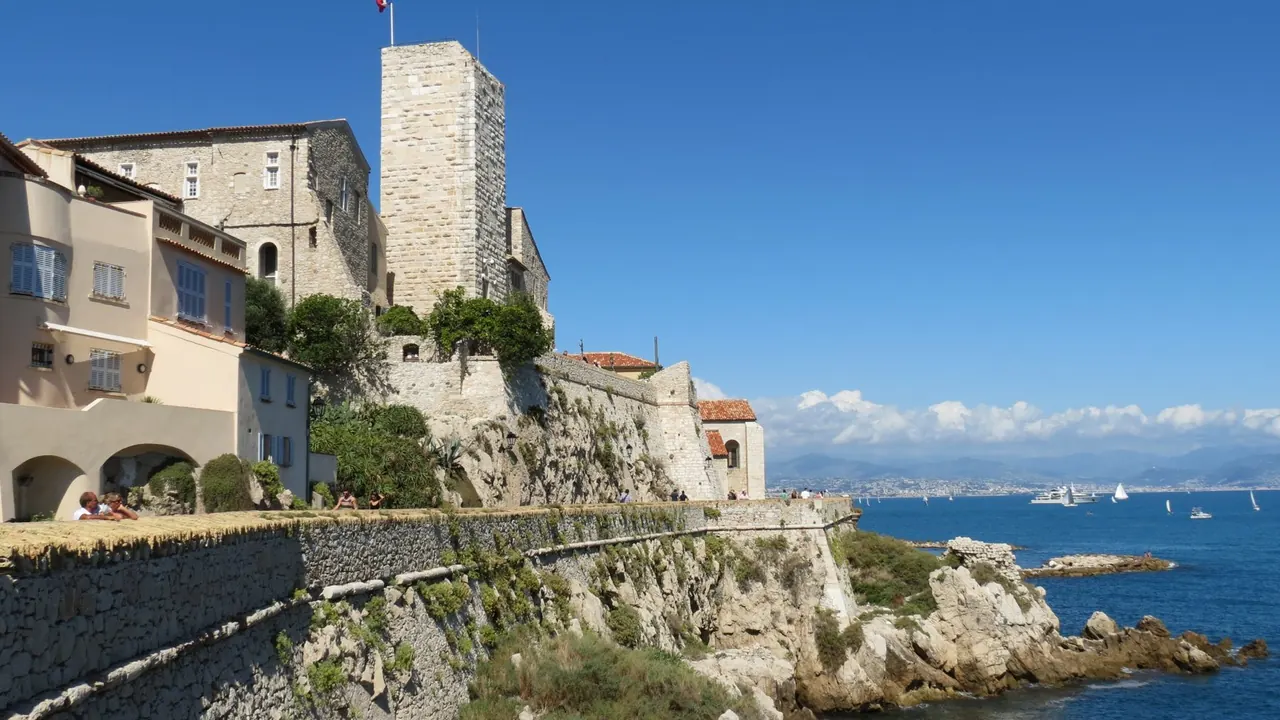
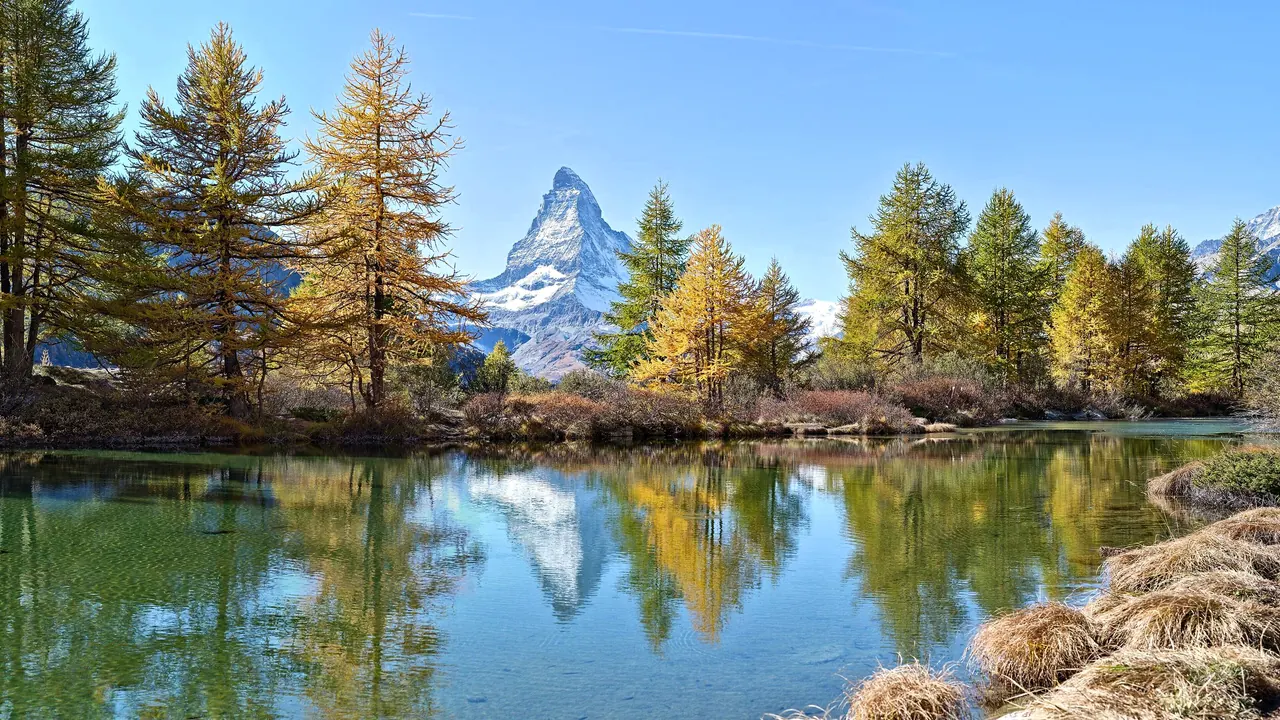
Photos: Antibes by Johan Allard, CC BY-SA 4.0, cropped; Zermatt by Roy Egloff, CC BY-SA 4.0, cropped.
Antibes or Zermatt?
Our verdict in twelve categories, each scored against the same fixed benchmark cities, and the climate month by month, so you can choose for your trip.
Choose Antibes for
- beaches
- day trips
- prices
Antibes is the pick for a summer by the sea with plenty to do between swims. The sand at Juan-les-Pins and La Salis shelves gently, the coves around the cape have very clear water, and the Picasso Museum and the old town fill a morning or two. The coastal railway reaches Nice, Cannes, Monaco and Menton without a car. Hill villages such as Saint-Paul-de-Vence and Grasse take a slow bus or a short drive. Choose it for warm water, long lunches outdoors and a different Riviera town whenever you want a break from the beach.
Choose Zermatt for
- nature and the outdoors
- getting around
- wellness
If the mountains are the whole point of the trip, Zermatt has no rival here. The Matterhorn rises over a car-free village, and lifts and cog railways climb to glaciers and high trails. You can ski in winter or walk in summer, eat on chalet terraces and spend the evenings in a hotel spa. It costs far more and offers little in the way of culture, nightlife or nearby towns, but nowhere on the Riviera puts you this close to the high Alps.
Scoreboard
Twelve categories on one fixed scale from 0 to 100. The shaded stretch is the gap between the two.
Your match
Pick a travel style or drag the sliders, and both match scores follow your weighting.
Wins on beaches and day trips with your weighting.
Wins on nature and the outdoors and getting around with your weighting.
What matters to you?
Category by category
What the scores mean for a trip.
Beaches & swimming
Antibes is a true beach town, with long, gently shelving sand at Juan-les-Pins and La Salis and rocky coves such as La Garoupe around the cape. The catch is that private beach clubs take much of the sand and the free stretches fill early in high summer.
Zermatt has no sea and no lake to swim in, and its mountain tarns stay icy even in August. If a swim matters, take a hotel with a pool, or spend some of the trip by a lake or the sea.
Food & drink
Antibes eats better, and more simply. Mornings revolve around the covered market on Cours Masséna, and the town eats Niçoise food: socca, pissaladière, stuffed vegetables, grilled fish and rosé. You do need to avoid the tourist menus near the port.
Zermatt's best meals are up the mountain, in chalets at Findeln, Furi and Zum See. You walk or ski there for raclette, air-dried beef and Valais wines with the Matterhorn in view. The village has a few ambitious kitchens, but the choice is narrower, cheap meals are scarce, and many places close between seasons.
Culture & sights
Antibes has more to see. The highlight is the Picasso Museum on the sea wall, which holds the work he made there in 1946. Around it are the lanes and ramparts of the old town, the star-shaped Fort Carré across the harbour and the Villa Eilenroc on the cape, enough for about two days.
Zermatt's history is about mountaineering. The underground Matterhorn Museum tells the story of the first ascent in 1865, the climbers' cemetery lies beside the church, and old larch barns stand on stone slabs in the Hinterdorf. A morning covers it all, and the Gornergrat cog railway, which has been running for well over a century, is the most memorable historic sight.
Nightlife
Antibes is livelier, but only in summer. In July and August, Juan-les-Pins has beach bars and clubs open into the early hours, and the yacht crews fill the pubs by Port Vauban. Nice is close for a bigger night out.
Zermatt's night out is winter après-ski. It starts with ski boots and loud music in the slope-side bars and moves to a few late bars on the main street. In summer the hikers go to bed early.
Nature & outdoors
Zermatt is the outstanding choice for scenery and outdoor sport. The Matterhorn, a ring of four-thousand-metre peaks and the Gorner Glacier are all reached by lift. You can ski into Italy, ski the glacier in summer, walk the Five Lakes trail or the Europaweg, and climb with a guide.
Antibes has gentler outdoor pleasures: the limestone coastal path round the cape, snorkelling and paddleboarding in clear water, and the botanical garden at Villa Thuret. Serious hiking means a drive to the Esterel's red cliffs or the Gorges du Loup.
Day trips
Antibes is one of the best bases on the Riviera for day trips. Nice and Cannes are minutes away by train, with Monaco and Menton further along the same line. Boats cross to the Lérins Islands, and the hill villages of Saint-Paul-de-Vence, Eze and Grasse are close by.
From Zermatt, every outing starts with a long train ride down the valley. Sion, with its castle hills and vineyards, is the best of them, but most visitors spend their spare days higher in the mountains rather than in other towns.
Good for families
Both work for families, but for different trips. Antibes is a beach vacation: shallow sand that suits small children, plus boats in the port and ice cream on the ramparts. Expect August heat and crowded beaches.
Zermatt suits families who ski or hike. There are no cars, ski schools and nursery slopes at Sunnegga, and marmots to spot on summer walks. Rainy days are hard to fill, though, and the highest viewpoints can be too cold and thin-aired for small children.
Getting around
Zermatt is the easier place to get around once you arrive. Cars are banned, the village is a compact strip you walk end to end, and the cog railway, the funicular and the gondolas all start in the centre. The drawback is the hour-plus train ride in and out of the valley.
In Antibes, the old town, the market and the port are easy on foot, and the coastal railway is excellent for other towns. Buses to the cape and the hill villages are slow, though, and summer traffic and parking make driving hard work.
Shopping & style
Neither is a shopping destination, but Antibes has a little more to browse. It has the covered market for olive oil, herbs and soap, independent shops selling Provençal linen and ceramics, and Biot glass and Vallauris pottery close by.
Zermatt's one main street sells Swiss watches, jewellery and souvenirs. Its real strength is its well-stocked ski and mountaineering shops, which are worth knowing about if you need gear.
Affordability
Both are costly, but Antibes is far easier on the wallet. In spring and autumn hotel rates fall sharply, the regional trains are good value, and the old town has cheaper places to eat.
Zermatt is expensive at every step: plain hotels, mountain-terrace lunches and the lift passes and train fares that every visitor needs. Self-catering and staying down the valley in Täsch help, but it remains a splurge.
Live music & performing arts
Antibes has the bigger name in live music: Jazz à Juan, held each July since 1960 under the pines by the sea. The Anthéa theatre runs a regional programme the rest of the year.
Zermatt has no stage of its own, but it has two good festivals: Zermatt Unplugged's acoustic sets in spring and chamber music in the church in late summer. Outside those weeks, live music means an après-ski band.
Wellness & relaxation
Zermatt is the more restful choice. It has many excellent hotel spas with pools and mountain views, and the car-free streets and clean air make quiet evenings after a day outdoors easy to come by.
In Antibes, wellness means a seawater thalassotherapy centre and the grand hotel spas on the cape. The town is most relaxing in May, June and September, when market mornings and evening walks on the ramparts set the pace, before the July crowds arrive.
When should you go?
Pick your month. The climate figures are measured averages, not a forecast.
Antibes in July
Zermatt in July
Daytime high, °C
Rainfall in the month, mm
Where the figures come from
Zermatt has no weather station within reach, so its figures come from a gridded climate model rather than a measured record, and read a broad area rather than the city itself.
Temperature and rainfall are climate normals, averaged over the years shown. Antibes: 1991-2020 normals, Nice (9.9 km from centre). Zermatt: 1991-2020 normals, TerraClimate 4 km grid at the town, no weather station within 90 km.
Antibes is at its best in summer. From June to September it is warm enough for the beach, with highs around 28°C in July and August and the sea reaching 25°C. June to August are the sunniest and driest months. The rain picks up in September, and May and late September are the gentler times for walking the old town and the cape. Autumn is the wet season, peaking in November at about 138mm. Winters are mild but often grey, and too cool for swimming.
Zermatt has two seasons at opposite ends of the year. From December to March, highs sit around -2°C and the village is all about skiing. June to September brings highs of about 14°C, good weather for walking but never for the beach. Rain falls fairly evenly through the year, so summer walkers should expect some wet days, and November is the wettest month. In both places spring and late autumn fall between the main seasons, but in Antibes they are pleasant times to visit, while in Zermatt they are quiet weeks with much of the village shut.
Which traveller are you?
For a beach and sun trip, Antibes is the clear choice. It has sand on a coast known for pebbles, clear water off the rocks of Cap d'Antibes and a warm sea from June into early October. In Zermatt, the only swimming is in a hotel pool.
On an outdoors trip, Zermatt is in another league. The lifts reach the Gornergrat and the Matterhorn Glacier Paradise, and from them run hundreds of kilometres of marked trails, glacier skiing and guided climbs. Antibes offers a fine coastal path and good snorkelling, but its real hiking is inland.
For a culture and arts trip, choose Antibes. You can see the Picasso Museum in the Château Grimaldi, the ramparts and Fort Carré, and go to Jazz à Juan in July. Saint-Paul-de-Vence and Nice are close by. Zermatt's mountaineering heritage takes about a morning.
Before you go
| Measure | Antibes | Zermatt |
|---|---|---|
| Official language | French | French, German, Italian, Romansh |
| Currency | Euro (EUR) | Swiss Franc (CHF) |
| Sockets | CE230 V, 50 Hz | CJ230 V, 50 Hz |
| Driving side | Right | Right |
| Time zone | UTC+1, UTC+2 in summer | UTC+1, UTC+2 in summer |
| Emergency number | 112 | 112 |
| Elevation | 0 m | 1,624 m |
| Main airport | Nice-Côte d'Azur Airport (NCE)11 km from centre130 non-stop destinations | Geneva International Airport (GVA)128 km from centre150 non-stop destinations |
| Public holidays this year | 11 days | 9 days |
By the numbers
| Measure | Antibes | Zermatt |
|---|---|---|
| City population | 77,637 | 6,023 |
| People per km² | 2,930 | 25 |
| Museums within 10 km | 14 | 2 |
| UNESCO World Heritage sites within 50 km | 2 | 2 |
| Swim season, months above 21 °C | 4 months | - |
Where else could you go?
Every comparison below shares a destination with this one, so you can follow Antibes or Zermatt somewhere new.
- Cannesvs Antibes
- Nicevs Antibes
- Monacovs Antibes
- Saint-Tropezvs Antibes
- Chamonixvs Zermatt
- Interlakenvs Zermatt