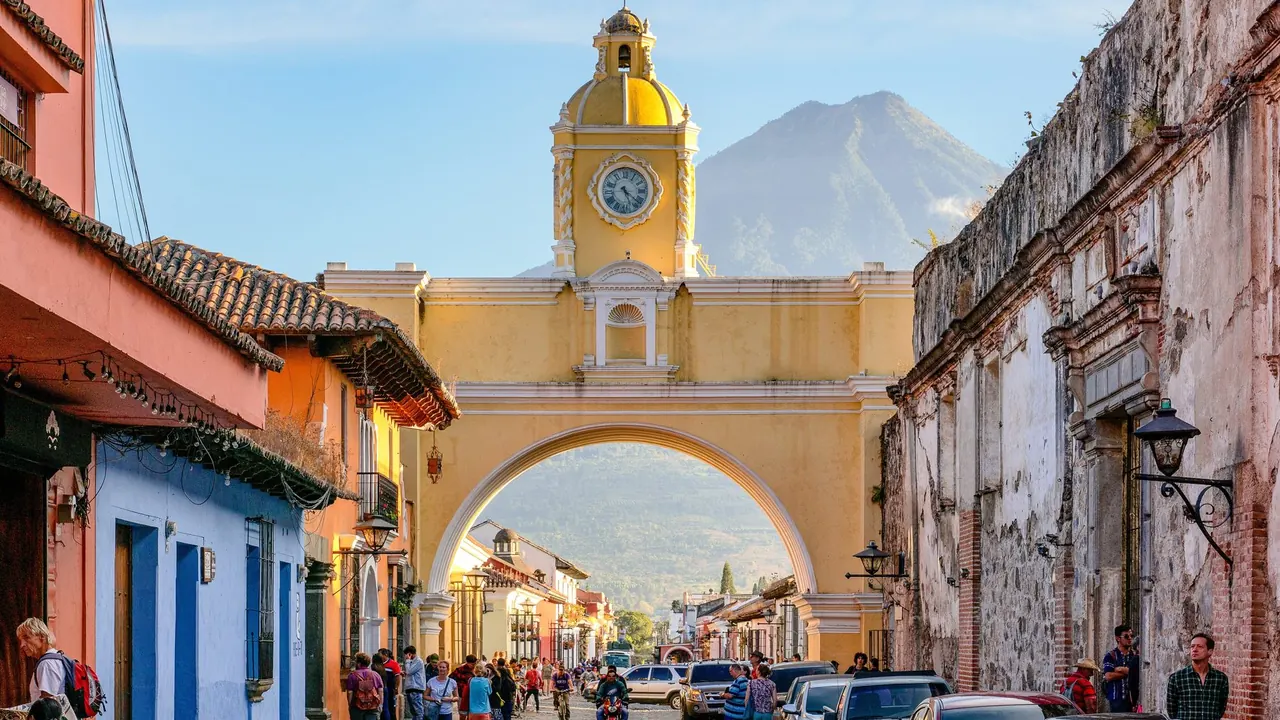
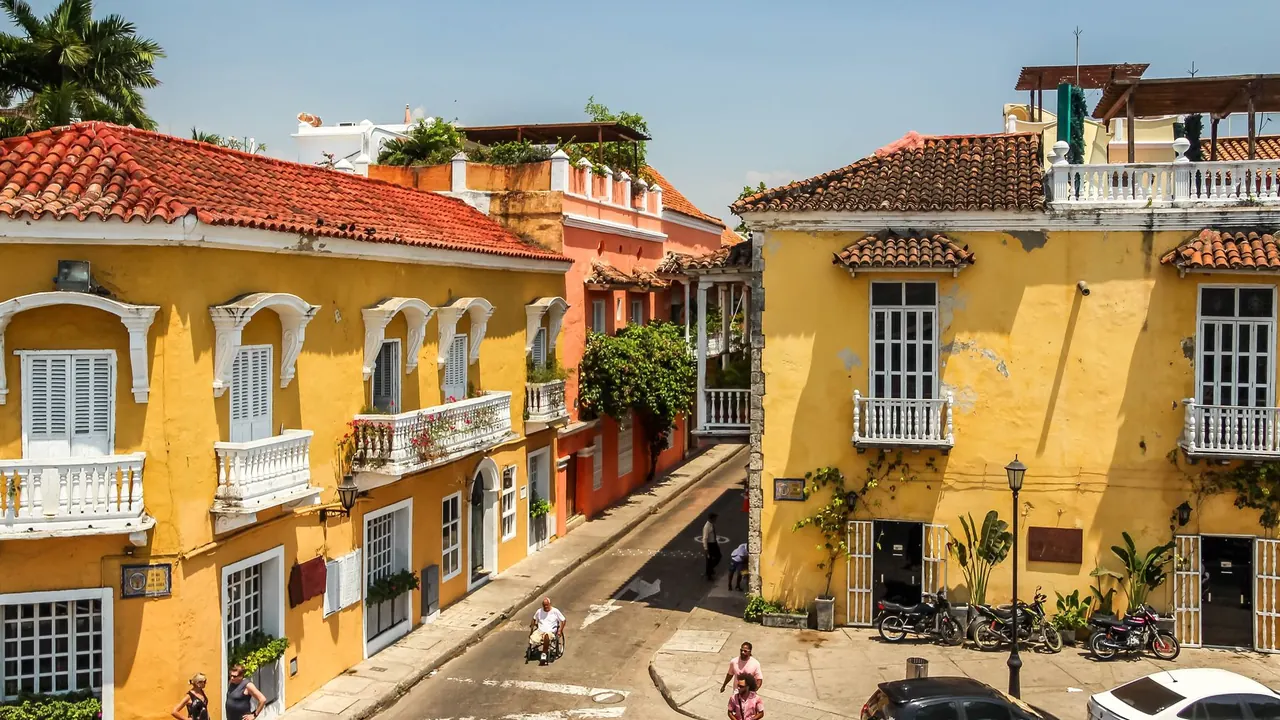
Photos: Antigua Guatemala by Chad Davis, CC BY-SA 2.0, cropped; Cartagena by Dr. Thomas Liptak, CC BY-SA 4.0, cropped.
Antigua Guatemala or Cartagena?
Our verdict in twelve categories, each scored against the same fixed benchmark cities, and the climate month by month, so you can choose for your trip.
Choose Antigua Guatemala for
- nature and the outdoors
- day trips
- prices
Antigua Guatemala suits travellers who want to walk and climb. It is a quiet colonial town of ruined churches, with volcano hikes, coffee farms and Maya weaving villages close by, and its mild highland air makes long days on foot comfortable. It costs a little less and winds down early, and there is no sea worth the name. Choose it if you are happy with a morning on a trail and an evening in a garden courtyard.
Choose Cartagena for
- beaches
- nightlife
- live music and the arts
Cartagena is the pick for a Caribbean trip that combines an old town with warm sea. The walled city has the colonial streets, the Rosario Islands have the clear water, and Getsemaní keeps going long after Antigua has gone to bed, with salsa, champeta and better seafood. In return you get steady heat, more hawkers and not much to see inland.
Scoreboard
Twelve categories on one fixed scale from 0 to 100. The shaded stretch is the gap between the two.
Your match
Pick a travel style or drag the sliders, and both match scores follow your weighting.
Wins on nature and the outdoors and day trips with your weighting.
Wins on beaches and nightlife with your weighting.
What matters to you?
Category by category
What the scores mean for a trip.
Beaches & swimming
Antigua has no beach to speak of. It sits high in a valley, and the nearest coast at Monterrico is about two hours away, with black sand and currents better watched than swum in. In town, swimming means a hotel pool.
Cartagena's own beaches at Bocagrande are only good for a quick dip in cloudy water, but that is not the point. An hour or less by boat, the Rosario Islands and Playa Blanca have pale sand and clear water, warm all year, and many visitors give a day or two of their stay to them.
Food & drink
Cartagena eats better and for longer. Its port cooking of fried whole fish, coconut rice, patacones and street ceviche is backed by a polished tier of modern Colombian restaurants inside the walls and cheaper corners in Getsemaní.
Antigua's strengths are narrower: coffee from the volcano slopes, chocolate tastings, and Guatemalan stews such as pepián at the market comedores. The choice runs out within a few days, and the restaurants around the central park are often ordinary.
Culture & sights
Both are colonial towns made for wandering rather than for museums, and both take two or three days. What they offer is different. Antigua is a town of ruins, abandoned as capital after the 1773 earthquakes, with roofless convents such as Capuchinas and Santa Clara where trees grow through the broken vaults.
Cartagena is the intact version: a complete walled city of balconied houses with ramparts you can walk along at sunset, guarded by the huge Castillo San Felipe. Antigua feels quieter and more melancholy, while Cartagena is grander and more fortified.
Nightlife
Antigua is better for a drink after dinner than for a night out. Its bars sit within a few blocks of the central park, so one stroll takes in the whole scene: a rooftop with volcano views, a mezcal bar behind a colonial door, perhaps a salsa class. It is sociable, but it is over early, and only weekends bring much of a crowd.
Cartagena's nights are bigger, later and built around dancing, and they are only getting going when Antigua's bars close. Evenings move from the open-air gathering on the Plaza de la Trinidad to salsa bars in Getsemaní, reggaetón clubs near the clock tower, or a chiva with a band on board. The circuit is aimed squarely at tourists, and touts working the streets are part of it.
Nature & outdoors
Antigua is the stronger place for the outdoors, and its landscape is volcanic. The overnight climb up Acatenango to watch Fuego throw lava, the half-day Pacaya walk over black lava fields, and trails through coffee farms and cloud forest are all within easy reach.
Cartagena's nature is mostly in the water: snorkelling and diving on the reefs of Corales del Rosario, canoeing the mangroves at La Boquilla, and kitesurfing in the dry-season winds. On land the country around it is flat and farmed, and the mud volcano at Totumo is more of a novelty than a hike.
Day trips
Antigua has more within a day's reach. Weaving villages such as San Antonio Aguas Calientes are a tuk-tuk ride away, Guatemala City's archaeology and textile museums are about an hour off, and the Maya ruins of Iximché make a solid outing. Lake Atitlán and Chichicastenango market are long but possible.
From Cartagena, the outings worth taking are San Basilio de Palenque, with its own language and music, and the islands, which are really about the sea. Mompox and Santa Marta are too far for a day trip.
Good for families
Neither city is built for children, and families will find them about as manageable as each other. Antigua's appeal for children is hands-on: chocolate workshops, coffee farms and the Pacaya walk for school-age children, in mild weather, although the cobbles are tough with a pushchair.
Cartagena trades that for the sea. The calm, warm water off the islands and the National Aviary on the way to Playa Blanca are the highlights, but the steady heat and long boat rides tire small children quickly.
Getting around
Antigua is a little easier to get around. Its grid of about a dozen blocks each way is walkable in mild air, with volcanoes as landmarks, and chicken buses and shuttles cover the villages and the lake. The large cobbles call for sensible shoes.
Cartagena's walled city, San Diego and Getsemaní are just as compact, and cheap taxis fill the gaps to Bocagrande. The problem there is the midday heat, which makes the same short distances more tiring.
Shopping & style
The two are on a par for shopping, and both are about local craft rather than fashion. Antigua is the place for highland textiles: handwoven huipiles, woven belts, jade and ceramics, plus coffee and chocolate to take home.
Cartagena's craft shops in Las Bóvedas sell Wayuu mochila bags, sombreros vueltiaos and hammocks. It adds emerald jewellers, linen resortwear from Colombian designers, and malls in Bocagrande if you need something bigger.
Affordability
Each is the most expensive place in its country, but Antigua is somewhat easier on a careful budget. Guesthouses, comedor lunches, chicken buses and modest entry fees to the ruins keep daily costs low, and only the guided volcano hikes add up.
Cartagena also rewards those who stay in Getsemaní and eat street food. However, boutique hotels inside the walls cost close to European rates, especially over Christmas, New Year and Easter, and inflated quotes from hawkers and boatmen mean it pays to agree prices first.
Live music & performing arts
Cartagena has more to offer. The ornate Teatro Adolfo Mejía hosts concerts and dance, a classical music festival fills churches and courtyards each January, and on most evenings cumbia dancers and drummers perform in the plazas while salsa bands play in Getsemaní.
Antigua has very little formal stage life: marimba in the central park, bar bands, and the occasional concert in a ruined cloister. Its great spectacle is Holy Week, with processions over sawdust carpets, and that is about faith rather than the stage.
Wellness & relaxation
Neither has a bathing tradition, and both offer a similar amount of rest, of different kinds. Antigua's calm is in the town itself: unhurried streets, garden courtyards with fountains, yoga studios, and spas that use local coffee and cacao. There are occasional temazcal sweat baths, although church bells can start early.
Cartagena's streets are noisy and hot, so the quiet is in hotel plunge pools or a few nights on the islands among hammocks. The Totumo mud bath is fun rather than restorative.
When should you go?
Pick your month. The climate figures are measured averages, not a forecast.
Antigua Guatemala in July
Cartagena in July
Daytime high, °C
Rainfall in the month, mm
Where the figures come from
Antigua Guatemala has no rain gauge within 25 km of the centre, so its rainfall comes from a gridded climate dataset read at the city rather than from a gauge further away.
Temperature and rainfall are climate normals, averaged over the years shown. Antigua Guatemala: 1998-2020 (rainfall 1991-2020) normals, Guatemala Aeropuertola Aurora (23.5 km from centre). Cartagena: 1991-2020 normals, Cartagena / Rafael Nunez (3.1 km from centre).
Antigua stays mild all year, with daytime highs between 23°C and 27°C, so the streets are comfortable to walk in any month. The real divide is rain. November to April is dry and clear, which is the best time for volcano views. From May the afternoon storms arrive, peaking at 297mm in June and staying heavy into September, and cloud often hides the peaks.
Cartagena is hot every month, close to 31°C, so walking at midday is hard going whatever the season. The sea stays warm enough to swim all year. December to April is the dry, sunniest stretch, with the most sunshine in January. Rain builds from May and is heaviest in October at 241mm, with showers that are shorter but steamier than Antigua's. For both cities, the early months of the year are the safest choice.
Which traveller are you?
On a beach and sun trip, Cartagena is the only real choice. Boats reach the pale sand and turquoise coves of the Rosario Islands and Baru in about an hour, while Antigua's nearest coast is a two-hour shuttle to black volcanic sand and heavy surf.
For an outdoors trip, go to Antigua. Acatenango's overnight climb with Fuego erupting across the valley, the easier Pacaya lava walk, and trails through coffee farms and cloud forest outclass Cartagena's flat farmland. Cartagena's best nature is offshore, in snorkelling over reefs and canoeing the mangroves.
On a food and nightlife trip, Cartagena wins clearly. You get ceviche from street carts, fried fish with coconut rice and polished colonial-house restaurants, then salsa bars and clubs running into the small hours. Antigua's stews and coffee are good, but its bars close early.
Before you go
| Measure | Antigua Guatemala | Cartagena |
|---|---|---|
| Official language | Spanish | Spanish |
| Currency | Quetzal (GTQ) | Colombian Peso (COP) |
| Sockets | AB120 V, 60 Hz | AB110 V, 60 Hz |
| Driving side | Right | Right |
| Time zone | UTC-6 | UTC-5 |
| Emergency number | Police 110/120, ambulance 128, fire 123 | 123 |
| Elevation | 1,582 m | 2 m |
| Main airport | La Aurora International Airport (GUA)22 km from centre19 non-stop destinations | Rafael Nuñez International Airport (CTG)2 km from centre26 non-stop destinations |
| Public holidays this year | 13 days | 19 days |
By the numbers
| Measure | Antigua Guatemala | Cartagena |
|---|---|---|
| City population | 59,091 | 914,552 |
| People per km² | - | 1,599 |
| Museums within 10 km | 2 | 2 |
| UNESCO World Heritage sites within 50 km | 1 | 1 |
| Swim season, months above 21 °C | - | 12 months |
Where else could you go?
Every comparison below shares a destination with this one, so you can follow Antigua Guatemala or Cartagena somewhere new.