Photos: Arequipa by DocSlyper, CC BY-SA 2.0, cropped; Santiago by Rjcastillo, CC BY-SA 4.0, cropped.
Arequipa or Santiago?
Our verdict in twelve categories, each scored against the same fixed benchmark cities, and the climate month by month, so you can choose for your trip.
Choose Arequipa for
- prices
- culture and sights
- food and drink
Arequipa suits a traveller who wants a beautiful colonial centre and a strong regional kitchen for little money. The sillar churches of the White City, Santa Catalina and long picanteria lunches fill two or three unhurried days. It works best as a base for Colca Canyon and the volcanoes on a longer route through southern Peru, as long as you don't mind quiet evenings and not much to keep children busy.
Choose Santiago for
- day trips
- live music and the arts
- nightlife
Santiago is the better pick for a trip that mixes city life with outings. The metro makes a large capital easy to manage, nights run late in Bellavista and Lastarria, and Valparaíso, the wine valleys and the winter ski slopes are all within a day. Families get zoos, pools and a science museum, though almost everything costs more than in Peru.
Scoreboard
Twelve categories on one fixed scale from 0 to 100. The shaded stretch is the gap between the two.
Your match
Pick a travel style or drag the sliders, and both match scores follow your weighting.
Wins on prices and culture and sights with your weighting.
Wins on day trips and live music and the arts with your weighting.
What matters to you?
Category by category
What the scores mean for a trip.
Beaches & swimming
Neither city is a beach destination, and both reach the same cold Humboldt water. From Arequipa the coast at Mollendo and Mejia is about two hours away over dry hills, with wide sand and rough surf. From Santiago the drive to Viña del Mar takes about as long but ends at a proper resort town with a seafront.
Back in the city, Santiago has the large public pools of the Parque Metropolitano, while in Arequipa swimming means a hotel pool.
Food & drink
Arequipa has the more distinctive kitchen, and it is at its best at lunchtime in the picanterias. Rocoto relleno, shrimp chowder and chicha de guinapo are served in noisy family dining rooms, and the city eats adobo on Sunday mornings. Eating where the locals eat is the whole point.
Santiago's strengths lie elsewhere: seafood at the Mercado Central and around La Vega, and wine from the nearby valleys, which makes dinner the main event. Its modern restaurants cluster in Lastarria, Barrio Italia and Bellavista. Neither city offers much international cooking.
Culture & sights
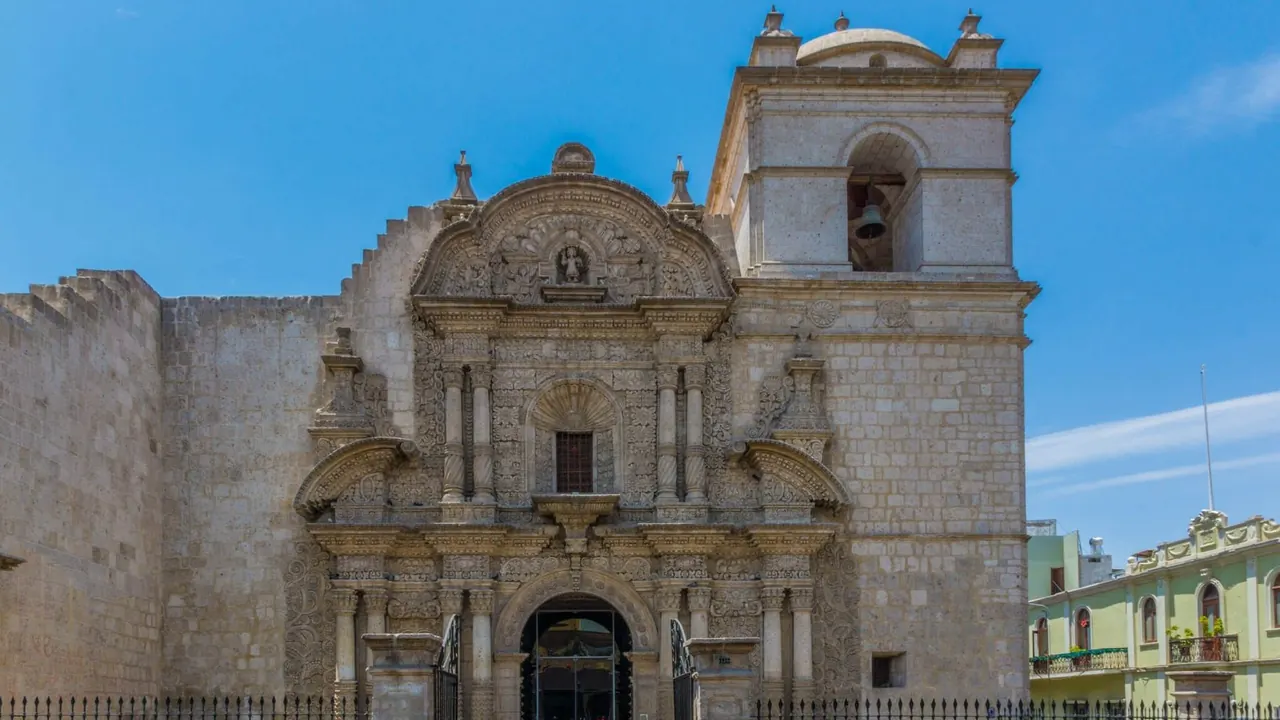
Arequipa has the richer historic centre. Its pale sillar churches and mansions form a UNESCO-listed whole, and Santa Catalina's walled lanes can fill half a day on their own. Juanita at the Museo Santuarios Andinos and the carved portal of La Compania are a short walk away.
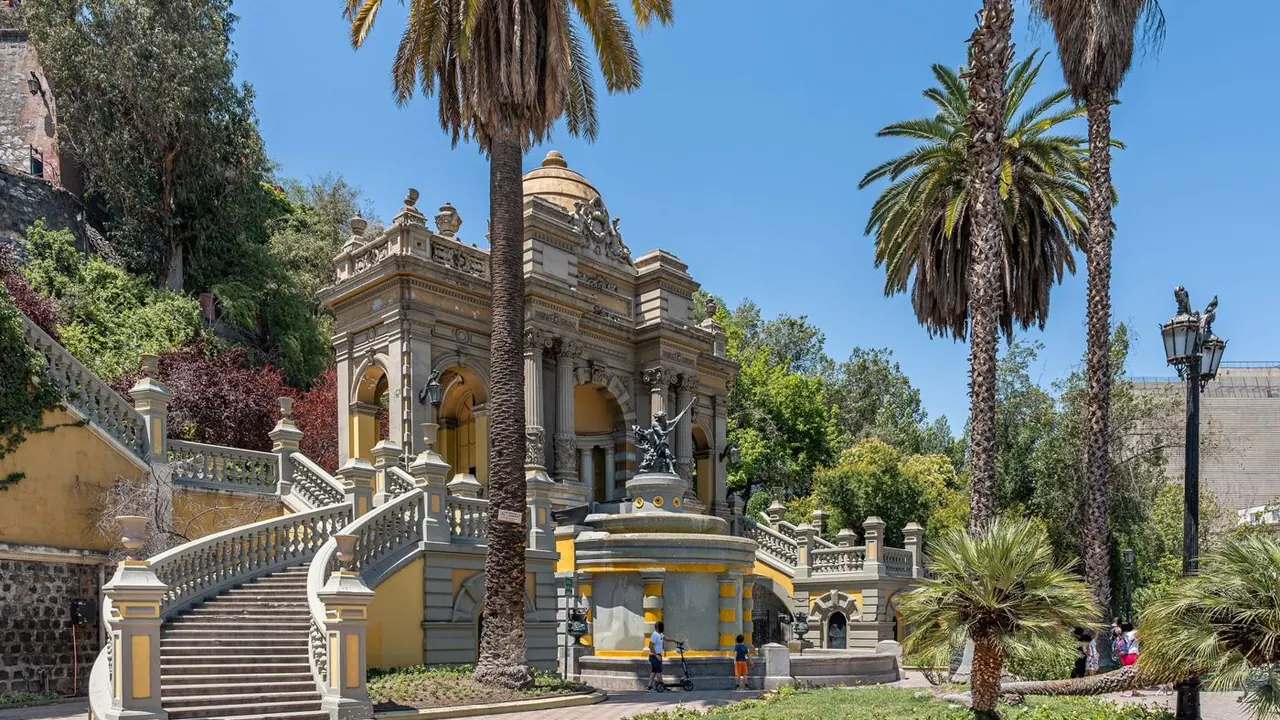
Earthquakes have left Santiago with fewer monuments, so its sightseeing leans on museums: the outstanding pre-Columbian collection, the Museum of Memory and La Moneda's link to 1973. Both cities need two or three days, but in Arequipa you spend them among the buildings and in Santiago mostly in galleries.
Nightlife
Santiago is the place for a late night. Bars fill after eleven, Bellavista has crowded terraces and the main LGBTQ+ clubs, and Lastarria and Barrio Italia have wine and cocktail bars for a quieter evening.
In Arequipa, going out means one area, Calle San Francisco, with pisco bars and a few student clubs that fill at weekends. Weeknights end early, partly because Colca tours leave before dawn.
Nature & outdoors
Both cities sit under big mountains, but Santiago puts more of them within easy reach. Cerro San Cristóbal and Manquehue have hikes inside the city, the Cajón del Maipo has rafting and glacier trails, and the ski areas are about an hour and a half away from June to September. The drawbacks are winter smog and the sprawl you cross to get out.
Arequipa's landscape is higher and wilder. El Misti and Chachani are serious guided climbs, and Colca Canyon, with its condors and multi-day treks, is the highlight. It is three to four hours away, though, and best done with nights away from the city.
Day trips
Here Santiago pulls well ahead. Valparaíso, with its steep hills and old funiculars, Viña del Mar, the historic Maipo estates and the Casablanca wine valley all fit comfortably into a day, and Pomaire makes a short half-day.
Around Arequipa the easy outings are smaller: the Sabandia mill, the Mansion del Fundador and country lunches in Characato or Tingo. Its bigger sights, the Colca villages and the Toro Muerto petroglyphs, need an overnight stay.
Good for families
Santiago gives children far more to do. There is the funicular and zoo on Cerro San Cristóbal, the hands-on Museo Interactivo Mirador, the amusement park in Parque O'Higgins and summer pools, and the metro takes pushchairs on most lines.
Arequipa is gentle on children: it is flat, welcoming and at a manageable altitude, and older children enjoy Santa Catalina and the frozen mummy. Beyond those there is little, and Colca trips mean pre-dawn starts on roads above 4,800m.
Getting around
Santiago is much larger but better equipped. Its clean, easy metro runs along the main axis to Providencia and Las Condes, one card covers trains and buses, and the walks between Lastarria, Bellavista and Providencia are pleasant. Rush-hour trains are packed, but ride-hailing fills the gaps.
In Arequipa, the plaza, Santa Catalina, the museums and most hotels are a few flat blocks apart, so the centre needs no transport, though the pavements are narrow. Beyond it you depend on taxis, because the buses and colectivos are hard for a visitor to work out.
Shopping & style
Santiago has the wider range. There are big malls in the eastern districts, luxury labels around Alonso de Córdova, independent design and vintage shops in Barrio Italia, and copper, lapis lazuli and Mapuche silver at Pueblito Los Dominicos.
Arequipa does one thing better: alpaca. The mill outlets sell baby alpaca and vicuna knitwear of reliable quality, and Fundo El Fierro gathers local artisans, but there is little else beyond textiles.
Affordability
Your money goes much further in Arequipa. Colonial guesthouses, set lunches and taxis cost little, and only Colca tours and guided volcano climbs make a real dent.
Santiago costs about as much as a mid-range southern European city, especially in Providencia, Lastarria and Las Condes, where most visitors stay. Set lunches, the metro and free or cheap museums help, but skiing and tours to the mountains or wineries add up.
Live music & performing arts
Santiago has a real stage life. The 19th-century Teatro Municipal has opera, ballet and a philharmonic orchestra, the GAM puts on contemporary work, and bands play in Bellavista and the Centro. Each January the Santiago a Mil festival brings theatre into parks and streets.
In Arequipa the most rewarding evening is a peña, with Andean folk music and dance over dinner, mostly at weekends. The founding anniversary in mid-August brings parades and concerts into the streets.
Wellness & relaxation
Arequipa is the calmer city to spend time in, while Santiago's quiet lies mostly at its edges. Arequipa's dry sunshine, long lunches and cloister courtyards make an ordinary day restful. For proper bathing, the simple volcanic pools at Yura are under an hour away, and the open-air springs near Chivay are a reward after a day on the Colca rim.
Santiago is a busy, car-heavy capital with winter smog, so in town you slow down on the shaded paths of Parque Forestal or in the gardens on Cerro San Cristóbal. Its thermal water is closer, though: Termas de Colina has terraced pools on the northern edge of the city, and the Cajón del Maipo has basic springs such as Baños Morales.
When should you go?
Pick your month. The climate figures are measured averages, not a forecast.
Arequipa in July
Santiago in July
Daytime high, °C
Rainfall in the month, mm
Where the figures come from
Arequipa's station stands 203 m above the city centre, so the centre is likely a little warmer than the figures say.
Temperature and rainfall are climate normals, averaged over the years shown. Arequipa: 1991-2020 normals, Arequipa (9.2 km from centre). Santiago: 1991-2020 normals, Santiago Q. Normal (3.1 km from centre).
Arequipa barely changes through the year. Daytime highs stay around 21-22°C in every month, so walking the centre is comfortable at any time. The short rainy spell runs from January to March and peaks at about 36mm in February. From April to December it hardly rains at all, so these are the months for clear skies over the volcanoes and the canyon.
Santiago has real seasons. December to February are hot, sunny and almost rainless, with highs near 28°C. That is warm enough for the city pools but tiring for long afternoons on foot. Winter is cool and cloudier, with highs around 14°C in July, and it brings most of the year's rain: June is the wettest month at about 87mm. Spring and autumn, roughly October to November and March to April, are the most pleasant months for the streets and the hills.
Which traveller are you?
On a trip on a tight budget, Arequipa is the clear choice. Guesthouses in colonial buildings, picanteria lunches and cross-town taxis cost little, and most sights charge modest fees. Santiago's visitor districts and its mountain and winery tours push spending up quickly.
On a family trip with children, Santiago keeps young visitors far busier. A cable car and zoo on the city's own hill, a hands-on science museum, a funfair and summer pools fill several days. Arequipa offers a couple of sights, then long high-altitude drives.
For a food and nightlife trip, Santiago edges it overall. Arequipa's picanteria lunches are the more memorable eating. Santiago adds wine from the surrounding valleys, late dinners and bar districts from Bellavista to Barrio Italia that stay busy into the early morning at weekends.
Before you go
| Measure | Arequipa | Santiago |
|---|---|---|
| Official language | Spanish, Aymara, Quechua | Spanish |
| Currency | Sol (PEN) | Chilean Peso (CLP) |
| Sockets | ABC220 V, 60 Hz | CL220 V, 50 Hz |
| Driving side | Right | Right |
| Time zone | UTC-5 | UTC-4, UTC-3 in summer |
| Emergency number | 111 or 911 | Police 133/134, ambulance 131, fire 132 |
| Elevation | 2,335 m | 575 m |
| Main airport | Rodríguez Ballón International Airport (AQP)7 km from centre2 non-stop destinations | Comodoro Arturo Merino Benítez International Airport (SCL)14 km from centre67 non-stop destinations |
| Public holidays this year | 17 days | 16 days |
By the numbers
| Measure | Arequipa | Santiago |
|---|---|---|
| City population | 1,008,290 | 6,257,516 |
| People per km² | 1,551 | 7,468 |
| Museums within 10 km | 3 | 54 |
| UNESCO World Heritage sites within 50 km | 1 | 0 |
Where else could you go?
Every comparison below shares a destination with this one, so you can follow Arequipa or Santiago somewhere new.