Argentina
Puerto Iguazu
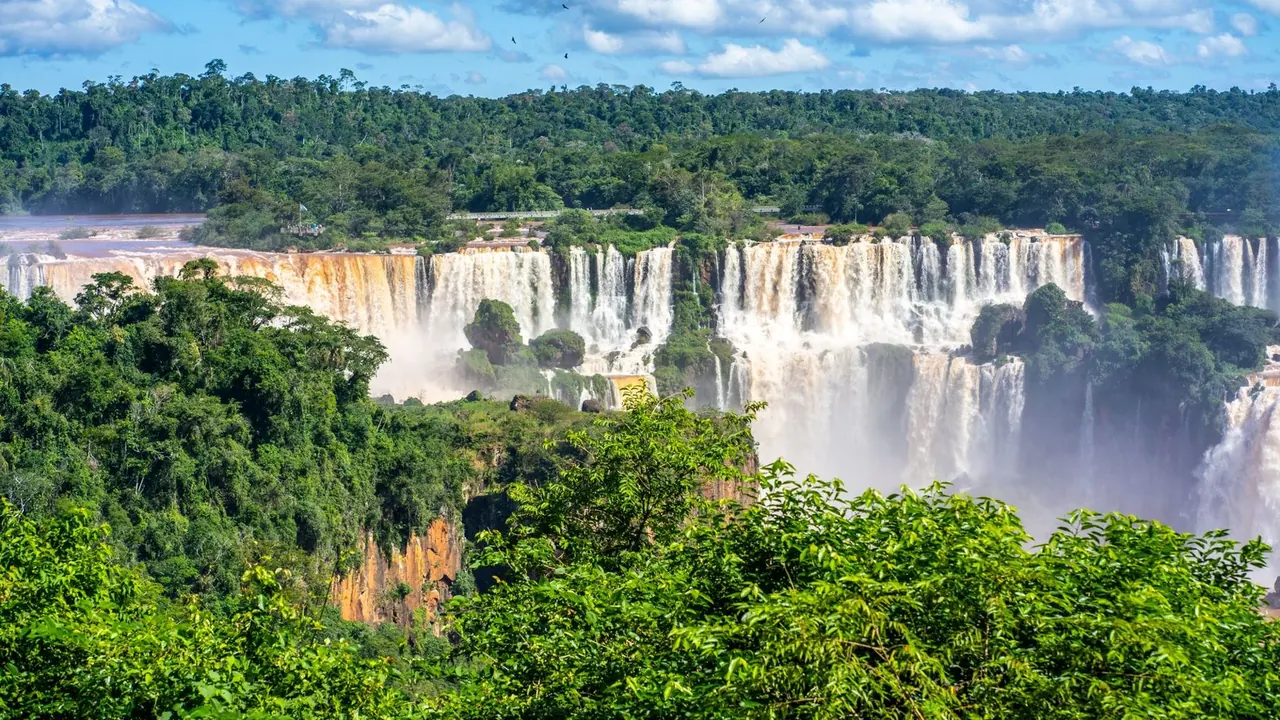
The Iguazu Falls in the green jungle
- Nature & outdoors95
- Families55
- Getting around54
Photo: Muhammed Ballan, Pexels License
Match
33
Every category weighted equally
- Beach & sun33
- Culture & arts29
- Food & nightlife26
- Family trip40
- Outdoors43
- Relax & unwind35
- Shopping & style29
- On a budget35
Puerto Iguazu in twelve categories
Our verdict on each, scored 0 to 100 against the same fixed benchmark cities, so a score means the same thing on every page.
Beaches & swimming. Scores 5 out of 100.
Food & drink. Scores 28 out of 100.
Culture & sights. Scores 9 out of 100.
Nightlife. Scores 14 out of 100.
Nature & outdoors. Scores 95 out of 100.
Day trips. Scores 33 out of 100.
Good for families. Scores 55 out of 100.
Getting around. Scores 54 out of 100.
Shopping & style. Scores 17 out of 100.
Affordability. Scores 48 out of 100.
Live music & performing arts. Scores 7 out of 100.
Wellness & relaxation. Scores 34 out of 100.
Puerto Iguazu category by category
Beaches & swimming
5Puerto Iguazu is deep inland, far from any sea coast, and there is no beach to speak of. The Iguazu and Parana rivers meet at the edge of town, but the water is fast, brown with red earth and not used for swimming, and bathing below the falls is not allowed. On hot, humid days visitors cool off in hotel pools, and many of the lodges on the road to the falls are built around one. If swimming matters to your vacation, this is not the place for it.
Food & drink
28Eating here is simple and mostly Argentine: parrillas grilling beef over wood, empanadas, milanesas and pasta, with river fish such as surubi and dorado as the local speciality. Yerba mate is grown across Misiones province, and you will see people carrying thermos and gourd everywhere.
The most enjoyable place to eat is the Feirinha, an old covered market near the centre where stalls sell Argentine cheeses, cured meats, olives and wine, and set out tables for long picadas in the evening. Beyond that, restaurants cluster along a few central streets and cater mainly to falls visitors. It is pleasant, filling food at the end of a hot day, not a reason to come.
Culture & sights
9Puerto Iguazu is a small, modern gateway town with almost nothing to see in itself. The one landmark is the Hito Tres Fronteras, an obelisk on the bluff where the Iguazu meets the Parana and you can look across to Brazil and Paraguay, each with its own marker on the far bank. Some visitors arrange a visit to a Mbya Guarani community in the surrounding forest to learn about local crafts and ways of life. There are no historic quarters or museums of note, and the Jesuit mission ruins of Misiones lie too far south for a casual outing. The falls are the reason to be here.
Nightlife
14Evenings are low-key. A handful of bars and beer gardens around the central streets fill up after dinner, mostly with travellers comparing their day at the falls, and Argentine dining hours mean dinner itself runs late. There is a casino on the edge of town and a couple of small dance spots at weekends, but the scene is thin, and most visitors are in bed early to reach the park when it opens. For a livelier night, people cross to the larger Brazilian city on the other side of the river.
Nature & outdoors
95This is the reason the town exists. Iguazu Falls, a horseshoe of some 275 cascades nearly 3km wide, lies inside a subtropical rainforest national park a short ride away. On the Argentine side, catwalks run over and alongside the drops, a small train carries you through the forest, and a walkway crosses the upper river to the Devil's Throat, where the water falls into a roaring gorge of spray. Boat trips run up the lower river right into the mist, and the Macuco trail leads through the jungle to a quieter waterfall.
The forest is full of life: coatis on every path, toucans, capuchin monkeys, vast clouds of butterflies and swifts nesting behind the curtains of water. The Brazilian side gives the panoramic view in a half day, and Brazil's bird park sits beside its entrance. Water levels change through the year, with the fullest flow usually after rains and the clearest days in the drier southern winter. Expect heat, humidity and soaking spray.
Day trips
33The border region gives a few outings beyond the falls themselves. Across the bridge in Brazil, Foz do Iguacu is a larger city, and just north of it the Itaipu Dam, one of the biggest hydroelectric works in the world, offers guided tours of its huge spillway and turbine halls. Paraguay's Ciudad del Este, a sprawling, chaotic duty-free market town, is a short hop further. On the Argentine side, the semi-precious stone mines at Wanda, about an hour south, show amethyst and quartz being worked. The Jesuit mission ruins of San Ignacio are too far for an easy day, so the list stays short, and border formalities add time to every trip into Brazil or Paraguay.
Good for families
55Children tend to love the falls: the little forest train, the catwalks over thundering water, the drenching boat rides and animals everywhere. The main trails are paved or boarded and manageable with older children, and the town is small and relaxed, with pool hotels that make the afternoons easy. Across the border, the bird park near the Brazilian entrance is a hit with younger ones.
The drawbacks are practical. Coatis are bold and will bite or scratch for food, so small hands need watching. Days in the park mean long hours on foot in heat and humidity, and beyond the falls there is little made for children.
Getting around
54The town centre is compact and easy to walk, with the bus terminal, restaurants and many guesthouses within a few blocks. Regular buses run along the highway to the national park entrance, about half an hour away, and inside the park the forest train and walkways do the rest. Many of the larger lodges sit along that same road or inside the park, so staying there means relying on shuttles or taxis. Visiting the Brazilian side or Paraguay is simplest by taxi or organised transfer, and border crossings can be slow at busy times. A car is not needed.
Shopping & style
17Shopping is modest. The Feirinha market is the best place for edible souvenirs such as Argentine cheeses, salamis, wine and yerba mate, and Guarani carvings and woven baskets are sold in town and near the park. Shops along the central streets lean towards souvenirs and amethyst and quartz from local mines. There is a duty-free shop at the border, and bargain hunters cross to the electronics stalls of Ciudad del Este in Paraguay, but there is no fashion or design shopping to speak of.
Affordability
48Day-to-day costs are moderate. Simple meals at parrillas, the bus to the park and the guesthouses and hostels in town are reasonable, and a picada at the market is an easy, inexpensive evening. The costs gather around the falls: foreign visitors pay a higher national park entry, boat trips and guided excursions add up quickly, and visiting the Brazilian side means a second park fee. The upscale jungle lodges near the falls charge international resort rates. Argentina's prices for visitors swing with its exchange rate, so check the picture before you go.
Live music & performing arts
7There is almost nothing to attend. Some restaurants put on folk music or a dinner show with regional dance, and you may hear chamame, the accordion music of north-east Argentina, at a local gathering. There is no theatre, concert hall or regular live-music venue, and visitors interested in performance will find nothing to plan around.
Wellness & relaxation
34There is no local bathing or spa tradition. What Puerto Iguazu offers is a slow, green pace: the lodges set in the forest on the road to the falls have pools, massage rooms and terraces where you hear birds rather than traffic, and the town itself is quiet once the day's excursions are done. It suits a few calm days after a long trip, but wellness here means a good hotel spa and a hammock, not a destination for rest in its own right.
When should you go?
Pick a month to see what it is like. The climate figures are measured averages, not a forecast.
Puerto Iguazu in July
Daytime high, °C
Rainfall in the month, mm
The whole year
Shaded against this city’s own year: the deepest cell is its best month for that figure and the palest its weakest.
Temperature and rainfall are climate normals, averaged over the years shown. Puerto Iguazu: 1991-2020 normals, Iguazu Aerodrome (17.8 km from centre).
Before you go
| Measure | Puerto Iguazu |
|---|---|
| Official language | Spanish |
| Currency | Argentine Peso (ARS) |
| Sockets | CI220 V, 50 Hz |
| Driving side | Left |
| Time zone | UTC-3 |
| Emergency number | 117 or 911 |
| Elevation | 162 m |
| Main airport | Cataratas Del Iguazú International Airport (IGR)18 km from centre8 non-stop destinations |
| Public holidays this year | 16 days |
By the numbers
| Measure | Puerto Iguazu |
|---|---|
| City population | 54,903 |
| Museums within 10 km | 0 |
| UNESCO World Heritage sites within 50 km | 1 |
Compare Puerto Iguazu with
Every comparison with a written verdict behind it.