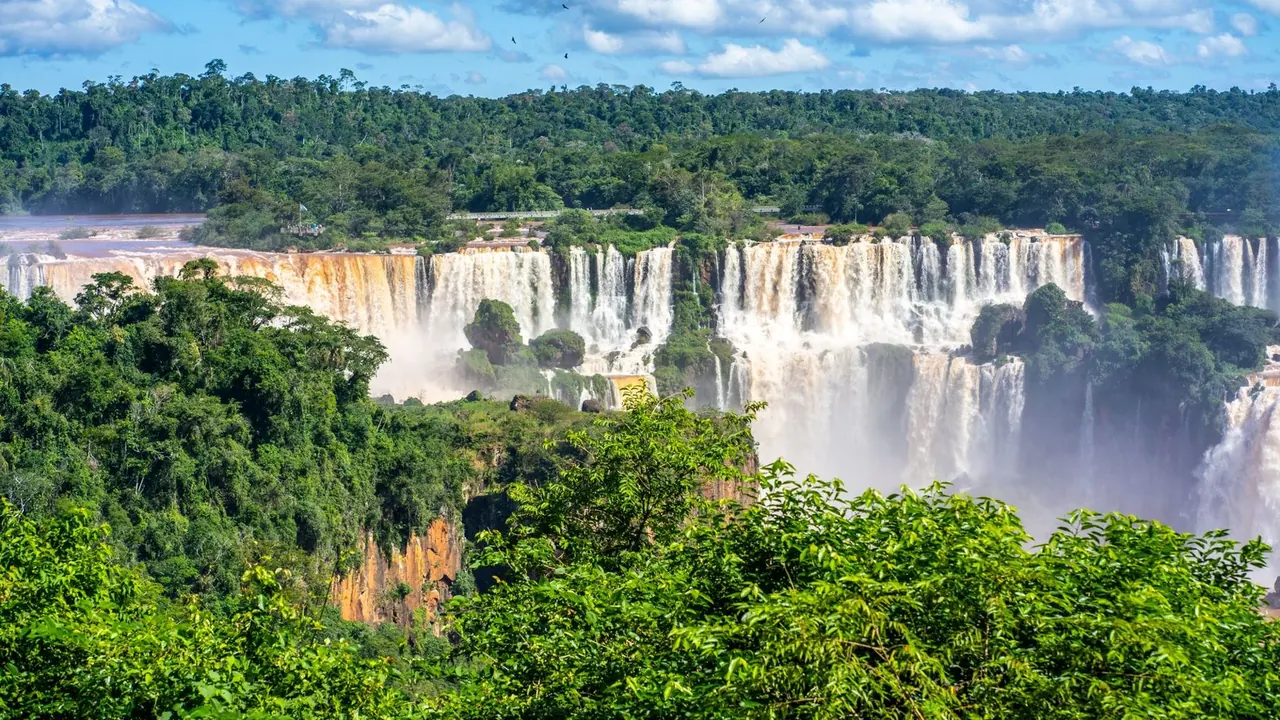
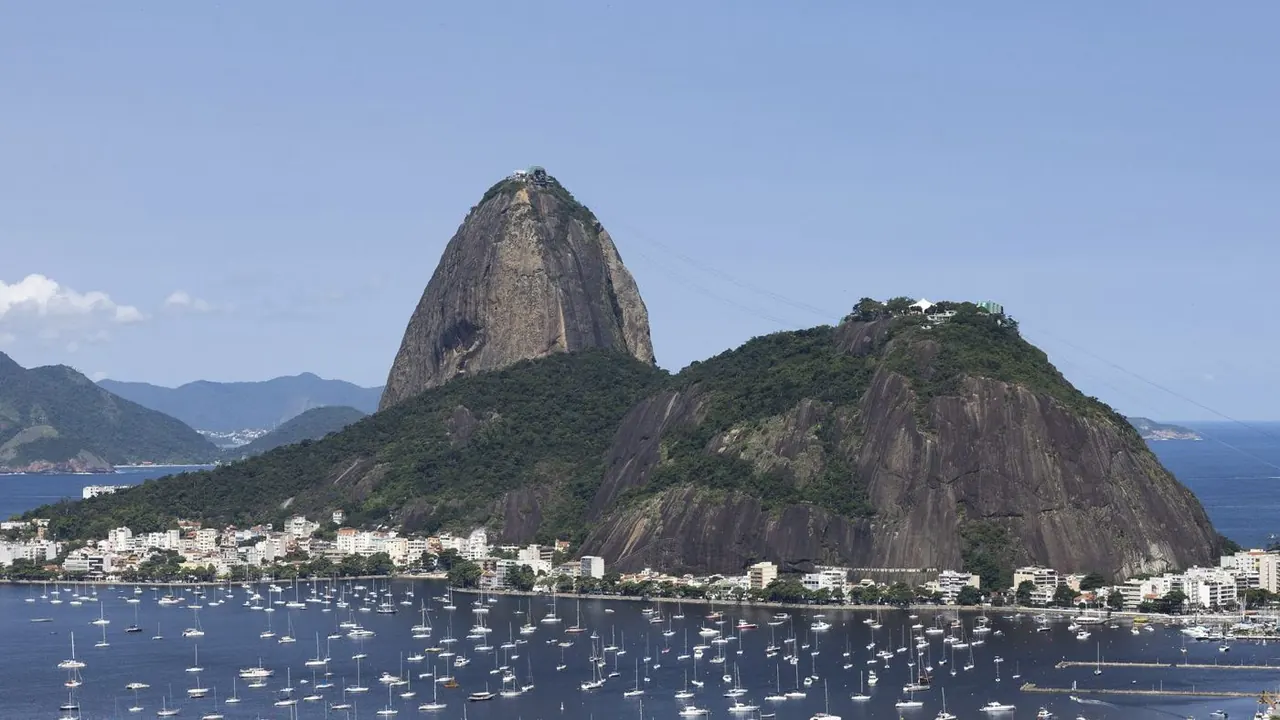
Photos: Puerto Iguazu by Muhammed Ballan, Pexels License; Rio de Janeiro by Arne Müseler, CC BY-SA 3.0 DE, cropped.
Puerto Iguazu or Rio de Janeiro?
Our verdict in twelve categories, each scored against the same fixed benchmark cities, and the climate month by month, so you can choose for your trip.
Choose Puerto Iguazu for
- getting around
- nature and the outdoors
- families
Puerto Iguazu is for one thing, and it does that thing superbly: the falls, the rainforest around them and the wildlife on every path. Choose it for a few focused days of catwalks, boat rides into the spray and coatis underfoot, based in a small, quiet town that is easy to get around. Expect early nights and simple meals, because the town offers little else.
Choose Rio de Janeiro for
- beaches
- nightlife
- culture and sights
Rio de Janeiro suits the traveller who wants a whole city as well as scenery. Beaches, botecos, samba in Lapa, Christ the Redeemer and forest trails all sit in one place, and the evenings run until dawn. It asks more of you, with heat, traffic and a need for care after dark, but it offers far more for a week or longer.
Scoreboard
Twelve categories on one fixed scale from 0 to 100. The shaded stretch is the gap between the two.
Your match
Pick a travel style or drag the sliders, and both match scores follow your weighting.
Wins on getting around and nature and the outdoors with your weighting.
Wins on beaches and nightlife with your weighting.
What matters to you?
Category by category
What the scores mean for a trip.
Beaches & swimming
There is no contest here. Puerto Iguazu is far inland and the rivers at its edge are fast and not for swimming. Apart from the spray at the falls, a hotel pool is the only place to get wet.
Rio is one of the world's great beach cities. Copacabana, Ipanema and Leblon are a walk from most hotels, and the Atlantic is warm for much of the year. For cleaner water and surf, Prainha and Grumari lie further west, although the open beaches need care with waves and currents.
Food & drink
Rio is the better place to eat, though neither is a food destination. Puerto Iguazu keeps to Argentine staples such as parrilla beef, empanadas and river fish like surubi. Its best evening is a picada of cheese, cured meat and wine at the old Feirinha market.
Rio has more range and more fun around the table. There are shared plates and cold chopp in botecos, feijoada on Saturdays, fruit juices on every Zona Sul corner, rodízio grills and cheap kilo lunches. The more ambitious kitchens are in Leblon, Ipanema and Botafogo.
Culture & sights
Puerto Iguazu has almost nothing to visit beyond the Hito Tres Fronteras, the obelisk where you look across to Brazil and Paraguay, and perhaps a visit to a Mbya Guarani community.
Rio fills several full days. There are Christ the Redeemer and Sugarloaf, the gilded São Bento monastery and the Real Gabinete Português de Leitura downtown, the museums on Praça Mauá, and the mansions of Santa Teresa leading down to the Selarón steps. Its museums are modest by world standards, but the gap between the two cities is still huge.
Nightlife
A night in Puerto Iguazu means a late dinner and a beer with other falls visitors, then bed before an early start at the park. Anyone wanting more crosses into Brazil.
Rio is one of South America's great nights out. Street drinking under the aqueduct arches in Lapa leads on to clubs that stay open until dawn, and in Botafogo the evening drifts between pavement bars. Leblon and Ipanema have a smarter cocktail crowd, and before Carnival the street blocos take over whole neighbourhoods.
Nature & outdoors
Both are outstanding, but for different things. Puerto Iguazu is about a single natural wonder: some 275 cascades spread across nearly 3km of subtropical rainforest. Catwalks run over the drops, a walkway crosses the river to the Devil's Throat, boats go into the mist, and toucans, capuchins and butterflies line the trails.
In Rio, nature runs through the city itself. The Tijuca forest covers the mountains at its centre, and short, steep climbs up Dois Irmãos and Pedra da Gávea look out over the beaches. Hang-gliders land at São Conrado and surfers ride the waves at Arpoador. Go to Iguazu to stand in front of the falls, and to Rio to be active in the landscape every day.
Day trips
Rio has the better choice of outings, though neither city has many. From Puerto Iguazu you can visit the Itaipu Dam across the Brazilian border, the sprawling duty-free town of Ciudad del Este and the amethyst mines at Wanda, with border queues slowing every trip.
From Rio, imperial Petrópolis is an easy run up into the cool hills, and Niterói is a ferry ride across the bay to Niemeyer's art museum on its cliff. Paraty, Búzios and Ilha Grande are tempting, but they are far enough away to need a night.
Good for families
Both work for a few days with children, in different ways. Puerto Iguazu offers one big adventure, with the forest train, the catwalks, drenching boat rides, animals everywhere and pool hotels for the afternoons. Coatis grab for food and need watching, and once the falls are done there is little else for children.
In Rio the beach is the playground, with calmer water at Leme, Praia Vermelha and Barra. The Sugarloaf cable car, AquaRio and the zoo at Quinta da Boa Vista fill the rest of the days. The downsides are the heat, heavy traffic and the need to keep a close eye on belongings.
Getting around
Puerto Iguazu is the easier of the two. The centre is a few walkable blocks, and a regular bus reaches the park entrance in about half an hour, where the forest train takes over. You only need taxis for the lodges along the road and for trips across the borders.
Rio is long and squeezed between mountains and sea. The metro covers the most useful line, from the centre through Copacabana to Leblon. For Santa Teresa, the Tijuca forest and the western beaches you need taxis or ride-hailing, and traffic through the tunnels can crawl.
Shopping & style
Puerto Iguazu sends you home with things to eat. The Feirinha sells Argentine cheese, salami, wine and yerba mate, and the shops in town add Guarani carvings, woven baskets and amethyst from the local mines. There is no fashion or design shopping, and bargain hunters cross the border to the electronics stalls of Ciudad del Este.
Rio gives you far more to browse, and almost all of it is made for the beach. The boutiques of Ipanema and Leblon sell Brazilian swimwear, linen and resort clothes, while the Sunday hippie fair and the crowded Saara streets add crafts, cheap fabric and Carnival costumes. Large malls in Botafogo, Leblon and Barra cover the rest, although international luxury labels are few.
Affordability
Day to day, Rio is the cheaper of the two, largely because its best things are free: the beaches, the promenade and the forest trails. Kilo lunches, boteco snacks and the metro all cost little. It gets expensive in beachfront hotels and in the weeks around Carnival and New Year.
Puerto Iguazu is moderately priced in town, but the costs add up at the falls. Foreign visitors pay a higher park fee, the Brazilian side charges a second fee, and boat trips and the jungle lodges at resort prices add more. Argentina's exchange rate also shifts the overall cost from one trip to the next.
Live music & performing arts
In Puerto Iguazu, performance comes down to the odd folk dinner show or some chamamé accordion music, nothing to plan a trip around.
Rio has samba most nights. Choro and samba bands play in Lapa's old houses, rodas gather around tables in neighbourhood squares, and the samba schools rehearse in the run-up to Carnival. Bossa nova still has small venues near the beaches where it was born, and the Theatro Municipal stages opera and ballet.
Wellness & relaxation
Neither city has a spa or bathing tradition, so rest comes from the setting. Puerto Iguazu offers the quiet of the forest, with lodges that have pools, massage rooms and terraces where you hear birdsong instead of traffic, in a town that goes quiet by evening.
In Rio, relaxing means the beach, a walk along the promenade at dusk and yoga on the sand, with hotel spas along Copacabana and Ipanema. The city around it is loud and demanding, so for real calm you head up to Santa Teresa or out to the mountain towns.
When should you go?
Pick your month. The climate figures are measured averages, not a forecast.
Puerto Iguazu in July
Rio de Janeiro in July
Daytime high, °C
Rainfall in the month, mm
Where the figures come from
Rio de Janeiro has no weather station within reach, so its figures come from a gridded climate model rather than a measured record, and read a broad area rather than the city itself.
Temperature and rainfall are climate normals, averaged over the years shown. Puerto Iguazu: 1991-2020 normals, Iguazu Aerodrome (17.8 km from centre). Rio de Janeiro: 2001-2020 normals, NASA POWER reanalysis grid, no weather station within 90 km.
Puerto Iguazu has no real dry season. Rain falls every month and is heaviest in spring and early summer, when October can bring well over 200mm. From October to March the days are hot and sticky at around 31°C, which makes long walks through the park hard going. The southern winter, June to August, is the most comfortable time: highs drop to about 22°C and August is the driest month, although June has the shortest and greyest days.
Rio is milder in both seasons. It never gets quite as hot, and the sea is warm enough to swim in all year. The water is at its warmest from January to April, the best beach months, but November to March is also the wet season, with heavy downpours. May to August is dry and pleasant for walking the city and hiking, with highs in the mid-20s and the sea cooling to 21°C by August, fresh but still swimmable.
Which traveller are you?
On a beach and sun trip, Rio de Janeiro is the only choice. Copacabana, Ipanema and the surf beaches further west have warm sea for much of the year. Puerto Iguazu sits far inland, with nothing but a hotel pool.
For a food and nightlife trip, Rio wins easily. Evenings move from boteco plates and cold chopp to street drinking in Lapa and clubs open until dawn. In Puerto Iguazu the evening is a parrilla dinner, a beer and an early night.
On an outdoors trip, choose by what you want to do. Puerto Iguazu puts you face to face with the falls, with boat rides into the spray and rainforest wildlife. Rio suits hikers, climbers and surfers, with peaks and waves inside the city.
Before you go
| Measure | Puerto Iguazu | Rio de Janeiro |
|---|---|---|
| Official language | Spanish | Portuguese |
| Currency | Argentine Peso (ARS) | Brazilian Real (BRL) |
| Sockets | CI220 V, 50 Hz | CN60 Hz |
| Driving side | Left | Right |
| Time zone | UTC-3 | UTC-3 |
| Emergency number | 117 or 911 | Police 190, ambulance 192, fire 193 |
| Elevation | 162 m | 31 m |
| Main airport | Cataratas Del Iguazú International Airport (IGR)18 km from centre8 non-stop destinations | Rio de Janeiro Galeão – Tom Jobim International Airport (GIG)12 km from centre54 non-stop destinations |
| Public holidays this year | 16 days | 14 days |
By the numbers
| Measure | Puerto Iguazu | Rio de Janeiro |
|---|---|---|
| City population | 54,903 | 6,211,223 |
| People per km² | - | 4,930 |
| Museums within 10 km | 0 | 69 |
| UNESCO World Heritage sites within 50 km | 1 | 3 |
| Swim season, months above 21 °C | - | 12 months |
Where else could you go?
Every comparison below shares a destination with this one, so you can follow Puerto Iguazu or Rio de Janeiro somewhere new.