Photos: Buenos Aires by Bernard Gagnon, CC BY-SA 4.0, cropped; Puerto Iguazu by Muhammed Ballan, Pexels License.
Buenos Aires or Puerto Iguazu?
Our verdict in twelve categories, each scored against the same fixed benchmark cities, and the climate month by month, so you can choose for your trip.
Choose Buenos Aires for
- nightlife
- live music and the arts
- culture and sights
Buenos Aires is the choice for a city trip in the full sense: long walks down Parisian-style boulevards, museums of Argentine and Latin American art, beef and Malbec at a neighbourhood parrilla, then a milonga or a club that keeps going until sunrise. It rewards travellers who want evenings as much as days, and who are happy to trade green space and quiet for theatre, tango and food.
Choose Puerto Iguazu for
- nature and the outdoors
- wellness
- families
Puerto Iguazu makes sense for one reason, and it is a very big one: the falls and the rainforest around them. Pick it if you want catwalks over thundering water, boat rides into the spray and coatis and toucans along the trails, and you are content with simple dinners and early nights in a small town. Many people sensibly do both, using the capital for culture and Iguazu for a few days of nature.
Scoreboard
Twelve categories on one fixed scale from 0 to 100. The shaded stretch is the gap between the two.
Your match
Pick a travel style or drag the sliders, and both match scores follow your weighting.
Wins on nightlife and live music and the arts with your weighting.
Wins on nature and the outdoors and wellness with your weighting.
What matters to you?
Category by category
What the scores mean for a trip.
Beaches & swimming
Neither city is a place to swim. In Buenos Aires the silty Rio de la Plata is for gazing at from the lawns of the Costanera, and the real beaches at Mar del Plata need a separate stay. In Puerto Iguazu the rivers run fast and red-brown, and bathing below the falls is banned.
What differs is the pool. Many of the lodges on the road to the falls are built around one, which makes the humid afternoons easy, while in Buenos Aires you depend on a hotel or club pool or leave town in summer.
Food & drink
Buenos Aires is a serious place to eat: wood-fired parrillas serving every cut and offal, a deep Italian streak in its pizza, pasta and ice cream, grand old cafés such as Tortoni, and ambitious modern kitchens and wine bars in Palermo. Its range is narrow beyond those staples, but within them it is excellent.
Puerto Iguazu serves the same Argentine basics more simply, with surubi and dorado from the rivers as its own touch. The happiest evening is a picada of cheese, cured meat and wine at the covered Feirinha market, otherwise it is filling food along a few streets aimed at falls visitors.
Culture & sights
Here the gap is enormous. Buenos Aires offers the Casa Rosada and Avenida de Mayo, Recoleta's marble cemetery where Eva Perón lies, the colonial lanes of San Telmo, Caminito's painted houses and two strong art museums, enough to fill days of walking.
Puerto Iguazu has the Hito Tres Fronteras, where you look across the rivers into Brazil and Paraguay, and the option of visiting a Mbya Guarani community. There are no historic quarters or museums, so sightseeing there means the falls and little else.
Nightlife
Buenos Aires is one of the great night-time cities, with dinner at ten, bars filling at midnight and clubs near the river and in Palermo's warehouse streets running past sunrise. San Telmo adds older, rougher bars, and the milongas give you tango danced by locals into the small hours.
Puerto Iguazu goes to bed early because the park opens early. A few beer gardens, a casino and weekend dance spots are about it, and anyone after a bigger night crosses into Brazil.
Nature & outdoors
Buenos Aires sits on flat pampas, and its green space is gentle: the lakes and rose garden of the Bosques de Palermo, the riverside marsh of Costanera Sur beside Puerto Madero, and kayaking or launch trips through the Paraná Delta beyond Tigre. Real hills or wild landscape mean a flight to Patagonia or the Andes.
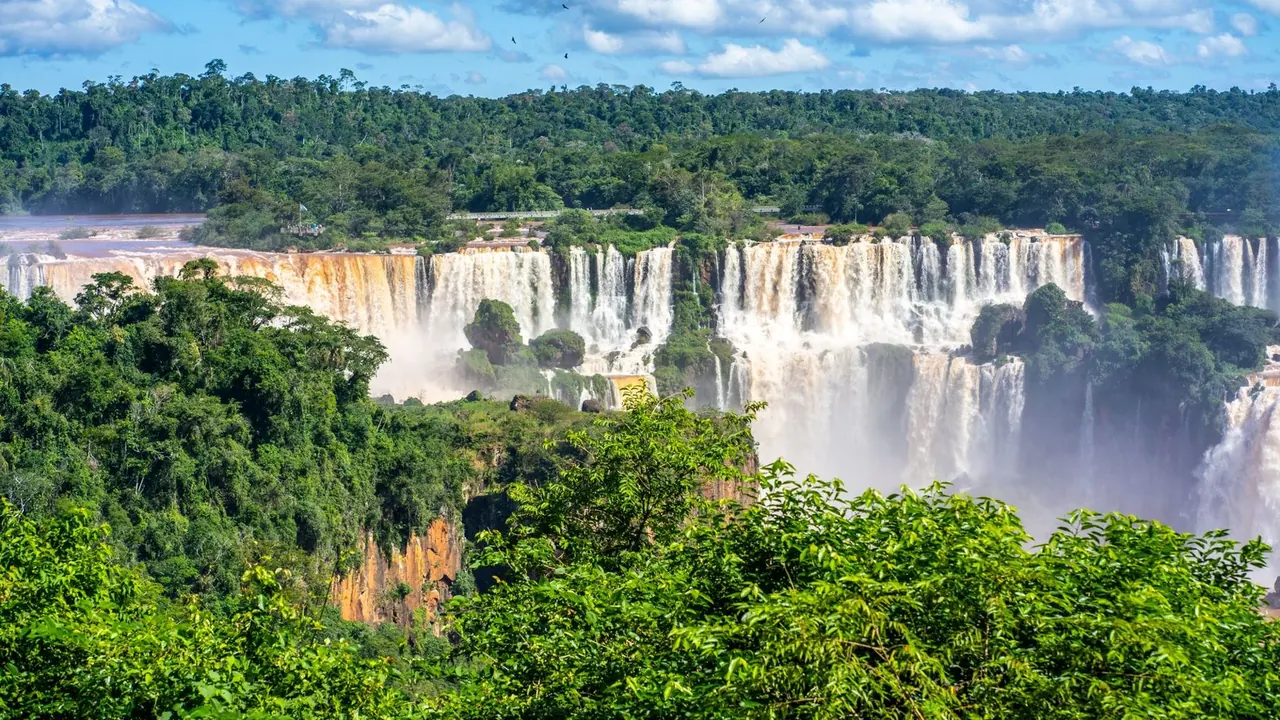
Puerto Iguazu is the reason to come for nature. Around 275 cascades pour through subtropical rainforest, with walkways out to the Devil's Throat, boats into the spray, the Macuco trail to a quieter waterfall, and capuchin monkeys, toucans and butterflies along the way. A morning there outdoes anything within reach of the capital.
Day trips
Buenos Aires has the better spread of outings. A fast ferry takes you to Colonia del Sacramento's cobbled Portuguese old town in Uruguay, Tigre and its delta are an hour by train, and San Antonio de Areco shows gaucho crafts and estancia life, with Luján and La Plata as further options.
From Puerto Iguazu, the falls themselves take up most of the days. Beyond them lie the Itaipu Dam tour, the duty-free sprawl of Ciudad del Este and the amethyst mines at Wanda, and border checks slow down every trip into Brazil or Paraguay.
Good for families
For families the two are on a similar level but work very differently. Buenos Aires keeps children busy with pedal boats and playgrounds in the Palermo parks, the planetarium, the Museo de los Niños and the Temaikèn biopark, but long distances, broken pavements and very late dinners wear small children out.
Puerto Iguazu is one big adventure for a few days: the forest train, drenching boat rides and the bird park on the Brazilian side. Bold coatis that bite for food, long hot hours on foot and little else to do afterwards make it better for a short stay with older children.
Getting around
Buenos Aires gives you more ways to move about. The Subte covers the centre and Palermo, colectivo buses run everywhere day and night on one card, and taxis are plentiful, though the city is so spread out that every neighbourhood is a ride from the next.
Puerto Iguazu is small enough to walk, and buses reach the park in about half an hour. Staying at a lodge outside town means shuttles or taxis, and trips into Brazil or Paraguay depend on transfers and sometimes slow border crossings.
Shopping & style
Buenos Aires is a real shopping city: leather jackets and bags around Villa Crespo, Argentine designers in Palermo Soho, smart boutiques on Avenida Alvear, and the Sunday antiques fair on Calle Defensa.
Puerto Iguazu offers souvenirs rather than shopping, with cheese, salami and yerba mate at the Feirinha, Guarani carvings and baskets, and amethyst from local mines.
Affordability
Buenos Aires is a little easier on the budget. Cheap public transport, generous parrillas and inexpensive wine help a great deal, as long as you limit nights in Palermo, Recoleta and Puerto Madero, where prices match Europe.
In Puerto Iguazu, meals and guesthouses are moderate, but the costs gather at the falls: the higher park entry for foreigners, a second fee for the Brazilian side, boat trips, and jungle lodges charging resort rates. In both places the exchange rate decides how far your money goes.
Live music & performing arts
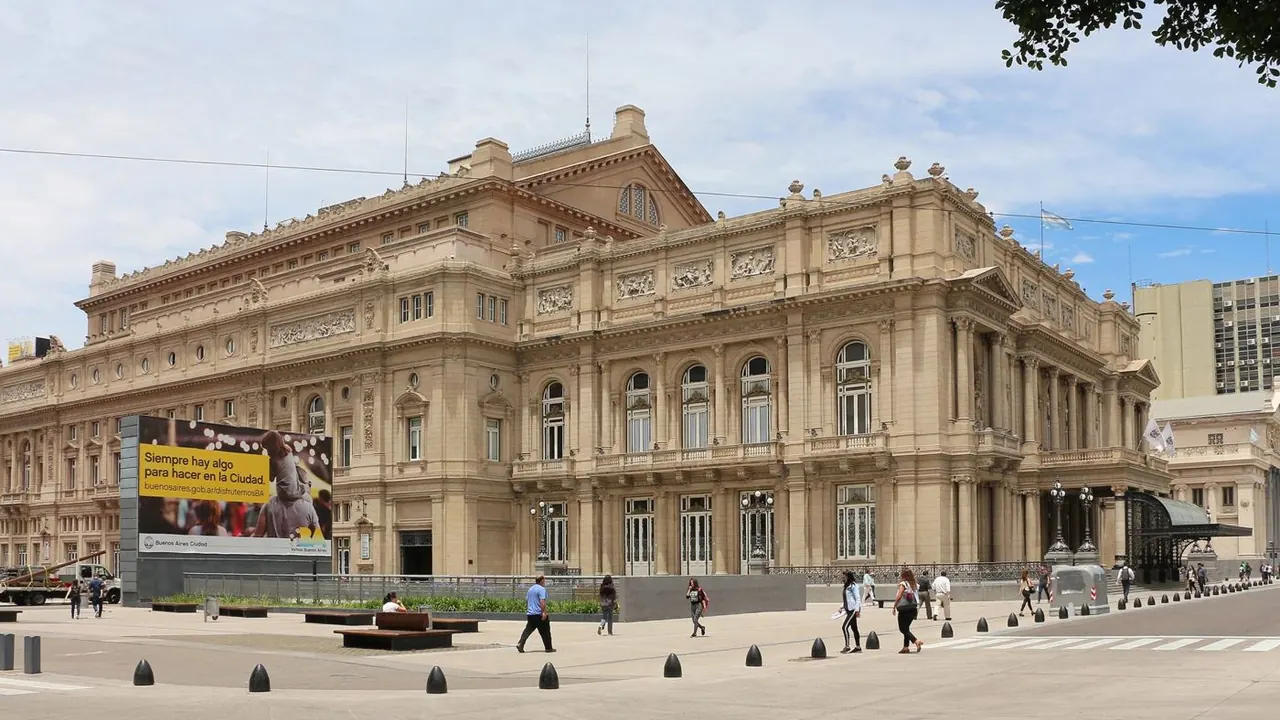
The Teatro Colón alone would make Buenos Aires worth a trip for opera, ballet and symphony concerts, and Avenida Corrientes and the large independent scene keep dozens of playhouses busy, mostly in Spanish. Tango is the other draw: milongas with live orchestras let you watch locals dance it, and folk peñas and jazz fill other nights.
Puerto Iguazu has nothing to plan around. At most you will catch a regional dance dinner show or some chamamé accordion music at a local gathering.
Wellness & relaxation
The pace sets these two apart. Buenos Aires is loud and intense, with heavy traffic and nights that run until dawn, and its slow moments come from the habit of lingering: the long coffee nobody hurries you out of, the sobremesa after a meal, the empty Sunday mornings. Its spas in Palermo and Recoleta are pleasant but no reason to come.
In Puerto Iguazu the calm needs no seeking out. Where the capital's quiet hours are snatched between busy avenues, here the rainforest is the background noise, and a massage at a lodge after a sweaty morning at the falls feels more like a real break than a day spa in Recoleta. Neither place has thermal waters or a bathing culture, so treat Iguazu as a pause between busier stops rather than a reason to travel.
When should you go?
Pick your month. The climate figures are measured averages, not a forecast.
Buenos Aires in July
Puerto Iguazu in July
Daytime high, °C
Rainfall in the month, mm
Temperature and rainfall are climate normals, averaged over the years shown. Buenos Aires: 1991-2020 normals, Aeroparque Bs. As. Aerodrome (4.9 km from centre). Puerto Iguazu: 1991-2020 normals, Iguazu Aerodrome (17.8 km from centre).
Buenos Aires has proper seasons. Summer from December to February is hot and sunny, with highs around 29°C, and January brings both the most sunshine and the heaviest rain. Winter from June to August is cool at about 15°C and noticeably drier. For walking the streets, the most comfortable stretches are March to May and October to November, when days are mild and still fairly bright.
Puerto Iguazu stays warm all year, and from November to March highs sit around 31°C, which makes long days in the park heavy going in the humidity. Rain falls in every month and peaks in October at 224mm, which swells the falls. August is the driest month at 78mm, and the winter months from June to August bring the most bearable heat for hiking, though June also has the least sunshine of the year. The two cities line up well in the southern spring and autumn, when the capital is mild and the falls are not at their hottest.
Which traveller are you?
On a culture and arts trip, Buenos Aires wins without contest. Recoleta's cemetery, the Bellas Artes and MALBA collections, opera and ballet at the Teatro Colón and the playhouses of Avenida Corrientes fill a week, while Puerto Iguazu has one obelisk and no stage.
For a food and nightlife trip, Buenos Aires is again the place. Parrillas, fresh pasta, ice cream and old coffee houses lead into cocktail bars in Palermo and clubs open until dawn. Iguazu offers grilled river fish and a market picada, then early nights.
On an outdoors trip, Puerto Iguazu is the clear pick. The falls, the jungle trails to quieter cascades, boat trips into the mist and wildlife on every path outdo anything around the capital, where the flat pampas only offer parks, wetland and the Tigre delta.
Before you go
| Measure | Buenos Aires | Puerto Iguazu |
|---|---|---|
| Official language | Spanish | Spanish |
| Currency | Argentine Peso (ARS) | Argentine Peso (ARS) |
| Sockets | CI220 V, 50 Hz | CI220 V, 50 Hz |
| Driving side | Left | Left |
| Time zone | UTC-3 | UTC-3 |
| Emergency number | 117 or 911 | 117 or 911 |
| Elevation | 25 m | 162 m |
| Main airport | Ezeiza International Airport - Ministro Pistarini (EZE)28 km from centre48 non-stop destinations | Cataratas Del Iguazú International Airport (IGR)18 km from centre8 non-stop destinations |
| Public holidays this year | 16 days | 16 days |
By the numbers
| Measure | Buenos Aires | Puerto Iguazu |
|---|---|---|
| City population | 3,121,707 | 54,903 |
| People per km² | 15,355 | - |
| Museums within 10 km | 76 | 0 |
| UNESCO World Heritage sites within 50 km | 1 | 1 |
| Swim season, months above 21 °C | 4 months | - |
Where else could you go?
Every comparison below shares a destination with this one, so you can follow Buenos Aires or Puerto Iguazu somewhere new.