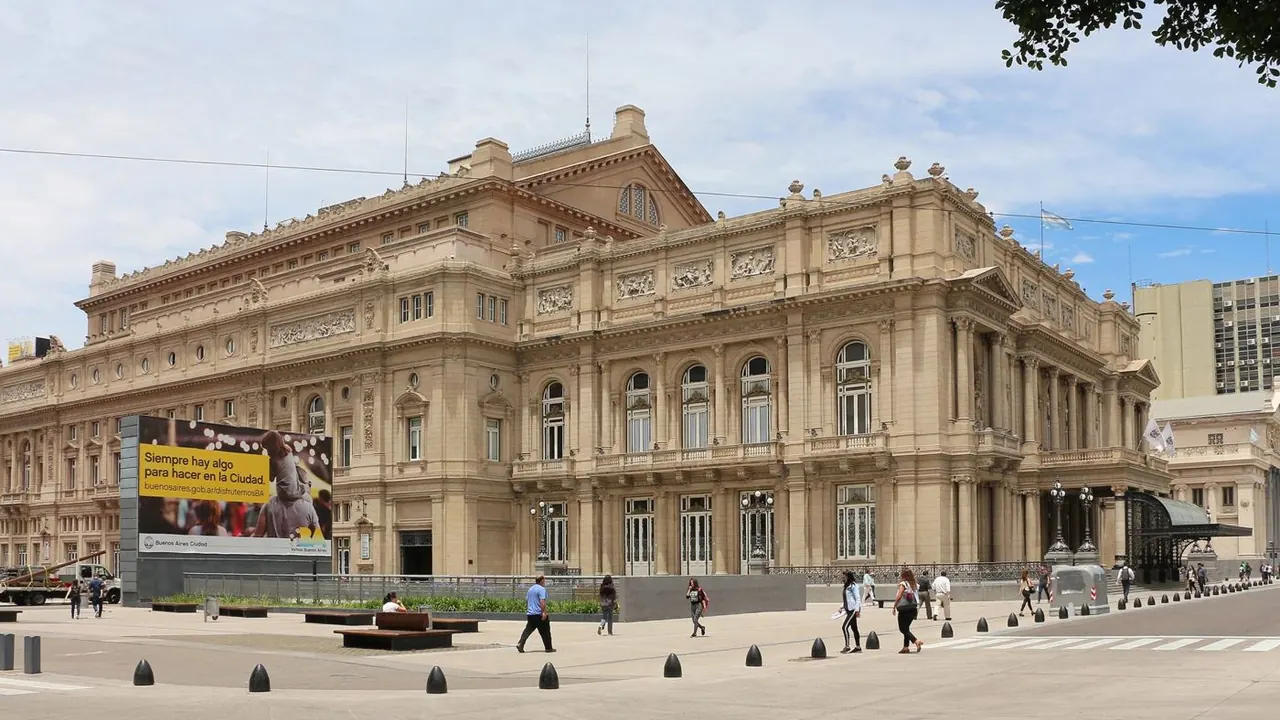
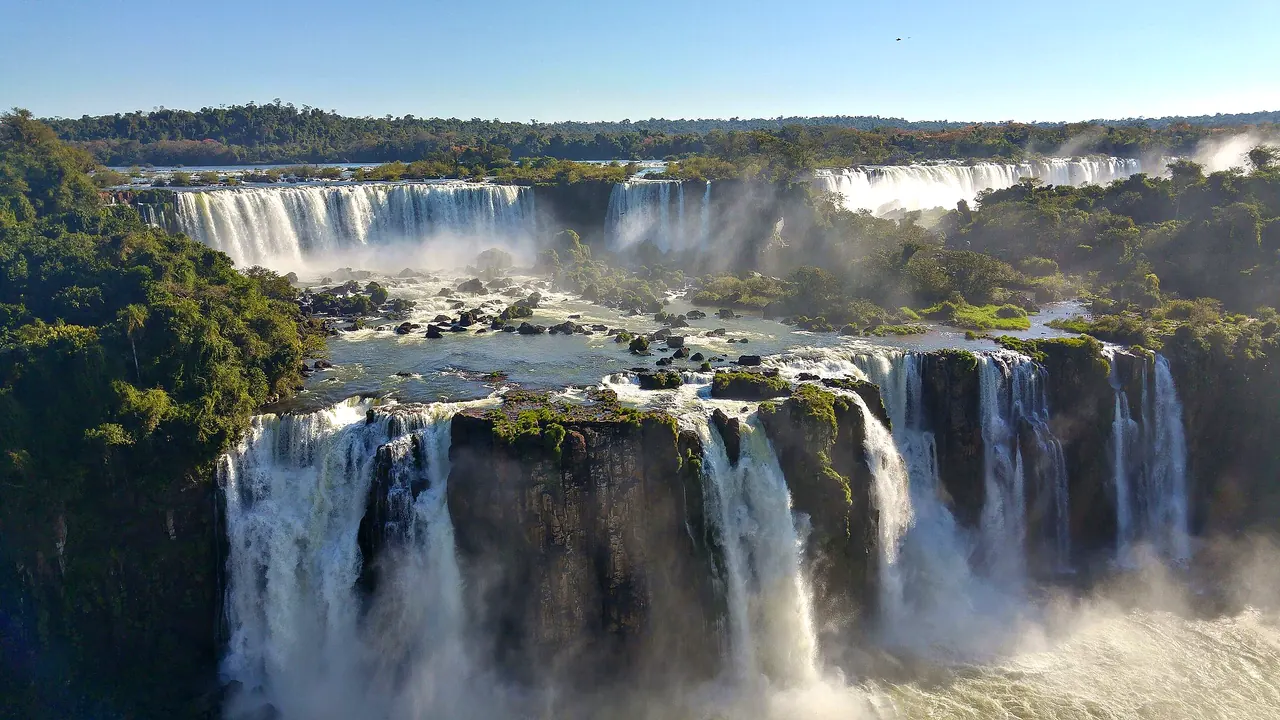
Photos: Buenos Aires by Bernard Gagnon, CC BY-SA 4.0, cropped; Foz do Iguacu by Gabriel Resende Veiga, CC BY-SA 4.0, cropped.
Buenos Aires or Foz do Iguacu?
Our verdict in twelve categories, each scored against the same fixed benchmark cities, and the climate month by month, so you can choose for your trip.
Choose Buenos Aires for
- nightlife
- live music and the arts
- culture and sights
Buenos Aires suits travellers who want a big city to settle into for a week. You get late dinners at the parrillas, tango in neighbourhood milongas, opera at the Teatro Colón and long walks between Recoleta, San Telmo and Palermo. Choose it when evenings, food and architecture matter more to you than scenery, and add the ferry to Colonia as a bonus.
Choose Foz do Iguacu for
- nature and the outdoors
- families
- prices
Foz do Iguaçu is the choice for one of the world's great natural sights, and not much else. Two or three days of walkways, boat rides into the spray and rainforest trails on both sides of the border make a spectacular short trip, and it works especially well with children. Don't expect much from the evenings, though: the town is plain and nights end early.
Scoreboard
Twelve categories on one fixed scale from 0 to 100. The shaded stretch is the gap between the two.
Your match
Pick a travel style or drag the sliders, and both match scores follow your weighting.
Wins on nightlife and live music and the arts with your weighting.
Wins on nature and the outdoors and families with your weighting.
What matters to you?
Category by category
What the scores mean for a trip.
Beaches & swimming
Neither is a beach destination. Buenos Aires lies on the Río de la Plata, which is too silty and polluted to swim in. The Costanera is for strolling and lying on the grass, and the Atlantic resorts such as Mar del Plata need a separate stay of several days.
Foz do Iguaçu has the slightly easier swim: lifeguarded lake beaches along the Itaipu reservoir, half an hour to an hour away by car, with warm water in summer. In both cities, the realistic choice on a hot afternoon is the hotel pool.
Food & drink
Buenos Aires is much the better place to eat. Its parrillas grill every cut over wood and charcoal, the Italian heritage brings thick pizza, fresh pasta and excellent ice cream, and the grand coffee houses on Avenida de Mayo let you sit for hours. Palermo has the most ambitious modern kitchens.
Foz offers rodízio at the churrascarias, buffets where you pay by weight, and good Lebanese esfihas and kibbeh, and you can cross the bridge to Puerto Iguazú for an Argentine grill. It is pleasant enough, but there is little fine dining, and many restaurants near the falls cater to coach groups.
Culture & sights
In Buenos Aires the streets themselves are the attraction. There are the boulevards and mansard roofs running from the Plaza de Mayo past the Palacio Barolo to Congress, the marble mausoleums of Recoleta Cemetery, and serious art at the Bellas Artes and MALBA.
Foz has no old town and only small museums, but what it has is unusual. You can tour the inside of the Itaipu dam, visit a large mosque and a Buddhist temple that reflect its Arab and Chinese communities, and see the obelisk where three countries face each other across the rivers. A day covers it.
Nightlife
This is where the two differ most. Buenos Aires keeps famously late hours, with cocktail bars behind unmarked doors in Palermo Soho and Hollywood, electronic clubs that run past sunrise, and milongas in San Telmo where people dance until the small hours.
Foz has a short strip of bars and terraces that is busiest at weekends with local students, a few late clubs, and casinos across the borders. After a day on the trails at the falls, most visitors settle for a long dinner.
Nature & outdoors
Here Foz do Iguaçu is in another league. The falls spread across nearly 3km of river in protected rainforest. A cliff-edge walkway on the Brazilian side gives the great panorama, and trails on the Argentine side lead right to the Devil's Throat. On top of that come boat rides, rafting, and coatis and toucans along the paths.
Buenos Aires sits on flat pampas with no hills within reach. Its green spaces are the Bosques de Palermo and the Costanera Sur wetland reserve, and the best escape is the Paraná Delta, explored by launch or kayak from Tigre.
Day trips
Buenos Aires has far more to go out for. A fast ferry reaches the cobbled UNESCO old town of Colonia del Sacramento in Uruguay. Closer by are the delta town of Tigre, the gaucho silversmiths of San Antonio de Areco, the basilica at Luján and the planned city of La Plata.
From Foz the options end at the borders. There is Puerto Iguazú, usually combined with the Argentine side of the falls, and the discount markets of Ciudad del Este. The Jesuit mission ruins are three hours or more away, and border queues eat into any outing.
Good for families
Foz is the easier place with children. The Brazilian walkway is short and gentle, the spray and the coatis keep them gripped, and the Parque das Aves lets them walk among macaws and flamingos. Resort hotels with pools make a calm base, though heat, mosquitoes and car journeys need planning.
Buenos Aires welcomes children everywhere, with pedal boats and the planetarium in Palermo and the Museo de los Niños for wet days. Long distances, broken pavements and dinners after ten are harder on young ones, and both Temaikèn and the amusement park at Tigre are an hour out.
Getting around
Buenos Aires is the easier city to get around without a car. The flat grid makes each district walkable, the Subte links the centre with Palermo, buses run everywhere day and night on a single card, and taxis are plentiful. The catch is the long distances between neighbourhoods.
The centre of Foz is compact, but the sights are elsewhere. The falls lie about 20km out, Itaipu is on the other side of town, and reaching the Argentine park usually means a taxi or transfer through two border posts. Expect several car journeys on even a short stay.
Shopping & style
Buenos Aires has things worth taking home: Argentine leather from the workshops of Villa Crespo, independent designers along the leafy streets of Palermo Soho, antiques and tango records at the Sunday fair on Calle Defensa, and the painted domes of Galerías Pacífico.
Shopping from Foz means bargains rather than style. Most of it is electronics and perfume in the crowded galleries of Ciudad del Este across the bridge, where fakes are common, plus duty-free shops, a mall and gemstone souvenirs.
Affordability
Foz is the cheaper place day to day, with inexpensive mid-range hotels, buffet lunches, churrascarias and affordable rides to the falls. The catch is the sights. Park entry for foreigners on both sides, the bird park, the Itaipu tours and the boat rides all add up over a packed few days.
Buenos Aires can be good value at its neighbourhood parrillas, on its cheap public transport and for wine. Palermo, Recoleta and Puerto Madero, though, charge like a European city. In both places, the Argentine exchange rate can change what you pay from one trip to the next.
Live music & performing arts
Buenos Aires is one of the great performance cities of the Spanish-speaking world. The Teatro Colón stages opera, ballet and symphony concerts in celebrated acoustics, and Avenida Corrientes is lined with theatres. Tango is danced for real in milongas with live orchestras, alongside folk peñas and jazz.
In Foz, the main evening entertainment is a dinner show of Latin American folk dances put on for tour groups. There is no orchestra or live music scene worth planning around.
Wellness & relaxation
Neither city is built for unwinding, and in both the spas are in hotels. In Buenos Aires the restful moments come from local habit: lingering over coffee, the long sobremesa after a meal and quiet Sunday mornings, all set against loud traffic and nights that run until dawn.
In Foz, rest comes from where you stay. The resort hotels on the falls road, with their pools, gardens and spas, make an easy recovery day between early starts on the trails.
When should you go?
Pick your month. The climate figures are measured averages, not a forecast.
Buenos Aires in July
Foz do Iguacu in July
Daytime high, °C
Rainfall in the month, mm
Temperature and rainfall are climate normals, averaged over the years shown. Buenos Aires: 1991-2020 normals, Aeroparque Bs. As. Aerodrome (4.9 km from centre). Foz do Iguacu: 1992-2020 (sunshine 1991-2020, rainfall 1991-2020) normals, Foz Do Iguacu Aeroporto (2.6 km from centre).
Buenos Aires has real seasons. December to February is hot and sunny, with highs near 29°C in January. January is also the wettest month, at about 135mm, but otherwise the rain is spread fairly evenly from October to April. The river is no place to swim even in summer, so hot days are for pools and the promenades. Spring in October and November and autumn in March and April are the most comfortable months for walking the city. From June to August it is cool, around 15°C, with less rain and shorter, greyer days.
Foz do Iguaçu is hot almost all year, with summer highs around 33°C and heavy humidity, and even winter days stay warm. Rain is heavy in most months and peaks at about 227mm in October, while July is the driest month. Summer brings the fullest falls and the season for the lake beaches. The milder, drier months from June to August are the easiest for long walks on the trails. That is exactly when Buenos Aires is at its coolest and greyest.
Which traveller are you?
For a culture and arts trip, Buenos Aires is the clear pick: an evening at the Teatro Colón, tango in neighbourhood milongas, the collections of MALBA and the Bellas Artes, and days spent walking grand boulevards. Foz offers a dam tour and two temples, and then runs out.
On an outdoors trip, Foz do Iguaçu wins easily. Trails on both banks lead to the Devil's Throat, boats push into the spray, and rafting, kayaking and wildlife-spotting fill the days. Buenos Aires can offer its parks and an outing to the delta.
On a family trip with children, Foz do Iguaçu is the gentler choice: a short, easy walkway at the falls, coatis on the paths, walk-through aviaries and hotels with pools. Buenos Aires asks more of small legs, with long distances and late bedtimes.
Before you go
| Measure | Buenos Aires | Foz do Iguacu |
|---|---|---|
| Official language | Spanish | Portuguese |
| Currency | Argentine Peso (ARS) | Brazilian Real (BRL) |
| Sockets | CI220 V, 50 Hz | CN60 Hz |
| Driving side | Left | Right |
| Time zone | UTC-3 | UTC-3 |
| Emergency number | 117 or 911 | Police 190, ambulance 192, fire 193 |
| Elevation | 25 m | 164 m |
| Main airport | Ezeiza International Airport - Ministro Pistarini (EZE)28 km from centre53 non-stop destinations | Cataratas International Airport (IGU)12 km from centre10 non-stop destinations |
| Public holidays this year | 16 days | 14 days |
By the numbers
| Measure | Buenos Aires | Foz do Iguacu |
|---|---|---|
| City population | 3,121,707 | 285,415 |
| People per km² | 15,355 | 462 |
| Museums within 10 km | 77 | 1 |
| UNESCO World Heritage sites within 50 km | 1 | 1 |
| Swim season, months above 21 °C | 4 months | - |
Where else could you go?
Every comparison below shares a destination with this one, so you can follow Buenos Aires or Foz do Iguacu somewhere new.
- Puerto Iguazuvs Foz do Iguacu
- Colonia del Sacramentovs Buenos Aires
- Montevideovs Buenos Aires
- Punta del Estevs Buenos Aires
- Florianopolisvs Foz do Iguacu
- Sao Paulovs Foz do Iguacu