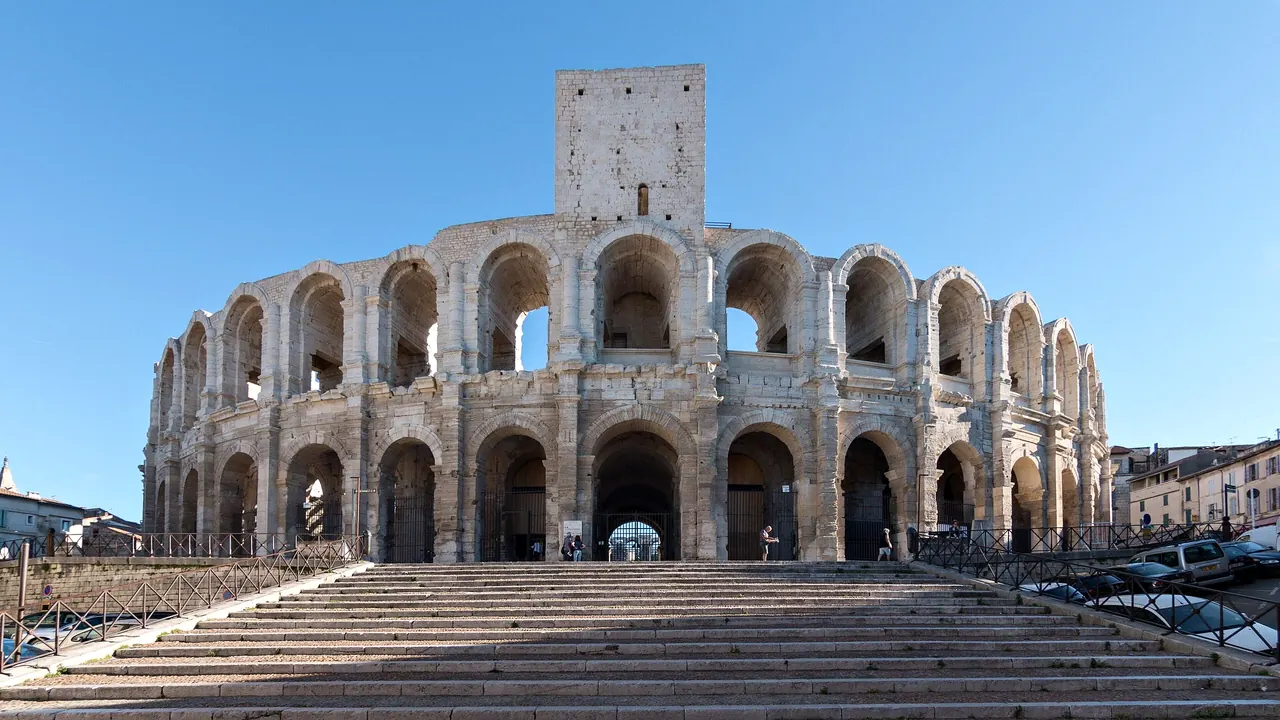
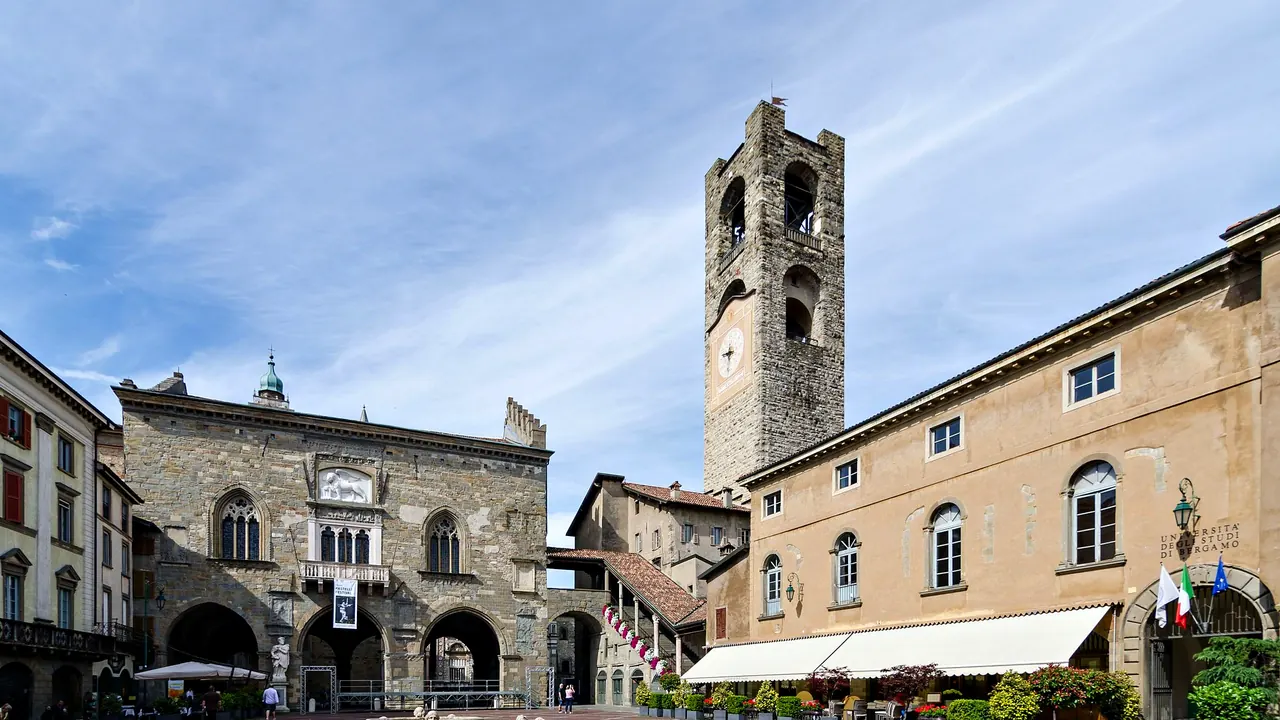
Photos: Arles by Martin Kraft, CC BY-SA 3.0, cropped; Bergamo by Steffen Schmitz, CC BY-SA 4.0, cropped.
Arles or Bergamo?
Our verdict in twelve categories, each scored against the same fixed benchmark cities, and the climate month by month, so you can choose for your trip.
Choose Arles for
- beaches
- culture and sights
- day trips
Arles is the choice if you want to see Roman Provence and the wild Camargue in one place. The arena, the Alyscamps and Van Gogh's landscapes are all in town, and the flamingo lagoons and long sandy beaches are a drive away. Summers are dry and reliably sunny. It suits a slow, warm-weather trip, ideally with a hire car, for people happy with market lunches and quiet evenings.
Choose Bergamo for
- wellness
- families
- getting around
Bergamo is the easier all-round city stay. Funiculars link its two levels, trains run straight to Milan and the lakes, there is an opera house devoted to Donizetti, and spa towns sit just up the valleys. It is also friendlier for children and offers more Lombard cooking. Pick it if you would rather travel by train and want mountains and lakes rather than the sea.
Scoreboard
Twelve categories on one fixed scale from 0 to 100. The shaded stretch is the gap between the two.
Your match
Pick a travel style or drag the sliders, and both match scores follow your weighting.
Wins on beaches and culture and sights with your weighting.
Wins on wellness and families with your weighting.
What matters to you?
Category by category
What the scores mean for a trip.
Beaches & swimming
Arles is the only one of the two with real sea swimming. The Camargue shore begins about 40km south, at Saintes-Maries-de-la-Mer, where you find sand and dunes. Further on are the huge empty strands of Piémanson and Beauduc, where the shallow Mediterranean is gentle for paddling, as long as the mistral and the mosquitoes behave.
Bergamo's answer is lake swimming at Iseo or on the Lecco arm of Como. The lake shores are pebble, grass or concrete platforms rather than sand. Both cities give you a day out rather than a beach vacation, but Arles's day is the more memorable.
Food & drink
Bergamo gives you more to eat. Casoncelli with butter and sage, polenta with braised game, and cheese counters stacked with Taleggio, Branzi and Strachitunt fill the Città Alta. The lower town adds everyday trattorias and aperitivo bars, there are fine-dining restaurants in the province, and Franciacorta comes from just over the border.
Arles has its own strong identity: bull gardiane, Camargue rice, tellines and Alpilles olive oil. Its high point is the long Saturday market on the Boulevard des Lices. Beyond that the choice of restaurants is narrow and thins out in winter.
Culture & sights
The two are equally rich in sights, but in different eras. Arles is about antiquity you walk through: the working Roman arena, the theatre, the cryptoporticus galleries, the Alyscamps tombs and the Romanesque cloister of Saint-Trophime. Photography and the Luma tower add a modern layer.
Bergamo is Venetian and Renaissance. It has the walled Città Alta, the marble front of the Cappella Colleoni and Santa Maria Maggiore. The Accademia Carrara holds Raphael, Bellini and Mantegna, which makes Bergamo the stronger choice for paintings. Each takes about two days.
Nightlife
Neither is a place for a big night out, but Bergamo has a little more going on. Long aperitivi spill into wine bars around Via XX Settembre and Borgo Santa Caterina, students keep a few bars busy, and summer evenings are spent drinking on the upper-town squares. Milan is a short train ride away.
In Arles, a late dinner on the Place du Forum is usually the whole evening. The exceptions are the Easter and September ferias, when street bodegas keep the town up for a few nights.
Nature & outdoors
Both have fine country close by, but of opposite kinds. Arles opens onto the flat Rhône delta of lagoons, salt flats and rice fields. You explore it on horseback or by bike along the dykes, watching flamingos, white horses and migrating waders, and the Alpilles ridges add hiking among olive groves.
Bergamo rises into mountains. Paths through the Colli park start at the upper town, and Val Brembana and Val Seriana lead to rifugi, high lakes and small winter ski areas, with Iseo and Como for sailing and lakeside cycling. Arles is best in spring and autumn, while Bergamo's mountains come into their own in summer.
Day trips
Both make outstanding bases, so the question is what you want to see. From Arles, Avignon's Papal Palace is about twenty minutes by train and Nîmes about half an hour, and the Pont du Gard, Les Baux and Saint-Rémy add more Roman sites and hill villages. Many of these places are much easier with a car.
Bergamo pairs a major city with lakes. Milan's Duomo and Last Supper are under an hour away, and Lake Iseo's Monte Isola and the towns of Lake Como are close. Brescia, Cremona and Verona can all be reached by rail.
Good for families
Bergamo is easier with children. The funiculars up to the Città Alta and San Vigilio are a treat in themselves, the walls make a gentle walk, and the city parks have playgrounds. Leolandia, aimed at younger children, is about twenty minutes away, and Le Cornelle wildlife park makes an easy half day.
Arles appeals more to older children who like history and animals. They can climb the arena towers, explore the dark cryptoporticus and ride ponies at Camargue ranches. The lack of organised attractions, the summer heat and the constant drives make it harder work.
Getting around
Arles's old town is tiny: everything is within about fifteen minutes' walk, and a free shuttle loops the centre. Trains serve Avignon, Nîmes and Marseille. The Camargue reserves and beaches, though, really need a car or a bike.
Bergamo has more ways to get around. Funiculars climb between the two towns, buses run to the station and the airport, and a light-rail line goes up Val Seriana. Only the upper valleys and lake shores are much quicker by car.
Shopping & style
Bergamo gives a shopper slightly more to do, though Arles has the more distinctive things to bring home. In Arles, look in the old-town shops for printed Provençal cottons, santons, pottery and gardian shirts and hats. Arles is also a publishing town, so its bookshops are good for photography books and prints. For clothes, people go to Aix or Marseille.
Bergamo has more variety. The arcaded Sentierone and Via XX Settembre in the lower town are lined with Italian chains and mid-range fashion. The lane through the Città Alta is packed with cheese shops, salumi and Valcalepio wine to take home. Milan, under an hour away, covers anything more serious.
Affordability
Bergamo is a little easier on the budget. Hotels in the lower town are fairly priced, and the cheap buses and funicular mean you can explore Lombardy without hiring a car. Staying inside the Città Alta costs more.
Arles is reasonable by Provençal standards and cheaper than the Luberon. However, most visitors hire a car to reach the Camargue and the villages, and rooms are tight during the ferias and the photography festival.
Live music & performing arts
Bergamo takes this clearly, thanks to Donizetti. The Teatro Donizetti runs a season of opera and concerts with an autumn festival of his works, the Teatro Sociale stages smaller productions, Bergamo Jazz has a long history, and La Scala is within reach for an evening.
Arles's live performance is mostly in summer and outdoors. There are concerts in the Roman theatre and arena, world music at Les Suds in July, and the ferias and the bloodless course camarguaise. There is no opera, and little happens in winter.
Wellness & relaxation
Bergamo has proper spa water nearby. The Belle Époque thermal resort of San Pellegrino Terme is about forty minutes up the valley, and Trescore Balneario's sulphur springs have been used since Roman times.
Arles has no thermal tradition, so relaxing there is about pace. You get shaded squares, a siesta through the summer heat and perhaps a few days at a Camargue or Alpilles farmhouse with a pool.
When should you go?
Pick your month. The climate figures are measured averages, not a forecast.
Arles in July
Bergamo in July
Daytime high, °C
Rainfall in the month, mm
Where the figures come from
Arles's temperatures are measured 28 km from the centre, at Nimes / Courbessac.
Arles has no rain gauge within 25 km of the centre, so its rainfall comes from a gridded climate dataset read at the city rather than from a gauge further away.
Bergamo has no rain gauge within 25 km of the centre, so its rainfall comes from a gridded climate dataset read at the city rather than from a gauge further away.
Bergamo's sunshine is measured 64 km from the centre, at Lugano.
Temperature and rainfall are climate normals, averaged over the years shown. Arles: 1991-2020 (sunshine 1981-2010) normals, Nimes / Courbessac (28 km from centre). Bergamo: 1991-2020 normals, Bergamo / Orio Al Serio (3.9 km from centre).
Arles has the hotter, sunnier and drier summer. July and August reach about 31°C, with the sea at around 22°C, so these are the beach months, and June and September are warm enough for a swim too. The midday heat makes sightseeing hard in high summer, though, so April, May and late September are better for walking the Roman sites and the Camargue. The rain comes in autumn and is heaviest in October, at about 105mm. Winters are mild and fairly bright.
Bergamo is cooler all year. January highs are only about 7°C, and summer is warm rather than baking. Rain is spread through the year and is heavy from May to November, peaking at about 129mm in October, so even a summer stay can bring thundery days. May, June and September are best for the hill walks and the Città Alta. July and August are the months for lake swimming.
Which traveller are you?
On a beach and sun trip, Arles is the better fit. Its dry, sunny summers come with long sandy strands across the Camargue at Saintes-Maries, Piémanson and Beauduc. Bergamo only has lake lidos on pebble, grass or concrete.
For a relaxing and wellness trip, Bergamo wins clearly. San Pellegrino Terme and the old sulphur springs at Trescore Balneario are close by, and the quiet Città Alta walls help you slow down. Arles offers shaded squares and farmhouse pools but no spa tradition.
On a family trip with children, Bergamo is easier. There are funicular rides, a gelato walk on the walls, the Leolandia theme park and the Le Cornelle wildlife park. In Arles, the ponies and flamingos are lovely, but summer heat, mosquitoes and constant car trips wear families down.
Before you go
| Measure | Arles | Bergamo |
|---|---|---|
| Official language | French | Italian |
| Currency | Euro (EUR) | Euro (EUR) |
| Sockets | CE230 V, 50 Hz | CFL230 V, 50 Hz |
| Driving side | Right | Right |
| Time zone | UTC+1, UTC+2 in summer | UTC+1, UTC+2 in summer |
| Emergency number | 112 | 112 |
| Elevation | 0 m | 249 m |
| Main airport | Marseille Provence Airport (MRS)54 km from centre126 non-stop destinations | Il Caravaggio International Airport (BGY)4 km from centre146 non-stop destinations |
| Public holidays this year | 11 days | 13 days |
By the numbers
| Measure | Arles | Bergamo |
|---|---|---|
| City population | 51,811 | 119,534 |
| People per km² | 68 | 2,973 |
| Museums within 10 km | 3 | 21 |
| UNESCO World Heritage sites within 50 km | 5 | 6 |
| Swim season, months above 21 °C | 2 months | - |
Where else could you go?
Every comparison below shares a destination with this one, so you can follow Arles or Bergamo somewhere new.
- Avignonvs Arles
- Milanvs Bergamo
- Comovs Bergamo
- Montpelliervs Arles
- Luganovs Bergamo
- Aix-en-Provencevs Arles