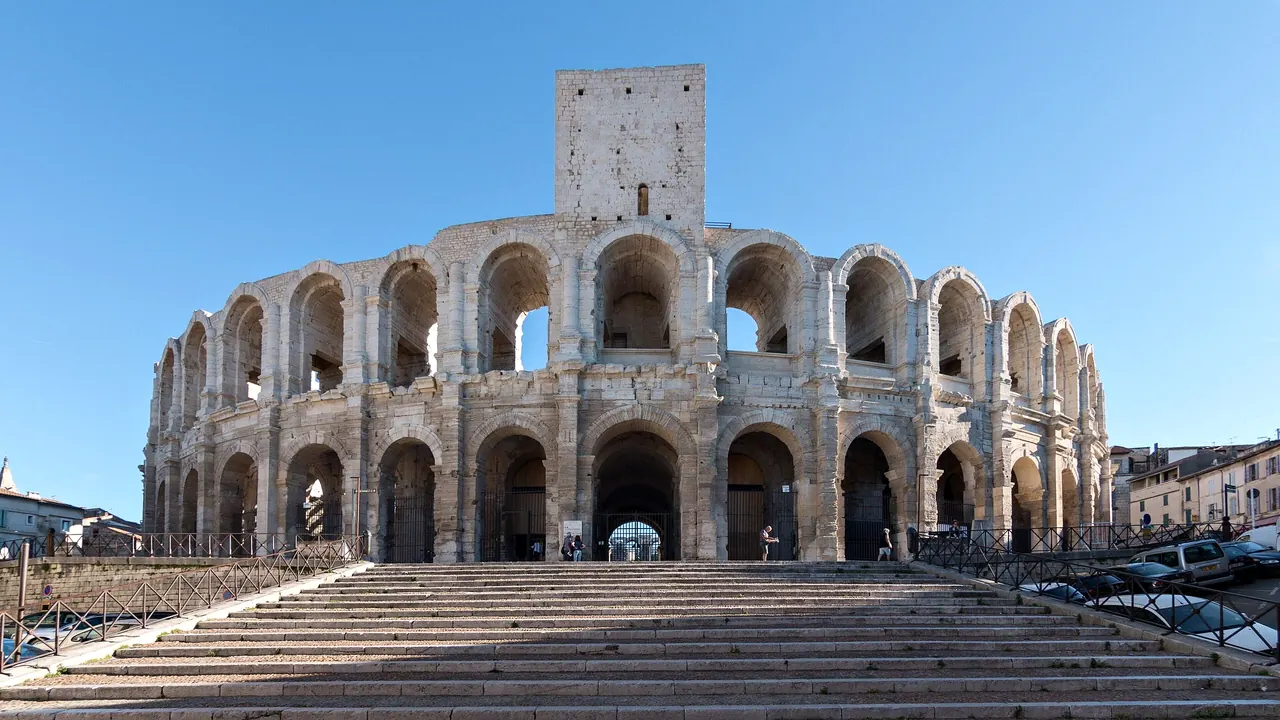
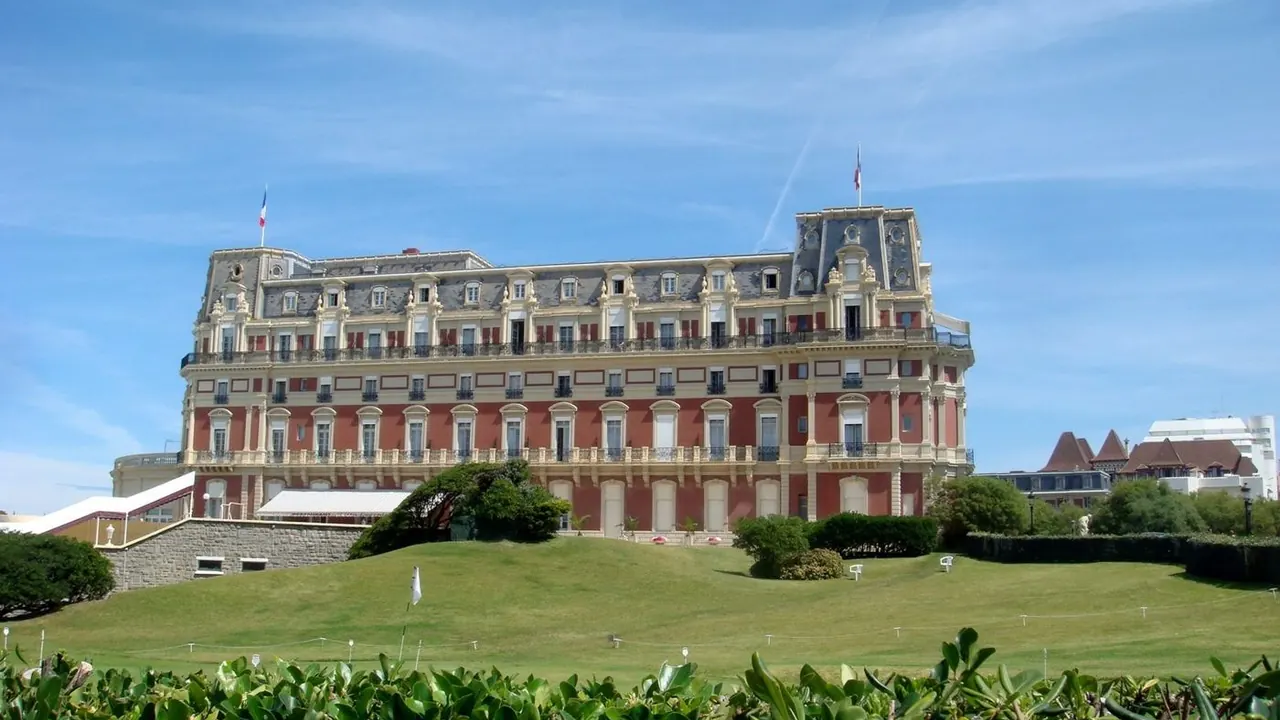
Photos: Arles by Martin Kraft, CC BY-SA 3.0, cropped; Biarritz by Lilipiapia, CC BY-SA 3.0, cropped.
Arles or Biarritz?
Our verdict in twelve categories, each scored against the same fixed benchmark cities, and the climate month by month, so you can choose for your trip.
Choose Arles for
- culture and sights
- prices
- day trips
Arles is the choice for travellers who want history close at hand and a long list of places to visit from one base. Its Roman monuments and Romanesque cloister are a short walk apart, Avignon and Nîmes are an easy train ride away, and the Camargue begins at the edge of town. It also costs less to stay than a fashionable resort. Come for sightseeing, market lunches and dry, sunny weather, but not for nights out, spa days or lazy beach mornings.
Choose Biarritz for
- wellness
- families
- beaches
Biarritz suits a vacation built around the ocean. The beaches start below the town, surf schools take beginners of any age, and the seawater spas make relaxing the main purpose of a stay. Families find more to keep children busy, and the Basque food and pintxo bars give the evenings more life. In return you pay resort prices, get much more rain and have far less old architecture to explore.
Scoreboard
Twelve categories on one fixed scale from 0 to 100. The shaded stretch is the gap between the two.
Your match
Pick a travel style or drag the sliders, and both match scores follow your weighting.
Wins on culture and sights and prices with your weighting.
Wins on wellness and families with your weighting.
What matters to you?
Category by category
What the scores mean for a trip.
Beaches & swimming
Biarritz is built on its beaches. The Grande Plage, the Côte des Basques and the sheltered Port Vieux cove are a short walk from your room, and Anglet's sand runs on to the north. It is the open Atlantic, though, with big waves and strong currents, so swimming means staying between the lifeguard flags.
Arles is a river town, and its sea is about 40km away across the Camargue at Saintes-Maries-de-la-Mer, or further on at the wild strands of Piémanson and Beauduc. The water there is shallow and calm when the mistral drops, and there is plenty of space, but you get little shade or service and need a car to reach it. Treat it as a day out, not the reason for the trip.
Food & drink
Biarritz has the stronger table, because Basque cooking is a full cuisine. Les Halles is the centre of it: Biscay fish, sheep's cheese, Bayonne ham and pintxo counters busy from mid-morning, along with modern bistros and dishes such as axoa and chipirons.
Arles eats well but more narrowly. Gardiane bull stew, Camargue rice and tellines are the local specialities, and the long Saturday market on the Boulevard des Lices is the event of the week. Long lunches on the squares are the pleasure here, but there are fewer restaurants to choose from and many close in winter.
Culture & sights
Arles is in another league for sightseeing. Within a short walk stand the arena, the Roman theatre, the cryptoporticus galleries, the Alyscamps that Van Gogh painted and the carved portal of Saint-Trophime, all under one UNESCO listing. The Roman barge in the Museum of Ancient Arles and Gehry's tower at Luma add to the old and the new.
In Biarritz, the history is the resort itself: Empress Eugénie's villa, the Art Deco casino, Belle Époque villas and the footbridge to the Rocher de la Vierge. The aquarium and the Cité de l'Océan are the main museums. Anyone looking for older history goes to Bayonne.
Nightlife
Neither town is a party destination, but Biarritz has more going on, at least in summer. The pintxo bars around Les Halles stay busy late, surfers gather on the terraces above the Côte des Basques at sunset, and a few clubs and the casino keep going after that. San Sebastián's bar streets are a short drive away.
In Arles, the evening usually ends with dinner and a drink on the Place du Forum. Things only get lively during the Easter and September ferias, when bodegas set up in the streets.
Nature & outdoors
Both offer fine outdoor days, but they are very different landscapes. The Camargue at Arles is flat delta country of lagoons, salt flats and rice fields, explored on horseback or by bike along the dykes, with flamingos, white horses and migrating birds. The limestone Alpilles add hill walking among the olive groves.
At Biarritz the outdoors means the water: surf breaks for beginners and experts, paddleboards and kayaks. On land there is the cliff path along the Basque Corniche, and the green Pyrenean foothills around La Rhune and Sare are close by. It is greener and wetter than Provence, without the mosquitoes.
Day trips
Both make excellent bases, and Arles has a slight edge. Avignon's Papal Palace is about twenty minutes away by train and Nîmes about half an hour, and the Pont du Gard, Les Baux, Saint-Rémy and Aigues-Mortes are all close. You can fill a week with Roman and medieval towns without ever going far.
Biarritz's strength is that its days out span two countries. You can eat pintxos in San Sebastián, walk Bayonne's riverside quarter, visit Saint-Jean-de-Luz and the Basque hill villages, or drive the longer way to the Guggenheim in Bilbao.
Good for families
Biarritz is easier with children. The aquarium's seals and sharks fill a wet afternoon, surf schools take young beginners, and the Port Vieux cove gives small children calm water. The main drawback is the steep streets, which are hard going with a pushchair.
Arles appeals more to older children who like history and animals. They can climb the arena towers, go into the dark cryptoporticus, ride ponies at a Camargue ranch and see flamingos at the bird park. Expect heat, mosquitoes and a lot of driving.
Getting around
The two are about equal for getting around, but the walking feels very different. Arles is flat and compact, with every main sight within about fifteen minutes, a free shuttle round the centre and a station close to the old town.
In Biarritz, steps and steep slopes link the cliffs to the beaches. Buses run to Anglet and Bayonne, the airport is on the edge of town, and coastal trains go to the Spanish border. In both places a hire car makes the countryside much easier to reach.
Shopping & style
Biarritz is a little better for browsing. Fashion boutiques and surf shops line the streets near the Place Clemenceau, and striped Basque linen, espadrilles and chocolate make good things to take home. Arles is more about crafts and books: Provençal printed cottons, santons, gardian shirts, photography books and the Saturday market's olive oil and Camargue salt. Neither has luxury depth.
Affordability
Arles is the cheaper stay. It is priced like a provincial French town, cheaper than the smart villages nearby, and a combined pass covers most of its sights. The main extra cost is hiring a car.
Biarritz charges resort prices, especially for summer rooms and seafront meals. You can bring the cost down by eating pintxos at the market counters, coming outside July and August, or staying in Anglet or Bayonne.
Live music & performing arts
Both have small programmes, and each has its own speciality. Biarritz's is dance: a resident ballet company performs at the Gare du Midi, a former station, and an autumn festival fills the town's stages.
In Arles, the shows are outdoors and happen in summer. There are concerts in the Roman theatre and the arena, a week of world music at Les Suds in July, and the course camarguaise and feria brass bands in the streets. Off season, there is little on in either town.
Wellness & relaxation
Biarritz is a real wellness destination. Sea bathing has been treated as a cure here since the nineteenth century, and the large thalassotherapy centres on the seafront offer heated seawater pools, algae wraps and cures lasting several days. Outside high summer, the town settles into a calm pace.
Arles has no spa tradition. What it offers is a slow pace: shaded squares, siestas in the heat, evenings by the Rhône, and a few converted farmhouses with pools in the Camargue and the Alpilles.
When should you go?
Pick your month. The climate figures are measured averages, not a forecast.
Arles in July
Biarritz in July
Daytime high, °C
Rainfall in the month, mm
Where the figures come from
Arles's temperatures are measured 28 km from the centre, at Nimes / Courbessac.
Arles has no rain gauge within 25 km of the centre, so its rainfall comes from a gridded climate dataset read at the city rather than from a gauge further away.
Temperature and rainfall are climate normals, averaged over the years shown. Arles: 1991-2020 (sunshine 1981-2010) normals, Nimes / Courbessac (28 km from centre). Biarritz: 1999-2020 (sunshine 1991-2020, rainfall 1991-2020) normals, Biarritz (2.5 km from centre).
Arles has a Provençal summer: hot, dry and very sunny, with highs around 31°C in July and August and hardly any rain in July. That suits a day on the Camargue beaches, where the sea reaches about 22°C in August, but midday among the ruins is tiring. May, June and September are kinder for sightseeing. The rain comes in autumn and peaks in October at around 105mm, and winters are cool but often bright.
Biarritz stays milder all year. Summer highs sit around 24°C, so walking the streets is comfortable even in August, and the sea warms as much as it does off the Camargue. It is much wetter in every season, with November the wettest month at about 224mm, and Arles gets clearly more sunshine in summer and winter alike. July to September is the time for the beach, while spring and autumn suit walkers and surfers who don't mind showers.
Which traveller are you?
For a culture and arts trip, Arles is the clear winner. Its arena, antique theatre, cryptoporticus and Saint-Trophime are all within walking distance, there are serious museums and the summer photography festival, and Avignon and Nîmes are close enough for an extra day.
On a relaxing and wellness trip, Biarritz is the better place. Its long thalassotherapy tradition means seawater pools and multi-day cures are easy to book, and outside high summer the headland walks run at a slow pace that Arles, with no spa culture, cannot match.
On a family trip with children, Biarritz makes things easier. The aquarium and ocean science centre cover rainy days, children can learn to surf, and the beaches are in town. Arles's best family outings are pony rides and flamingos in the Camargue, and most of them need a car.
Before you go
| Measure | Arles | Biarritz |
|---|---|---|
| Official language | French | French |
| Currency | Euro (EUR) | Euro (EUR) |
| Sockets | CE230 V, 50 Hz | CE230 V, 50 Hz |
| Driving side | Right | Right |
| Time zone | UTC+1, UTC+2 in summer | UTC+1, UTC+2 in summer |
| Emergency number | 112 | 112 |
| Elevation | 0 m | 0 m |
| Main airport | Marseille Provence Airport (MRS)54 km from centre126 non-stop destinations | Biarritz Pays Basque airport (BIQ)3 km from centre25 non-stop destinations |
| Public holidays this year | 11 days | 11 days |
By the numbers
| Measure | Arles | Biarritz |
|---|---|---|
| City population | 51,811 | 26,206 |
| People per km² | 68 | 2,240 |
| Museums within 10 km | 3 | 8 |
| UNESCO World Heritage sites within 50 km | 5 | 2 |
| Swim season, months above 21 °C | 2 months | 2 months |
Where else could you go?
Every comparison below shares a destination with this one, so you can follow Arles or Biarritz somewhere new.
- Avignonvs Arles
- San Sebastianvs Biarritz
- Montpelliervs Arles
- Aix-en-Provencevs Arles
- Marseillevs Arles
- Bilbaovs Biarritz