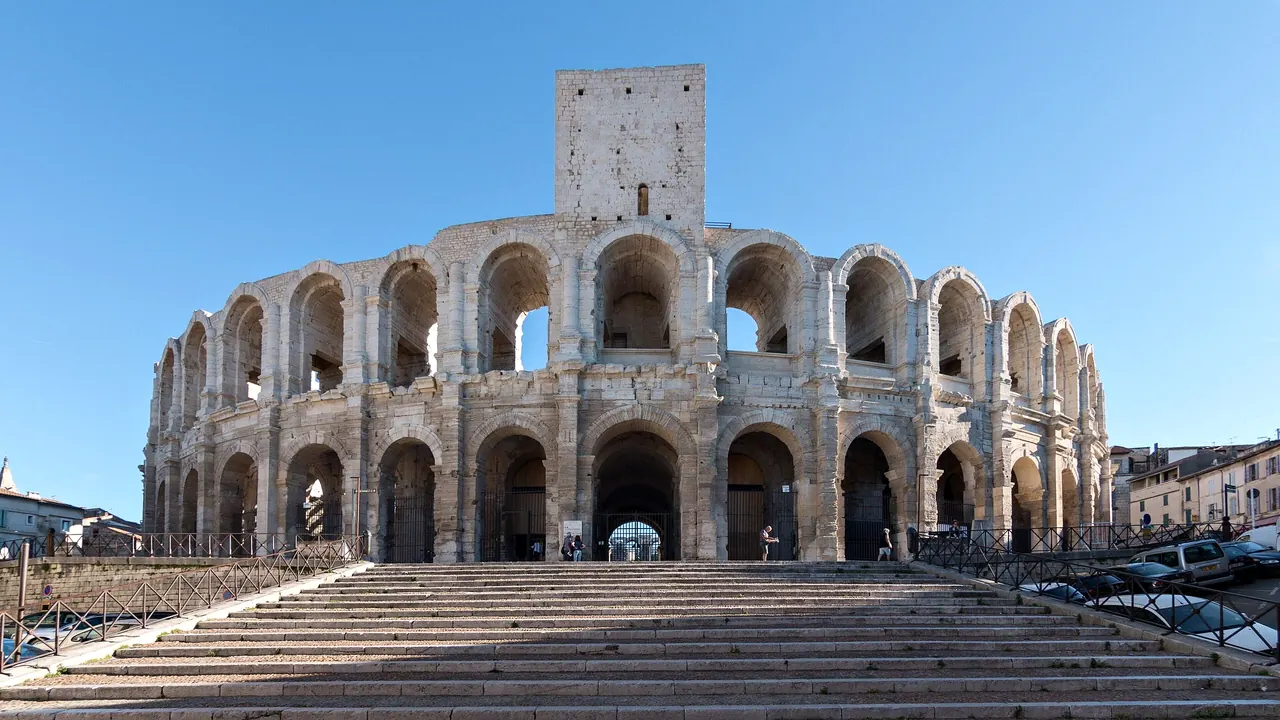
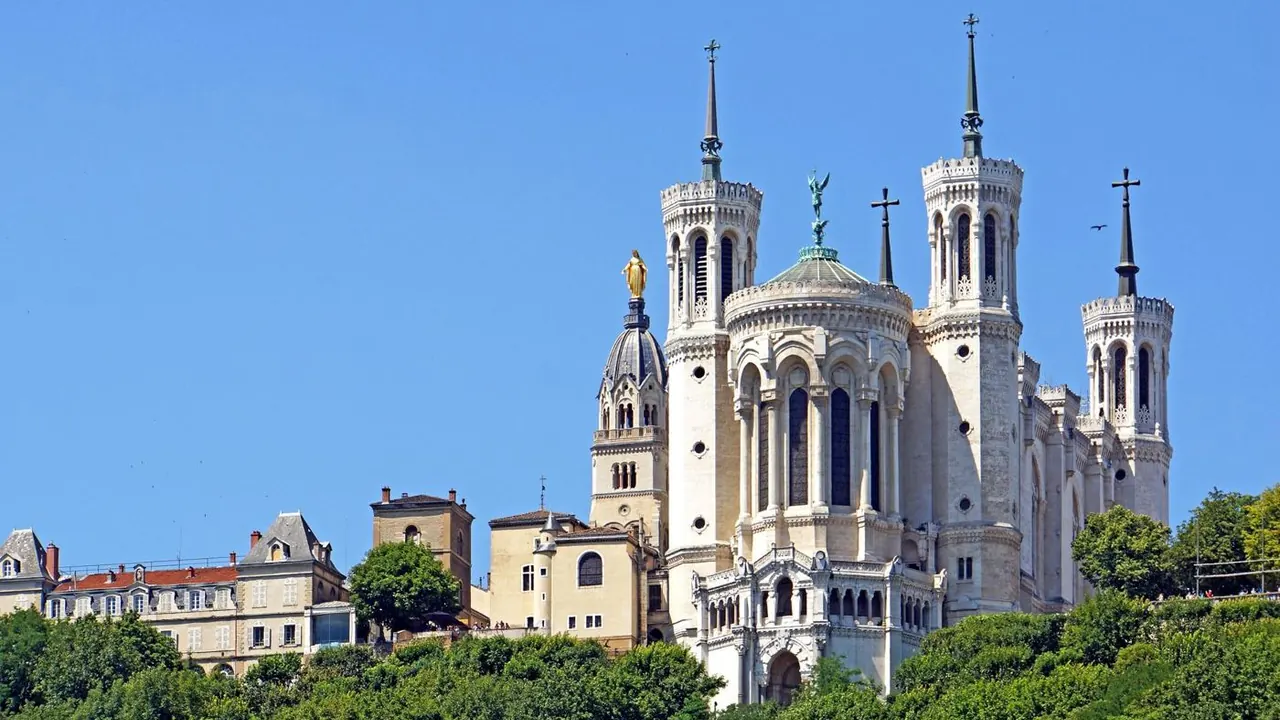
Photos: Arles by Martin Kraft, CC BY-SA 3.0, cropped; Lyon by Dennis G. Jarvis, CC BY-SA 2.0, cropped.
Arles or Lyon?
Our verdict in twelve categories, each scored against the same fixed benchmark cities, and the climate month by month, so you can choose for your trip.
Choose Arles for
- beaches
- day trips
- nature and the outdoors
Arles is the better pick for a slow trip through Provence. In one small town you get Roman stones, Van Gogh's landscapes and the Camargue delta, and Avignon, Nîmes, the Pont du Gard and Les Baux are all close enough for easy day trips. It suits travellers who like to wander, eat long lunches, watch flamingos at dusk and drive out to the sea, and who don't mind quiet evenings.
Choose Lyon for
- nightlife
- live music and the arts
- food and drink
Lyon gives you a real city. You eat in bouchons and at Les Halles, you can see opera and dance, the Presqu'île bars and riverside barges keep going late, and the metro and funiculars mean you never need a car. Couples who travel for food, culture lovers who want evenings in a theatre and families who want parks and museums close at hand will all get more from it.
Scoreboard
Twelve categories on one fixed scale from 0 to 100. The shaded stretch is the gap between the two.
Your match
Pick a travel style or drag the sliders, and both match scores follow your weighting.
Wins on beaches and day trips with your weighting.
Wins on nightlife and live music and the arts with your weighting.
What matters to you?
Category by category
What the scores mean for a trip.
Beaches & swimming
Arles has a real coast within reach and Lyon doesn't. About 40km south of Arles, across the Camargue, you find dune-backed sand at Saintes-Maries and huge empty strands at Piémanson and Beauduc, with shallow, calm water in summer. The catch is the drive, little shade and the mosquitoes.
Lyon is three hours from the Mediterranean. Swimming there means the supervised lake at Miribel-Jonage or a long day out to Lake Annecy, which makes Arles the only one of the two where a sea day fits easily into the trip.
Food & drink
Lyon is in a different league for food. Its bouchons serve quenelles, andouillette and praline tart with a pot of local red, the city has a long tradition of fine dining, and Les Halles Paul Bocuse and the Sunday markets by the Saône are full of Bresse poultry and Saint-Marcellin. Beaujolais and northern Rhône wines come from just outside town.
Arles eats well but on a smaller scale: gardiane bull stew, Camargue rice, tellines and a very long Saturday market on the Boulevard des Lices. It is good for market produce and lunches on terraces, but the choice of restaurants is narrow, and many close in winter.
Culture & sights
Both cities have Roman theatres and UNESCO-listed centres, but Lyon has more breadth. Arles packs its arena, cryptoporticus, Alyscamps and the carved portal of Saint-Trophime into a short walk, with Van Gogh's legacy and the Luma tower by Frank Gehry on top, and two full days cover it all.
Lyon needs several days. Its sights run from Lugdunum on Fourvière through the Renaissance lanes and traboules of Vieux Lyon to a major fine-arts museum on the Presqu'île, the silk-weavers' hill at Croix-Rousse and the Institut Lumière, where cinema began.
Nightlife
Evenings in Arles mean dinner on a square and a last drink on the Place du Forum, and then the town is quiet. Only the Easter and September ferias, when bodegas appear in the streets, keep it up late.
Lyon has a proper night out, kept going by its students. You'll find wine and cocktail bars between Hôtel de Ville and the Terreaux, pubs in Vieux Lyon, and barges moored on the Rhône that serve as bars and clubs. Warehouse-style electronic clubs out towards Gerland add later options.
Nature & outdoors
Arles has the wilder landscape, though the gap is small. The Camargue begins at the edge of town, with lagoons, salt flats, flamingos, white horses and black bulls, best explored on horseback or by bike along the dykes. The olive-covered ridges of the Alpilles add proper hiking.
Lyon's outdoor life is more urban and gentler. You can run along the car-free Rhône quays, row on the lake in the Parc de la Tête d'Or and walk in the Monts d'Or. The Vercors and Chartreuse, an hour or more away by car, are the places for serious mountain days.
Day trips
Arles has the richer choice of short trips. Avignon's Papal Palace is about 20 minutes away by train and Nîmes is half an hour, while the Pont du Gard, Les Baux, Saint-Rémy and Montmajour are all close by. For a cluster of first-rate Roman and medieval sites, few bases beat it.
Lyon's day trips are mostly about wine and old towns, and they are more spread out. Roman Vienne is a short train ride away, and Pérouges, the Beaujolais villages, Cluny and Beaune are within reach. Annecy and the Alpine lakes take about two hours each way.
Good for families
Arles works best for older children who like history and animals. Climbing the arena towers and walking through the dark cryptoporticus make the Roman town feel like an adventure. Out in the delta there are horse rides at the ranches, flamingos at the ornithological park near Saintes-Maries and shallow sea for paddling. Nothing in Arles is built just for children, though, and the summer heat and mosquitoes soon tire younger ones.
Lyon gives you more to fill the days, and more of it is close together. The animals are in town rather than out in the marshes, and there is an aquarium on the southern edge. The Musée Miniature et Cinéma in Vieux Lyon is a good pick for older children, and a theme park lies about an hour east. Pushchairs struggle in both cities, on the cobbles of Arles and on Lyon's stepped hill lanes, but in Lyon the flat Presqu'île makes up for it.
Getting around
Inside its old centre, Arles is easy. Everything is within about fifteen minutes' walk, and the station is close for trains to Avignon and Marseille. Beyond the town, though, the buses are infrequent, and the Camargue really calls for a hire car or a bike.
Lyon covers far more ground without a car. Metro, trams and buses share one ticket, funiculars climb Fourvière, bike-share runs along the river paths, and a tram goes straight to the airport. The hills are steep, but you never need to drive.
Shopping & style
Lyon has the fuller shopping scene. There are chain stores on the rue de la République, luxury labels around Place des Jacobins and a large mall at Part-Dieu. The more personal finds are Lyon silk, designer workshops on Croix-Rousse and the antique dealers of the rue Auguste Comte.
Arles is about local crafts and souvenirs. Look for Provençal printed cottons, santons, gardian shirts, Camargue salt from the Saturday market, and photography books from a town known for publishing. For fashion, people from Arles go to Aix or Marseille.
Affordability
The two cost about the same overall, but the money goes in different places. Arles is a cheaper base than the smart villages nearby, and one combined pass covers its sights, but most visitors pay for a hire car, and rooms get tight during the summer festivals and the ferias.
In Lyon you save on transport and eat generous set lunches in bouchons. City hotel rates apply, though, and they rise sharply during trade fairs and the Fête des Lumières.
Live music & performing arts
Lyon has a year-round stage life that Arles can't match. It has an opera house and ballet under the glass vault of the Opéra, the Orchestre National at the Auditorium, the Célestins playhouse and the Maison de la Danse, one of Europe's leading dance venues. In summer the Nuits de Fourvière festival puts shows in the Roman theatres.
Arles is mostly a summer and open-air town for performance. There are concerts in its own Roman theatre and arena, world music at Les Suds, and the bullfights and brass bands of the ferias. It has no opera or orchestra.
Wellness & relaxation
Neither city has a bathing tradition of its own, but Lyon gives you a bit more to do. It has hammams, day spas, the large open-air pool on the Rhône quays, and Aix-les-Bains for thermal baths within a day trip.
Arles relaxes you through its pace rather than treatments. Expect shaded squares, siestas in the summer heat and quiet evenings by the river. Its best retreats are converted farmhouses with pools out in the Camargue and the Alpilles.
When should you go?
Pick your month. The climate figures are measured averages, not a forecast.
Arles in July
Lyon in July
Daytime high, °C
Rainfall in the month, mm
Where the figures come from
Arles's temperatures are measured 28 km from the centre, at Nimes / Courbessac.
Arles has no rain gauge within 25 km of the centre, so its rainfall comes from a gridded climate dataset read at the city rather than from a gauge further away.
Temperature and rainfall are climate normals, averaged over the years shown. Arles: 1991-2020 (sunshine 1981-2010) normals, Nimes / Courbessac (28 km from centre). Lyon: 1991-2020 (sunshine 1981-2010) normals, Lyon / Bron (10.6 km from centre).
Arles is the warmer and sunnier of the two all year. July and August reach about 31°C there, which is hot for walking the old streets in the middle of the day, and July is very dry. June to September is the time for the Camargue beaches, with the sea warmest in August at around 22°C. For sightseeing and walking in the delta, May, June and late September are more comfortable. Rain builds in autumn and peaks in October at about 105mm, and winters are mild but cool.
Lyon is a few degrees cooler and much less sunny. Its summer highs of about 28°C are pleasant for city walking, but it rains fairly steadily from spring right through autumn, with no truly dry month. Winter is grey and cold, with January highs of around 7°C and little sun, while Arles stays brighter at that time of year. May, June and September are Lyon's best months, and October is wet in both cities.
Which traveller are you?
For a beach and sun trip, Arles is the clear choice. The long, wild sands of the Camargue at Saintes-Maries, Piémanson and Beauduc are a drive away, and summers are hotter and drier. Lyon is inland, and the best it offers is a bathing lake on the edge of town.
For a food and nightlife trip, choose Lyon. Bouchons, Les Halles Paul Bocuse and the Beaujolais nearby make it one of France's great places to eat. Then come the wine bars on the Presqu'île, the barge bars on the Rhône and proper clubs, while Arles goes to bed after dinner.
On a family trip with children, Lyon makes the days easier. The Parc de la Tête d'Or has a free zoo, pedalos and pony rides, the Musée des Confluences has dinosaurs, and there are Guignol puppet shows and funiculars. All of it is reachable by tram or metro, while in Arles most outings with children need a car.
Before you go
| Measure | Arles | Lyon |
|---|---|---|
| Official language | French | French |
| Currency | Euro (EUR) | Euro (EUR) |
| Sockets | CE230 V, 50 Hz | CE230 V, 50 Hz |
| Driving side | Right | Right |
| Time zone | UTC+1, UTC+2 in summer | UTC+1, UTC+2 in summer |
| Emergency number | 112 | 112 |
| Elevation | 0 m | 160 m |
| Main airport | Marseille Provence Airport (MRS)54 km from centre126 non-stop destinations | Lyon Saint-Exupéry Airport (LYS)20 km from centre141 non-stop destinations |
| Public holidays this year | 11 days | 11 days |
By the numbers
| Measure | Arles | Lyon |
|---|---|---|
| City population | 51,811 | 519,127 |
| People per km² | 68 | 10,838 |
| Museums within 10 km | 3 | 43 |
| UNESCO World Heritage sites within 50 km | 5 | 2 |
| Swim season, months above 21 °C | 2 months | - |
Where else could you go?
Every comparison below shares a destination with this one, so you can follow Arles or Lyon somewhere new.
- Avignonvs Arles
- Montpelliervs Arles
- Aix-en-Provencevs Arles
- Marseillevs Arles
- Annecyvs Lyon
- Genevavs Lyon