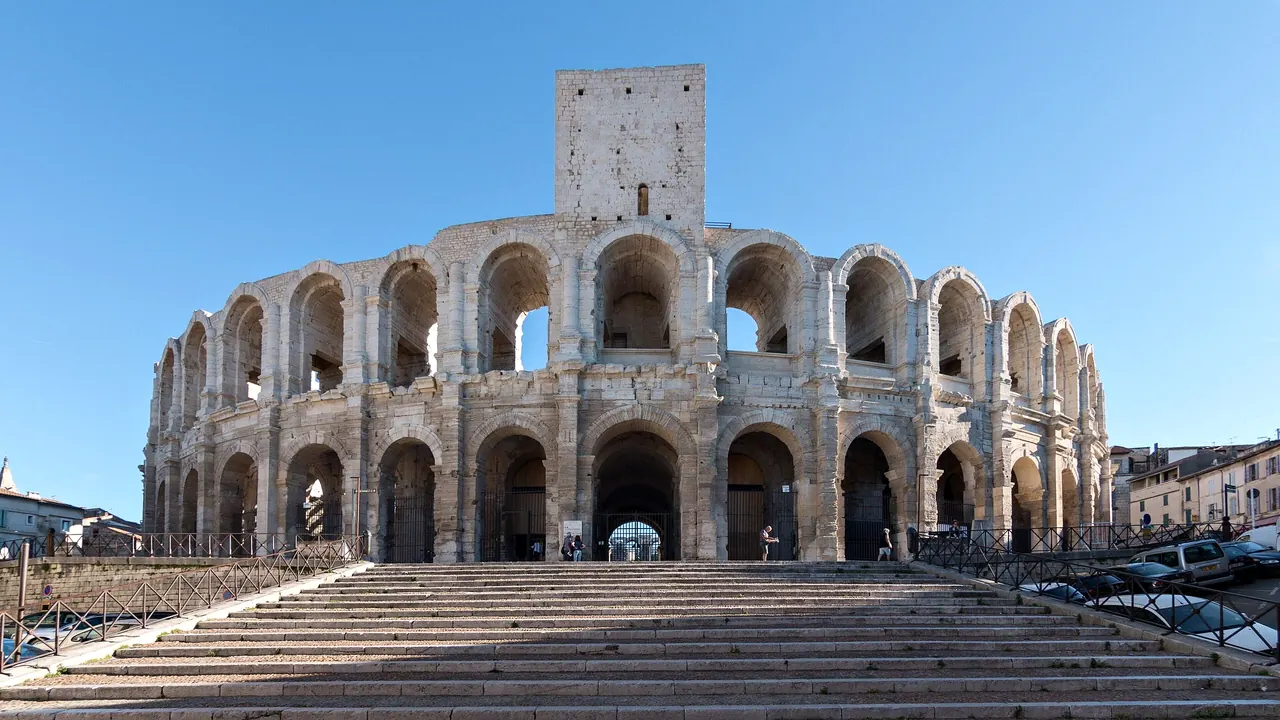
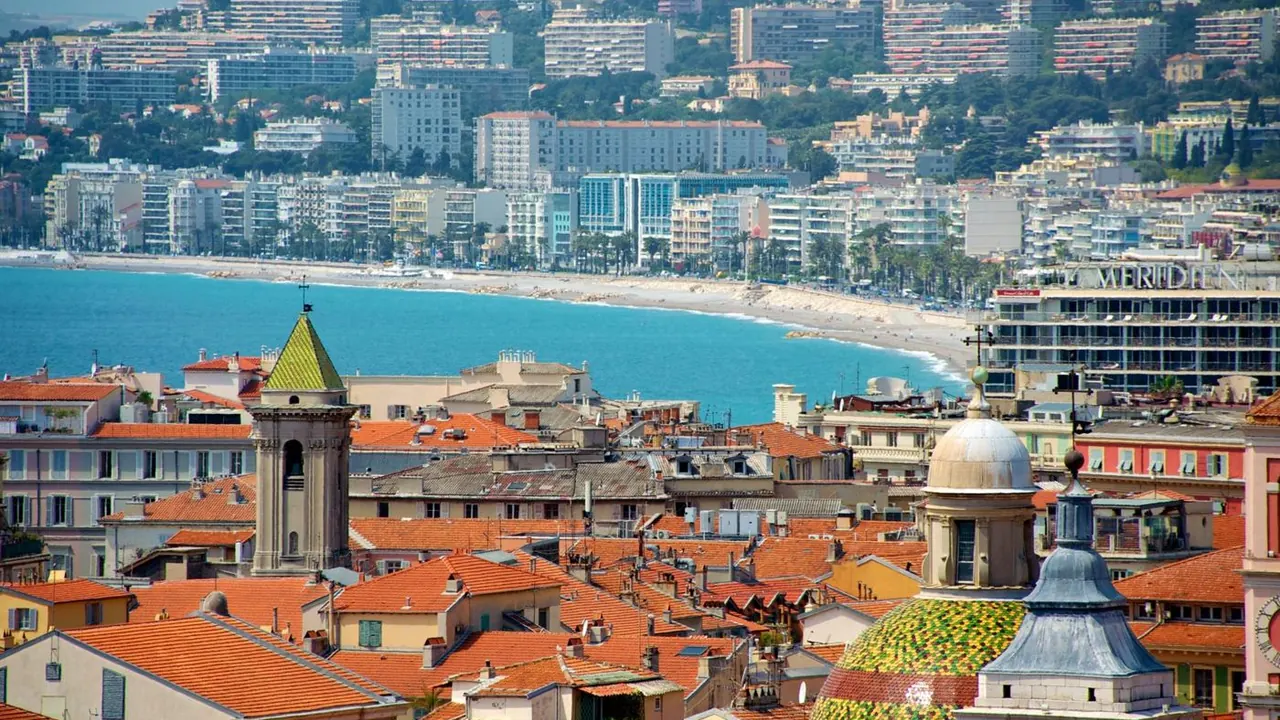
Photos: Arles by Martin Kraft, CC BY-SA 3.0, cropped; Nice by Daniel Stockman, CC BY-SA 2.0, cropped.
Arles or Nice?
Our verdict in twelve categories, each scored against the same fixed benchmark cities, and the climate month by month, so you can choose for your trip.
Choose Arles for
- prices
- culture and sights
Arles is for travellers who want history close at hand and a slower Provençal pace. The Roman monuments and Romanesque carving all lie within a short walk, the flamingos and white horses of the Camargue start at the edge of town, and Avignon, Nîmes and Les Baux are all close. It is the cheaper of the two, but it goes quiet after dinner, and a hire car makes the stay far easier.
Choose Nice for
- beaches
- nightlife
- shopping
Choose Nice for a trip that mixes sea and city without needing a car. You can swim from the city itself, trams and coastal trains run to Monaco, Antibes and Menton, the Alps are close enough for hiking or skiing, and the old town has more going on in the evening. You pay more for all this, especially in summer.
Scoreboard
Twelve categories on one fixed scale from 0 to 100. The shaded stretch is the gap between the two.
Your match
Pick a travel style or drag the sliders, and both match scores follow your weighting.
Wins on prices and culture and sights with your weighting.
Wins on beaches and nightlife with your weighting.
What matters to you?
Category by category
What the scores mean for a trip.
Beaches & swimming
In Nice you swim from the city itself. A pebble shore runs about 7km below the Promenade des Anglais, and the sandier coves at Villefranche, Beaulieu and Cap Ferrat are a short train or bus ride east. Beach-club loungers and water shoes make the stones easier.
Arles has no beach of its own. The sand is out in the Camargue, at Saintes-Maries-de-la-Mer about 40km away or on the wide, wild strands of Piémanson and Beauduc. They have more space and softer ground underfoot, but little shade, few services and a drive each way. That makes a good day at the sea, while Nice is the place to swim every day.
Food & drink
Both cities cook in a Provençal style, but Nice offers more. Its cooking leans towards Liguria: socca from wood ovens, pissaladière and stuffed vegetables, eaten in modest family places in Vieux Nice and around the port. The small Bellet vineyards in the hills supply a wine you rarely find elsewhere.
Arles has a narrower range: gardiane of Camargue bull, red rice, tellines and the long Saturday market on the Boulevard des Lices, and many restaurants close in winter. It is good for market picnics and long lunches, less so for a week of varied dinners.
Culture & sights
Arles has more in a smaller space. The arena, the Roman theatre, the underground cryptoporticus, the Alyscamps and the cloister of Saint-Trophime make up one UNESCO-listed group you can cover on foot. The Roman barge in the Museum of Ancient Arles and the summer photography festival add more. Two full days cover it well.
The strength of Nice is modern art rather than antiquity: Matisse and Chagall up in Cimiez, Yves Klein at MAMAC, with the Belle Époque villas and the Russian cathedral around them. Pick Arles for Rome and the Middle Ages, and Nice for twentieth-century painting.
Nightlife
Neither city is good for clubbing, but Nice does have evenings out. The lanes of Vieux Nice fill with pubs, wine bars and cocktail bars, the port has a few quieter bars, and in summer the beach clubs keep the promenade busy late.
Arles winds down after a late dinner on the Place du Forum. It only comes alive at night during the Easter and September ferias, when bodegas take over the streets. The rest of the year, people who want a night out drive to Montpellier or Marseille.
Nature & outdoors
Both cities give access to striking country, but of very different kinds. Arles opens onto the flat delta of the Camargue: lagoons, salt flats and rice fields with flamingos, white horses and herons, best seen on horseback or by bike along the dykes. The Alpilles to the north-east add hill walks.
Nice has more variety and more height. There are coastal paths round Cap Ferrat, road cycling on the corniches, the red rocks of the Esterel, and diving and kayaking offshore. The high lakes and ibex of the Mercantour are about two hours inland, with skiing there in winter. Arles is the place for birdlife, and Nice for range.
Day trips
Both make excellent bases, but for different kinds of outing. From Arles, most trips are inland and Roman: Avignon and Nîmes by train, the Pont du Gard, Les Baux, Saint-Rémy and the walled town of Aigues-Mortes. You really need a car for the villages.
From Nice, the trips run along the Riviera coast: Monaco, Menton, Èze, Antibes, Cannes and the Lérins islands. Inland you can reach Grasse and Saint-Paul-de-Vence, and across the border Sanremo in Italy. You can get to all of them by train or bus.
Good for families
Nice is easier with children. The flat promenade suits pushchairs, the Promenade du Paillon has playgrounds and water jets, and Parc Phoenix and the Oceanographic Museum in Monaco are easy half-day outings. The pebble beaches are the main drawback for small feet.
Arles suits older children who like history and animals. They can climb the towers of the arena, ride ponies at the Camargue ranches and see the flamingos near Saintes-Maries. Cobbled streets, mosquitoes, summer heat and the need for a car make it harder work with toddlers.
Getting around
Both have small centres you can cover on foot. The difference shows once you leave them. In Nice, trams run across the city from the airport, and coastal trains and buses reach most of the Riviera, so you only need a car for the mountains.
In Arles the station is a short walk from the old town, with trains to Avignon, Nîmes and Marseille. Buses into the Camargue and the Alpilles are infrequent, though, so most visitors staying several days hire a car.
Shopping & style
Arles is the smaller and more specialised of the two. Its shops sell printed Provençal cottons, santons, gardian shirts, and Camargue salt and rice, and its bookshops are full of photography titles. For fashion, people go on to Aix or Marseille.
Nice has more to browse, though neither is worth the trip for shopping alone. Avenue Jean Médecin has the high-street chains and the streets around rue Paradis have the luxury labels. On Mondays the Cours Saleya becomes a flea and antiques market.
Affordability
Arles is the easier city on a budget. Rooms, lunch menus and market food cost what they do in any French provincial town, and one combined pass covers most of the sights. Hiring a car and visiting in festival weeks both add to the bill.
Nice is dearer, above all for rooms near the sea in summer and for beach-club loungers. Cheap trams, cheap coastal trains and socca lunches help keep costs down, and spring and late autumn are easier on the budget.
Live music & performing arts
Nice has a regular season. The Opéra de Nice stages opera, ballet and concerts by the Nice Philharmonic, and the Théâtre National puts on drama. There is also a long-running jazz festival every July and the Carnival in February.
In Arles, performances are mostly seasonal and outdoors: summer concerts in the Roman theatre and the arena, world music at Les Suds in July, and brass bands and the course camarguaise around the ferias. Outside summer there is little on, and the town has no opera or orchestra.
Wellness & relaxation
Neither city has a tradition of baths or spas, but Nice has more you can book. There are treatment rooms in the larger seafront hotels and thalassotherapy centres along the coast towards Monaco and Antibes. Early swims and evening walks on the promenade are restful too, though the crowds of high summer are not.
What Arles offers is a slow pace: shaded squares, siestas in the heat and quiet evenings by the Rhône. Some converted farmhouses in the Camargue and the Alpilles are run as quiet retreats with pools.
When should you go?
Pick your month. The climate figures are measured averages, not a forecast.
Arles in July
Nice in July
Daytime high, °C
Rainfall in the month, mm
Where the figures come from
Arles's temperatures are measured 28 km from the centre, at Nimes / Courbessac.
Arles has no rain gauge within 25 km of the centre, so its rainfall comes from a gridded climate dataset read at the city rather than from a gauge further away.
Temperature and rainfall are climate normals, averaged over the years shown. Arles: 1991-2020 (sunshine 1981-2010) normals, Nimes / Courbessac (28 km from centre). Nice: 1991-2020 normals, Nice (8 km from centre).
Arles is inland and gets hotter in midsummer. It reaches 31°C in July and August, which makes sightseeing in the middle of the day hard work. Nice peaks at a gentler 28°C and has the sea for cooling off. For swimming, Nice is better from June into early October, with the water reaching 25°C in August, while the sea off the Camargue stays a couple of degrees cooler. Both cities are very sunny from May to August.
The best months for walking the streets of Arles are May, June and September. Autumn brings the rain to both. October is the wettest month in Arles at 105mm, and Nice is wetter still into November, at 138mm. Winters in both are cool but bright, and Nice is a little milder because it sits on the sea.
Which traveller are you?
For a beach and sun trip, choose Nice. From Arles, every day at the sea means a drive across the Camargue. In Nice you swim from the city itself from June into October, and Villefranche's sandier bay is minutes away by train.
On a food and nightlife trip, Nice wins. Arles means gardiane, long market lunches and an early night. Nice adds socca and pissaladière in the family kitchens of Vieux Nice, and its lanes of wine and cocktail bars stay busy late.
On a tight budget, base yourself in Arles and travel by train rather than hiring a car. Walk the Roman town, then take short rides to Avignon and Nîmes for the Papal Palace and the Maison Carrée. Beds in Nice cost more, especially by the sea.
Before you go
| Measure | Arles | Nice |
|---|---|---|
| Official language | French | French |
| Currency | Euro (EUR) | Euro (EUR) |
| Sockets | CE230 V, 50 Hz | CE230 V, 50 Hz |
| Driving side | Right | Right |
| Time zone | UTC+1, UTC+2 in summer | UTC+1, UTC+2 in summer |
| Emergency number | 112 | 112 |
| Elevation | 0 m | 0 m |
| Main airport | Marseille Provence Airport (MRS)54 km from centre126 non-stop destinations | Nice-Côte d'Azur Airport (NCE)6 km from centre130 non-stop destinations |
| Public holidays this year | 11 days | 11 days |
By the numbers
| Measure | Arles | Nice |
|---|---|---|
| City population | 51,811 | 357,737 |
| People per km² | 68 | 4,975 |
| Museums within 10 km | 3 | 17 |
| UNESCO World Heritage sites within 50 km | 5 | 2 |
| Swim season, months above 21 °C | 2 months | 4 months |
Where else could you go?
Every comparison below shares a destination with this one, so you can follow Arles or Nice somewhere new.