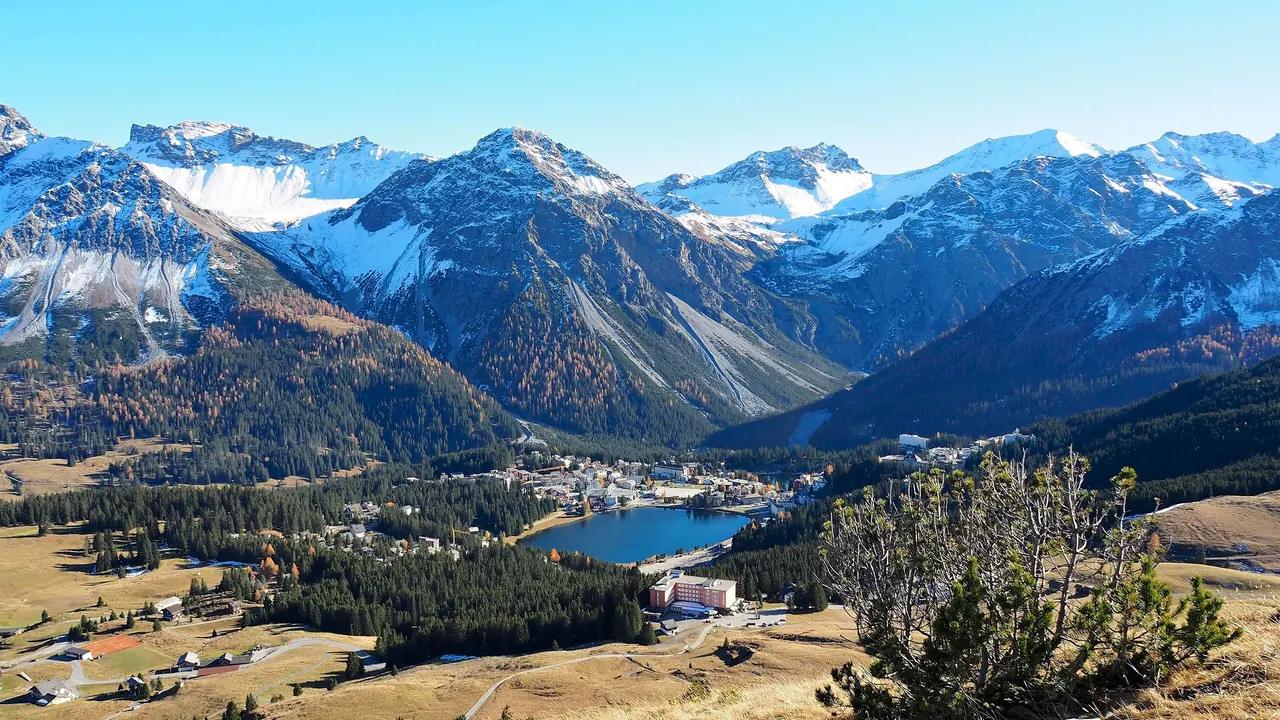
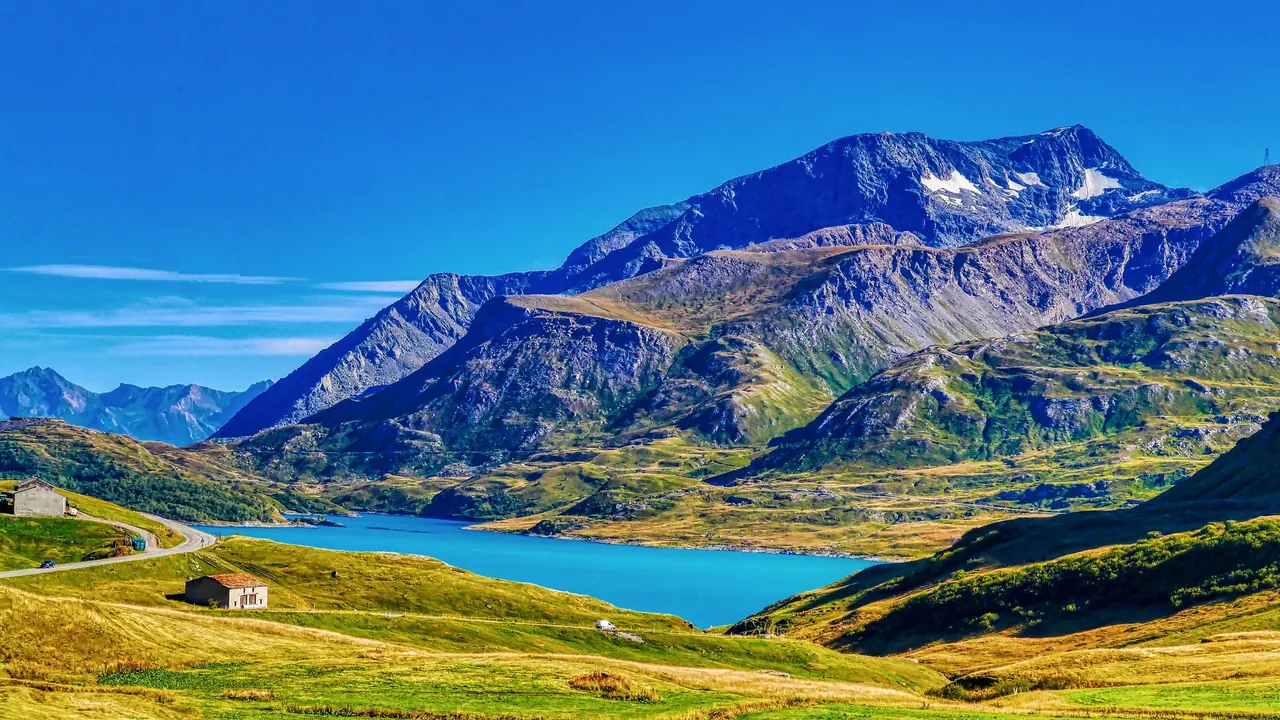
Photos: Arosa by Andres Passwirth, CC BY-SA 4.0, cropped; Val Cenis by Zairon, CC BY-SA 4.0, cropped.
Arosa or Val Cenis?
Our verdict in twelve categories, each scored against the same fixed benchmark cities, and the climate month by month, so you can choose for your trip.
Choose Arosa for
- getting around
- wellness
- live music and the arts
Arosa suits travellers who want a comfortable mountain stay without a car. The train climbs up from Chur, buses and lifts start in the village, and there are spa hotels, livelier winter evenings and a few fixed dates for comedy and chamber music. Choose it for a restful stay, or for a ski week where comfort matters more than cost.
Choose Val Cenis for
- prices
- culture and sights
- day trips
If you are watching what you spend, or you like wilder country, Val Cenis makes more sense. It costs much less, it borders the Vanoise with its glaciers and ibex, and in summer a car opens up Turin, Susa and the stone villages of the upper Maurienne. Expect quiet evenings and plenty of self-catering.
Scoreboard
Twelve categories on one fixed scale from 0 to 100. The shaded stretch is the gap between the two.
Your match
Pick a travel style or drag the sliders, and both match scores follow your weighting.
Wins on getting around and wellness with your weighting.
Wins on prices and culture and sights with your weighting.
What matters to you?
Category by category
What the scores mean for a trip.
Beaches & swimming
Neither is a place for swimming, but Arosa at least has somewhere to swim outdoors. The lido on the Untersee has a lawn and a jetty, and the colder Obersee and Schwellisee give a few weeks of lake dips in high summer.
Val Cenis has only the Mont Cenis reservoir at nearly 2,000m, which is lovely to walk around but too cold to swim in, so a pool is the realistic option.
Food & drink
Both kitchens serve hearty Alpine food, but Arosa has a little more range. You can eat Graubünden dishes such as capuns, barley soup and dried meat on hut terraces with valley views, and the luxury hotels have a small fine-dining tier for a special evening.
Val Cenis has nothing like that tier, but it does have something Arosa lacks: its own rare cheese, Bleu de Termignon, which you can buy at cheese shops and farm sales. Many visitors here cook in their apartments, and in both places a lot of restaurants close between seasons.
Culture & sights
In Arosa, everything worth seeing fits into one afternoon. The main sight is the Bergkirchli, a small wooden chapel clad in shingles that has stood by itself on the meadow above Innerarosa since the late Middle Ages. The Schanfigg museum tells the rest of the story: hill farming, and the decades when patients came to the village to treat tuberculosis in the thin, dry air. A handful of grand hotels from that time still stand.
Val Cenis has a little more to see, and it is spread along the valley instead of being gathered in one place. The best of it is the chapel of Saint-Sébastien at Lanslevillard, whose walls were painted with frescoes in the early 1500s. A few villages along, Termignon's church has an ornate baroque altar, and the stone houses under slab roofs make the walk between villages part of the visit. Neither place will fill a wet week. In Val Cenis, though, the old buildings line the whole valley, while in Arosa you visit the village's history in two places and then you are done.
Nightlife
Arosa is the place for an evening out, though a fairly smart and sedate one. In winter there is après-ski in slope-side bars, then hotel bars and a couple of small clubs that stay open late at weekends, and the January gay ski week brings the liveliest nights. Val Cenis is quieter still, with a few après-ski bars in Lanslebourg and Lanslevillard before dinner and bed. In summer both go to sleep early.
Nature & outdoors
Both are excellent mountain bases, and the difference is one of character. Arosa sits in a compact basin at 1,800m under the Weisshorn. Its lifts link to Lenzerheide to form one of Graubünden's larger ski areas, and in summer there are lake circuits, routes over the passes toward Davos and the bear sanctuary, all reached on foot or by lift from the village.
Val Cenis feels wilder. It borders the Vanoise, France's oldest national park, with glaciers, ibex and chamois, hut-to-hut hiking, via ferrata, and the great road climbs of the Mont Cenis and the Iseran. In winter its very long gentle run from about 2,800m suits beginners, but its summer season is shorter and the weather turns quickly.
Day trips
Val Cenis has more varied outings, at least in summer, because the Mont Cenis pass leads into Italy. Susa with its Roman arch and the mountaintop Sacra di San Michele lie just over the pass, and Turin is about an hour and a half away through the Fréjus tunnel. On the French side, the upper Maurienne adds Bonneval-sur-Arc, Bessans and the Esseillon forts.
From Arosa the obvious day out is Chur, an hour down by train over the Schanfigg viaducts, and Maienfeld, Vaduz or the Albula line are further on. That rail link makes Arosa's trips easy without a car. Val Cenis's best trips need one, and the choice narrows in winter when the pass closes.
Good for families
Both suit families who want snow and mountain air rather than attractions, and neither has zoos or museums made for children. Arosa is easier to manage, with free buses, cable cars that carry small legs to high viewpoints, the bear sanctuary, and an indoor pool and ice rink for wet days. Eating out with a family adds up quickly, though.
Val Cenis is gentler on beginners, with a very long easy run from high on the mountain, and its apartments make family self-catering cheaper. With toddlers, the altitude, cold and mountain roads take more planning.
Getting around
Arosa is far easier without a car. The Rhaetian Railway brings you up from Chur, free buses link the station, the lake, Innerarosa and the lifts, and the only effort is the slopes and stairs of the hillside village.
Val Cenis is a string of villages along the valley floor from Bramans to Lanslevillard. In winter, shuttles and lifts tie the resort villages together. The nearest station is at Modane, half an hour away, though, and outside the ski season most visitors drive to reach the trailheads and passes.
Shopping & style
Neither is somewhere to go shopping. Arosa's main street has a few fashion boutiques for hotel guests alongside the ski shops and Swiss chocolate, and Chur's old town is an hour down the line if you need more. Val Cenis has sports shops and small grocers, and its best buys are edible: the local cheese, honey and charcuterie.
Affordability
Val Cenis costs much less. Self-catering apartments are the usual way to stay, lift passes and lodging cost less than in the big resorts of the neighbouring valleys, and hiking in the national park is free.
Arosa is expensive at every level, with upscale hotels, Swiss resort prices for meals and lifts, and peak winter weeks priced to match. A simple guesthouse, cooking for yourself and the summer guest card soften the cost, but never enough to close the gap.
Live music & performing arts
Arosa has two real dates in its calendar. In December a long-established comedy festival puts stand-up and cabaret on stages around the village, some of them out in the snow. In summer, chamber concerts fill the churches, the old Bergkirchli included. Val Cenis offers little beyond village festivals and the occasional church concert, so if you want to catch a performance, choose Arosa and time your stay around one of these.
Wellness & relaxation
Arosa was built on rest. It grew up as a health resort for its dry mountain air, and its larger hotels have extensive spas with pools, saunas and treatment rooms looking out on the peaks. There is a public indoor pool too.
Val Cenis has the calm of its small villages, but only a few hotel spas with a sauna and hot tub. They make a pleasant end to a day outdoors rather than a reason to come. Neither place has thermal springs.
When should you go?
Pick your month. The climate figures are measured averages, not a forecast.
Arosa in July
Val Cenis in July
Daytime high, °C
Rainfall in the month, mm
Where the figures come from
Arosa's temperatures are measured 31 km from the centre, at Samedan.
Arosa has no rain gauge within 25 km of the centre, so its rainfall comes from a gridded climate dataset read at the destination rather than from a gauge further away.
Val Cenis has no weather station within reach, so its figures come from a gridded climate model rather than a measured record, and read a broad area rather than one spot.
Temperature and rainfall are climate normals, averaged over the years shown. Arosa: 2015-2025 (rainfall 1991-2020) normals, Samedan (31.2 km from centre). Val Cenis: 2001-2020 normals, NASA POWER reanalysis grid, no weather station within 90 km.
Both are high mountain places, so summer is short and winter is long. July and August are the warm months in each. Arosa reaches about 20°C and Val Cenis runs a degree or two cooler. In Arosa that warmth only just allows a cold dip in the lakes. The big difference is rain. In Arosa, summer is the wettest part of the year, at around 150mm a month from June to August and peaking at 159mm. Val Cenis stays much drier in summer, with under 90mm a month, which makes it more reliable for long hikes and rides.
In winter Val Cenis is the colder of the two. Daytime highs stay below freezing from December to February and fall to about -4°C in January. Arosa hovers around zero. In both places March is still fully wintry. May and the late autumn months are cool and in-between, too chilly for the high trails and before the snow is reliable.
Which traveller are you?
On a trip on a tight budget, Val Cenis is the clear choice. Self-catering apartments keep costs down, lift passes cost less than at the big French resorts nearby, and hiking in the Vanoise is free. Arosa stays expensive even in its cheaper summer months.
For a relaxing and wellness trip, Arosa is the better fit. It began as a place to recover in the dry mountain air, and its larger hotels have spas with pools, saunas and treatment rooms facing the peaks. Val Cenis has quiet villages but only modest hotel spas.
On a food and nightlife trip, Arosa gives you more to do once the lifts close. There are hut terraces serving capuns, a fine-dining tier in the luxury hotels, and après-ski that carries on into hotel bars and small clubs. In Val Cenis, evenings mostly end after dinner.
Before you go
| Measure | Arosa | Val Cenis |
|---|---|---|
| Official language | French, German, Italian, Romansh | French |
| Currency | Swiss Franc (CHF) | Euro (EUR) |
| Sockets | CJ230 V, 50 Hz | CE230 V, 50 Hz |
| Driving side | Right | Right |
| Time zone | UTC+1, UTC+2 in summer | UTC+1, UTC+2 in summer |
| Emergency number | 112 | 112 |
| Elevation | 1,775 m | 1,752 m |
| Main airport | Zürich Airport (ZRH)114 km from centre226 non-stop destinations | Turin Airport (TRN)59 km from centre65 non-stop destinations |
| Public holidays this year | 9 days | 11 days |
By the numbers
| Measure | Arosa | Val Cenis |
|---|---|---|
| Population | 3,185 | - |
| People per km² | 21 | - |
| Museums within 10 km | 1 | 0 |
| UNESCO World Heritage sites within 50 km | 2 | 1 |
Where else could you go?
Every comparison below shares a destination with this one, so you can follow Arosa or Val Cenis somewhere new.
- Lenzerheidevs Arosa
- Davosvs Arosa
- Klostersvs Arosa
- Val d'Isèrevs Val Cenis
- Tignesvs Val Cenis
- Val Thorensvs Val Cenis