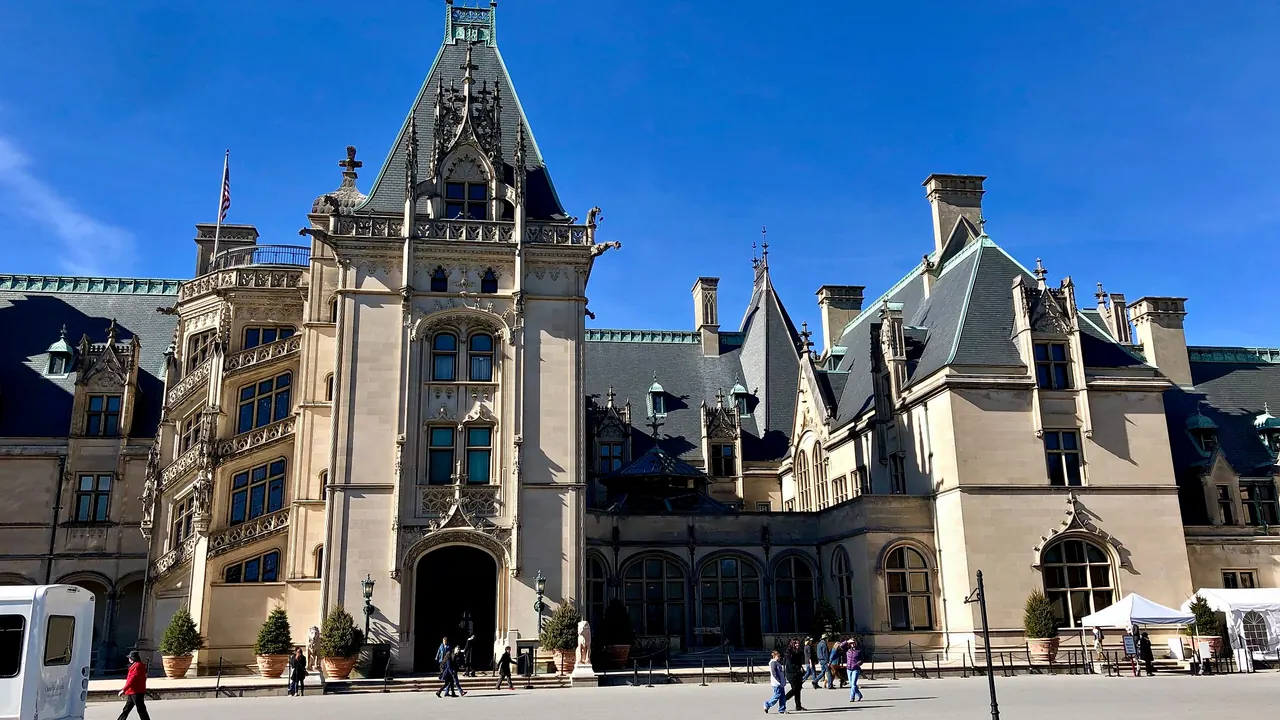
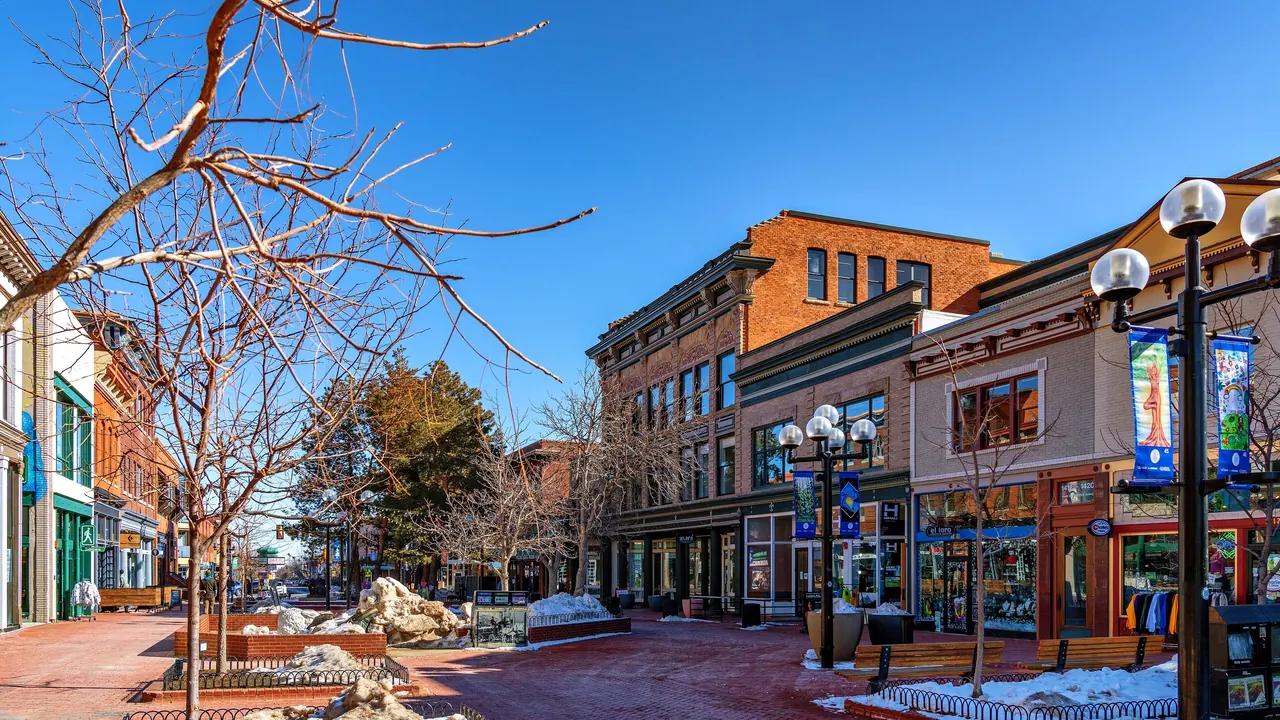
Photos: Asheville by Warren LeMay, CC0; Boulder by Tony Webster, CC BY 2.0, cropped.
Asheville or Boulder?
Our verdict in twelve categories, each scored against the same fixed benchmark cities, and the climate month by month, so you can choose for your trip.
Choose Asheville for
- culture and sights
- food and drink
- prices
Asheville suits travellers who want the mountains with a proper town attached. The Biltmore Estate and the Art Deco downtown give it real sights, the breweries and Appalachian farm cooking make it the better place to eat and drink, and evenings of bluegrass jams and craft-gallery browsing fill the hours off the trail. Pick it for a rounded trip in which hiking is one part among several.
Choose Boulder for
- getting around
- nature and the outdoors
- families
Boulder is the place for people who mainly want to be outdoors. The Flatirons trails start at the edge of town, Eldorado Canyon draws climbers, and Rocky Mountain National Park is close enough for a day. Its bike paths make the town easy to get around without a car. Expect a clean, sunny, health-minded small town with few sights, early nights and high prices, and go into Denver for anything bigger.
Scoreboard
Twelve categories on one fixed scale from 0 to 100. The shaded stretch is the gap between the two.
Your match
Pick a travel style or drag the sliders, and both match scores follow your weighting.
Wins on culture and sights and food and drink with your weighting.
Wins on getting around and nature and the outdoors with your weighting.
What matters to you?
Category by category
What the scores mean for a trip.
Beaches & swimming
Neither is a beach destination. Asheville gives you cold mountain water instead: waterfall pools in Pisgah, the natural rock slide at Sliding Rock, river floats on the French Broad and a little sandy beach at Lake Lure.
Boulder has less to offer for swimming: a small swim area at the reservoir and inner tubes on Boulder Creek. In both cities you swim for an afternoon in summer, then go back to the trails.
Food & drink
Asheville is the better place to eat. Its cooking comes from the Appalachians, with trout, heirloom corn, ramps and Southern barbecue and biscuits, and its brewing scene runs from downtown across the South Slope to large brewery sites in the valleys. The farmers' markets, cider and mead add to the range.
Boulder eats healthily rather than with a distinct identity. You will find plenty of vegetarian food, good bakeries, a Saturday market by the creek and tea at the carved Dushanbe Teahouse. For more variety, people drive to Denver.
Culture & sights
Asheville has two or three days of sightseeing, with the Biltmore Estate alone filling one of them. Its downtown, preserved by the slump after the 1920s boom, is full of Art Deco and Beaux-Arts buildings, and the Thomas Wolfe Memorial and the Folk Art Center add a literary side and a craft side.
Boulder's sights are mostly about atmosphere: the wooden cottages of the Chautauqua, the sandstone and red-tile university campus, and I.M. Pei's laboratory on the mesa. You can see them all in an unhurried day.
Nightlife
Both cities offer evenings of craft beer rather than clubbing, but Asheville keeps going a little longer. It has taprooms, cocktail bars and dive bars within walking distance on the South Slope, a local strip along Haywood Road, a long-standing LGBTQ scene and the summer drum circle in Pritchard Park.
In Boulder you go out on Pearl Street or among the student bars on University Hill, which go quiet when term ends. People there head home early because they plan to be at a trailhead by dawn.
Nature & outdoors
Both cities are mainly outdoor bases, and Boulder is the stronger of the two. The Flatirons and more than 200km of protected trails start at the edge of town, Eldorado Canyon is minutes away for climbers, and Rocky Mountain National Park adds alpine tundra and elk. The dry, sunny weather also makes hiking possible for more of the year.
Asheville's mountains are older, softer and wooded. Its strengths are Pisgah's mountain biking, whitewater on three rivers, spring rhododendrons and a famous October leaf season, with the Smokies an hour away.
Day trips
The day trips are about equally good but quite different. From Asheville you drive to small Southern mountain towns such as Hendersonville, Black Mountain and Brevard. The Cherokee museum and village to the west are the most rewarding outing, and Greenville is the nearest real city.
From Boulder, Denver is the obvious trip, with its art museum and Union Station, and you can reach it by express bus without a car. Beyond it lie the old mining towns of Georgetown and Idaho Springs and the brewing town of Fort Collins.
Good for families
Both suit active children better than ones who want theme parks. Asheville has the bears and red wolves at the Nature Center, zip lines, tubing and the farmyard at Biltmore, but the sights are spread out and need a lot of driving.
Boulder is more compact, with the creek path, the reservoir beach, street performers on Pearl Street and a planetarium. The altitude and strong sun mean taking water and hats on any walk.
Getting around
Boulder is much easier without a car. Downtown, the university and Chautauqua are linked by off-street bike paths along the creek, there is bike share, and an express bus runs to Denver and its airport.
In Asheville only the downtown and the South Slope are walkable, and buses are limited. The Biltmore, the Parkway and the waterfalls all mean slow drives on winding roads. In both places you will still need a car to reach the mountains.
Shopping & style
Asheville is the better place to shop because of its craft tradition. You can buy pottery, glass, weaving and woodwork straight from the studios in the River Arts District, and the Grove Arcade and Lexington Avenue add bookshops and vintage clothes.
Boulder's shopping is mostly the four brick blocks of the Pearl Street Mall. Its real strength is outdoor gear, with climbing, running and cycling shops that are better than you would expect in a town this size.
Affordability
Neither is cheap, but Asheville costs somewhat less. Its downtown hotels and inns are still expensive by American standards and get much dearer on autumn leaf weekends, and Biltmore admission and a hire car add to the bill. A midweek or winter stay is much easier on the budget.
Boulder costs more again. It is a wealthy town with few hotels, rooms peak in summer and on graduation and football weekends, and eating out costs what you would expect in an affluent town. Many visitors save by staying in Denver and driving in. In both places the trails are free.
Live music & performing arts
Asheville's music runs deeper because of its Appalachian roots. It has bluegrass and old-time jams, free summer evenings of fiddle music and clogging at Shindig on the Green, and the Mountain Dance and Folk Festival, which has run since 1928, alongside touring bands most nights.
Boulder's strength is its summer seasons: orchestral concerts in the 1898 Chautauqua Auditorium and outdoor Shakespeare on campus. Red Rocks Amphitheatre is also within easy reach.
Wellness & relaxation
Both are calm places for rest, but the experience is different. Asheville has the real soaking: riverside mineral tubs at Hot Springs, big spas at the grand resort hotels and porch-sitting at the mountain inns.
Boulder's wellness is more about studios and mindset, with yoga, meditation and a contemplative university tradition. For hot springs you have to go to Idaho Springs, an hour away.
When should you go?
Pick your month. The climate figures are measured averages, not a forecast.
Asheville in July
Boulder in July
Daytime high, °C
Rainfall in the month, mm
Where the figures come from
Asheville's temperatures are measured 50 km from the centre, at Asheville Regional Airport.
Asheville has no rain gauge within 25 km of the centre, so its rainfall comes from a gridded climate dataset read at the city rather than from a gauge further away.
Boulder has no rain gauge within 25 km of the centre, so its rainfall comes from a gridded climate dataset read at the city rather than from a gauge further away.
Boulder's sunshine is measured 45 km from the centre, at Denver / Stapleton International, Co..
Temperature and rainfall are climate normals, averaged over the years shown. Asheville: 1991-2020 (sunshine 1981-2010) normals, Asheville Regional Airport (50.3 km from centre). Boulder: 2010-2025 (sunshine 1981-2010, rainfall 1991-2020) normals, Boulder / Valmont (6.1 km from centre).
The two climates differ more in rain and sun than in heat. Asheville gets steady rain all year, around 100mm in most months, with humid summers and afternoon storms. Spring warms early, so May is already pleasant for walking, and October is mild, dry and bright with leaf colour. Midsummer peaks at about 29°C, and winters are cool but rarely harsh.
Boulder is far drier and much sunnier, with winter months of only about 15mm and plenty of bright days, so a January walk around town is often pleasant even though it is cold. Spring comes later and May is the wettest stretch. July is the hottest month in either city at about 31°C, with thunderstorms on the high trails in the afternoons. September is the best month in both: warm, settled and good for hiking. Neither city has a beach season worth planning around.
Which traveller are you?
On a culture and arts trip, Asheville is the richer choice. The Biltmore Estate fills a day, the downtown is full of 1920s Art Deco buildings, and the craft studios of the River Arts District add more. Boulder's few sights fit into a single day.
For a food and nightlife trip, choose Asheville. It has dozens of taprooms across downtown and the South Slope, Appalachian farm cooking and bluegrass jams in the pubs, though most places close around midnight. Boulder eats healthily and goes to bed even earlier.
For an outdoors trip, Boulder has the edge. Asheville's wooded ridges and Pisgah's bike trails are excellent, but Boulder's trails start right behind town under the Flatirons, Eldorado Canyon is a great climbing wall, and the dry, sunny weather lets you get out more often.
Before you go
| Measure | Asheville | Boulder |
|---|---|---|
| Currency | US Dollar (USD) | US Dollar (USD) |
| Sockets | AB120 V, 60 Hz | AB120 V, 60 Hz |
| Driving side | Right | Right |
| Time zone | UTC-5, UTC-4 in summer | UTC-7, UTC-6 in summer |
| Emergency number | 911 | 911 |
| Elevation | 650 m | 1,655 m |
| Main airport | Asheville Regional Airport (AVL)18 km from centre27 non-stop destinations | Denver International Airport (DEN)56 km from centre231 non-stop destinations |
| Public holidays this year | 14 days | 12 days |
By the numbers
| Measure | Asheville | Boulder |
|---|---|---|
| City population | 94,589 | 108,250 |
| People per km² | 796 | 1,628 |
| Museums within 10 km | 4 | 4 |
| UNESCO World Heritage sites within 50 km | 0 | 0 |
Where else could you go?
Every comparison below shares a destination with this one, so you can follow Asheville or Boulder somewhere new.
- Denvervs Boulder
- Winter Park, Coloradovs Boulder
- Keystonevs Boulder
- Gatlinburgvs Asheville
- Breckenridgevs Boulder
- Copper Mountainvs Boulder