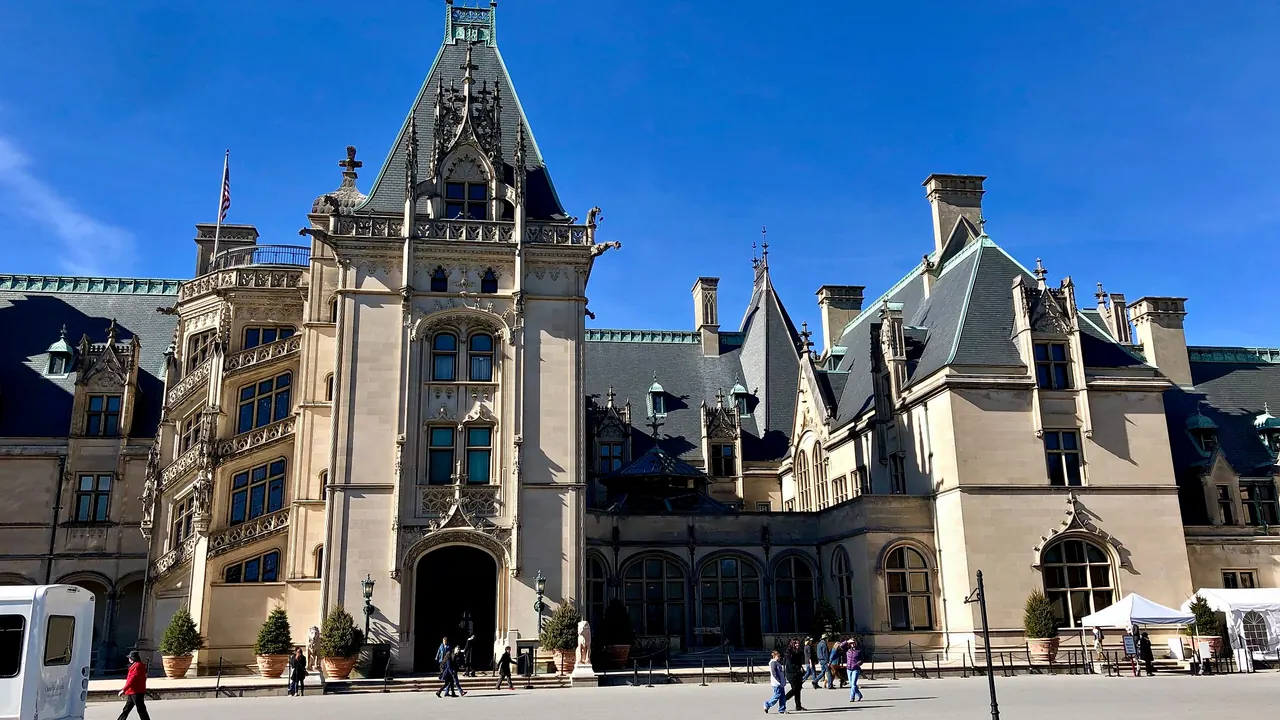
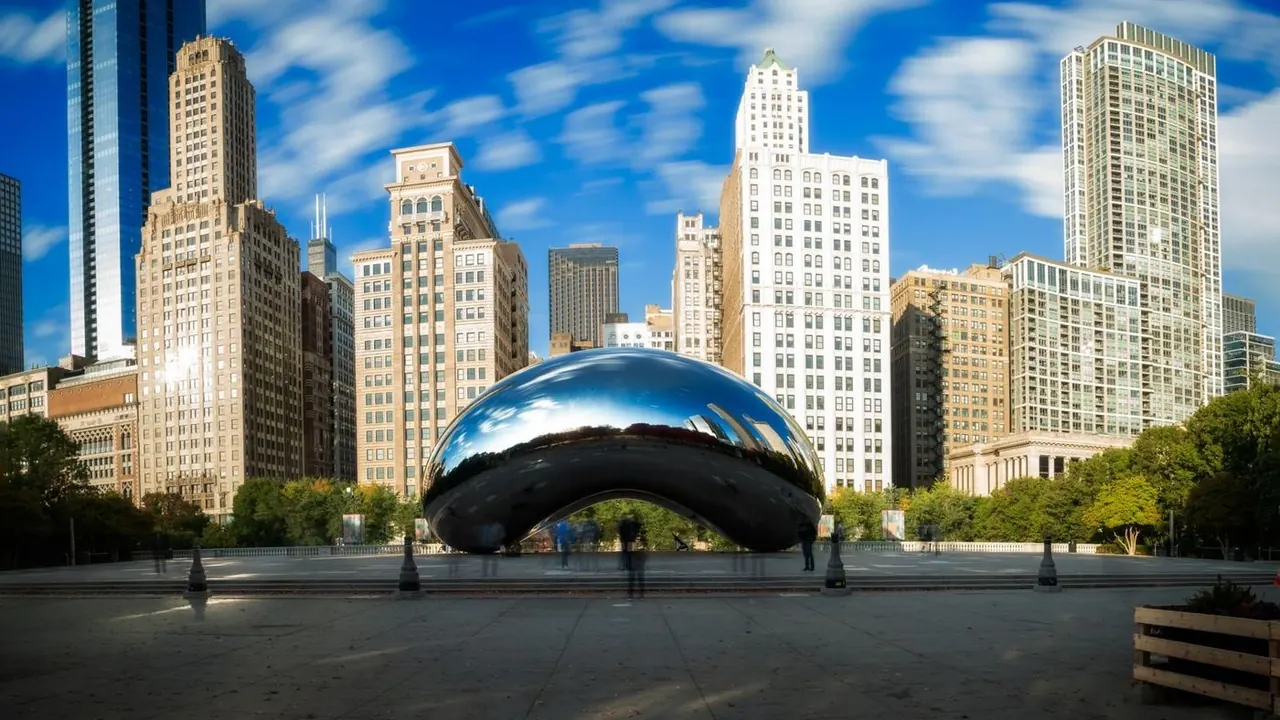
Photos: Asheville by Warren LeMay, CC0; Chicago by Jesus Toledo, Pexels License.
Asheville or Chicago?
Our verdict in twelve categories, each scored against the same fixed benchmark cities, and the climate month by month, so you can choose for your trip.
Choose Asheville for
- nature and the outdoors
- wellness
- day trips
Asheville is the choice for travellers who want the mountains at the centre of their trip. Hiking ridges and waterfall trails, cycling in Pisgah, rafting and driving the Blue Ridge Parkway fill the days, while the evenings are for brewery taprooms, farm-to-table cooking and quiet inn porches. It suits couples and active friends who like a slower pace and don't mind doing a lot of driving.
Choose Chicago for
- getting around
- beaches
- nightlife
For a big-city trip, Chicago wins on almost everything else. It has world-class architecture and museums, a symphony, opera and theatre scene, neighbourhood food from Pilsen to Devon Avenue, and bars that stay open into the small hours. Families, first-time visitors without a car and anyone who wants a full calendar of things to do will find far more here, as long as they plan around the hard winter.
Scoreboard
Twelve categories on one fixed scale from 0 to 100. The shaded stretch is the gap between the two.
Your match
Pick a travel style or drag the sliders, and both match scores follow your weighting.
Wins on nature and the outdoors and wellness with your weighting.
Wins on getting around and beaches with your weighting.
What matters to you?
Category by category
What the scores mean for a trip.
Beaches & swimming
Asheville has no beach life to speak of. Swimming there means cold plunge pools in Pisgah, the natural rock slide at Sliding Rock, tubing on the French Broad or the small sandy beach at Lake Lure. These are fun summer half-days, not lazy afternoons on the sand.
Chicago genuinely has beaches. More than twenty sandy strands line Lake Michigan inside the city, from Oak Street Beach under the Gold Coast towers to the volleyball crowds at North Avenue. The fresh water is only pleasant from late June to early September, but in summer you can easily fit a beach afternoon between museums.
Food & drink
Asheville is strongest in its glass. Dozens of breweries cluster downtown, on the South Slope and in West Asheville, and the cooking draws on Appalachian farms: trout, ramps, heirloom corn and proper biscuits and barbecue. Beyond Southern and modern American food, though, the choice runs thin.
Chicago has range at every level. There are its own staples of deep-dish, tavern-cut pizza and Italian beef, tasting-menu kitchens along Randolph Street, and whole neighbourhoods built around Mexican, South Asian, Vietnamese, Polish and Korean cooking. A week of eating in Chicago never repeats itself.
Culture & sights
Asheville's sights come down to the Biltmore Estate, which takes a full day, and a downtown of 1920s Art Deco and Beaux-Arts buildings, including the domed City Hall and the Grove Arcade. Add the Folk Art Center and the Thomas Wolfe Memorial and two or three days cover it.
Chicago is in another league. It is where the skyscraper grew up, and a river cruise past the Loop's towers, the Rookery and the Mies van der Rohe landmarks is a highlight on its own. The Art Institute's Impressionists, the Field Museum and Frank Lloyd Wright's Robie House could fill several more days.
Nightlife
A night out in Asheville means good beer in a brewery taproom, a cocktail downtown or a dive bar on Haywood Road, with a relaxed local crowd. On summer Fridays there is the drum circle in Pritchard Park. Dance clubs are few and most places close around midnight.
Chicago keeps going long after that. Late licences keep bars open until 4am, and each neighbourhood has its own style: dance clubs in River North, cocktail bars in Logan Square, the gay scene of Northalsted and house music nights in the city where the genre was born.
Nature & outdoors
This is Asheville's great advantage. The Blue Ridge Parkway runs along the edge of town, Pisgah National Forest starts just to the south, and the Great Smokies and Mount Mitchell are about an hour away. You get grassy ridge walks such as Max Patch, some of the country's best mountain-biking trails, rafting on the Nantahala, and spring rhododendrons and October colour on top.
Chicago's outdoors is mostly the lakeshore: the 29km path for walking or cycling, the lagoons of Lincoln and Jackson parks, and spring and autumn birding. For dunes or canyons you need to drive an hour or more to Indiana Dunes or Starved Rock, and the land is flat throughout.
Day trips
Asheville's outings are mostly drives into the landscape. Brevard leads into waterfall country, and Cherokee has the region's deepest look at its original people, at the Museum of the Cherokee Indian and the Oconaluftee village. Hendersonville, the Carl Sandburg Home and Greenville's riverside downtown add some variety.
Chicago's choices are fewer and need more effort across the prairie. Milwaukee is an easy train ride and Oak Park is on the city's edge. Lake Geneva and the Michigan harbour towns need a car, and a nice day out there doesn't match a day in the Smokies.
Good for families
Asheville suits active children. They can watch bears and red wolves at the Western North Carolina Nature Center, take on Sliding Rock, go river tubing and try the zip lines. There is no zoo, aquarium or theme park, and Dollywood is two hours away over the mountains.
Chicago has much more for children within easy reach. You could spend a day in the Museum of Science and Industry's coal mine and U-boat, and another on the Museum Campus with dinosaurs, belugas and a planetarium next to each other. Lincoln Park Zoo is free, and Navy Pier and lifeguarded summer beaches fill the gaps.
Getting around
In Asheville a car is close to essential. Downtown and the South Slope are walkable, if hilly, but the Biltmore, the Parkway and every trailhead lie out along slow, winding roads, and buses barely help.
Chicago is easy without a car. The L runs from both airports into the Loop, and the flat downtown grid puts the Art Institute, Millennium Park and the Museum Campus within walking distance of each other. Crossing between outer neighbourhoods often means a long bus ride, and January wind makes walking hard work.
Shopping & style
Asheville is a place to buy something handmade. Potters, glassblowers and weavers sell from their studios in the River Arts District, and the Folk Art Center shows off Appalachian craft. The Grove Arcade and Lexington Avenue add independent bookshops, vintage clothes and outdoor gear.
Chicago offers far more choice, from department stores and flagships on the Magnificent Mile to luxury labels on Oak Street and the old Marshall Field's building on State Street. Wicker Park and Andersonville supply the independent boutiques and record shops. What Chicago lacks is Asheville's local craft tradition.
Affordability
Both are expensive in similar ways, but the costs come from different places. In Asheville they are the hire car, the Biltmore ticket and inn rates that jump in leaf season, while the trails, waterfalls and Parkway themselves cost nothing.
In Chicago, high hotel taxes and convention-week rates push up the bill. On the other hand, you can skip the car and use the L, eat cheaply at taquerias and hot dog stands, and enjoy the lakefront and Lincoln Park Zoo for free.
Live music & performing arts
Asheville's live music is rooted in the mountains. There are bluegrass and old-time jams in pubs, fiddles and clogging at the free Shindig on the Green, and the Mountain Dance and Folk Festival, held since 1928. Its symphony and theatres are pleasant but small-scale.
Chicago is one of the reasons people travel for performance at all. The Chicago Symphony Orchestra, the Lyric Opera, Steppenwolf, the Goodman and dozens of storefront stages run alongside nightly improv at Second City. Electric blues and late jazz sets carry the city's own sound into the small hours.
Wellness & relaxation
Asheville was built partly on rest cures, and that heritage remains in its retreats, yoga studios and the spas of the hillside resort hotels. Hot Springs, about forty minutes away, has outdoor tubs of mineral water beside the French Broad. Cool evenings and quiet porches do the rest.
Chicago offers bathing rather than calm. There is a century-old Russian-and-Turkish bathhouse in Wicker Park with steam rooms and cold plunges, a Korean-style spa in the suburbs, and warm conservatories for a winter afternoon. Around these, the pace is that of a big, busy city.
When should you go?
Pick your month. The climate figures are measured averages, not a forecast.
Asheville in July
Chicago in July
Daytime high, °C
Rainfall in the month, mm
Where the figures come from
Asheville's temperatures are measured 50 km from the centre, at Asheville Regional Airport.
Asheville has no rain gauge within 25 km of the centre, so its rainfall comes from a gridded climate dataset read at the city rather than from a gauge further away.
Temperature and rainfall are climate normals, averaged over the years shown. Asheville: 1991-2020 (sunshine 1981-2010) normals, Asheville Regional Airport (50.3 km from centre). Chicago: 1991-2020 (sunshine 1961-1990) normals, Chicago Midway Airport (14.5 km from centre).
Asheville's mountain climate stays fairly mild all year. April, May, September and October are the best months for trails and the Parkway, and October is also the driest month, at about 72mm. Summer is warm and humid, with afternoon storms. Winter days of around 9°C are cool but still fine for walking around town. Rain falls quite evenly through the year, so no month is a washout and none is reliably dry.
Chicago swings much harder. January highs sit around 0°C, with short, grey days, and walking the city then is a chore. From June to August it is as warm as Asheville and much sunnier. Lake Michigan is only warm enough to swim in from July into early September, peaking near 23°C in August. May and June bring the heaviest rain, so September is often the most comfortable month for exploring on foot.
Which traveller are you?
On an outdoors trip, Asheville is the clear pick. Pisgah National Forest, the Great Smokies, Mount Mitchell and the Blue Ridge Parkway are all within about an hour, with ridge hikes, mountain biking and whitewater rafting. Chicago's flat lakefront path can't compete.
For a food and nightlife trip, choose Chicago. You can eat your way through Mexican Pilsen, South Asian Devon Avenue and the West Loop's restaurant row, then carry on in Wicker Park or River North bars that pour until 4am. Asheville's taprooms mostly wind down by midnight.
On a relaxing and wellness trip, Asheville suits better. Its long history as a mountain health retreat lives on in yoga studios, resort spas and the riverside mineral tubs at Hot Springs. Chicago offers an old steam bathhouse and the lakefront, but the city never slows down.
Before you go
| Measure | Asheville | Chicago |
|---|---|---|
| Currency | US Dollar (USD) | US Dollar (USD) |
| Sockets | AB120 V, 60 Hz | AB120 V, 60 Hz |
| Driving side | Right | Right |
| Time zone | UTC-5, UTC-4 in summer | UTC-6, UTC-5 in summer |
| Emergency number | 911 | 911 |
| Elevation | 650 m | 179 m |
| Main airport | Asheville Regional Airport (AVL)18 km from centre27 non-stop destinations | Chicago O'Hare International Airport (ORD)25 km from centre274 non-stop destinations |
| Public holidays this year | 14 days | 13 days |
By the numbers
| Measure | Asheville | Chicago |
|---|---|---|
| City population | 94,589 | 2,746,388 |
| People per km² | 796 | 4,529 |
| Museums within 10 km | 4 | 44 |
| UNESCO World Heritage sites within 50 km | 0 | 1 |
| Swim season, months above 21 °C | - | 1 month |
Where else could you go?
Every comparison below shares a destination with this one, so you can follow Asheville or Chicago somewhere new.
- Gatlinburgvs Asheville
- Pigeon Forgevs Asheville
- Atlantavs Asheville
- Nashvillevs Asheville
- Charlestonvs Asheville
- Myrtle Beachvs Asheville