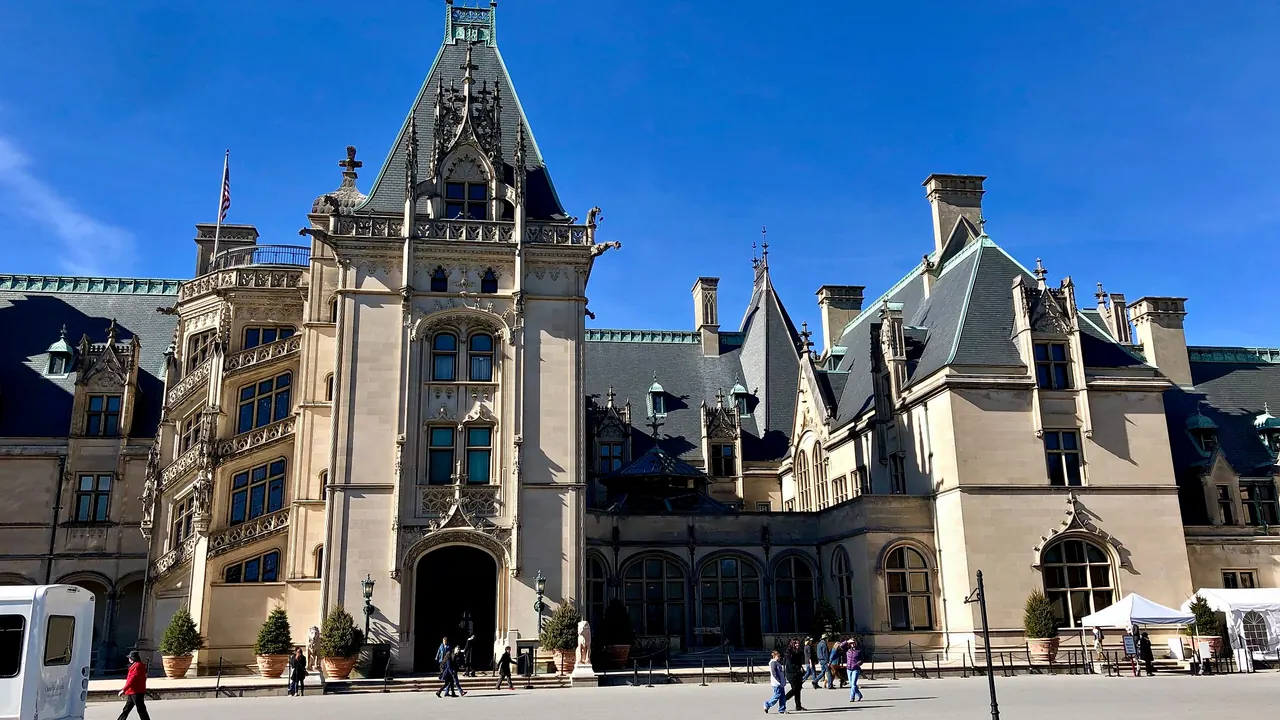
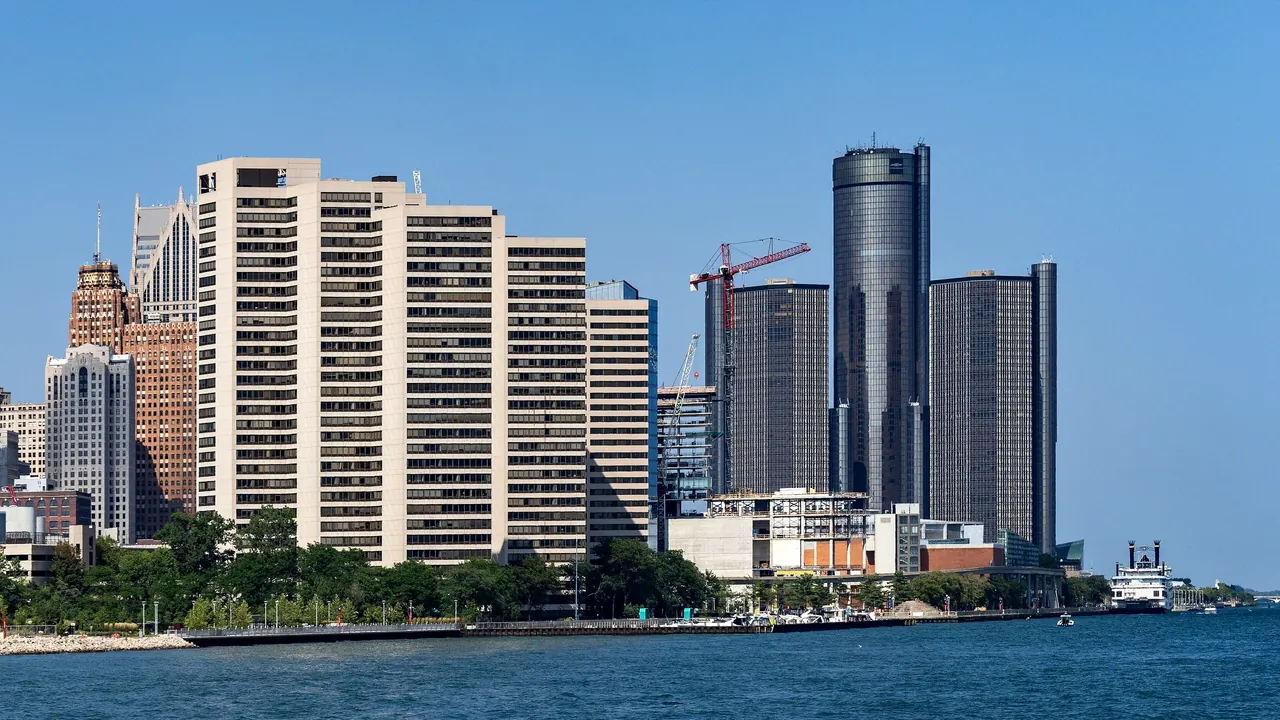
Photos: Asheville by Warren LeMay, CC0; Detroit by Chris Woodrich, CC BY-SA 4.0, cropped.
Asheville or Detroit?
Our verdict in twelve categories, each scored against the same fixed benchmark cities, and the climate month by month, so you can choose for your trip.
Choose Asheville for
- nature and the outdoors
- wellness
- shopping
Asheville is the pick for travellers who want mountains on the doorstep: ridge hikes, waterfalls, mountain biking and river trips in the Blue Ridge, then an evening in a brewery taproom and a quiet night at an inn. It also suits a slower, restorative trip with spas, yoga and the riverside tubs at Hot Springs, and anyone who would rather bring home a piece of handmade pottery than a designer bag.
Choose Detroit for
- beaches
- prices
- nightlife
Detroit is for the visitor who comes for the city itself. The Detroit Institute of Arts, the Henry Ford Museum and the Motown Museum give it the deeper sights, and its music runs from the symphony at Orchestra Hall to jazz clubs and techno nights. It is also the cheaper place to stay and has the wider international food, though you will need a car in either city.
Scoreboard
Twelve categories on one fixed scale from 0 to 100. The shaded stretch is the gap between the two.
Your match
Pick a travel style or drag the sliders, and both match scores follow your weighting.
Wins on nature and the outdoors and wellness with your weighting.
Wins on beaches and prices with your weighting.
What matters to you?
Category by category
What the scores mean for a trip.
Beaches & swimming
Neither city is a beach destination, but Detroit at least has lake swimming in high summer. There is the small beach on Belle Isle, and the long, shallow shore at Lake St. Clair Metropark warms enough in July and August for a comfortable dip.
In Asheville you swim in mountain water. The waterfall pools in Pisgah, the rock slide at Sliding Rock, tubing on the French Broad and the little beach at Lake Lure are fun on a hot day, but the water stays cool and none of it adds up to a beach day.
Food & drink
The two eat well in quite different ways. Asheville's cooking is Appalachian and Southern: trout, heirloom beans, ramps, barbecue and biscuits. Beer from the dozens of breweries downtown and on the South Slope is the main event, with cider and mead on the side.
Detroit's strengths are its own street food and its immigrant neighbourhoods. There are Coney dogs, thick square pizza and Saturdays at Eastern Market, Lebanese and Yemeni cooking in Dearborn, Mexicantown and the Polish bakeries of Hamtramck. Asheville is the place for a farm-to-table dinner, while Detroit has far more international food, though its best meals are often a drive away.
Culture & sights
Detroit has more to see. The Detroit Institute of Arts alone, with Rivera's Detroit Industry murals, goes beyond anything in Asheville's museums. The Henry Ford Museum, Greenfield Village, the Motown Museum and the Charles H. Wright Museum add several full days on industry, music and African American history.
Asheville has the Biltmore Estate, a single great day, and a compact Art Deco downtown with the domed City Hall and the Grove Arcade. Both cities have fine early twentieth-century buildings, but Asheville's are easier to walk between, and its sights run out after two or three days.
Nightlife
Detroit offers more of a night out, including something Asheville lacks entirely: techno, which was born here. There are warehouse parties, small serious clubs and after-hours events, plus cocktail bars and dives in Corktown and Midtown. The drawback is that the scene is spread out, so getting between neighbourhoods means taxis.
Asheville's evenings are gentler and the bars sit closer together: taprooms, cocktail bars and dives a short walk apart downtown and on the South Slope, with Haywood Road in West Asheville for a local crowd. It suits a few relaxed beers, but few places stay open much past midnight.
Nature & outdoors
This is where Asheville is far ahead. It sits among the Southern Appalachians, with the Blue Ridge Parkway at its edge and Pisgah National Forest just south. Mount Mitchell and the Great Smokies are about an hour away, and trails, mountain biking and whitewater rafting are close by.
Detroit is flat, and its outdoors means rivers and parks: Belle Isle, the RiverWalk, kayaking and sailing on Lake St. Clair, and wetland trails in the metroparks. These make a pleasant afternoon but are not a reason to travel, and the long, cold winters shorten the season.
Day trips
Neither city has a major destination within reach. Asheville's outings come out slightly ahead because the landscape itself is the attraction: the waterfall country around Brevard, the Cherokee museum and Oconaluftee village, Carl Sandburg's home at Flat Rock and the autumn orchards.
From Detroit the choices are towns and single attractions. Ann Arbor has its campus and museums, Frankenmuth is a Bavarian-themed town, Toledo has its art museum, Windsor in Canada is across the river, and Cedar Point's roller coasters are at the far edge of a day out. From both cities you will be driving.
Good for families
Families do about equally well, but in different ways. Asheville suits active children, with tubing, Sliding Rock, zip lines, short waterfall hikes, the bears and red wolves at the Nature Center and the farmyard at Biltmore.
Detroit has the bigger set pieces: a large zoo with a polar bear tunnel, the hands-on Michigan Science Center, the small aquarium on Belle Isle and the steam trains of Greenfield Village. Several of these also work on cold or wet days. In both cities you spend plenty of time driving between sights.
Getting around
Both cities leave most visitors needing a car, so the difference is in what you can do without one. Detroit has a little rail: the People Mover loops round downtown and the QLine streetcar runs up Woodward to the museums of Midtown and New Center. A stay built around museums and concerts can manage without a car.
Asheville's walkable centre is smaller and hillier. Its main sights, the Biltmore, the Parkway and the trailheads, lie outside it on slow, winding mountain roads that get crowded on October weekends.
Shopping & style
Asheville is the better place to shop, as long as you want handmade things. There is pottery, glass, weaving and woodwork in the River Arts District studios and the downtown galleries, the craft guild's Folk Art Center, and independent boutiques in the Grove Arcade and around Lexington Avenue.
Detroit has less, and it is more scattered: Detroit-made watches, leather and prints in Midtown and Corktown, market-day stalls at Eastern Market, and a suburban mall for the big brands. Neither has a central shopping street full of big brands or luxury labels.
Affordability
Detroit is the cheaper place to stay. Outside event nights its hotels cost less than in most big American cities, and Coney dogs, pizza and Dearborn's Middle Eastern food are good value.
Asheville is priced as a popular weekend escape, with expensive inns and steep autumn weekends, and the Biltmore is a costly day out. On the plus side, the trails, waterfalls and Parkway cost nothing, and midweek or winter stays are easier on the budget. In both cities, tips and a hire car add to the cost.
Live music & performing arts
Detroit has far more on stage. Its symphony plays in Orchestra Hall, the Detroit Opera performs in a restored opera house, and the Fox and Fisher theatres host big concerts and touring Broadway. Jazz clubs and the free Labor Day jazz festival sit alongside the city's Motown, soul and gospel tradition.
Asheville's music is smaller and more rooted in the region. There are bluegrass and old-time jams, street buskers, free fiddle and clogging evenings at Shindig on the Green, and the Mountain Dance and Folk Festival, which has run since 1928. Go to Asheville for Appalachian music, not for orchestras or opera.
Wellness & relaxation
The gap is wide. Asheville has been a place to rest since the nineteenth century, when people came to its mountain air to recover their health, so you can build a whole stay around unwinding. Neither city has a public bathhouse, but only Asheville has natural mineral water within reach, at Hot Springs beside the French Broad.
In Detroit, a calm afternoon fits in between museums and gigs rather than being the reason for the trip. A hotel spa or a suburban day spa will do for a massage. The quietest hours are by the water, cycling the RiverWalk or wandering the woods and lagoon of Belle Isle with the Windsor skyline across the river.
When should you go?
Pick your month. The climate figures are measured averages, not a forecast.
Asheville in July
Detroit in July
Daytime high, °C
Rainfall in the month, mm
Where the figures come from
Asheville's temperatures are measured 50 km from the centre, at Asheville Regional Airport.
Asheville has no rain gauge within 25 km of the centre, so its rainfall comes from a gridded climate dataset read at the city rather than from a gauge further away.
Temperature and rainfall are climate normals, averaged over the years shown. Asheville: 1991-2020 (sunshine 1981-2010) normals, Asheville Regional Airport (50.3 km from centre). Detroit: 1991-2020 (sunshine 1981-2010) normals, Detroit / Hamtramck (9.2 km from centre).
Asheville lies well to the south of Detroit, so its winters are much milder. January days reach about 9°C, cool enough for a coat but fine for walking downtown or on a low trail. Its height in the mountains keeps summer no hotter than Detroit's, though June to August are humid with afternoon storms. Spring and autumn are the best seasons for hiking, with blossom in late spring and leaf colour in October, the driest month. Rain falls steadily all year, so pack for showers whatever the month.
Detroit swings much harder. In January highs hover around freezing, and from November to March the cold, grey days push most plans indoors. Summer is warm, and from May to August Detroit gets more sunshine than Asheville. Only July, August and the start of September are warm enough for a lake swim, with the water reaching about 23°C. Late May to September suits Detroit best, while April to June and September to October suit Asheville.
Which traveller are you?
On an outdoors trip, Asheville wins easily. The Blue Ridge Parkway, Pisgah National Forest and the Great Smokies are all within about an hour, with waterfall walks, ridge hikes, mountain biking and rafting. Detroit has flat river parks and metropark trails.
For a culture and arts trip, Detroit is the stronger base. The Detroit Institute of Arts with its Rivera murals, the Henry Ford Museum and an evening at Orchestra Hall or a jazz club outweigh Asheville's Biltmore and its compact Art Deco downtown.
On a relaxing and wellness trip, Asheville is the clear choice. Its resort spas, yoga studios, quiet inn porches and the riverside mineral-water tubs at Hot Springs have no real counterpart in Detroit, where unwinding means a hotel spa.
Before you go
| Measure | Asheville | Detroit |
|---|---|---|
| Currency | US Dollar (USD) | US Dollar (USD) |
| Sockets | AB120 V, 60 Hz | AB120 V, 60 Hz |
| Driving side | Right | Right |
| Time zone | UTC-5, UTC-4 in summer | UTC-5, UTC-4 in summer |
| Emergency number | 911 | 911 |
| Elevation | 650 m | 183 m |
| Main airport | Asheville Regional Airport (AVL)18 km from centre27 non-stop destinations | Detroit Metropolitan Wayne County Airport (DTW)28 km from centre129 non-stop destinations |
| Public holidays this year | 14 days | 13 days |
By the numbers
| Measure | Asheville | Detroit |
|---|---|---|
| City population | 94,589 | 639,111 |
| People per km² | 796 | 1,727 |
| Museums within 10 km | 4 | 18 |
| UNESCO World Heritage sites within 50 km | 0 | 0 |
| Swim season, months above 21 °C | - | 2 months |
Where else could you go?
Every comparison below shares a destination with this one, so you can follow Asheville or Detroit somewhere new.
- Gatlinburgvs Asheville
- Pigeon Forgevs Asheville
- Chattanoogavs Asheville
- Atlantavs Asheville
- Pittsburghvs Detroit
- Torontovs Detroit