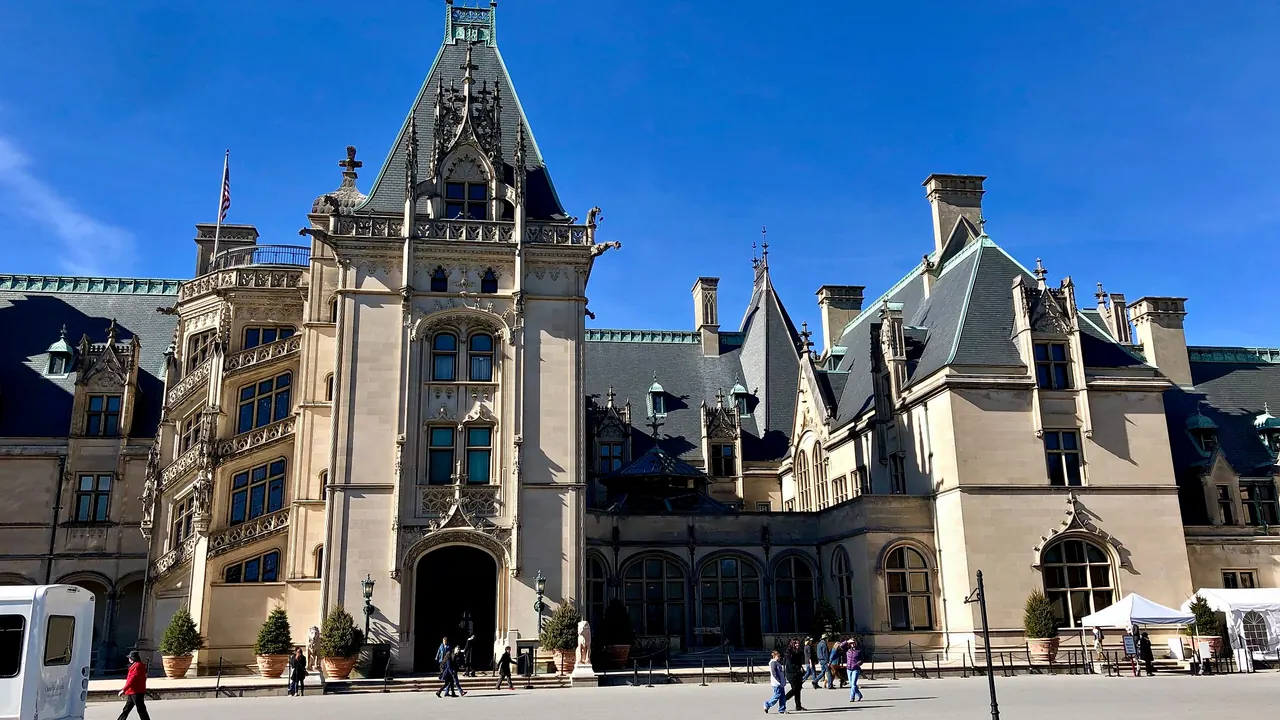
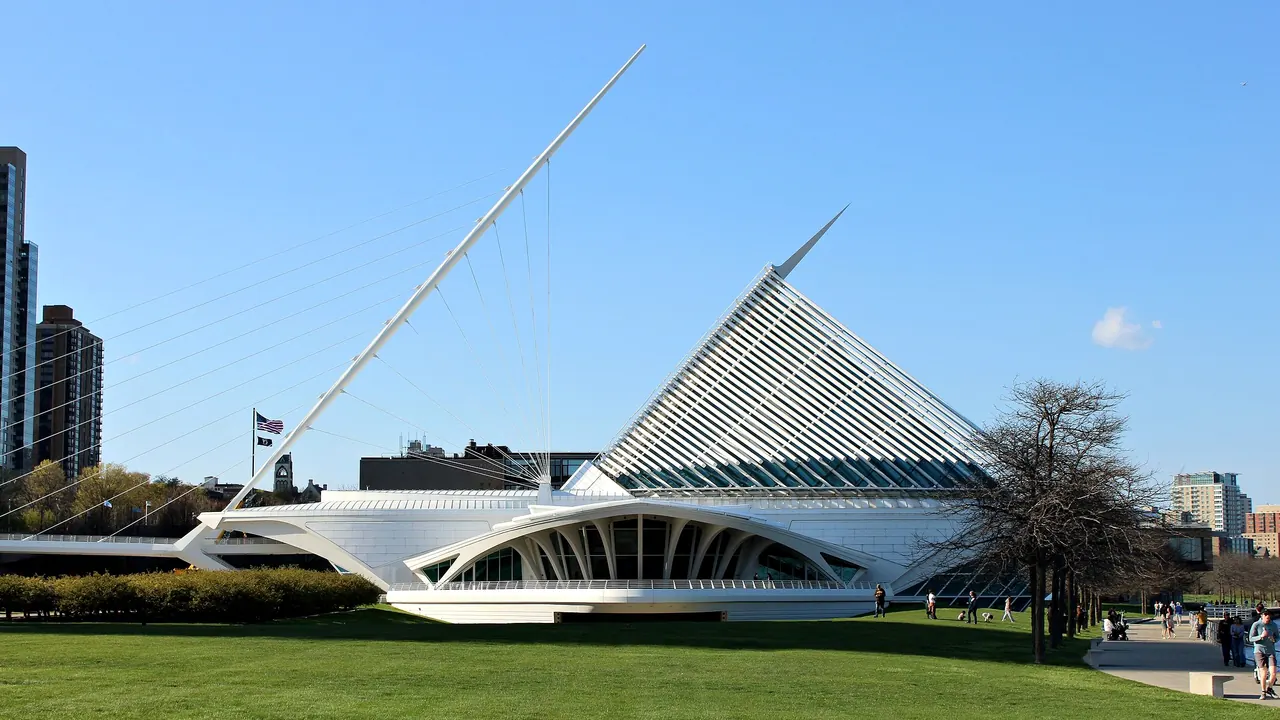
Photos: Asheville by Warren LeMay, CC0; Milwaukee by Michael Barera, CC BY-SA 4.0, cropped.
Asheville or Milwaukee?
Our verdict in twelve categories, each scored against the same fixed benchmark cities, and the climate month by month, so you can choose for your trip.
Choose Asheville for
- nature and the outdoors
- wellness
- shopping
Asheville suits travellers who want mountains on the doorstep: ridge hikes, mountain biking, whitewater and the autumn colour of the Blue Ridge. Alongside that come the Biltmore Estate, a strong craft tradition, Appalachian farm cooking and a slow pace that sends people home rested. It is the better pick for couples and active families who are happy to drive.
Choose Milwaukee for
- beaches
- day trips
- prices
For a cheaper and more urban trip, Milwaukee makes more sense. Its corner taverns, resident arts companies and lakefront festivals give it fuller evenings, families get a large zoo and indoor attractions, and Chicago is an easy train ride away. Plan it for summer, when the beach and the beer gardens are busy.
Scoreboard
Twelve categories on one fixed scale from 0 to 100. The shaded stretch is the gap between the two.
Your match
Pick a travel style or drag the sliders, and both match scores follow your weighting.
Wins on nature and the outdoors and wellness with your weighting.
Wins on beaches and day trips with your weighting.
What matters to you?
Category by category
What the scores mean for a trip.
Beaches & swimming
Neither city is a beach destination, but only Milwaukee has real sand on open water. Asheville's swimming is all mountain water: waterfall pools in Pisgah, the natural rock slide at Sliding Rock, tubing on the French Broad and the small beach at Lake Lure, and all of it stays cold even in midsummer.
Milwaukee has Bradford Beach below the East Side bluffs, with volleyball and a crowd on summer weekends, plus McKinley and South Shore along the same lakefront. Lake Michigan is freshwater and unpredictable, and only warm enough for a swim in high summer, so expect an afternoon of sand and paddling rather than a seaside vacation.
Food & drink
Beer matters in both cities, but Asheville has the more interesting table. Its cooking draws on Appalachian farms, with trout, heirloom corn, ramps and biscuits served in chef-led dining rooms, and alongside the taprooms of the South Slope and West Asheville there is cider, mead and distilling.
Milwaukee eats in the German and Polish tradition of the Upper Midwest: the Friday fish fry, bratwurst, cheese curds, frozen custard and a supper-club evening with a brandy old fashioned. It is hearty and full of character, and the South Side adds good Mexican cooking, but the cooking is less ambitious overall.
Culture & sights
Each city fills two or three days, but with different things. Asheville is dominated by one great house, the Biltmore Estate with its Olmsted gardens, and by a downtown of Art Deco and Beaux-Arts buildings that survived intact because of the slump after the 1920s.
Milwaukee's draw is its museums: the Milwaukee Art Museum in Calatrava's winged pavilion on the lakefront, and the Harley-Davidson Museum. The Pabst Mansion and the Basilica of St Josaphat show off the city's brewing-era wealth.
Nightlife
Milwaukee offers the longer and more varied night out. The corner tavern, with its pool table and regulars, is the local institution. Water Street draws a loud sports and student crowd, bars stay open until about 2am, and in summer the beer gardens and game nights add more.
Asheville's evenings are gentler: taprooms and cocktail bars downtown and on the South Slope, Haywood Road for a local crowd, and most places winding down around midnight. It suits a sociable beer rather than a late finish.
Nature & outdoors
This is the widest gap between the two. Asheville sits among the Southern Appalachians, with the Blue Ridge Parkway, Pisgah National Forest, Mount Mitchell and the Great Smokies all within about an hour. That means ridge hikes over grassy balds, some of the country's best mountain biking and whitewater rafting.
Milwaukee's outdoors is gentler and centred on Lake Michigan: Olmsted's Lake Park, flat cycling on the Oak Leaf Trail and kayaking on the river through town. The glacial hills of the Kettle Moraine are the best escape inland, pleasant but no match for the mountains.
Day trips
Milwaukee has the stronger day out, because Chicago is about an hour and a half away by train. Madison, Frank Lloyd Wright's buildings in Racine, the stone mills of Cedarburg and the company village of Kohler add variety without a long drive.
From Asheville, most outings go into the landscape or to small towns: Hendersonville, Black Mountain, Brevard's waterfall country and the Cherokee museum to the west. Greenville is the only sizeable city within easy reach, and every trip needs a car.
Good for families
Both cities are relaxed with children, but they suit different families. Milwaukee has the classic city attractions: a large zoo, the aquariums at Discovery World, a children's museum and the Mitchell Park Domes for cold days, plus the beach and a baseball game in summer.
Asheville is better for active children: the bears and red wolves at the Nature Center, Sliding Rock, river tubing and zip lines. It has no zoo or theme park, and much of the day goes on driving between sights.
Getting around
Neither city works well without a car, but Milwaukee is a little easier. Its compact centre is linked by the Riverwalk and The Hop streetcar, buses reach the zoo and the East Side, and parking is simple.
In Asheville, the walkable downtown and South Slope are only the start. Reaching Biltmore, the Parkway and the trailheads means slow, winding mountain roads, which fill with traffic on October weekends.
Shopping & style
Asheville gives you more reason to shop, and what it sells is handmade. Pottery, glass, weaving and woodwork fill the River Arts District studios and the downtown galleries, the Folk Art Center shows off the regional craft guild, and the Grove Arcade adds boutiques and bookshops.
In Milwaukee, browsing is mostly in the warehouse boutiques of the Third Ward and the vintage and record shops of Brady Street. Most visitors take home cheese, local beer or Harley-Davidson gear rather than anything crafted.
Affordability
Milwaukee is easier on the budget. Its hotels are well below coastal prices, tavern beer and the fish fry are cheap by American standards, and the lakefront and many festivals cost little, although big summer weekends push room rates up.
Asheville is priced as a popular weekend escape, with expensive inns, a costly Biltmore ticket and a hire car you can hardly do without. Its trails and the Parkway are free, though, and midweek or winter stays cost noticeably less.
Live music & performing arts
The two are evenly matched, but the music is different. Asheville's strength is Appalachian tradition: bluegrass and old-time jams, fiddling and clogging at Shindig on the Green, and the Mountain Dance and Folk Festival, held since 1928. Its formal arts are small.
Milwaukee has the fuller set of resident companies, including the symphony, the Florentine Opera, the ballet and the Rep, along with the ornate Pabst Theater. Its peak is Summerfest on the lakefront, with hundreds of acts over several weeks.
Wellness & relaxation
Asheville is by far the better place to unwind. People have come to its mountain air for their health since the nineteenth century, and today that means yoga studios, retreats, large resort spas and the riverside mineral tubs at Hot Springs, about forty minutes away.
Milwaukee offers hotel and day spas and a calming walk along the lakefront or the Riverwalk. For a proper spa day, visitors drive an hour north to Kohler.
When should you go?
Pick your month. The climate figures are measured averages, not a forecast.
Asheville in July
Milwaukee in July
Daytime high, °C
Rainfall in the month, mm
Where the figures come from
Asheville's temperatures are measured 50 km from the centre, at Asheville Regional Airport.
Asheville has no rain gauge within 25 km of the centre, so its rainfall comes from a gridded climate dataset read at the city rather than from a gauge further away.
Temperature and rainfall are climate normals, averaged over the years shown. Asheville: 1991-2020 (sunshine 1981-2010) normals, Asheville Regional Airport (50.3 km from centre). Milwaukee: 1991-2020 (sunshine 1981-2010) normals, Gen Mitchell International Airport (11.2 km from centre).
Asheville's mountain climate is the milder of the two through the year. Late spring and the stretch from late September into October are its best seasons for walking and hiking: warm days, cool evenings, and October is also the driest month at about 72mm. Rain otherwise falls fairly evenly all year. Summer reaches about 29°C and brings humid afternoons and storms, and winter days are cool rather than bitter, so a winter visit is still possible.
Milwaukee has a short, bright summer and a long, cold winter. June to August are the sunniest months in either city, with highs in the mid-twenties, while in January the daytime high is around -1°C and from November to March life moves indoors. Lake Michigan only warms to about 21°C in August, so swimming is really a July and August affair.
Which traveller are you?
For an outdoors trip, Asheville is the obvious base. A morning on a ridge trail or a rafting river can end with dinner and a local beer in town, and the season runs from spring blossom to October colour. Milwaukee's outdoor life is lakeside and mostly limited to summer.
A relaxing and wellness trip also points to Asheville. Cool mountain evenings, an inn porch and an unhurried downtown make rest the natural pace of a stay, with a spa or a riverside soak never far away. Milwaukee's energy lies in its taverns and festivals instead.
As a short city break, Milwaukee works better. You can manage a weekend without a car, moving between the art museum, the Third Ward and the corner taverns, and rooms cost less. Asheville's best sights lie out along slow mountain roads.
Before you go
| Measure | Asheville | Milwaukee |
|---|---|---|
| Currency | US Dollar (USD) | US Dollar (USD) |
| Sockets | AB120 V, 60 Hz | AB120 V, 60 Hz |
| Driving side | Right | Right |
| Time zone | UTC-5, UTC-4 in summer | UTC-6, UTC-5 in summer |
| Emergency number | 911 | 911 |
| Elevation | 650 m | 188 m |
| Main airport | Asheville Regional Airport (AVL)18 km from centre27 non-stop destinations | General Mitchell International Airport (MKE)12 km from centre34 non-stop destinations |
| Public holidays this year | 14 days | 12 days |
By the numbers
| Measure | Asheville | Milwaukee |
|---|---|---|
| City population | 94,589 | 577,222 |
| People per km² | 796 | 2,302 |
| Museums within 10 km | 4 | 14 |
| UNESCO World Heritage sites within 50 km | 0 | 0 |
| Swim season, months above 21 °C | - | 1 month |
Where else could you go?
Every comparison below shares a destination with this one, so you can follow Asheville or Milwaukee somewhere new.
- Gatlinburgvs Asheville
- Pigeon Forgevs Asheville
- Chicagovs Milwaukee
- Wisconsin Dellsvs Milwaukee
- Chattanoogavs Asheville
- Atlantavs Asheville