
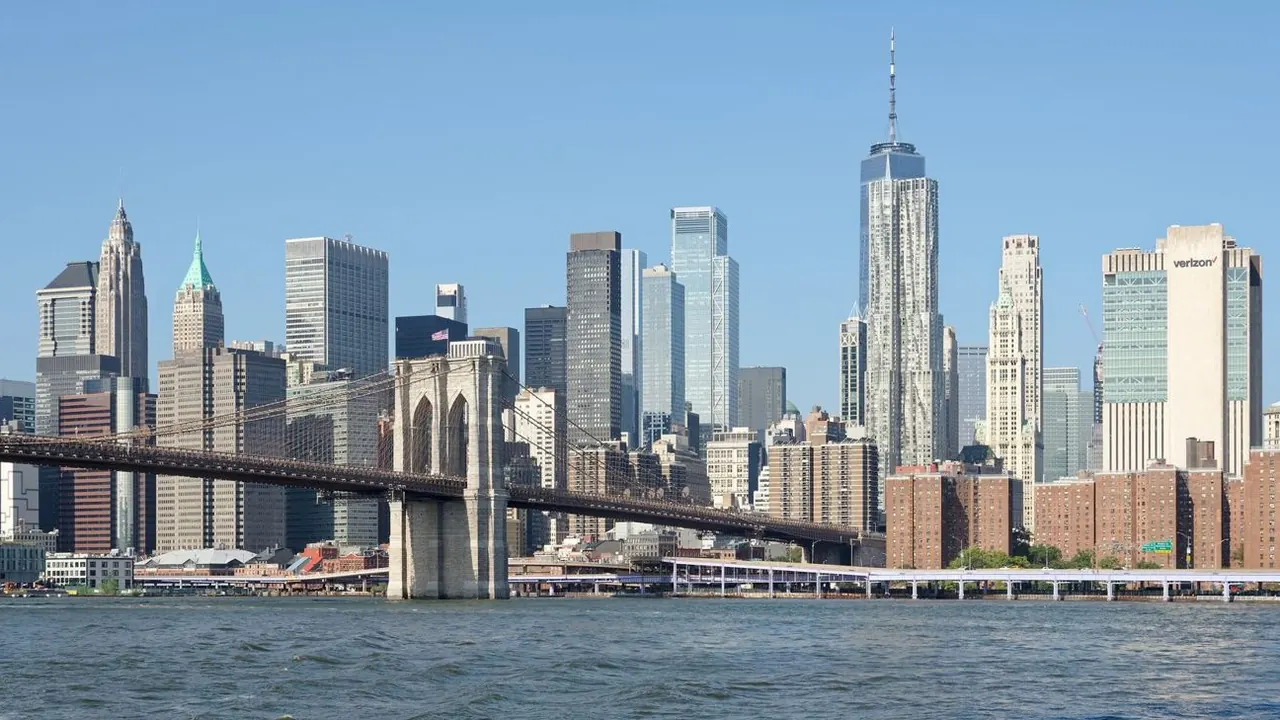
Photos: Asheville by Warren LeMay, CC0; New York by Jakub Hałun, CC BY 4.0, cropped.
Asheville or New York?
Our verdict in twelve categories, each scored against the same fixed benchmark cities, and the climate month by month, so you can choose for your trip.
Choose Asheville for
- nature and the outdoors
- prices
- wellness
Asheville suits travellers who want the mountains at the door: ridge hikes off the Blue Ridge Parkway, mountain biking in Pisgah, rafting on the rivers, then an evening of craft beer and bluegrass in a small, easy-going town. It is also the better choice for a slower trip, with resort spas, mountain inns and the riverside tubs at Hot Springs within reach, as long as you are happy to drive everywhere.
Choose New York for
- nightlife
- getting around
- shopping
For a trip built around the city itself, New York is in another league. Its great museums, Broadway and Lincoln Center, food from almost every community on earth and nights that run past dawn reward travellers who want to pack every day, and the subway means you never need a car. It costs a great deal more, and its green space comes as parks rather than wilderness.
Scoreboard
Twelve categories on one fixed scale from 0 to 100. The shaded stretch is the gap between the two.
Your match
Pick a travel style or drag the sliders, and both match scores follow your weighting.
Wins on nature and the outdoors and prices with your weighting.
Wins on nightlife and getting around with your weighting.
What matters to you?
Category by category
What the scores mean for a trip.
Beaches & swimming
Neither city is a beach destination, but only New York has the sea. Swimming around Asheville means cold mountain water: waterfall pools in Pisgah, the natural slide at Sliding Rock, tubing on the French Broad and the small sandy strip at Lake Lure.
New York can give you a proper Atlantic day in high summer. Coney Island has its boardwalk, the Rockaways have longer beaches with surf, and Jones Beach on Long Island is about an hour away, all reachable on public transport. Expect crowds at weekends.
Food & drink
Asheville eats well for its size, and its strength is local. It has dozens of brewery taprooms across downtown and the South Slope, and Appalachian cooking built on trout, heirloom corn, ramps and barbecue. Beyond Southern and modern American food, though, the choice soon runs thin.
New York has far more range and depth. Whole cuisines are cooked by their own communities in Flushing, Jackson Heights, Greenpoint and Crown Heights. Cheap classics like the pizza slice, the bagel and deli pastrami are on every block, and above them sits one of the world's deepest fine-dining scenes.
Culture & sights
Asheville's sights come down to two things. The first is the Biltmore Estate, which takes a full day between the Vanderbilts' château and Olmsted's gardens. The second is a downtown of 1920s Art Deco and Beaux-Arts buildings. Add the art museum and the Thomas Wolfe house and two or three days are plenty.
New York could keep a museum lover busy for weeks, with the Met, MoMA, the Natural History museum and the Cloisters, as well as landmarks from the Statue of Liberty to Grand Central. Both cities tell a mostly nineteenth and twentieth-century story, but New York tells it on a far larger scale.
Nightlife
A night in Asheville is a relaxed walk between taprooms, cocktail bars and dives downtown and on the South Slope, or along Haywood Road in West Asheville. There are few places to dance, and most of the town has gone quiet by around midnight.
New York goes on until morning. Each neighbourhood has its own mood, from West Village wine bars and Midtown rooftops to the Village gay bars that go back to Stonewall. At weekends the warehouse clubs of Williamsburg and Bushwick keep dancing past dawn.
Nature & outdoors
This is where Asheville pulls well ahead. The Blue Ridge Parkway, Pisgah National Forest, Mount Mitchell and the Great Smokies are all within about an hour. Between them they offer ridge hikes over grassy balds, some of the country's best mountain biking and whitewater on three rivers.
New York's nature is mostly designed parkland, such as Central Park, Prospect Park and the High Line, along with birding at Jamaica Bay. Real hiking means a train up the Hudson to Breakneck Ridge, which makes a good outing but only a single day. Both cities are at their finest when the leaves turn in October.
Day trips
Asheville's excursions are mostly into the landscape. Small towns such as Hendersonville, Brevard and Black Mountain lie along the way, and the Cherokee museum makes the strongest cultural outing. You will need a car for nearly all of them.
New York has more substantial places within reach by train. Philadelphia has its colonial old town, Princeton and New Haven have their universities, and the Hudson Valley has Gilded Age estates, Dia Beacon and Storm King. That makes it easy to add a whole second city to the trip.
Good for families
Asheville suits active children: the bears and red wolves at the Nature Center, Sliding Rock, river tubing, zip lines and the farmyard at Biltmore. There is no big zoo, aquarium or theme park, though, and a lot of the day goes on driving.
New York has far more built for young visitors, from the dinosaurs and planetarium at the Natural History museum to the Bronx Zoo, the Coney Island aquarium and the aircraft carrier on the Hudson. The trade-off is subway stations with only stairs, small hotel rooms and Midtown crowds, which tire small children faster than Asheville's easy pace.
Getting around
In Asheville you can only walk around a small core, downtown and the South Slope, and the buses do little for visitors. Biltmore, the Parkway and the trailheads all need a car, on slow, winding roads that fill with traffic on October weekends.
In New York a car is more trouble than help. The Manhattan grid is easy to walk, the subway runs all night across four boroughs, and ferries and Citi Bike fill the gaps. The express and local lines and the weekend reroutes do take some learning.
Shopping & style
Asheville is the place to buy one good handmade piece. Pottery, glass, weaving and woodwork come from the River Arts District studios and the Folk Art Center, and the Grove Arcade has independent shops. There are no luxury labels or department stores.
New York covers every level. Fifth Avenue has the flagship stores and Madison Avenue the luxury houses, alongside the historic department stores, SoHo's fashion brands, Williamsburg vintage and specialist shops for books, records and cameras. Serious shoppers will find far more here.
Affordability
Neither city is cheap, but Asheville is easier on the wallet. Its inns are expensive, especially when the leaves turn, and a hire car and Biltmore entry add up. Still, the trails, waterfalls and Parkway cost nothing, and stays midweek or in winter are noticeably cheaper.
New York is one of the most expensive cities in the world to visit. Hotel rooms are small and costly, every bill comes with tax and a tip, and tickets for the theatre and observation decks are steep. Pizza slices, food carts, the free ferry and parks, and a room in Brooklyn or Queens all help, but the total stays high.
Live music & performing arts
Asheville's music has real local character. There are bluegrass and old-time jams, buskers downtown, free evenings of fiddle music and clogging at Shindig on the Green, and a folk festival that has run since 1928. Its symphony and theatres are pleasant but modest.
New York is the stronger stage city by a long way. It has Broadway, the Metropolitan Opera, the Philharmonic and New York City Ballet at Lincoln Center, and Carnegie Hall. Add the Village jazz clubs, Harlem gospel and free Shakespeare in the park, and there is something worth seeing every night of the trip.
Wellness & relaxation
People have come to Asheville to recover since the nineteenth century, and it shows. There are resort spas on the hillsides, a strong yoga and retreat culture and outdoor mineral tubs by the river at Hot Springs, along with cool evenings and quiet porches.
Bathing in New York is more intense and more urban: the old Russian and Turkish bathhouse in the East Village, the banyas of Brighton Beach and Korean-style spas a short trip away. Outside the steam room, though, the noise and pace make real rest hard to find.
When should you go?
Pick your month. The climate figures are measured averages, not a forecast.
Asheville in July
New York in July
Daytime high, °C
Rainfall in the month, mm
Where the figures come from
Asheville's temperatures are measured 50 km from the centre, at Asheville Regional Airport.
Asheville has no rain gauge within 25 km of the centre, so its rainfall comes from a gridded climate dataset read at the city rather than from a gauge further away.
Temperature and rainfall are climate normals, averaged over the years shown. Asheville: 1991-2020 (sunshine 1981-2010) normals, Asheville Regional Airport (50.3 km from centre). New York: 1991-2020 normals, LaGuardia Airport (12.9 km from centre).
The two cities follow a similar four-season pattern, and in both the rain is spread fairly evenly through the year, so there is no dry season to aim for. Asheville is at its best for walking and hiking in spring and autumn, when daytime highs sit around 20-25°C. October is also its driest month, at 72mm. June to August brings the most sunshine but turns humid, with afternoon storms, and winters are cool rather than harsh.
New York is a few degrees colder in winter, when grey, chilly days make long walks less appealing. High summer is slightly hotter, with July reaching 30°C, and the streets and subway platforms get sticky. The sea is only warm enough for a comfortable swim in July and August, at about 23°C. For walking the city, May, late September and October are the most pleasant months.
Which traveller are you?
On an outdoors trip, Asheville is the clear choice. The mountains begin where the town ends, so every day can hold a hike, a ride or a river and still end back in town for dinner. From New York, each proper hike takes a whole day.
For a food and nightlife trip, New York wins easily. Asheville's beer and Southern cooking make a good evening, but by midweek they start to repeat and the town goes quiet near midnight. In New York, every meal can be a different cuisine, and the night ends when you choose.
On a shopping trip, New York is the obvious pick. Asheville suits buying one handmade piece, often from the person who made it, and not much more. New York can fill a whole shopping list in one trip, from luxury labels to rare books.
Before you go
| Measure | Asheville | New York |
|---|---|---|
| Currency | US Dollar (USD) | US Dollar (USD) |
| Sockets | AB120 V, 60 Hz | AB120 V, 60 Hz |
| Driving side | Right | Right |
| Time zone | UTC-5, UTC-4 in summer | UTC-5, UTC-4 in summer |
| Emergency number | 911 | 911 |
| Elevation | 650 m | 25 m |
| Main airport | Asheville Regional Airport (AVL)18 km from centre27 non-stop destinations | John F. Kennedy International Airport (JFK)21 km from centre189 non-stop destinations |
| Public holidays this year | 14 days | 13 days |
By the numbers
| Measure | Asheville | New York |
|---|---|---|
| City population | 94,589 | 8,804,190 |
| People per km² | 796 | 7,256 |
| Museums within 10 km | 4 | 161 |
| UNESCO World Heritage sites within 50 km | 0 | 2 |
| Swim season, months above 21 °C | - | 3 months |
Where else could you go?
Every comparison below shares a destination with this one, so you can follow Asheville or New York somewhere new.
- Gatlinburgvs Asheville
- Pigeon Forgevs Asheville
- Philadelphiavs New York
- Rehoboth Beachvs New York
- Bethany Beachvs New York
- Atlantavs Asheville