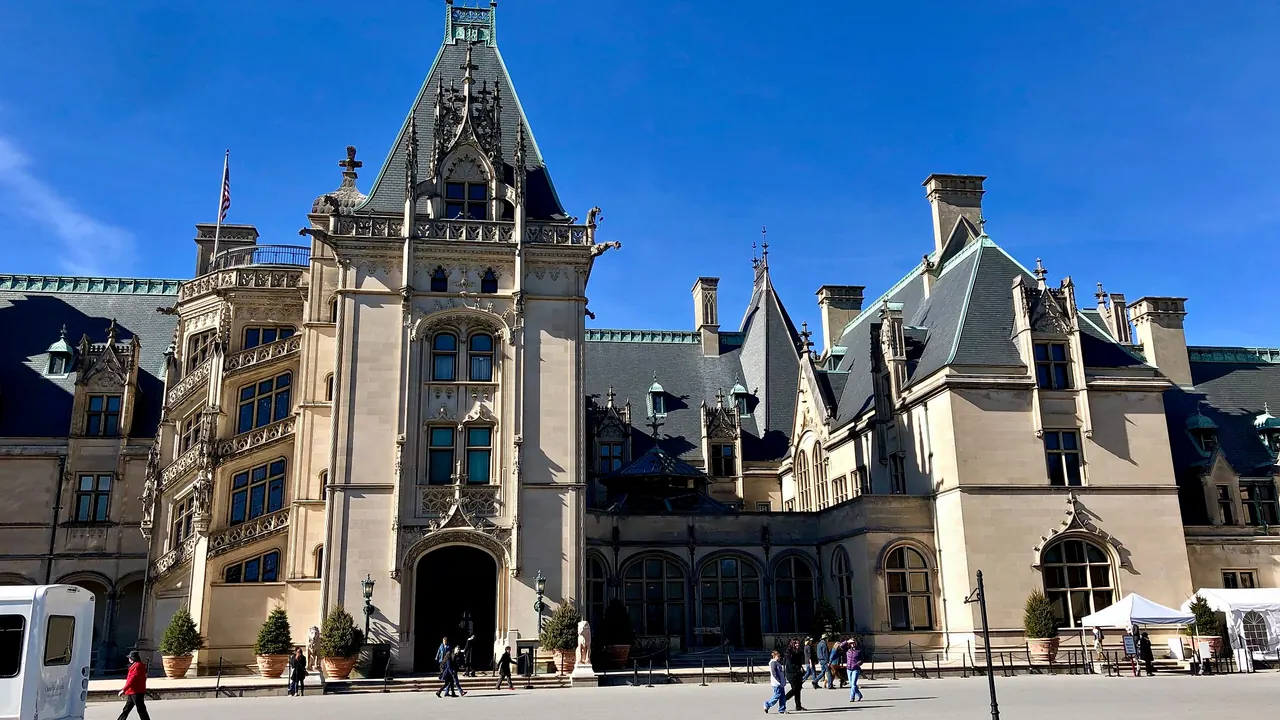
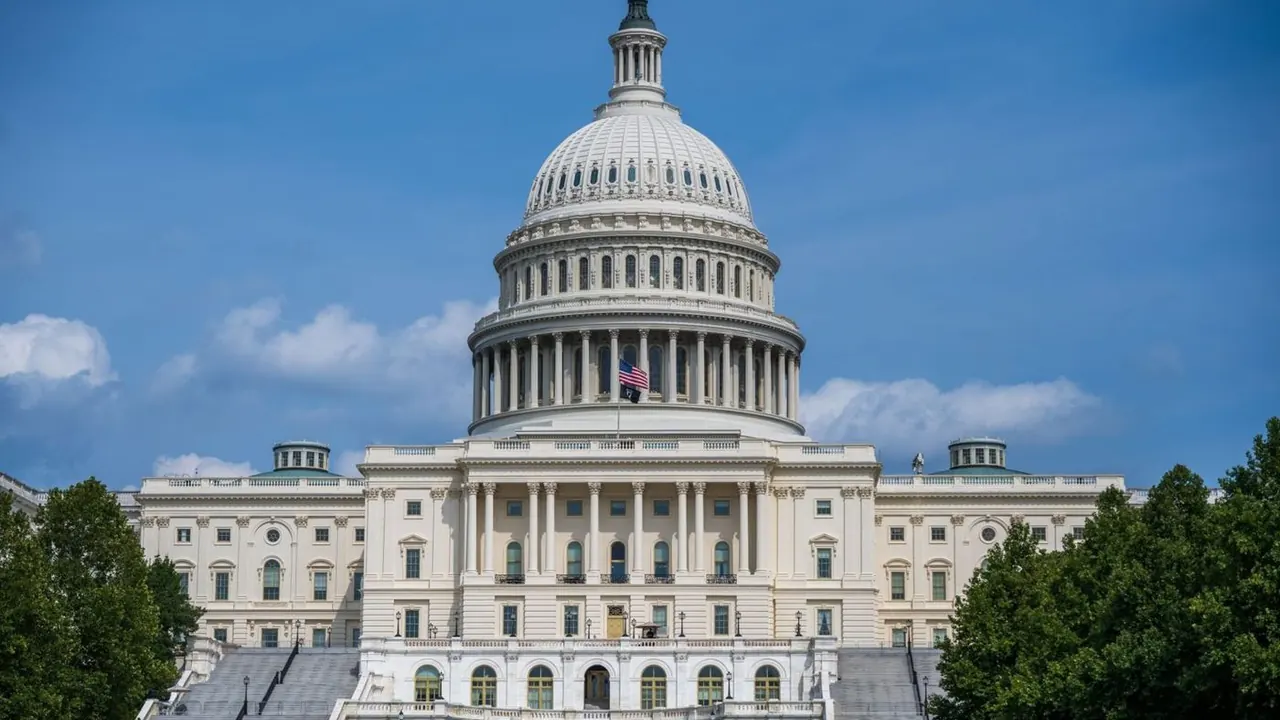
Photos: Asheville by Warren LeMay, CC0; Washington DC by Guohua Song, Pexels License.
Asheville or Washington DC?
Our verdict in twelve categories, each scored against the same fixed benchmark cities, and the climate month by month, so you can choose for your trip.
Choose Asheville for
- wellness
- nature and the outdoors
- prices
Asheville is the choice for travellers who want the mountains on the doorstep: ridge walks off the Blue Ridge Parkway, mountain biking in Pisgah, rafting on the French Broad, then an evening in a brewery taproom. It suits an unhurried trip with a hire car, where a day at Biltmore and a soak at Hot Springs fit between hikes, and it is a little easier on the budget than the capital.
Choose Washington DC for
- getting around
- culture and sights
- day trips
For museums, monuments and American history, Washington wins clearly. The free Smithsonian collections and the National Gallery could fill a week, the Metro does away with the need for a car, and Alexandria, Baltimore and the Civil War battlefields lie within easy reach. Families, theatre-goers and anyone after a livelier night out will also find more here.
Scoreboard
Twelve categories on one fixed scale from 0 to 100. The shaded stretch is the gap between the two.
Your match
Pick a travel style or drag the sliders, and both match scores follow your weighting.
Wins on wellness and nature and the outdoors with your weighting.
Wins on getting around and culture and sights with your weighting.
What matters to you?
Category by category
What the scores mean for a trip.
Beaches & swimming
Neither city is a beach destination, and the difference lies in the kind of water. Asheville offers cold mountain swimming: waterfall pools in Pisgah, the natural rock slide at Sliding Rock, tubing on the French Broad and a small sandy beach at Lake Lure. Washington's nearest sand is on the warm but brackish Chesapeake around Annapolis, about an hour east, and the proper Atlantic resorts are a weekend away.
Food & drink
Both eat well, but in very different ways. Asheville is about drink and the Appalachian larder: dozens of breweries across downtown, the South Slope and West Asheville, with trout, heirloom beans, ramps and barbecue on the plate, but little beyond Southern and modern American cooking.
Washington has the broader range. The Ethiopian restaurants of Shaw and U Street lead it, with pupusas in Columbia Heights, Chesapeake crabs and oysters in season, and grazing at Eastern Market and Union Market. Its weak spot is the corporate steakhouse dining near the offices.
Culture & sights
Washington is in another league here. The Smithsonian museums, the National Gallery and the monuments of the Mall can fill a week, nearly all of it free, with the Capitol, the Library of Congress reading room and Arlington Cemetery close by.
Asheville's culture rests on the Biltmore Estate, a full day in itself, and a downtown of Art Deco and Beaux-Arts buildings left by the 1920s boom. Add the art museum on Pack Square, the Thomas Wolfe Memorial and the Folk Art Center, and two or three days covers it.
Nightlife
Washington offers more of a night out. The 14th Street and U Street corridor has cocktail bars, rooftops and late dance spots, Adams Morgan stays rowdy, and weekend bars keep going well past midnight, though early in the week it is mostly after-work happy hours.
Asheville's evenings are gentler: taprooms, cocktail bars and dives within walking distance downtown and on the South Slope, a looser local scene on Haywood Road, and most places quiet by about midnight.
Nature & outdoors
This is Asheville's great strength. Pisgah National Forest, the Blue Ridge Parkway, Mount Mitchell and the Great Smokies are all within about an hour, offering ridge hikes over grassy balds, some of the country's best mountain biking and rafting on three rivers.
Washington is green for a capital, with Rock Creek Park, the C&O Canal towpath and the gorge at Great Falls close at hand. Its real mountains, Shenandoah and the Blue Ridge, make a long day out rather than a view from town.
Day trips
Washington has the richer surroundings. Old Town Alexandria and Mount Vernon are close, Baltimore and Annapolis about an hour away, and Gettysburg, Antietam and Harpers Ferry within two hours. Philadelphia is reachable by fast train.
From Asheville most outings go into the landscape, and the list of towns is short: Hendersonville and the Carl Sandburg Home, Brevard's waterfall country, and Cherokee, whose museum and Oconaluftee village give the deepest look at the region's first people.
Good for families
Washington is the easier family destination. The dinosaurs at Natural History, the rockets at Air and Space and the National Zoo are all free, the Mall gives children room to run, and every Metro station has lifts for buggies. Summer heat on the long walks is the main drawback.
Asheville suits active children, with bears and red wolves at the Nature Center, Sliding Rock, river tubing, zip lines and the Biltmore farmyard. The sights are scattered, though, and need a car.
Getting around
On foot, Asheville gives you only a small area: the compact, hilly downtown, with the South Slope breweries and the River Arts District a short ride away. Biltmore, the Parkway, the trailheads and the waterfalls all need a car, the local buses are limited, and the winding mountain roads fill with traffic on October weekends.
Washington is far easier without one. The flat grid of the centre is good for walking, though distances stretch, and the Metro reaches most sights as well as Arlington, Alexandria and the airport, with bike-share and riverside paths linking the monuments. The network has gaps, Georgetown for one has no station, and trains thin out late at night and at weekends, but a car is only needed for the battlefields and the countryside.
Shopping & style
Asheville sells what its mountains make: pottery, glass, weaving and woodwork from the working studios of the River Arts District, the downtown galleries and the Folk Art Center, with bookshops, vintage clothing and outdoor gear around the Grove Arcade and Lexington Avenue. There are no luxury brands or department stores.
Washington offers the wider mainstream choice instead, from the chain fashion and antique shops on Georgetown's M Street to the luxury labels at CityCenterDC and the malls at Tysons Corner. Its more local buys are the weekend craft stalls at Eastern Market and the books and prints in the museum shops.
Affordability
Neither is cheap, but Asheville is the gentler on the wallet. Its inns and hotels get expensive on autumn weekends, and Biltmore and a hire car add up. Midweek and winter stays ease the cost, though, and the trails and waterfalls are free.
Washington's rooms are dear all year, and its restaurants and taxis are priced for expense accounts. The saving is the sightseeing: the Smithsonian, the zoo and the memorials cost nothing. A room across the river in Arlington also helps.
Live music & performing arts
Washington has the fuller stage. Arena Stage, the Shakespeare Theatre Company, Ford's Theatre and touring musicals at the National Theatre give a wide choice of plays, backed by the National Symphony Orchestra, the national opera and summer concerts on the lawn at Wolf Trap.
Asheville's offer is narrower but distinctive: bluegrass and old-time jams, free fiddle and clogging evenings at Shindig on the Green, and the Mountain Dance and Folk Festival, running since 1928. Its theatre and orchestra are modest.
Wellness & relaxation
Asheville was partly built on rest. Its mountain air drew people recovering their health in the nineteenth century, and that legacy lives on in retreats, yoga studios, large resort spas and the riverside mineral tubs at Hot Springs, about forty minutes away.
Washington has no such tradition. Rest there means a hotel spa or a quiet hour in the Dumbarton Oaks gardens, the National Arboretum or by the Tidal Basin, set against the brisk pace of a government town.
When should you go?
Pick your month. The climate figures are measured averages, not a forecast.
Asheville in July
Washington DC in July
Daytime high, °C
Rainfall in the month, mm
Where the figures come from
Asheville's temperatures are measured 50 km from the centre, at Asheville Regional Airport.
Asheville has no rain gauge within 25 km of the centre, so its rainfall comes from a gridded climate dataset read at the city rather than from a gauge further away.
Temperature and rainfall are climate normals, averaged over the years shown. Asheville: 1991-2020 (sunshine 1981-2010) normals, Asheville Regional Airport (50.3 km from centre). Washington DC: 1991-2020 (sunshine 1981-2010) normals, Washington National Airport (5 km from centre).
Asheville's height takes the edge off summer. Highs peak around 29°C in July, warm and humid with afternoon storms, while Washington climbs to 32°C, which makes the long, exposed walks between monuments hard going in July and August. Both cities are at their best for walking from April to early June and from mid-September through October. Winters are cool in both, with daytime highs of around 10°C or lower in December and January.
Rain is spread fairly evenly through the year in both cities. Asheville is driest in October, at 72mm, which is another reason to go for the autumn colour. Washington's wettest stretch is early summer. Only Washington's data has a sea temperature: the Chesapeake reaches about 26°C in August and stays pleasant into September. Both cities get their most sunshine in June and July.
Which traveller are you?
For an outdoors trip, Asheville is the clear pick. Pisgah National Forest begins just south of town, and the Blue Ridge Parkway, Mount Mitchell and the Smokies are all close. Washington has Rock Creek Park and Great Falls, but Shenandoah is a long drive.
On a culture and arts trip, Washington is far ahead. The Smithsonian museums and the National Gallery are free and stand side by side on the Mall, and theatres from Arena Stage to Ford's fill the evenings. Asheville's Biltmore and Art Deco downtown take two or three days.
For a relaxing and wellness trip, Asheville suits much better. It has a long tradition of retreats and yoga, resort spas on the hillsides, mineral tubs at Hot Springs and quiet inn porches. In Washington, with its working pace, rest is mostly a hotel spa or a walk round the Tidal Basin.
Before you go
| Measure | Asheville | Washington DC |
|---|---|---|
| Currency | US Dollar (USD) | US Dollar (USD) |
| Sockets | AB120 V, 60 Hz | AB120 V, 60 Hz |
| Driving side | Right | Right |
| Time zone | UTC-5, UTC-4 in summer | UTC-5, UTC-4 in summer |
| Emergency number | 911 | 911 |
| Elevation | 650 m | 72 m |
| Main airport | Asheville Regional Airport (AVL)18 km from centre27 non-stop destinations | Ronald Reagan Washington National Airport (DCA)5 km from centre105 non-stop destinations |
| Public holidays this year | 14 days | 11 days |
By the numbers
| Measure | Asheville | Washington DC |
|---|---|---|
| City population | 94,589 | 689,545 |
| People per km² | 796 | 3,896 |
| Museums within 10 km | 4 | 98 |
| UNESCO World Heritage sites within 50 km | 0 | 0 |
| Swim season, months above 21 °C | - | 3 months |
Where else could you go?
Every comparison below shares a destination with this one, so you can follow Asheville or Washington DC somewhere new.
- Gatlinburgvs Asheville
- Pigeon Forgevs Asheville
- Rehoboth Beachvs Washington DC
- Bethany Beachvs Washington DC
- Ocean City, Marylandvs Washington DC
- Philadelphiavs Washington DC