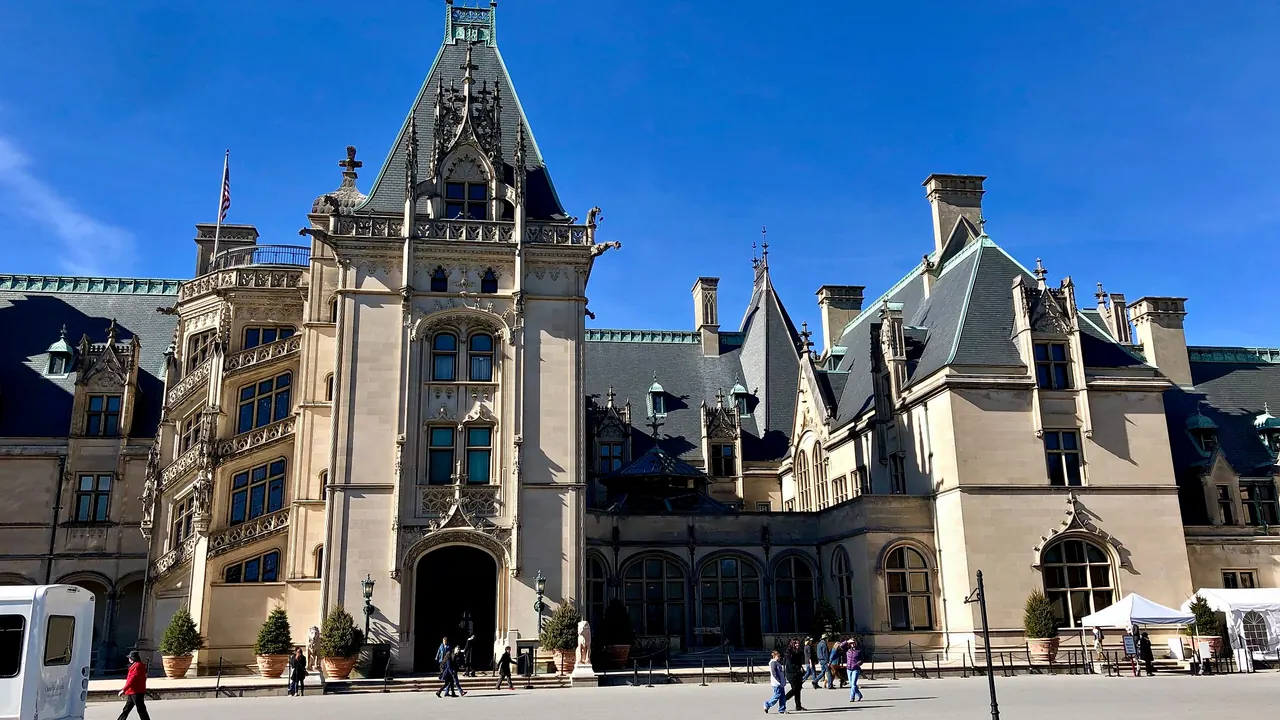
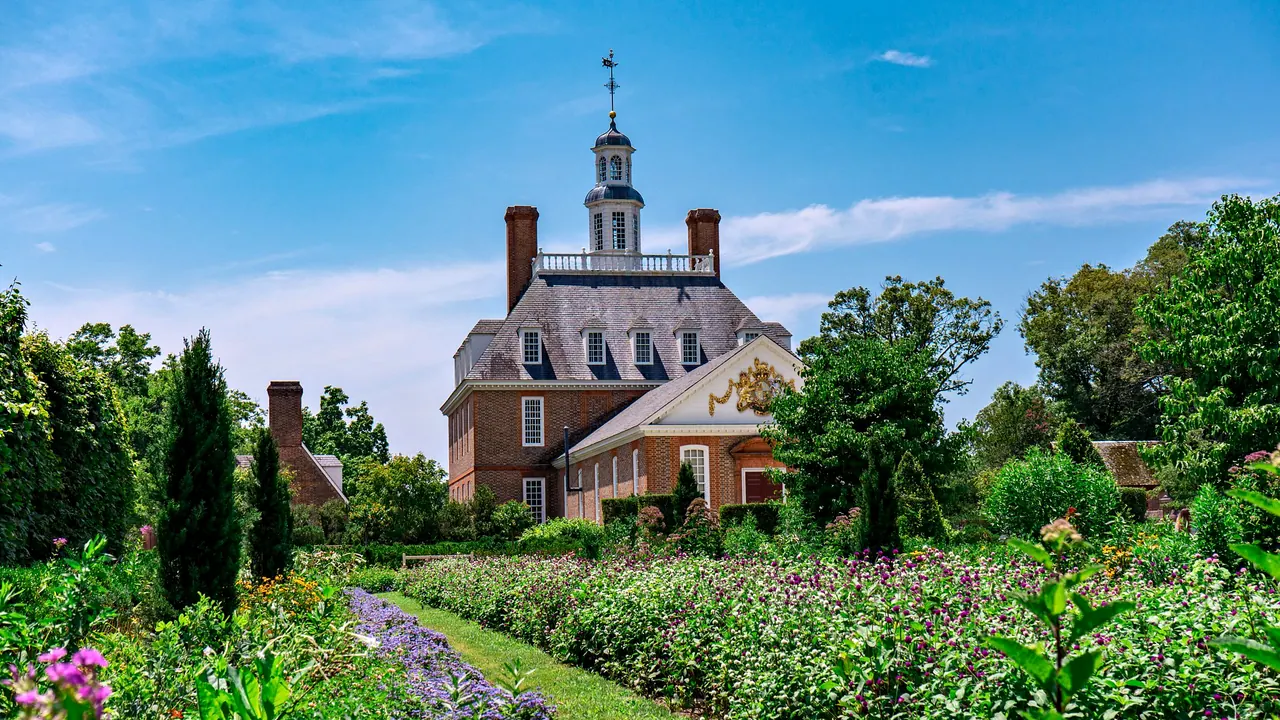
Photos: Asheville by Warren LeMay, CC0; Williamsburg, Virginia by Brian Magill, Pexels License.
Asheville or Williamsburg, Virginia?
Our verdict in twelve categories, each scored against the same fixed benchmark cities, and the climate month by month, so you can choose for your trip.
Choose Asheville for
- nature and the outdoors
- food and drink
- live music and the arts
Asheville is the choice for travellers who want mountains outside the window and something good in the glass at the end of the day. Its strength is the Blue Ridge and Pisgah country around it, with ridge hikes, waterfalls, rivers to raft and the Parkway on its doorstep, and in the evening it has a brewery and kitchen scene, Appalachian music and a slow, restorative pace that a small colonial town cannot match.
Choose Williamsburg, Virginia for
- beaches
- families
- culture and sights
Families, and anyone drawn to American history, will usually do better in Williamsburg. The restored colonial capital, the replica ships at Jamestown and the Yorktown battlefield make history something children can watch and touch, and Busch Gardens and its water park are a few minutes away. Evenings are quiet and the food is simple, but as a base for a week of sights and rides it is hard to beat.
Scoreboard
Twelve categories on one fixed scale from 0 to 100. The shaded stretch is the gap between the two.
Your match
Pick a travel style or drag the sliders, and both match scores follow your weighting.
Wins on nature and the outdoors and food and drink with your weighting.
Wins on beaches and families with your weighting.
What matters to you?
Category by category
What the scores mean for a trip.
Beaches & swimming
Neither town is a beach destination, but Williamsburg comes closer. It has the calm river beach at Yorktown about 20 minutes away, Chesapeake Bay beaches in Hampton and the long Atlantic sands of Virginia Beach within an hour, all warm enough to swim in high summer.
Asheville has no sea within reach at all. Swimming there means cold mountain water: waterfall pools, Sliding Rock, a float on the French Broad or the small sandy shore of Lake Lure.
Food & drink
Asheville eats and drinks much better. Its breweries spread across downtown, the South Slope and West Asheville, and its chef-driven kitchens cook with Appalachian trout, heirloom corn, ramps and mushrooms from the region's farms.
Williamsburg's table is simpler and more touristy. Country ham biscuits, peanut soup and bay crab cakes and oysters are the things worth seeking out, but the colonial taverns sell atmosphere more than cooking, and Richmond Road is mostly chains and pancake houses.
Culture & sights
Williamsburg has the deeper sightseeing for history lovers. The whole restored colonial capital is the attraction, from the Capitol along Duke of Gloucester Street to the Wren Building, with working craftsmen and costumed interpreters bringing the eighteenth century to life and serious folk and decorative art museums alongside.
Asheville's culture rests on two things: the Biltmore Estate, a full day in itself, and a downtown of 1920s Art Deco and Beaux-Arts buildings. Beyond those the list thins quickly, while Williamsburg's interest is spread across an entire townscape.
Nightlife
Asheville has the livelier evenings, though both towns go to bed fairly early. Its taprooms, cocktail bars and dive bars sit within walking distance of each other downtown and on the South Slope, with a looser local scene along Haywood Road in West Asheville.
In Williamsburg a candlelit ghost walk or tavern supper is usually the whole night, apart from a few student pubs near the college. Anyone wanting more drives to Norfolk or Richmond.
Nature & outdoors
This is the widest gap between the two. Asheville sits among the highest mountains in the eastern United States, with Mount Mitchell and the Great Smokies about an hour away, Pisgah National Forest starting at the edge of town, and rafting, mountain biking and long ridge walks all within reach.
Williamsburg's countryside is low Tidewater of pine forest, marsh and broad estuaries. It is pleasant for cycling the Colonial Parkway or the Capital Trail and for watching ospreys and eagles from a kayak, but there is nothing to climb.
Day trips
Williamsburg has the better outings, because its biggest neighbours are part of the same story. Jamestown and Yorktown are each within about 20 minutes, the James River plantations line Route 5, and Richmond's museums and Civil War sites are about an hour away.
From Asheville, excursions are mostly into the landscape and to small mountain towns such as Brevard, Hendersonville and Black Mountain. The most substantial is Cherokee, whose museum and village give the best insight into the region's original people.
Good for families
Williamsburg is the classic family choice. Busch Gardens and Water Country USA supply the rides, and the Historic Area, Jamestown and Yorktown turn history into fife-and-drum parades, blacksmiths and forts to explore. Motels with pools and child-friendly restaurants are everywhere.
Asheville works best for outdoor families. The nature centre's bears and red wolves, Sliding Rock, river tubing and zip lines suit energetic older children, but there is no theme park or large zoo nearby.
Getting around
Both towns are much the same here: a walkable core and a car for everything else. What differs is the terrain. Williamsburg's historic district is flat and partly car-free, with a shuttle and an Amtrak station close by, while Asheville's downtown is hilly and its main sights lie along slow, winding mountain roads that fill up on October weekends.
Shopping & style
Asheville has the richer shopping, provided you want handmade things. Its pottery, glass, weaving and woodwork come from working studios in the River Arts District and from the Folk Art Center, and the Grove Arcade and Lexington Avenue add bookshops and vintage clothing.
Williamsburg's shops in the Historic Area sell reproduction pewter, silver and furniture in colonial style. Beyond that it has gift shops on Merchants Square and a large outlet centre on Richmond Road for familiar American brands.
Affordability
Williamsburg is somewhat easier on the budget, mainly because of its large stock of motels and chain hotels, which are reasonably priced outside summer weekends. The admission tickets are the big expense there, so combination passes matter.
Asheville's rooms are dearer and climb sharply in the leaf season, and Biltmore is a costly day. Its trails, waterfalls and Parkway, however, are free.
Live music & performing arts
Asheville has a real music life for its size. Touring Americana and indie acts play its riverside venues, there are bluegrass and old-time jams in pubs, and the Mountain Dance and Folk Festival has run since 1928.
Williamsburg's performances belong to the colonial set: candlelit recitals, period theatre and fife-and-drum corps on Duke of Gloucester Street, with student shows at the college in term time. They are charming, but limited.
Wellness & relaxation
Asheville is the more restful place. It has been a health retreat since the nineteenth century, and today has yoga studios, retreats and large hillside resort spas, as well as riverside mineral tubs at Hot Springs about forty minutes away.
Williamsburg's options stop at the spas of its historic inn and golf resorts along the James. Its calm comes from early walks on the empty colonial greens and quiet drives on the Colonial Parkway.
When should you go?
Pick your month. The climate figures are measured averages, not a forecast.
Asheville in July
Williamsburg, Virginia in July
Daytime high, °C
Rainfall in the month, mm
Where the figures come from
Asheville's temperatures are measured 50 km from the centre, at Asheville Regional Airport.
Asheville has no rain gauge within 25 km of the centre, so its rainfall comes from a gridded climate dataset read at the city rather than from a gauge further away.
Williamsburg, Virginia's sunshine is measured 60 km from the centre, at Richmond International Airport.
Temperature and rainfall are climate normals, averaged over the years shown. Asheville: 1991-2020 (sunshine 1981-2010) normals, Asheville Regional Airport (50.3 km from centre). Williamsburg, Virginia: 2006-2020 (sunshine 1981-2010, rainfall 1991-2020) normals, Williamsburg / Kingspoint (3.6 km from centre).
Asheville's height keeps it the milder of the two. Summer highs stop around 29°C, spring and autumn are comfortable for walking and hiking, and October is the driest month as well as the season of autumn colour. Rain is spread fairly evenly through the year, so no month is reliably dry. Winters are cool, with highs near 9°C in January, which suits a quiet inn stay more than long days on the trails.
Williamsburg runs hotter and sunnier. July reaches about 33°C with heavy humidity, and late summer brings the most rain, peaking in August, which makes the Historic Area hard work at midday. The water in the bay and ocean is warm enough for swimming from June to September, at about 26°C in high summer. April, May and October are the most pleasant months for walking the colonial streets, and winter is mild but grey.
Which traveller are you?
For an outdoors trip, Asheville wins easily. It has ridge hikes over grassy balds, the Great Smoky Mountains an hour away, mountain biking in Pisgah and whitewater on several rivers, against Williamsburg's flat forest trails and gentle kayaking creeks.
On a family trip with children, Williamsburg is the stronger pick. A large theme park, a water park, costumed interpreters, musket firings and replica ships at Jamestown keep all ages busy, while Asheville suits only active children happy with hikes and tubing.
For a food and nightlife trip, Asheville has far more to offer. Dozens of taprooms, Appalachian farm cooking and bluegrass jams make for good evenings, whereas Williamsburg means candlelit tavern dinners, a few student pubs and an early night.
Before you go
| Measure | Asheville | Williamsburg, Virginia |
|---|---|---|
| Currency | US Dollar (USD) | US Dollar (USD) |
| Sockets | AB120 V, 60 Hz | AB120 V, 60 Hz |
| Driving side | Right | Right |
| Time zone | UTC-5, UTC-4 in summer | UTC-5, UTC-4 in summer |
| Emergency number | 911 | 911 |
| Elevation | 650 m | 15 m |
| Main airport | Asheville Regional Airport (AVL)18 km from centre27 non-stop destinations | Newport News Williamsburg International Airport (PHF)24 km from centre1 non-stop destination |
| Public holidays this year | 14 days | 13 days |
By the numbers
| Measure | Asheville | Williamsburg, Virginia |
|---|---|---|
| City population | 94,589 | 15,425 |
| People per km² | 796 | 656 |
| Museums within 10 km | 4 | 8 |
| UNESCO World Heritage sites within 50 km | 0 | 0 |
| Swim season, months above 21 °C | - | 4 months |
Where else could you go?
Every comparison below shares a destination with this one, so you can follow Asheville or Williamsburg, Virginia somewhere new.
- Virginia Beachvs Williamsburg, Virginia
- Gatlinburgvs Asheville
- Pigeon Forgevs Asheville
- Washington DCvs Williamsburg, Virginia
- Ocean City, Marylandvs Williamsburg, Virginia
- Bethany Beachvs Williamsburg, Virginia