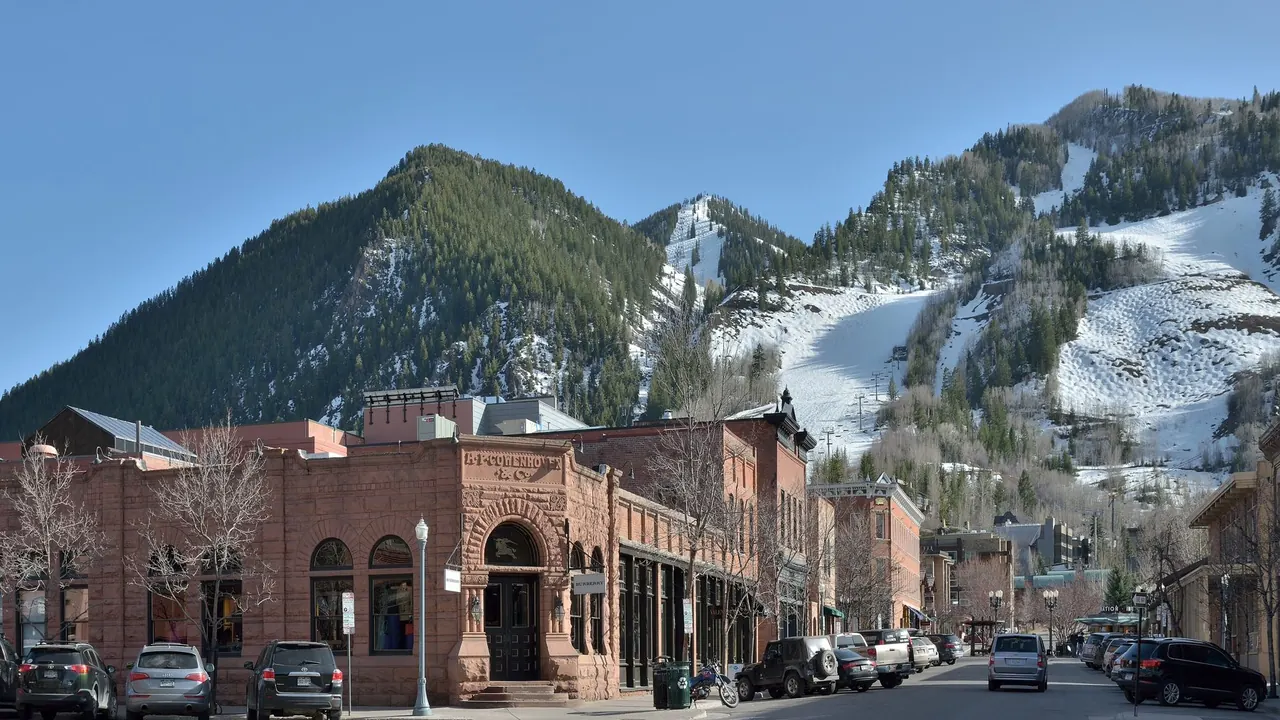
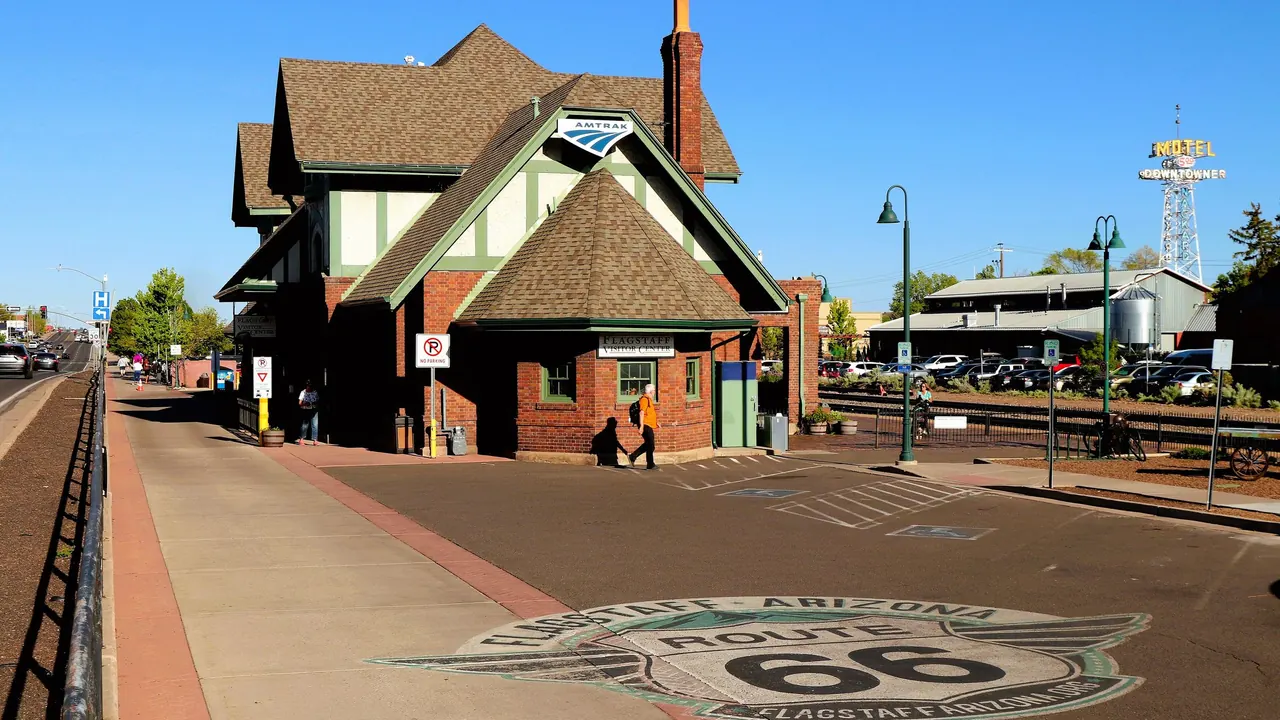
Photos: Aspen by Moroder, CC BY-SA 3.0, cropped; Flagstaff by Thank You (25 Millions) views, CC BY 2.0, cropped.
Aspen or Flagstaff?
Our verdict in twelve categories, each scored against the same fixed benchmark cities, and the climate month by month, so you can choose for your trip.
Choose Aspen for
- getting around
- shopping
- live music and the arts
Aspen suits travellers who want a polished mountain resort and are willing to pay for it. It has four linked ski mountains, a downtown you can walk with no car, chef-led dining and après-ski, luxury boutiques and a summer music festival, all in one compact valley. It is the better pick for a ski week or a summer of concerts and high trails, provided cost is not the deciding factor.
Choose Flagstaff for
- prices
- day trips
- culture and sights
Flagstaff is the more practical base for exploring a whole region. From its pine-forest plateau you can reach the Grand Canyon, Sedona's red rock and ancient pueblo ruins, then come back to brewery patios and a motel that costs far less than anything in Aspen. Choose it for a road trip with a hire car, curious children or an interest in astronomy and Native American history, and expect a casual town rather than a glamorous one.
Scoreboard
Twelve categories on one fixed scale from 0 to 100. The shaded stretch is the gap between the two.
Your match
Pick a travel style or drag the sliders, and both match scores follow your weighting.
Wins on getting around and shopping with your weighting.
Wins on prices and day trips with your weighting.
What matters to you?
Category by category
What the scores mean for a trip.
Beaches & swimming
Both towns are high in the mountains and far from any coast, so neither is a swimming destination. The difference is in what cold water each offers. Aspen has alpine lakes and rafting on the Roaring Fork. Flagstaff has the natural rock slides and creek pools of Oak Creek Canyon, which are busier but more fun for a summer splash.
Food & drink
Aspen eats better. Its downtown grid has steak, sushi and Italian dining rooms, serious wine lists, après-ski at the base of Aspen Mountain and the Food & Wine Classic each June. The weakness is the narrow range: there is little casual or inexpensive food, and many kitchens close in the shoulder seasons.
Flagstaff is a beer town before it is a food town. Breweries cluster downtown and in the Southside, and the rest is diners, Mexican cooking and green chile, with Navajo frybread as a regional extra. It feeds a hiker well, but it is not a reason to go.
Culture & sights
Flagstaff has more worth seeing. Lowell Observatory, where Pluto was discovered, holds night viewings through historic telescopes. The Museum of Northern Arizona has a serious collection of Hopi, Navajo and Zuni art. The Riordan Mansion and the railroad-era centre on Route 66 fill out a day or two.
Aspen's heritage is mostly architectural: silver-boom brick blocks around the Wheeler Opera House, miners' cottages in the West End, the Aspen Art Museum and Herbert Bayer's modernist Aspen Institute campus. It makes a pleasant walk rather than a sightseeing programme.
Nightlife
Aspen goes out harder, at least in ski season. Après-ski moves from slopeside decks into downtown lounges, and around Christmas and the X Games the hotel bars and small clubs stay busy late. In spring and autumn, though, the town goes quiet.
Flagstaff is more about taprooms and Route 66 saloons than dressing up. Students keep term-time weekends lively, but there are hardly any clubs and the evening ends early, which suits anyone leaving at dawn for the Grand Canyon.
Nature & outdoors
Both are excellent mountain bases, but the scenery is different in character. Aspen is enclosed alpine country, with four ski mountains, the Maroon Bells reflected in Maroon Lake, 4,000m summits, Independence Pass, and rafting and fly-fishing on the Roaring Fork. For skiers it is clearly the stronger choice.
Flagstaff is open and volcanic. It has the San Francisco Peaks, a huge ponderosa forest, Sunset Crater's lava flows and some of the darkest skies anywhere. Its real strength is what lies beyond, with Sedona's red rock and the Grand Canyon's South Rim both within a long morning's drive.
Day trips
From Aspen the outings are quieter and fewer: small mountain towns such as Glenwood Springs down the valley and the old quarry and coke-oven villages along the Crystal River, rather than sights you would travel for. The best of them, Leadville's high Victorian main street, is reached over Independence Pass, which closes in winter. In ski season that leaves little beyond the valley itself.
Flagstaff has far more to choose from, and in more varieties. In one direction are Sedona's red rock and the hillside mining town of Jerome. Elsewhere you can see Sinagua and pueblo ruins at Walnut Canyon, Wupatki and Montezuma Castle, ride the old railway from Williams to the Grand Canyon, or visit the ancient Hopi mesa villages. With a car, these outings can fill a whole week, with a different landscape or period of history each day.
Good for families
Both work well with children, but they suit different families. Aspen is the place to learn to ski. Buttermilk and Snowmass have gentle slopes and good kids' schools, the free buses make it easy to get around, and summer brings alpine coasters on the mountain.
Flagstaff suits curious children more than young skiers. They can join telescope evenings at Lowell, see dinosaur displays at the museum, sled in the snow, and visit the drive-through wildlife park and the Grand Canyon train. The trade-off is longer drives between outings.
Getting around
In Aspen you can leave the car behind. The flat downtown grid, a gondola right at its edge, free buses to all four ski mountains and a summer shuttle to the Maroon Bells cover almost everything. A car only matters for trips out of the valley.
In Flagstaff it is the opposite. The downtown is walkable and the urban trails are good for cycling, but motels are spread along Route 66, and the canyons, monuments and Sedona are beyond public transport. Plan on hiring a car or booking tours.
Shopping & style
Aspen is the place for luxury. Its few pedestrian blocks hold international designer boutiques, high-end ski wear, jewellers and commercial galleries, and browsing them is part of an evening out. Everyday or affordable shopping is scarce.
Flagstaff's appeal is authenticity rather than glamour. Navajo rugs, Hopi kachina carvings, pottery and turquoise jewellery are sold in galleries, the museum shop and trading posts outside town. Beyond these, it is outdoor gear shops and chain stores.
Affordability
Flagstaff costs far less. It is not cheap by international standards, and you have to add a hire car and park fees, but chain motels and brewery meals keep it manageable. Prices only climb on peak Grand Canyon weekends.
Aspen is among the most expensive places to vacation at all. Lodging, lift passes, ski school and meals are all priced for a very rich clientele. Summer is easier, but not much.
Live music & performing arts
Aspen's summer is a real reason to go. The Music Festival fills the Benedict Music Tent with leading soloists and orchestras, and people picnic on the lawn outside to listen for free. Jazz, the Aspen Santa Fe Ballet and the Wheeler Opera House fill the rest of the calendar.
Flagstaff offers a pleasant evening rather than a festival. It has its symphony orchestra and the university's concerts, indie and folk acts at the restored Orpheum, community theatre and brewery gigs.
Wellness & relaxation
Aspen is better set up for rest. Its large resort hotels have spas with altitude-recovery treatments, and there is yoga by the river. The mineral pools and cave vapour baths of Glenwood Springs are an hour away, and Conundrum Hot Springs rewards a long hike. The busy peak ski weeks are the least restful time.
Flagstaff has no hot springs and only a few day spas, so its calm comes from pine air, cool evenings and starry nights. For treatments, visitors drive an hour to the resort spas of Sedona.
When should you go?
Pick your month. The climate figures are measured averages, not a forecast.
Aspen in July
Flagstaff in July
Daytime high, °C
Rainfall in the month, mm
Where the figures come from
Aspen has no rain gauge within 25 km of the centre, so its rainfall comes from a gridded climate dataset read at the city rather than from a gauge further away.
Flagstaff has no rain gauge within 25 km of the centre, so its rainfall comes from a gridded climate dataset read at the city rather than from a gauge further away.
Temperature and rainfall are climate normals, averaged over the years shown. Aspen: 2006-2020 (rainfall 1991-2020) normals, Aspen / Woody Creek (5.2 km from centre). Flagstaff: 1991-2020 normals, Flagstaff / Fort Tuthill (7.4 km from centre).
Neither town has beach weather, so the choice comes down to snow or hiking. Aspen has the harsher winter, with daytime highs around 0°C from December to January, which is ideal for skiing and cold for anything else. Its summer is short and pleasant. July reaches about 27°C, and June is the driest month. Precipitation stays modest all year, and late September, when the aspens turn gold and the air is still mild, is the other high point.
Flagstaff is a few degrees milder in winter, so snow on the peaks often comes with walkable days in town. Its rainfall follows a sharper pattern. June is almost dry at about 6mm, then the monsoon brings afternoon storms in July and August, with up to 64mm a month. Late spring and early autumn are the safest times for long canyon and trail days. In midsummer, plan hikes for the morning.
Which traveller are you?
On a trip on a tight budget, Flagstaff wins easily. Chain motels on Route 66 and casual brewery meals keep costs manageable. Aspen is priced for the very wealthy, and even staying down the valley does not make it cheap.
For a relaxing and wellness trip, Aspen is better. Its resort hotels have proper spas, there are riverside paths and yoga in the parks, and the Glenwood Springs mineral pools are an hour away. Flagstaff's calm comes from its pines and dark skies, not from spas.
On a food and nightlife trip, Aspen gives more to do. It has chef-led dining rooms, après-ski terraces and late hotel bars in peak winter weeks. Flagstaff offers craft beer and relaxed taprooms, and most places close early.
Before you go
| Measure | Aspen | Flagstaff |
|---|---|---|
| Currency | US Dollar (USD) | US Dollar (USD) |
| Sockets | AB120 V, 60 Hz | AB120 V, 60 Hz |
| Driving side | Right | Right |
| Time zone | UTC-7, UTC-6 in summer | UTC-7 |
| Emergency number | 911 | 911 |
| Elevation | 2,405 m | 2,106 m |
| Main airport | Aspen-Pitkin County Airport (Sardy Field) (ASE)5 km from centre11 non-stop destinations | Flagstaff Pulliam Airport (FLG)7 km from centre2 non-stop destinations |
| Public holidays this year | 12 days | 12 days |
By the numbers
| Measure | Aspen | Flagstaff |
|---|---|---|
| City population | 7,004 | 76,831 |
| People per km² | 700 | 464 |
| Museums within 10 km | 2 | 1 |
| UNESCO World Heritage sites within 50 km | 0 | 0 |
Where else could you go?
Every comparison below shares a destination with this one, so you can follow Aspen or Flagstaff somewhere new.