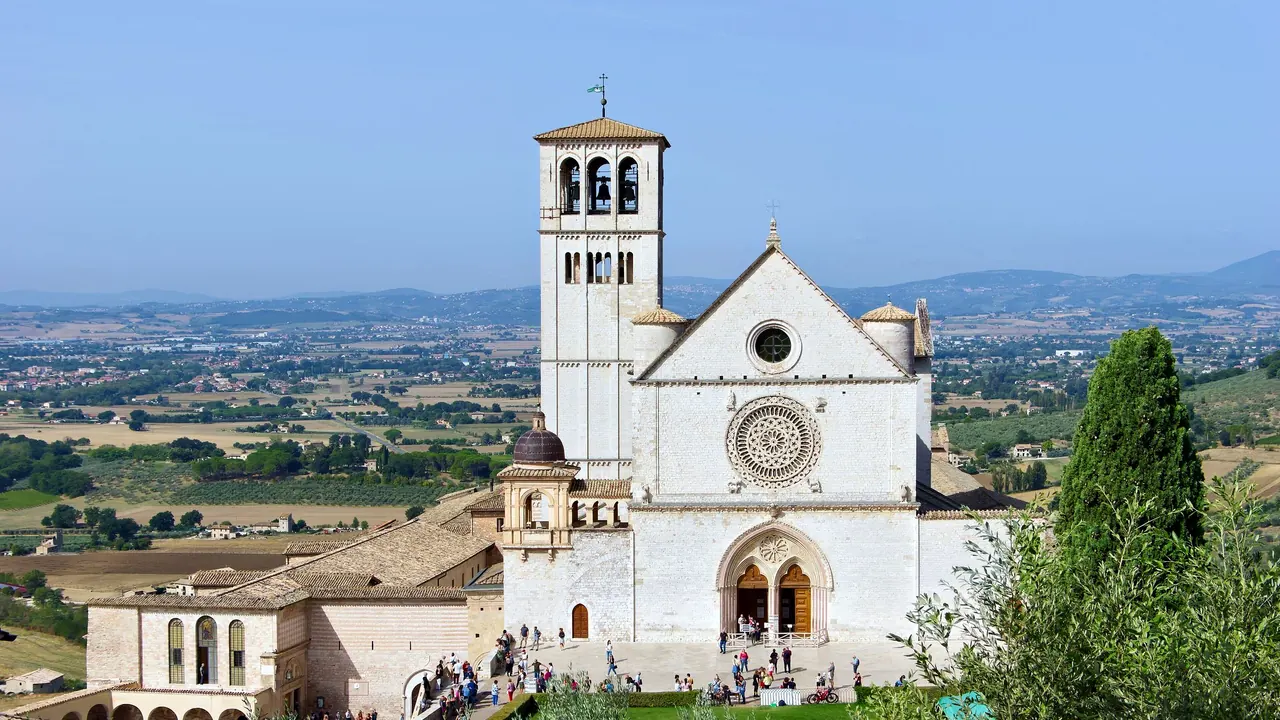
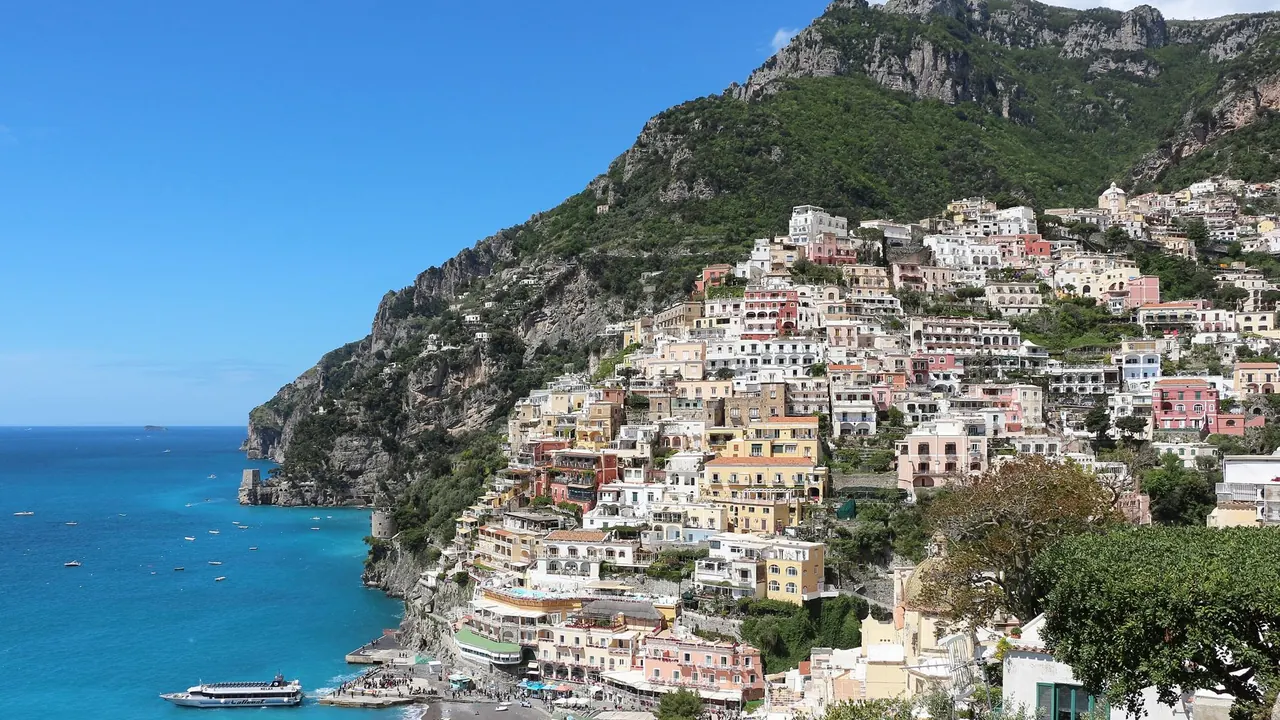
Photos: Assisi by Berthold Werner, CC BY-SA 4.0, cropped; Positano by Bernard Gagnon, CC BY 4.0, cropped.
Assisi or Positano?
Our verdict in twelve categories, each scored against the same fixed benchmark cities, and the climate month by month, so you can choose for your trip.
Choose Assisi for
- culture and sights
- prices
- getting around
Assisi suits travellers who want art, faith and the hill towns of central Italy more than the sea. The Basilica of San Francesco and its frescoes are the reason to come. It costs far less to stay than the coast, and trains along the valley to Perugia, Spello and Spoleto make it a quiet base for a week in Umbria. Evenings are early and still, which is exactly what many visitors are after.
Choose Positano for
- beaches
- shopping
- nature and the outdoors
Positano is the choice for a sea vacation in a dramatic setting, provided the budget can stretch to it. The days are spent swimming off Spiaggia Grande, taking boats to Capri and the coves, and walking the Path of the Gods high above the water. There are few monuments, and every errand involves stairs or a ferry, but few places are as good to look at or to swim from.
Scoreboard
Twelve categories on one fixed scale from 0 to 100. The shaded stretch is the gap between the two.
Your match
Pick a travel style or drag the sliders, and both match scores follow your weighting.
Too close to call, 1 point apart
Wins on culture and sights and prices with your weighting.
Wins on beaches and shopping with your weighting.
What matters to you?
Category by category
What the scores mean for a trip.
Beaches & swimming
Positano is a real beach destination and Assisi is not. From Assisi the nearest swim is at the small lido beaches of Lake Trasimeno, which are shallow and rather murky, or in the pool of a country hotel.
Positano has Spiaggia Grande and Fornillo below the town, Arienzo and Laurito reached by stairway or boat, and clear deep water that is warm enough from June to early October. The shore is coarse grey sand and pebble and shelves steeply, so water shoes help, and in high summer space runs out by mid-morning.
Food & drink
Both towns eat well within a narrow range, but from different larders. Assisi cooks like inland Umbria: strangozzi with black truffle, Castelluccio lentils, wild boar and torta al testo, with Monte Subasio olive oil and Sagrantino from Montefalco. The best of it is on the side lanes and at agriturismi, away from the tour-group menus.
Positano's table is the sea: clams, grilled fish, scialatielli and lemon desserts, eaten on terraces where the view is part of the meal. A few hotel dining rooms aim higher, but many kitchens close between November and Easter.
Culture & sights
Assisi is far ahead here. The Basilica of San Francesco ranks among Europe's great monuments: two churches stacked on the hillside, with frescoes by Cimabue, Simone Martini and Lorenzetti and the cycle of Saint Francis traditionally given to Giotto. The Temple of Minerva, Santa Chiara and the Rocca Maggiore fill out a calm two days.
Positano's main sight is the town itself, its pastel houses stacked up the ravine, along with the majolica dome of Santa Maria Assunta and the painted Roman villa preserved beneath it. That takes a couple of hours, and for serious sightseeing you have to go to Naples or elsewhere on the coast.
Nightlife
Neither is a place for a night out, but Positano has a little more going on. In summer a few bars near the beach stay busy and a club in a cave at the end of Spiaggia Grande runs late, though it all fades once the season ends.
Assisi goes silent after the day-trippers leave. A glass of Sagrantino and a walk through the floodlit lanes is about as late as the evening gets, and anyone who wants bars should stay in Perugia, half an hour away.
Nature & outdoors
Both towns have mountains behind them, but Positano's are the more spectacular. Assisi has Monte Subasio, with woodland paths to the Eremo delle Carceri and open summit meadows at about 1,290m, easy cycling between Spello and Montefalco, and the Sibillini within reach by car.
At Positano the Lattari mountains drop straight into the sea. The Path of the Gods runs along the cliffs to Nocelle, and kayaks and boats reach grottoes and the Li Galli islets. In both places, spring and autumn walking beats the midday heat of summer.
Day trips
Both are excellent bases. The difference is in what lies around them and how you get there. From Assisi the outings are to hill towns: Spello, Perugia, Spoleto, Gubbio, Todi and Orvieto, with trains along the valley and a car for the rest.
From Positano you travel mostly by water, and the list includes some of Italy's best-known sites: Amalfi, Ravello, Capri, and Pompeii and Herculaneum via Sorrento. Most ferries run only from spring to autumn, so Assisi's train line is the more dependable choice in winter.
Good for families
Neither is easy with small children, and for similar reasons: steep, stepped streets that defeat a pushchair, and very little made for children. The difference is what older children get out of it, which in Assisi means the Rocca Maggiore castle and a walk up Monte Subasio, and in Positano swimming in calm summer water and boat trips. In both places families do better staying somewhere flatter, at a valley agriturismo with a pool near Assisi or on a gentler stretch of the coast.
Getting around
Assisi is the easier of the two, though neither is flat. Its centre takes twenty minutes to walk end to end, with slopes and stairs, and there are car parks and lifts at the edges. Regional trains from the station 4km below run to Perugia, Spello and Spoleto.
Positano is almost all steps, with one road, crowded coastal buses and scarce parking. Ferries are the best way along the coast, but mostly only in season, so visitors rely on boats and their own legs.
Shopping & style
Positano makes shopping part of the visit. Its lanes are lined with boutiques selling white linen and printed moda Positano resort wear, and sandal makers will fit a pair while you wait. It is all one look, but a distinctive one.
Assisi's streets lean towards rosaries and Tau crosses, though Umbrian linen with Assisi embroidery, Deruta ceramics, olive oil and truffle products are worth taking home.
Affordability
Assisi is much the easier on the wallet, and saving money there takes little effort. The extra cost of a famous town gathers in a small ring around the basilicas and along the main streets, so sleeping down in the valley or eating a few lanes away brings prices back to ordinary Umbrian levels. Its dearest times follow the religious calendar rather than the weather, so steering clear of Easter and the great feast days avoids the peaks.
In Positano, the high prices are hard to avoid while you are in town, because the view is built into the price of every room and every table. The real saving is to sleep elsewhere, in Praiano or Sorrento, and come in by bus or ferry. Here the season is what drives prices, so May and October cost noticeably less than high summer, though even then a day there costs well above a day in Assisi.
Live music & performing arts
Neither has much, but Assisi offers a little more in town. Organ recitals and choral concerts are held in its basilicas around the feast days, the spring Calendimaggio festival brings costume, song and processions, and Perugia's opera and summer jazz are close by.
Positano has only occasional summer concerts. Its best evening out is Ravello's classical festival on a terrace above the sea, and for opera you go to Naples.
Wellness & relaxation
Both offer calm rather than a spa culture, but of very different kinds. Assisi's calm is contemplative: retreats in convent guesthouses, silent walks to the Eremo delle Carceri and evenings that go still once the tour groups leave.
Positano's comes from comfort: upscale hotels with spas and pools cut into the cliff, and long afternoons on a terrace above the sea. It is most restful in May, June and late September, because high summer is crowded and noisy.
When should you go?
Pick your month. The climate figures are measured averages, not a forecast.
Assisi in July
Positano in July
Daytime high, °C
Rainfall in the month, mm
Where the figures come from
Assisi's temperatures are measured 51 km from the centre, at Frontone.
Assisi has no rain gauge within 25 km of the centre, so its rainfall comes from a gridded climate dataset read at the city rather than from a gauge further away.
Positano's temperatures are measured 25 km from the centre, at Capri.
Positano has no rain gauge within 25 km of the centre, so its rainfall comes from a gridded climate dataset read at the city rather than from a gauge further away.
Positano's sunshine is measured 59 km from the centre, at Grazzanise.
Temperature and rainfall are climate normals, averaged over the years shown. Assisi: 1991-2020 normals, Frontone (50.5 km from centre). Positano: 2005-2025 (sunshine 1991-2020, rainfall 1991-2020) normals, Capri (25.3 km from centre).
Assisi has a hill-town climate with real seasons. January highs sit around 7°C, and July climbs to about 30°C, which makes the steep lanes hard going in the afternoon. May and June, and then September into early October, are the best months for walking the town and Monte Subasio. Rain builds through the autumn and is heaviest in October and November.
Positano is milder at both ends of the year, around 13°C in January, and is at its best from June to September. Then the sea warms to about 26°C by August, rain almost stops and July has the most sunshine. Swimming is pleasant from June into early October. The coast's wet season comes late in the year and peaks at about 127mm in November, so late autumn is the weakest time for both towns, though Positano stays the warmer of the two.
Which traveller are you?
For a beach and sun trip, Positano wins outright. It has clear, deep blue water, beaches below the town and at Fornillo, and boats to coves and Capri. Assisi is two hours from either coast, and the nearest swimming is at Lake Trasimeno.
On a culture and arts trip, Assisi is the stronger choice. The two stacked churches of San Francesco hold frescoes by Cimabue and Simone Martini and the Saint Francis cycle, and Perugia, Spoleto and Orvieto are close by. Positano has one domed church and a buried Roman villa.
On a trip with a tight budget, Assisi goes much further. The basilicas are free to enter, and convent guesthouses and valley agriturismi keep rooms cheap. Positano is among Italy's most expensive places to sleep and eat, and beach loungers and boat trips there add up quickly.
Before you go
| Measure | Assisi | Positano |
|---|---|---|
| Official language | Italian | Italian |
| Currency | Euro (EUR) | Euro (EUR) |
| Sockets | CFL230 V, 50 Hz | CFL230 V, 50 Hz |
| Driving side | Right | Right |
| Time zone | UTC+1, UTC+2 in summer | UTC+1, UTC+2 in summer |
| Emergency number | 112 | 112 |
| Elevation | 424 m | 142 m |
| Main airport | Perugia San Francesco d'Assisi – Umbria International Airport (PEG)9 km from centre17 non-stop destinations | Naples International Airport (NAP)33 km from centre131 non-stop destinations |
| Public holidays this year | 13 days | 13 days |
By the numbers
| Measure | Assisi | Positano |
|---|---|---|
| City population | 27,605 | 3,729 |
| People per km² | 147 | 429 |
| Museums within 10 km | 14 | 10 |
| UNESCO World Heritage sites within 50 km | 2 | 5 |
| Swim season, months above 21 °C | - | 5 months |
Where else could you go?
Every comparison below shares a destination with this one, so you can follow Assisi or Positano somewhere new.
- Sorrentovs Positano
- Amalfivs Positano
- Salernovs Positano
- Naplesvs Positano
- San Marinovs Assisi
- Sienavs Assisi