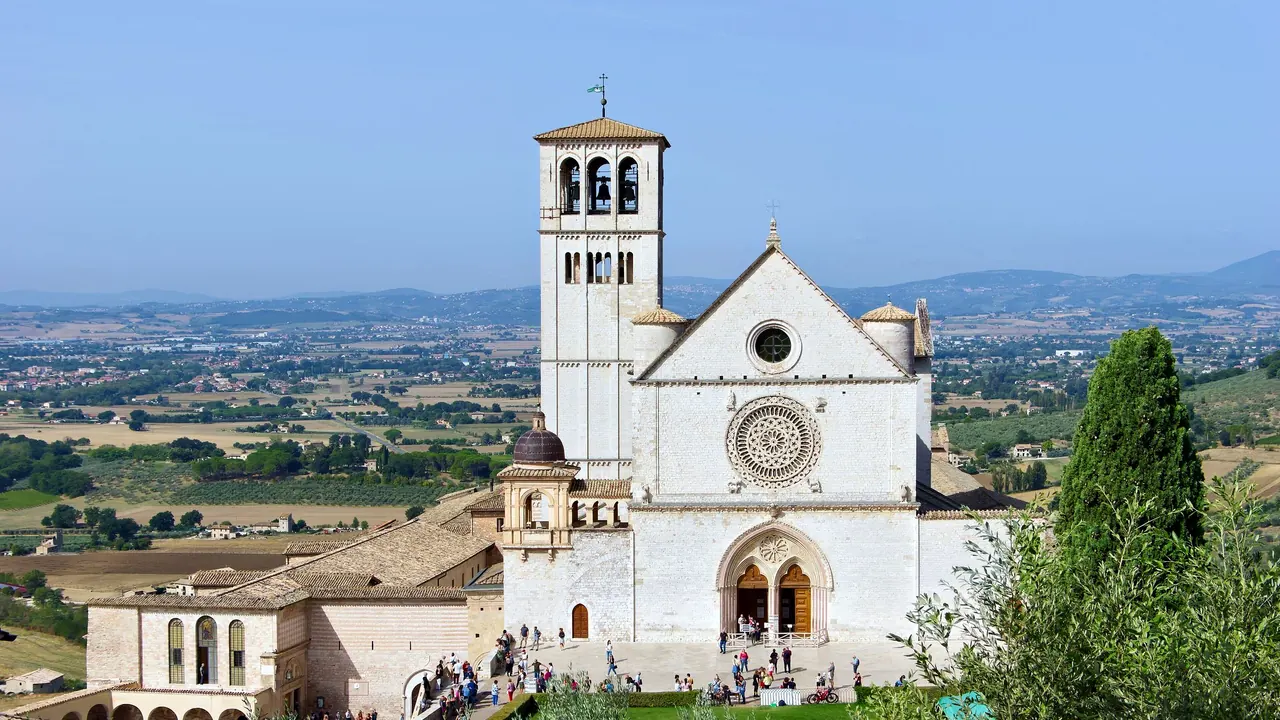
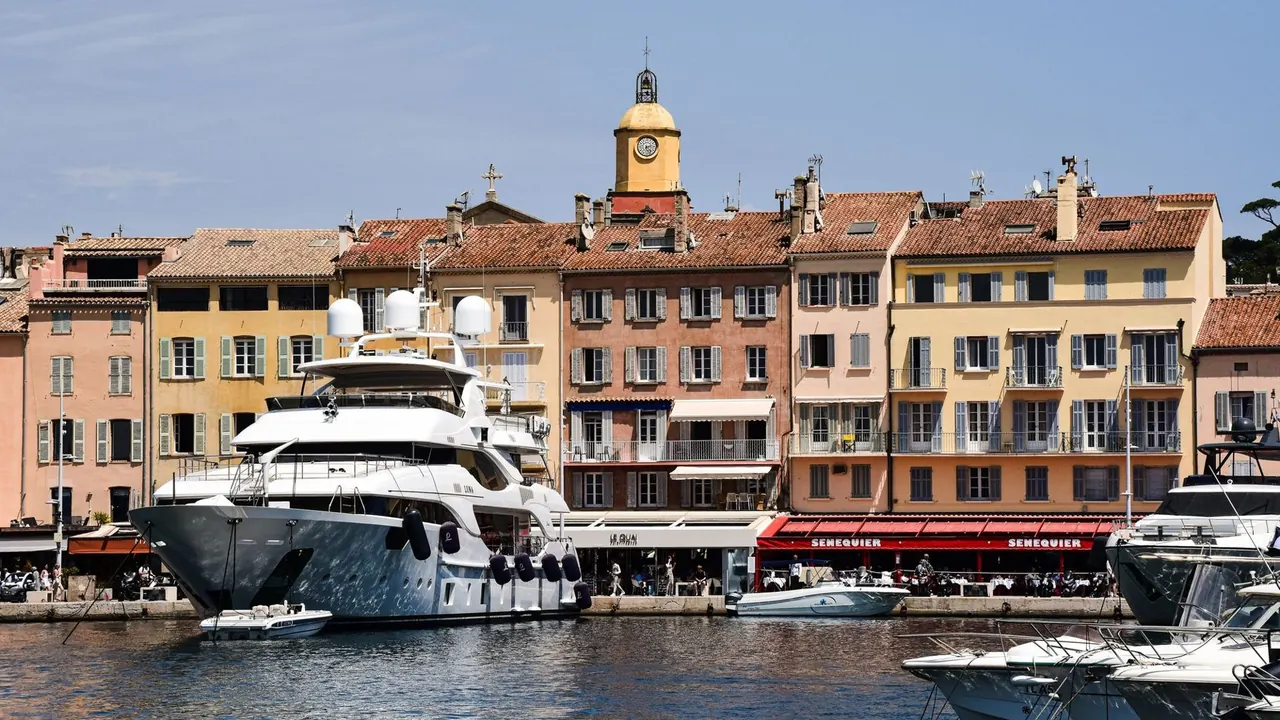
Photos: Assisi by Berthold Werner, CC BY-SA 4.0, cropped; Saint-Tropez by AXP Photography, Pexels License.
Assisi or Saint-Tropez?
Our verdict in twelve categories, each scored against the same fixed benchmark cities, and the climate month by month, so you can choose for your trip.
Choose Assisi for
- prices
- culture and sights
- day trips
Choose Assisi for a slower trip built on art, faith and the hill towns of Umbria. The Basilica of San Francesco and its frescoes outweigh anything Saint-Tropez can show. The town is also an excellent base for Spello, Perugia, Spoleto and Gubbio, and it costs far less. Expect quiet evenings and no beach.
Choose Saint-Tropez for
- beaches
- nightlife
- shopping
Saint-Tropez is the better pick for a summer by the sea with some glamour attached. Pampelonne's long sand, the clear water of the gulf, the coast path and the harbour's beach clubs and late clubs give it the edge for sun, swimming and going out. Its boutiques leave Assisi's souvenir stalls far behind. It only works, though, if the budget stretches to one of the costliest towns on the Mediterranean.
Scoreboard
Twelve categories on one fixed scale from 0 to 100. The shaded stretch is the gap between the two.
Your match
Pick a travel style or drag the sliders, and both match scores follow your weighting.
Wins on prices and culture and sights with your weighting.
Wins on beaches and nightlife with your weighting.
What matters to you?
Category by category
What the scores mean for a trip.
Beaches & swimming
This is no contest. Assisi sits in the hills of Umbria, a couple of hours from either coast. Swimming there means the shallow, rather murky lido beaches of Lake Trasimeno or a pool at an agriturismo.
Saint-Tropez has Pampelonne, some 5km of fine pale sand with clear water and public stretches between the beach clubs. Wilder coves lie further south at Escalet, Cap Taillat and Gigaro. From June to September it is a real beach destination.
Food & drink
Assisi feeds you well but plainly: strangozzi with black truffle, Castelluccio lentils, wild boar, torta al testo, Monte Subasio olive oil and Sagrantino from Montefalco. The range is narrow, though. Set menus cluster near the basilica, and the best meals are in side-lane trattorias or agriturismi.
Saint-Tropez gives you more choice and a stronger top end. You get Provençal grilled fish, bouillabaisse and aïoli, the Place des Lices market, the tarte tropézienne and serious hotel dining rooms, all with local rosé. Simple, fairly priced meals are the hard part there.
Culture & sights
Assisi has one of Europe's great monuments, the Basilica of San Francesco. Its Lower Church holds frescoes by Cimabue and Simone Martini, and the Upper Church has the Saint Francis cycle given to Giotto. Add the Temple of Minerva, Santa Chiara and the Porziuncola below the walls, and the whole UNESCO-listed town rewards two unhurried days.
Saint-Tropez's highlight is the Annonciade, with its pointillist and Fauvist paintings from the Signac years. The citadel's maritime museum and the ochre lanes of La Ponche complete the picture. It makes a pleasant day, not a reason to travel.
Nightlife
Assisi goes to sleep after dinner. A glass of Sagrantino and a walk through empty floodlit lanes is the evening, and Perugia, half an hour away, is the place for anything livelier.
Saint-Tropez in July and August runs from afternoon beach-club parties at Pampelonne to champagne on the harbour and clubs open until dawn. The scene is moneyed and dress-coded rather than relaxed bar-hopping, and it has faded by October.
Nature & outdoors
Assisi has one fine mountain on its doorstep. The path up Monte Subasio climbs through holm oaks past the Eremo delle Carceri to summit meadows at about 1,290m, and the valley below is gentle cycling country among olive groves. The Valnerina and the Sibillini make bigger days out by car.
Saint-Tropez has more to offer because it adds the sea to the land. The Sentier du Littoral circles the peninsula's capes, the gulf is good for sailing and snorkelling, and the Massif des Maures has cork-oak forest. Port-Cros and Porquerolles form a protected island national park. Summer fire risk can close some trails.
Day trips
Assisi is one of the best bases in central Italy. Spello is ten minutes away, and Perugia, Spoleto, Gubbio and Todi are all easy to reach, several of them by train. Orvieto's cathedral and the Tuscan towns of Cortona and Montepulciano make longer days.
Saint-Tropez's outings are pleasant but smaller in scale: the hill villages of Ramatuelle, Gassin and Grimaud, the canals of Port Grimaud, wine estates and a boat across the gulf. None of them matches the Umbrian towns in historic weight, and summer traffic makes every trip slower.
Good for families
Assisi is safe and welcoming, but its frescoed churches call for silence and its stepped streets are hard going with a pushchair. Older children enjoy the Rocca Maggiore and the climb up Monte Subasio. A valley agriturismo with a pool usually keeps a family trip happy.
Saint-Tropez does better because it has what young children want most: sandy, gently shelving beaches at Pampelonne and Gigaro. The adult-focused harbour, high prices and summer traffic count against it, so many families stay in Sainte-Maxime and come over by boat.
Getting around
Both centres are small enough to walk, though Assisi's means plenty of stairs and slopes. The real difference is getting further afield. Assisi's station in Santa Maria degli Angeli, 4km below the town, has regional trains to Perugia, Spello, Foligno and Spoleto.
Saint-Tropez has no railway, its buses are slow, and its main beaches are several kilometres out of town. In July and August the single road along the gulf jams for hours, so the passenger boats from Sainte-Maxime and Port Grimaud are often the best way in.
Shopping & style
Assisi's lanes are full of rosaries and Tau crosses. The worthwhile buys are linens with Assisi embroidery, Deruta ceramics, olive oil and truffle products.
Saint-Tropez offers far more than you would expect from a town its size. The big fashion houses keep summer shops behind the port, alongside resort wear and jewellery, and the leather Tropézienne sandals are still hand-stitched in the old town. The Place des Lices market adds linen, baskets and vintage finds, although much of the town's shopping closes in winter.
Affordability
The gap is wide, and the money goes in different places. In Assisi the extra costs are few and easy to avoid: a room inside the walls at Easter or on a feast day, or dinner at the tables nearest the basilicas. Sightseeing adds little to the bill, so a modest budget lasts comfortably over several days.
In Saint-Tropez the cost comes with simply being there in summer. A lounger at a beach club, a drink on the harbour and the taxi or parking for every trip out to Pampelonne all add up. Late spring and autumn soften the bill without making it cheap, so money that pays for an easy week in Umbria buys a short and careful stay on the gulf.
Live music & performing arts
Neither town has much of a concert calendar, and in both the serious stage is elsewhere: Perugia for Assisi, Toulon or Nice for Saint-Tropez. What differs is the flavour.
Assisi's music is sacred: organ and choral concerts in its basilicas, plus the medieval song and costume of Calendimaggio in spring. Saint-Tropez has open-air classical and jazz on the citadel in summer, and each May the Bravade procession fills the streets with costumed townspeople carrying muskets.
Wellness & relaxation
Neither town has a bathing tradition, and the calm you find in each depends on timing. Assisi's restfulness is spiritual: convent retreats, silent walks to the Eremo delle Carceri and empty lanes once the tour groups leave, with only a few country spas.
Saint-Tropez has polished hotel spas, but high summer there is crowded and loud. Its peace comes in May, June and September, with long lunches and pétanque under the plane trees.
When should you go?
Pick your month. The climate figures are measured averages, not a forecast.
Assisi in July
Saint-Tropez in July
Daytime high, °C
Rainfall in the month, mm
Where the figures come from
Assisi's temperatures are measured 51 km from the centre, at Frontone.
Assisi has no rain gauge within 25 km of the centre, so its rainfall comes from a gridded climate dataset read at the city rather than from a gauge further away.
Saint-Tropez has no rain gauge within 25 km of the centre, so its rainfall comes from a gridded climate dataset read at the city rather than from a gauge further away.
Saint-Tropez's sunshine is measured 62 km from the centre, at Nice.
Temperature and rainfall are climate normals, averaged over the years shown. Assisi: 1991-2020 normals, Frontone (50.5 km from centre). Saint-Tropez: 1999-2020 (sunshine 1991-2020, rainfall 1991-2020) normals, Le Luc (24.2 km from centre).
Assisi is at its best in spring and autumn. April, May, September and early October bring mild days for climbing its stepped lanes and walking on Monte Subasio. July and August reach about 30°C, too hot for the slopes in the afternoon. Winters are cold for central Italy, around 7°C by day, and the wettest stretch runs from September to December.
Saint-Tropez is warmer than Assisi in every month and built around summer. The sea is warm enough for swimming from June to September and reaches about 24°C in August. July is almost dry and the sunniest month of the year. Autumn turns wet quickly, with November the rainiest month at around 155mm, but the mild winters still make a walk by the water more pleasant than a cold day in the Umbrian hills.
Which traveller are you?
For a beach and sun trip, Saint-Tropez wins outright. Pampelonne's long pale sand, clear water and the quieter coves along the coast path give you a whole summer of swimming. Assisi's nearest water is a shallow lake about three-quarters of an hour's drive away.
On a culture and arts trip, Assisi is the clear choice. The frescoed Basilica of San Francesco, Santa Chiara and the Roman Temple of Minerva fill two rewarding days, with Perugia, Spoleto and Orvieto close by. Saint-Tropez has one fine museum and a citadel.
On a tight budget, your money goes much further in Assisi. The basilicas are free, and convent guesthouses and valley agriturismi keep costs modest. Saint-Tropez charges premium prices for rooms, meals and loungers, so budget visitors usually sleep across the gulf and come over for the day.
Before you go
| Measure | Assisi | Saint-Tropez |
|---|---|---|
| Official language | Italian | French |
| Currency | Euro (EUR) | Euro (EUR) |
| Sockets | CFL230 V, 50 Hz | CE230 V, 50 Hz |
| Driving side | Right | Right |
| Time zone | UTC+1, UTC+2 in summer | UTC+1, UTC+2 in summer |
| Emergency number | 112 | 112 |
| Elevation | 424 m | 0 m |
| Main airport | Perugia San Francesco d'Assisi – Umbria International Airport (PEG)9 km from centre17 non-stop destinations | Nice-Côte d'Azur Airport (NCE)64 km from centre130 non-stop destinations |
| Public holidays this year | 13 days | 11 days |
By the numbers
| Measure | Assisi | Saint-Tropez |
|---|---|---|
| City population | 27,605 | 3,582 |
| People per km² | 147 | 320 |
| Museums within 10 km | 14 | 4 |
| UNESCO World Heritage sites within 50 km | 2 | 0 |
| Swim season, months above 21 °C | - | 3 months |
Where else could you go?
Every comparison below shares a destination with this one, so you can follow Assisi or Saint-Tropez somewhere new.
- Cannesvs Saint-Tropez
- Antibesvs Saint-Tropez
- Nicevs Saint-Tropez
- Monacovs Saint-Tropez
- San Marinovs Assisi
- Aix-en-Provencevs Saint-Tropez