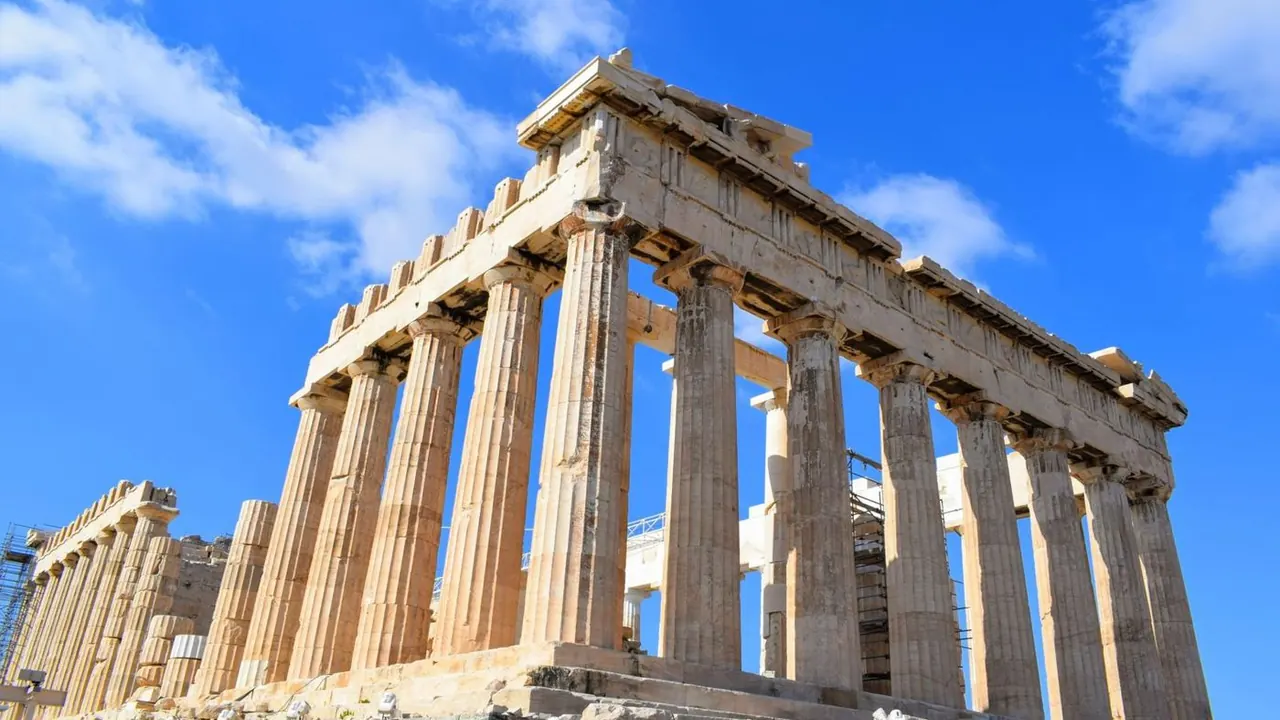
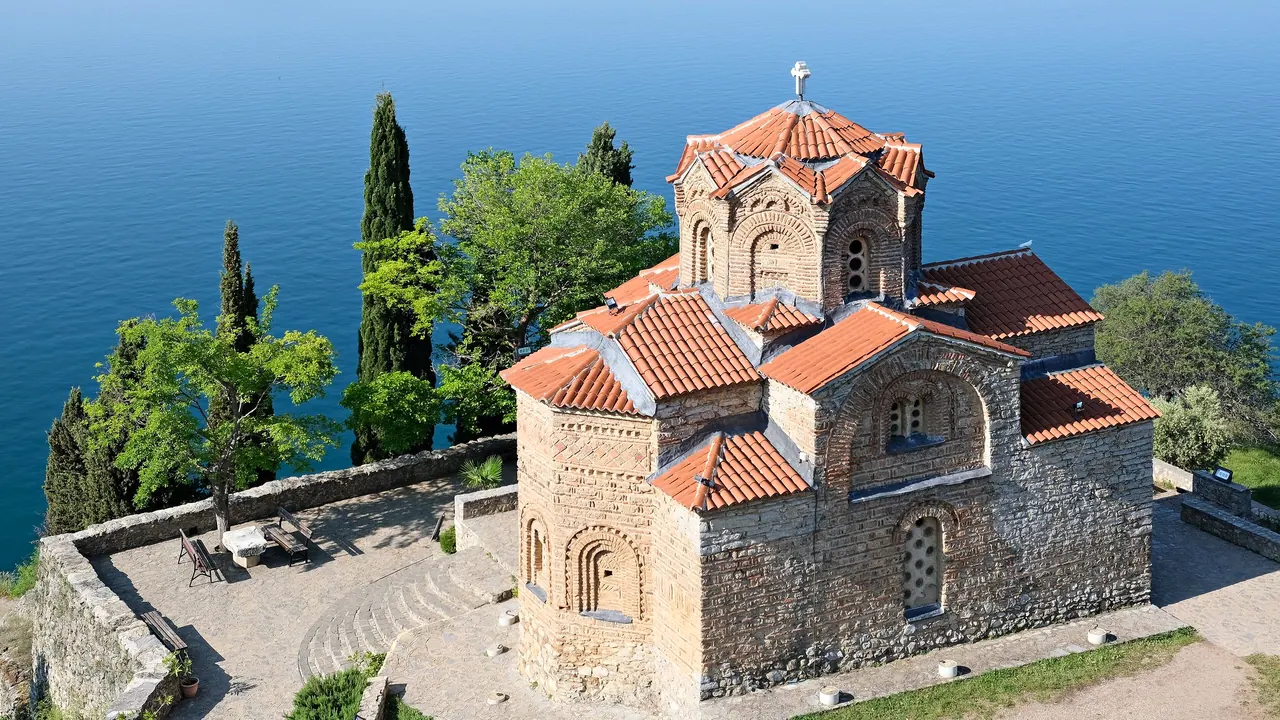
Photos: Athens by Ranjeet Kumar Singh, Pexels License; Ohrid by kallerna, CC BY-SA 4.0, cropped.
Athens or Ohrid?
Our verdict in twelve categories, each scored against the same fixed benchmark cities, and the climate month by month, so you can choose for your trip.
Choose Athens for
- nightlife
- food and drink
- live music and the arts
Athens is the choice for a trip built around the city itself. The Acropolis and the great archaeological museums, late taverna dinners, rooftop bars and clubs that run until dawn, and a long list of famous ancient sites within reach for a day give it far more to fill a week. Choose it if you want a capital with real depth and don't mind heat, noise and crowds as part of the deal.
Choose Ohrid for
- prices
- nature and the outdoors
Ohrid suits a slower, cheaper trip in a small place. Its pull is a clear mountain lake, a hillside old town of frescoed churches and an easy rhythm of swimming, walking and eating by the water. It costs far less than Athens, and in late spring or early autumn it is calm in a way the Greek capital never is. Food, nightlife and things to do are much thinner, though, so it works best for travellers who want quiet.
Scoreboard
Twelve categories on one fixed scale from 0 to 100. The shaded stretch is the gap between the two.
Your match
Pick a travel style or drag the sliders, and both match scores follow your weighting.
Wins on nightlife and food and drink with your weighting.
Wins on prices and nature and the outdoors with your weighting.
What matters to you?
Category by category
What the scores mean for a trip.
Beaches & swimming
Athens has salt water and real choice. The Riviera runs south past Glyfada and Vouliagmeni towards clearer coves, the swimming season lasts from late May into October, and Aegina and Agistri are a short ferry ride away when the city beaches feel crowded.
Ohrid swims in fresh water. The lake is calm and very clear, but the shore is mostly concrete platforms, jetties and short pebble strips, and the water is warm enough only from late June to mid-September. It is a pleasant way to cool off rather than a beach destination.
Food & drink
Athens is much the stronger place to eat. There are mezedopoleia in Psyrri and Pangrati, a central market to wander through, wines from assyrtiko to xinomavro, bakeries open at dawn and a serious fine-dining scene at the top end. You can eat differently every night for a week.
Ohrid's cooking is honest Macedonian home food: tavče gravče, ajvar, grilled meats and belvica from the lake. But the same menu repeats along the waterfront, and after a few days the choice runs thin. The best meals are in family-run places in the upper old town or in the shore villages.
Culture & sights
Both cities have ancient and religious layers, but Athens works on a far larger scale. The Acropolis, the Agora, the Kerameikos and the Temple of Olympian Zeus are linked by a pedestrian promenade, and the Acropolis Museum and the National Archaeological Museum could each fill a day.
Ohrid is a smaller, more intimate set: the medieval frescoes of St Sophia, St John at Kaneo above the water, Plaošnik with its links to the Cyrillic tradition, and Ottoman-era houses on steep lanes. It is lovely to walk slowly, but you can see it in a day or two.
Nightlife
Athens is a city that stays out all night all year. There are rooftop bars facing the lit Acropolis, clubs and a long-standing gay scene in Gazi, student bars in Exarchia and bouzouki nights that run until morning.
In Ohrid, going out is a summer thing: a stroll along the promenade, café-bars by the old bazaar and beach clubs on the southern shore in July and August. Outside that season, evenings end over dinner.
Nature & outdoors
The two are broadly level outdoors, but the landscapes are very different. Athens has bare, sun-baked hills: short climbs up Lycabettus and Filopappou, pine trails on Hymettus, fir forest on Parnitha and the open Saronic Gulf for sailing and windsurfing.
Ohrid is greener and more enclosed, with a deep lake ringed by mountains. You can hike to summits above 2,000m in Galičica, paraglide from its ridge, paddle a kayak along the shore or take a rowing boat through the spring-fed pool near St Naum. Both are best in spring and autumn.
Day trips
Athens has some of the most famous day trips in Europe. Sounion at sunset, Mycenae, Epidaurus and Nafplio in the Argolid, and Delphi are all reachable from the city, along with island days to Hydra or Poros by ferry from Piraeus.
Ohrid's outings are quieter and more local. You can visit St Naum by road or by boat, Bitola and the mosaics at Heraclea, Lake Prespa, or cross into Albania for Korçë. Roads are slow and buses are infrequent, so you will need a driver for most of them.
Good for families
Athens has more to keep children busy, with the calm Riviera beaches, a zoo, a planetarium and the park at the Stavros Niarchos centre. It is tiring in midsummer, though, and pushchairs struggle on the broken pavements.
Ohrid is calmer and safer-feeling, with long days in the lake, boat rides and the pile village at the Bay of Bones. There is little else built for children, and the cobbled old town is steep.
Getting around
Both centres can be crossed on foot, but only one is backed by a proper transit network. In Athens the core around Syntagma, Plaka, Monastiraki and the Acropolis is compact. The metro links it to the airport and Piraeus, with antiquities on show in its stations, and the tram runs down to the coast. The catch is at street level: narrow, broken pavements, hills, heavy traffic and summer heat that wears you down.
Ohrid's promenade, old bazaar and churches all lie a short walk apart, though the old town climbs on cobbles and stairs. Reaching the lakeside beaches further south is the awkward part, because the local buses and summer boats are infrequent. Anyone staying outside town tends to rely on taxis, a hire car or a driver.
Shopping & style
Shopping in Athens covers far more ground. Ermou Street handles the chain fashion, Kolonaki and Voukourestiou have the designer labels and Greek boutiques, and the weekend flea market around Monastiraki is good for records, antiques and old furniture. The streets around Athinas add leather sandals, mountain honey, olive oil and jewellery based on ancient designs.
Ohrid really has one speciality, the lustrous Ohrid pearl. Buy it from a long-established family workshop in the old bazaar, not from a stall. Beyond that, there is carved wood, filigree silver and summer souvenirs, and nothing you could call a fashion street.
Affordability
Athens strains a budget in ways Ohrid rarely does. Everyday eating and transport are fair, but the bed is the big expense, especially a central room with an Acropolis view in high summer. Over a few days of sightseeing, the entry fees at the archaeological sites add a second layer of cost. Staying in Koukaki or Pangrati and travelling in spring or autumn softens both.
In Ohrid there is no single cost that dominates, so the calendar matters more than your choices. Lakefront rooms climb and book out in July and August, above all at weekends. In late spring and early autumn the town is at its cheapest while the weather still holds.
Live music & performing arts
Both cities stage summer performances in ancient settings, but Athens offers far more. Its festival fills the Odeon of Herodes Atticus beneath the Acropolis and the theatre at Epidaurus, and the Greek National Opera and the Megaron keep classical music going all year. Late rebetiko in small tavernas adds a living tradition.
Ohrid has its long-running Summer Festival in St Sophia and the ancient theatre. Outside the festival, there is little beyond folk music at restaurants.
Wellness & relaxation
Neither city is a spa destination, but Athens has more to offer. Lake Vouliagmeni, fed by warm mineral springs beneath a limestone cliff, is a place to bathe all year, and there are hammam-style bathhouses and hotel spas in the city as well.
Ohrid has a few hotel spas and no bathing tradition of its own. Its gift is a slow pace by the still lake in May, June and September, which fades in a crowded August.
When should you go?
Pick your month. The climate figures are measured averages, not a forecast.
Athens in July
Ohrid in July
Daytime high, °C
Rainfall in the month, mm
Where the figures come from
Ohrid has no rain gauge within 25 km of the centre, so its rainfall comes from a gridded climate dataset read at the city rather than from a gauge further away.
Temperature and rainfall are climate normals, averaged over the years shown. Athens: 1991-2020 normals, Athens / Athenai / Pláka (2.2 km from centre). Ohrid: 1999-2017 (rainfall 1991-2020) normals, Ohrid (0.2 km from centre).
Athens is the warmer city all year. Its swimming season runs from June to early October, when the sea is warmest in August at around 26°C, and summer is almost completely dry. From late June to August, highs of 34°C to 35°C make sightseeing on foot hard work in the middle of the day. Spring and autumn are the best times for walking the ruins. Rain comes back in November and peaks in December, though even midwinter is mild and fairly sunny.
Ohrid has the colder, wetter climate of an inland mountain town. July and August are the only months when it is reliably warm enough for lake swimming, with highs near 29°C that are comfortable rather than draining. May, June and September are pleasant for walking the old town and the hills. Rain is spread across the year but is heaviest from October to December, at around 94mm a month, and winter highs of about 6°C make it a grey, chilly place out of season.
Which traveller are you?
On a food and nightlife trip, Athens is the clear pick. Shared meze, Greek wine and late taverna dinners lead on to bars in Psyrri, clubs in Gazi and open-air venues on the coast in summer. Ohrid offers waterfront café-bars in summer and quiet dinners for the rest of the year.
For a culture and arts trip, choose Athens. The Acropolis, the Agora and two world-class museums are within walking distance of each other, with Delphi and Epidaurus a day away. Ohrid's frescoed churches are beautiful, but you can see them in a day or two.
On a trip with a tight budget, Ohrid goes much further. Guesthouse rooms, lakeside meals with local wine, taxis and church entry fees all cost little, especially outside July and August. Athens is cheaper than Western capitals but is never a budget city.
Before you go
| Measure | Athens | Ohrid |
|---|---|---|
| Official language | Greek | Albanian, Macedonian |
| Currency | Euro (EUR) | Denar (MKD) |
| Sockets | CF230 V, 50 Hz | CF230 V, 50 Hz |
| Driving side | Right | Right |
| Time zone | UTC+2, UTC+3 in summer | UTC+1, UTC+2 in summer |
| Emergency number | 112 | 112 |
| Elevation | 74 m | 695 m |
| Main airport | Athens Eleftherios Venizelos International Airport (ATH)20 km from centre173 non-stop destinations | Ohrid St. Paul the Apostle Airport (OHD)9 km from centre14 non-stop destinations |
| Public holidays this year | 15 days | 12 days |
By the numbers
| Measure | Athens | Ohrid |
|---|---|---|
| City population | 643,452 | 38,818 |
| People per km² | 16,499 | 100 |
| Museums within 10 km | 88 | 11 |
| UNESCO World Heritage sites within 50 km | 2 | 2 |
| Swim season, months above 21 °C | 5 months | - |
Where else could you go?
Every comparison below shares a destination with this one, so you can follow Athens or Ohrid somewhere new.