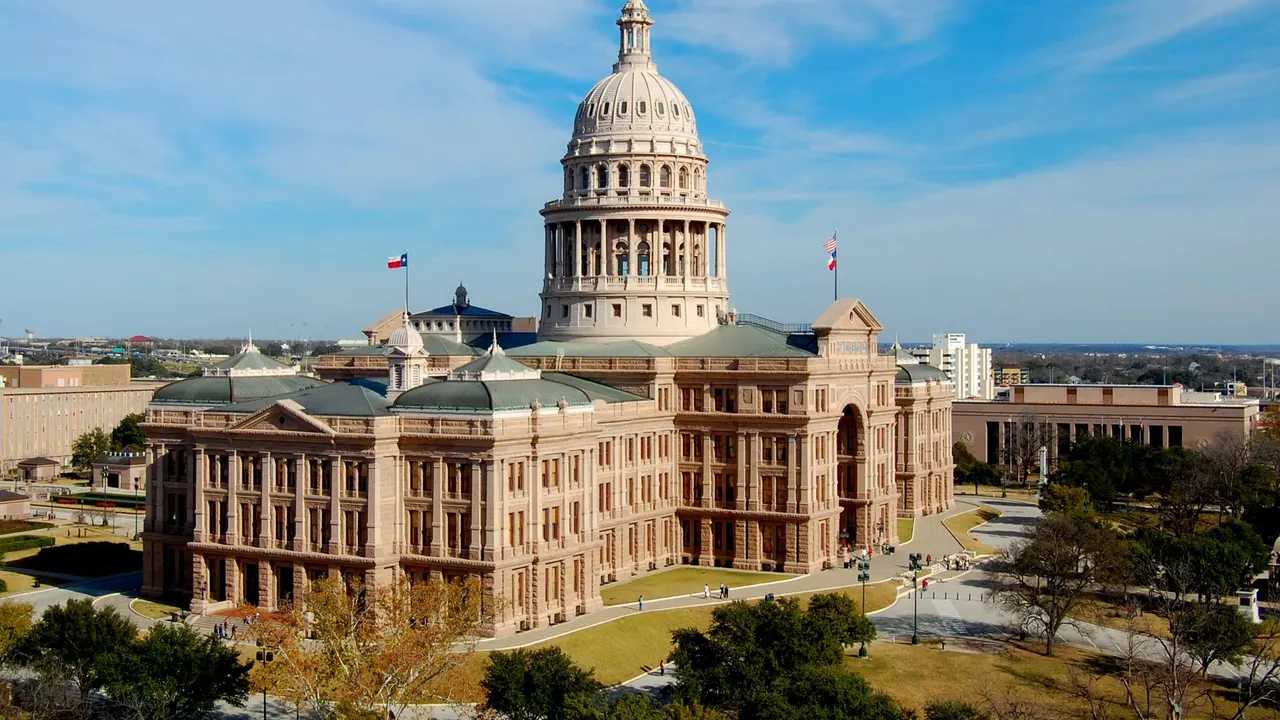
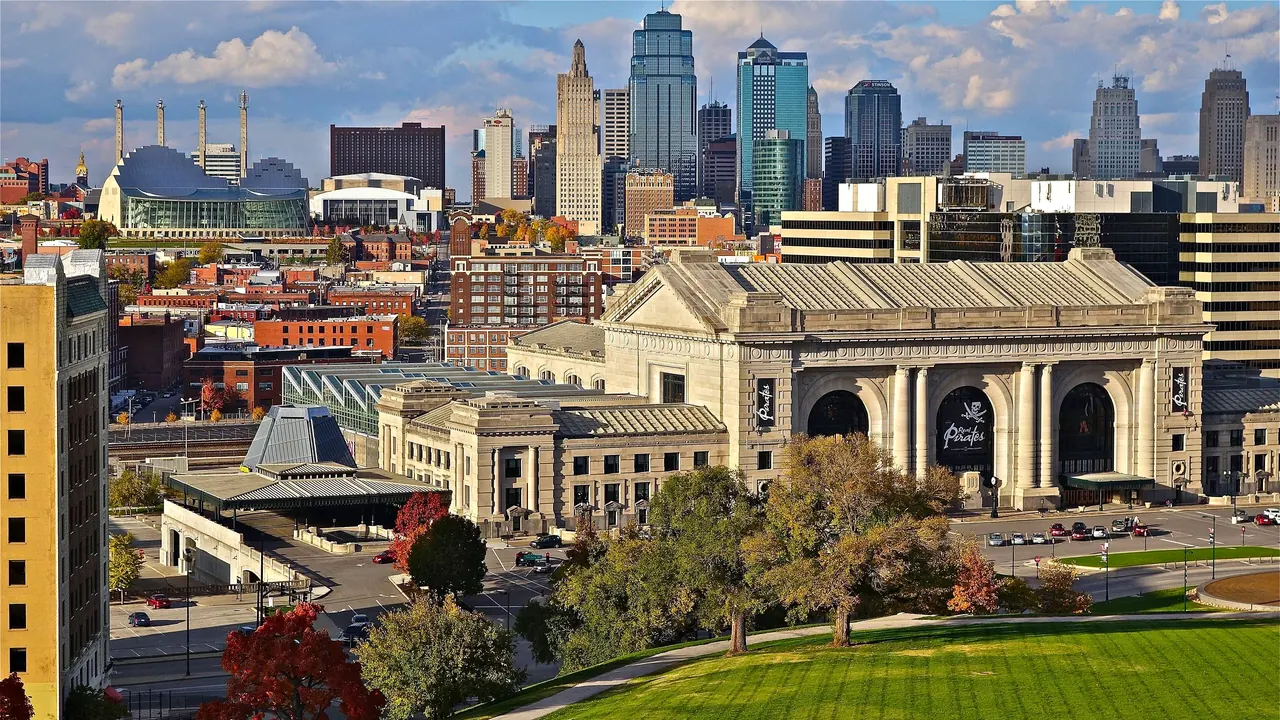
Photos: Austin by LoneStarMike, CC BY 3.0, cropped; Kansas City by Dean Hochman from Overland Park, Kansas, U.S., CC BY 2.0, cropped.
Austin or Kansas City?
Our verdict in twelve categories, each scored against the same fixed benchmark cities, and the climate month by month, so you can choose for your trip.
Choose Austin for
- nature and the outdoors
- beaches
- day trips
Austin suits travellers who want their evenings to be the main event. Live bands play every night of the week, from Red River clubs to honky-tonks, and the bar streets fill up late. During the day there is limestone country to explore, with spring-fed pools, the Greenbelt canyon and the Hill Country close by. Pick it for a music-led trip with time outdoors, and plan on a car and a bigger budget.
Choose Kansas City for
- culture and sights
- prices
- families
Kansas City is the better choice for museums and for children. The Nelson-Atkins, the National WWI Museum and the 18th and Vine museums make a stronger sightseeing list than Austin's, and Worlds of Fun, the zoo and the attractions at Crown Center keep a family busy for days. It costs less to stay, parking is easy, and evenings are quieter, with jazz and a proper symphony and opera season rather than a nightly party.
Scoreboard
Twelve categories on one fixed scale from 0 to 100. The shaded stretch is the gap between the two.
Your match
Pick a travel style or drag the sliders, and both match scores follow your weighting.
Wins on nature and the outdoors and beaches with your weighting.
Wins on culture and sights and prices with your weighting.
What matters to you?
Category by category
What the scores mean for a trip.
Beaches & swimming
Neither city is a beach destination, but Austin's swimming is much better. Barton Springs Pool stays cold and clear all year and is the centre of summer life in Zilker Park. Deep Eddy is a calmer spring-fed alternative, and Lake Travis offers coves and boat days on warm water.
Kansas City has lake beaches in county parks on the edge of town, plus ordinary public and hotel pools. They are fine for an afternoon with children, but nothing to plan a trip around.
Food & drink
Both cities are known for barbecue, and the food is about equally good. It is a different kind of barbecue, though. Austin smokes brisket over post oak, sells it by weight on butcher paper, and adds Tex-Mex, breakfast tacos and food trucks in beer gardens. Lockhart, the barbecue town, is a short drive away.
Kansas City smokes over hickory, uses a thick, sweet sauce and is famous for burnt ends. It also has old steakhouses from its cattle-town days and immigrant food counters around the River Market. In both cities the best eating is casual, and fine dining is limited.
Culture & sights
Kansas City has more worth seeing. The Nelson-Atkins is a major art museum with especially strong Chinese art, the National WWI Museum is the country's main museum of that war, and 18th and Vine tells African American history through baseball and jazz. Union Station and the Spanish-style Country Club Plaza give the city some architecture to look at as well.
Austin's highlights are the pink granite State Capitol and the museums around the university campus. The Ransom Center, with its Gutenberg Bible, is the one that stands out. There is little historic architecture beyond that, so it makes a pleasant day or two rather than a reason to visit.
Nightlife
Going out is central to an Austin trip in a way it isn't in Kansas City. Sixth Street, the bars in Rainey Street's old bungalows and the east side's mezcal bars and beer gardens are all close together. The student crowd keeps them busy through the week, and the spring and autumn festival weeks turn the whole centre into one long party.
Kansas City's bars are split between separate districts: the sports bars of Power and Light, the scruffier Westport strip and the calmer craft-beer bars of the Crossroads. You need a ride between them, and away from Friday and Saturday the city goes quiet early.
Nature & outdoors
Austin sits on the edge of the limestone Hill Country, and the outdoors starts in town. The Barton Creek Greenbelt runs through a wooded canyon with climbing walls, and kayaks and paddleboards fill Lady Bird Lake. Bats pour out from under the Congress Avenue Bridge at dusk, and Enchanted Rock and Pedernales Falls are within a couple of hours.
Around Kansas City the land is rolling prairie and farmland, so the outdoors means large city parks such as Swope Park, the rose garden in Loose Park, and reservoirs for fishing. For real hiking country you have to drive several hours to the Ozarks.
Day trips
Austin has much better day trips. San Antonio is about an hour and a half south and has the Alamo, the River Walk and its UNESCO-listed Spanish missions. Fredericksburg, a town founded by German settlers, has wineries along the road there, and Gruene's old dance hall makes an easy stop.
From Kansas City the outings are smaller and closer: Truman's home and library in Independence, the university town of Lawrence, and the old river town of Weston. They make pleasant half days rather than memorable ones. From either city you need a car.
Good for families
Kansas City has more for children right in town. Worlds of Fun is a full amusement park with a water park next door, and the zoo is large. Science City, an aquarium and a Legoland Discovery Centre are all close together around Union Station and Crown Center.
Austin is relaxed and easy with children: Zilker Park's miniature train, the Thinkery and the bat flight are reliable hits. For theme parks and big waterparks, though, you have to drive to San Antonio or New Braunfels.
Getting around
Both are car cities, and in both you will be driving to most things. In Austin the walkable part is downtown, the Capitol area and Rainey Street, with bikes, scooters and the lakeside trail for short trips. The main highway through town gets heavily congested at peak hours.
Kansas City's highways move easily and parking is simple. Its streetcar along Main Street links the River Market, downtown, Union Station and Crown Center, so if you stay near the line you can manage a day or two without a car.
Shopping & style
There is little to separate the two, and neither is a place for serious fashion. Austin's best buys are cowboy boots, pearl-snap shirts and vintage clothing from the independent shops on South Congress. Its luxury brands are in a mall on the northern edge of town.
Kansas City's centrepiece is the Country Club Plaza, a 1920s district of tiled towers that is mostly chain and upmarket stores. The Crossroads and 39th Street add galleries, record shops and thrift stores, and the typical souvenir is a bottle of barbecue sauce.
Affordability
Kansas City is the cheaper of the two. Hotel rooms, even downtown, cost noticeably less, parking is easy, and general entry to the Nelson-Atkins is free. You will probably still need to hire a car, and tickets to the theme park and the zoo add up for a family.
Austin's downtown hotels charge big-city rates, and during the big festival and racing weeks prices rise sharply and rooms sell out. Car hire and parking add to the bill. Tacos, food trucks and free outings such as the Greenbelt and the bat flight help keep the daily spend down.
Live music & performing arts
Austin is the stronger choice for live music, and its scene is broader. Several bands a night play the clubs on Red River and Sixth Street, often with no cover charge, and in the honky-tonks couples two-step to Texas country. The festival weeks bring in hundreds of acts at once.
Kansas City's music is jazz, the style of Count Basie and Charlie Parker, played in small clubs with late jam sessions. It is better than Austin for formal arts, with the symphony, opera and ballet at the Kauffman Center and summer musicals at the open-air Starlight Theatre.
Wellness & relaxation
Austin is the more restful choice. It has a strong yoga culture, shaded patios and destination spa resorts on Lake Austin and out in the Hill Country, where you can spend a few quiet days by the water.
In Kansas City, wellness mostly means hotel and suburban day spas. The old mineral-water resort of Excelsior Springs, forty minutes north, is the nearest thing to a spa town. Neither city has thermal baths or a hammam.
When should you go?
Pick your month. The climate figures are measured averages, not a forecast.
Austin in July
Kansas City in July
Daytime high, °C
Rainfall in the month, mm
Where the figures come from
Kansas City has no rain gauge within 25 km of the centre, so its rainfall comes from a gridded climate dataset read at the city rather than from a gauge further away.
Kansas City's sunshine is measured 30 km from the centre, at Kansas City International Airport.
Temperature and rainfall are climate normals, averaged over the years shown. Austin: 1991-2020 normals, Camp Mabry/Austin City Asos (3.7 km from centre). Kansas City: 1991-2020 (sunshine 1981-2010) normals, Kansas City / Harlem (8.2 km from centre).
Austin's mild winter is its big advantage. Daytime highs stay in the high teens from December to February, so walking around town is comfortable all winter. March, April and November are the most pleasant months. May is the wettest month, at 130mm, and from June to September it is very hot, with highs around 36°C. That is fine for spring-fed pools and lake days but hard going for sightseeing on foot.
Kansas City has a real winter, with January highs around 5°C, so the warm season is shorter. Late April to early June and September to October are the best times to visit, though spring brings the most rain of the year. July and August are hot and humid but a few degrees cooler than Austin. Both cities get the most sunshine in midsummer.
Which traveller are you?
For a food and nightlife trip, Austin is the stronger choice. Both cities have serious barbecue, but Austin adds Tex-Mex and breakfast tacos. Its nights are livelier too, from Sixth Street to the east-side dive bars, with live bands playing in many of them.
On an outdoors trip, Austin is the clear pick. You can hike the Barton Creek Greenbelt, paddle Lady Bird Lake or climb Enchanted Rock without going far. Kansas City has big parks and creekside trails, but the country around it is gentle farmland.
For a culture and arts trip, Kansas City has more to see. The Nelson-Atkins, the WWI Museum and the jazz and Negro Leagues museums are a deeper collection than Austin's. The Kauffman Center also gives it a fuller symphony, opera and ballet season.
Before you go
| Measure | Austin | Kansas City |
|---|---|---|
| Currency | US Dollar (USD) | US Dollar (USD) |
| Sockets | AB120 V, 60 Hz | AB120 V, 60 Hz |
| Driving side | Right | Right |
| Time zone | UTC-6, UTC-5 in summer | UTC-6, UTC-5 in summer |
| Emergency number | 911 | 911 |
| Elevation | 149 m | 277 m |
| Main airport | Austin Bergstrom International Airport (AUS)13 km from centre91 non-stop destinations | Kansas City International Airport (MCI)30 km from centre57 non-stop destinations |
| Public holidays this year | 13 days | 14 days |
By the numbers
| Measure | Austin | Kansas City |
|---|---|---|
| City population | 961,855 | 508,090 |
| People per km² | 1,217 | 615 |
| Museums within 10 km | 21 | 12 |
| UNESCO World Heritage sites within 50 km | 0 | 0 |
Where else could you go?
Every comparison below shares a destination with this one, so you can follow Austin or Kansas City somewhere new.
- San Antoniovs Austin
- Houstonvs Austin
- Dallasvs Austin
- Bransonvs Kansas City
- Galvestonvs Austin
- St. Louisvs Kansas City