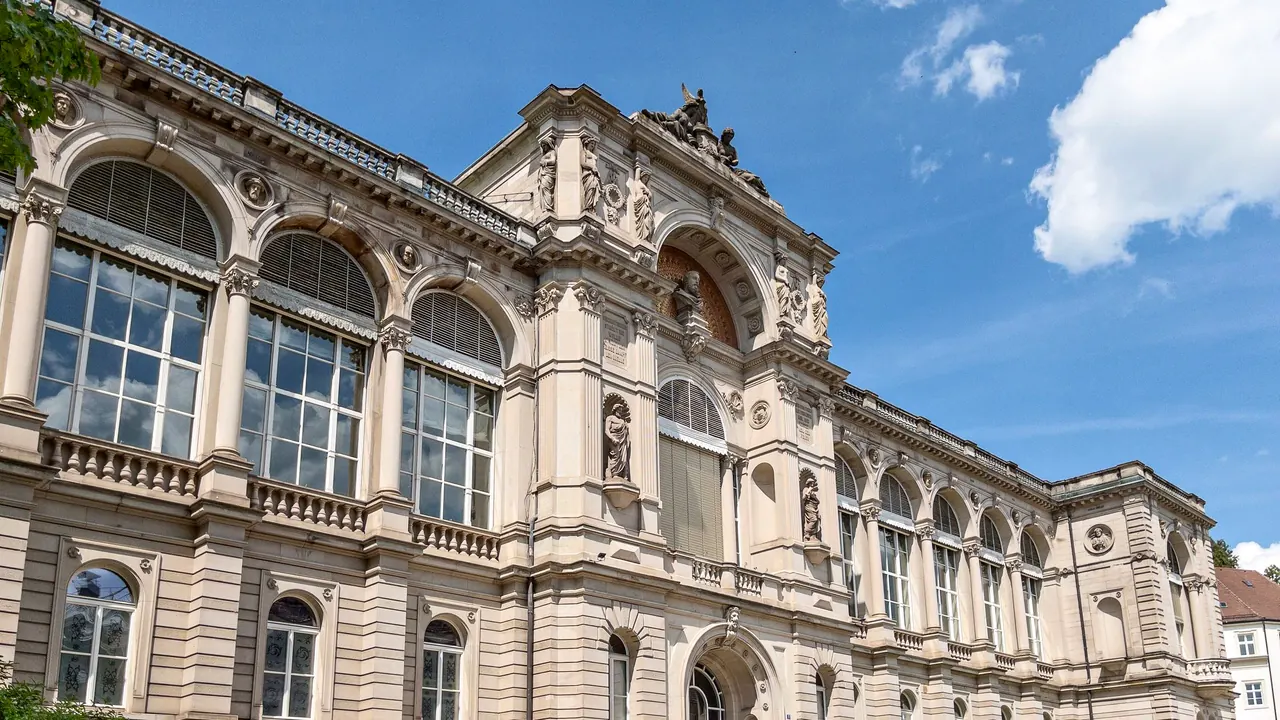
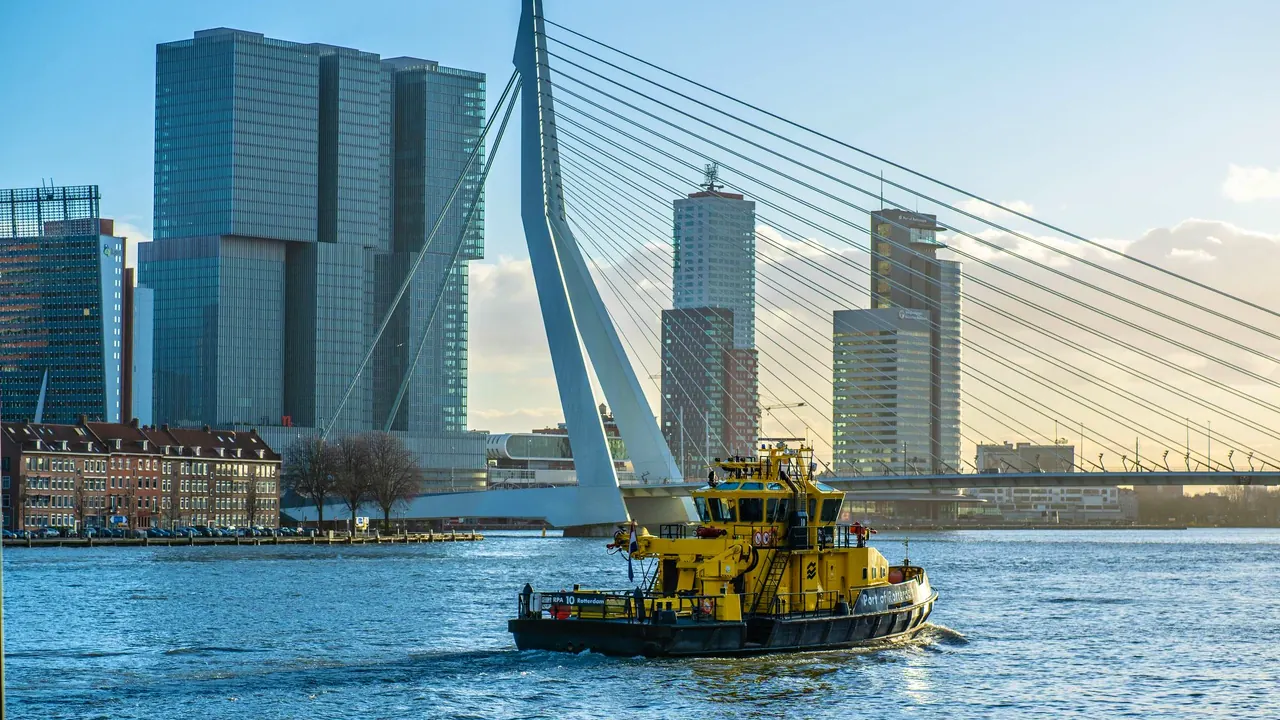
Photos: Baden-Baden by Kent Wang, CC BY-SA 2.0, cropped; Rotterdam by Bas Geerlings, Pexels License.
Baden-Baden or Rotterdam?
Our verdict in twelve categories, each scored against the same fixed benchmark cities, and the climate month by month, so you can choose for your trip.
Choose Baden-Baden for
- wellness
- nature and the outdoors
Baden-Baden is for travellers who want to slow down. The thermal baths are the reason to go, set in an intact Belle Époque spa town where the Black Forest begins at the edge of the streets. Add forest walks, Rebland wine taverns and an evening at the Festspielhaus, and it makes a restful, grown-up few days. It suits couples and older travellers far better than anyone looking for a night out.
Choose Rotterdam for
- nightlife
- beaches
- shopping
Rotterdam is the livelier choice and the easier one to get around. Its modern architecture, mixed port-city food, club nights and simple tram and metro network suit a busy city break, and families do better here too. It also makes the stronger base for exploring, because Delft, The Hague, Amsterdam and Antwerp are all an easy train ride away.
Scoreboard
Twelve categories on one fixed scale from 0 to 100. The shaded stretch is the gap between the two.
Your match
Pick a travel style or drag the sliders, and both match scores follow your weighting.
Wins on wellness and nature and the outdoors with your weighting.
Wins on nightlife and beaches with your weighting.
What matters to you?
Category by category
What the scores mean for a trip.
Beaches & swimming
Neither city is a beach destination, but only Rotterdam has a coast at all. Hoek van Holland is a wide sandy strand backed by dunes, with large ships passing close offshore, and the metro runs all the way there. The cold, windy North Sea means it is better for a walk than a swim.
Baden-Baden is far inland. On hot days, people swim in the Rhine-plain gravel pits and outdoor pools, and the water that really counts there is the thermal kind.
Food & drink
Rotterdam has the wider range of food, because it eats like an immigrant port city: roti shops, Turkish bakeries and Cape Verdean kitchens, the stalls of the Markthal, and waterside terraces in Katendrecht. Classic Dutch cooking adds little beyond herring and bitterballen.
Baden-Baden offers less choice but more regional character. Expect Flammkuchen, venison and Black Forest gateau, with Riesling and Pinot Noir poured in the Rebland wine taverns just outside town.
Culture & sights
The two towns are close here, but Rotterdam gives a sightseer a little more to fill the days. Rebuilt after 1940, it is a showcase of modern architecture, from the Erasmus Bridge and the Cube Houses to the mirrored Depot Boijmans, alongside the Kunsthal, the Maritime Museum and old Delfshaven.
Baden-Baden is the opposite kind of place: a nineteenth-century spa resort that has kept its period buildings, with the Kurhaus, the Trinkhalle, hillside villas and Roman bath ruins. The Museum Frieder Burda and the Brahms house fill a day or two.
Nightlife
Rotterdam is the only one of the two with a real night out. There are terrace bars on Witte de Withstraat and around the Oude Haven, and warehouse techno and house nights carry on from the city's gabber roots, though weeknights can be quiet.
In Baden-Baden, an evening means the dress code and gilded rooms of the Kurhaus casino, followed by a hotel bar. Anyone who wants to stay out late has to travel to Karlsruhe or Strasbourg.
Nature & outdoors
Baden-Baden has much the better outdoors. Fir forest begins at the edge of town, with climbing on the Battert cliffs, the Panoramaweg running through the vineyards, and the Mummelsee and the Hornisgrinde moorland along the ridge road. There is also mountain biking and modest skiing in winter.
Rotterdam's landscape is flat and man-made. The outdoors there means cycling along the dykes, sailing in the Kralingse Bos, and canoeing or birdwatching among the willow islands of the Biesbosch.
Day trips
Both are excellent bases, but Rotterdam has the edge because fast trains reach so much. Delft is a quarter of an hour away, The Hague, Leiden and Amsterdam are within about an hour, the Kinderdijk windmills can be reached by water bus, and Antwerp is about an hour across the border.
Baden-Baden looks across the Rhine to Strasbourg and the Alsace wine villages, with Heidelberg, Freiburg, Speyer and Maulbronn also within reach. Many of these outings are much easier with a car.
Good for families
Rotterdam is the easier city with children. It is flat and well served by trams, and it has Blijdorp zoo with its large ocean section, the hands-on harbour area at the Maritime Museum, and water taxis that children enjoy. Madurodam and the Efteling are both within reach.
Baden-Baden is safe and calm, but it is designed for adults. The Friedrichsbad turns away young children, so families end up spending their days at Europa-Park or Karlsruhe zoo.
Getting around
Baden-Baden works on foot, while Rotterdam works on rails and bikes. In Baden-Baden the baths, the Kurhaus, the museums and the Lichtentaler Allee are close together, though a few streets climb steeply. The station is out in Oos, however, and the High Road and the Alsace villages really need a car.
Without a car, Rotterdam is much easier. Metro, trams and buses share one tap-in system, water buses cross the Maas, and there are cycle paths almost everywhere. The postwar centre is spread out, though, so walks between sights can be long and windy.
Shopping & style
This comes down to a short luxury strip against a full high street. Baden-Baden's Sophienstraße has jewellers, watchmakers and delicatessens for a wealthy spa crowd, and it is pleasant to browse. Beyond it there are no department stores or markets.
Rotterdam offers far more range. The Lijnbaan pedestrian street and the Bijenkorf department store cover the high street, and independent vintage, record and design shops line the Meent and the Nieuwe Binnenweg. There is also a large market on the Binnenrotte.
Affordability
Neither city is cheap, but Rotterdam is somewhat easier on the budget. It has plenty of hotel rooms, business hotels that empty at weekends, and inexpensive lunches from Surinamese snack shops and the Markthal counters. Eating out in restaurants is still expensive.
Baden-Baden was built for wealthy visitors, and grand hotels and paid entry to the baths make a spa-focused stay add up quickly. Guesthouses and wine taverns are the reasonable options.
Live music & performing arts
Both are strong on music, but in different ways. Baden-Baden is the place for opera and orchestras: the Festspielhaus brings in international names, the philharmonic plays in the Kurhaus, and the town still carries the memory of Brahms and Clara Schumann.
Rotterdam leans more towards jazz and modern music. It has the Philharmonic at De Doelen, small venues fed by the conservatory and the North Sea Jazz Festival each July, but no resident opera house.
Wellness & relaxation
This is Baden-Baden's defining strength. Roman-era hot springs feed the domed Friedrichsbad, with its silent sequence of hot rooms and scrubs, and the modern Caracalla pools and saunas next door. The rest of the town keeps to the same unhurried pace.
Rotterdam is a brisk working port. Its relaxation comes from Dutch sauna complexes on the outskirts, usually textile-free, and from quiet hours in the Kralingse Bos.
When should you go?
Pick your month. The climate figures are measured averages, not a forecast.
Baden-Baden in July
Rotterdam in July
Daytime high, °C
Rainfall in the month, mm
Where the figures come from
Rotterdam has no rain gauge within 25 km of the centre, so its rainfall comes from a gridded climate dataset read at the destination rather than from a gauge further away.
Rotterdam's sunshine is measured 52 km from the centre, at De Bilt.
Temperature and rainfall are climate normals, averaged over the years shown. Baden-Baden: 1991-2020 normals, Baden-Baden-Geroldsau (3.9 km from centre). Rotterdam: 1993-2020 (sunshine 1991-2020, rainfall 1991-2020) normals, Rotterdam Airport Zestienhoven (3.9 km from centre).
Both cities have mild winters and moderate summers, but Baden-Baden is the warmer and sunnier of the two from May to August, with July highs around 25°C against about 22°C in Rotterdam. It is also wetter all year, often with more than 100mm in a month, so showers are part of any stay. Late spring and early autumn are the best time for walking in the Black Forest, and from November to February the short grey days suit the warm baths better than the trails.
Rotterdam has its driest weather in spring, with April the driest month. Rain builds through late summer and peaks in October. July and August are the only months warm enough for the beach at Hoek van Holland, and even then the North Sea reaches only about 19°C, so most people walk on the sand rather than swim. Winters in Rotterdam are windy and grey, which makes April to June the most comfortable time to explore the city on foot or by bike.
Which traveller are you?
On a relaxing and wellness trip, Baden-Baden is the clear choice. The silent rooms of the Friedrichsbad, the pools at Caracalla, slow walks along the Lichtentaler Allee and early nights shape the whole stay. Rotterdam's sauna complexes sit outside the centre and are an outing, not the purpose of a visit.
For a food and nightlife trip, choose Rotterdam. Surinamese, Turkish and Indonesian kitchens, the Markthal and the bars of Witte de Withstraat lead into warehouse techno nights. Baden-Baden's evenings end calmly at the casino or in a wine bar.
On an outdoors trip, Baden-Baden wins comfortably. Trails start in town, the Merkur funicular climbs to wide views and the Black Forest High Road leads up to the Hornisgrinde. Rotterdam offers flat cycling through the polders and the Biesbosch creeks, but no hills to climb.
Before you go
| Measure | Baden-Baden | Rotterdam |
|---|---|---|
| Official language | German | Dutch |
| Currency | Euro (EUR) | Euro (EUR) |
| Sockets | CF230 V, 50 Hz | CF230 V, 50 Hz |
| Driving side | Right | Right |
| Time zone | UTC+1, UTC+2 in summer | UTC+1, UTC+2 in summer |
| Emergency number | 112 | 112 |
| Elevation | 181 m | 10 m |
| Main airport | Karlsruhe Baden-Baden Airport (FKB)12 km from centre44 non-stop destinations | Rotterdam The Hague Airport (RTM)5 km from centre53 non-stop destinations |
| Public holidays this year | 12 days | 11 days |
By the numbers
| Measure | Baden-Baden | Rotterdam |
|---|---|---|
| Population | 56,952 | 664,311 |
| People per km² | 406 | 2,080 |
| Museums within 10 km | 11 | 41 |
| UNESCO World Heritage sites within 50 km | 3 | 5 |
| Swim season, months above 21 °C | - | None |
Where else could you go?
Every comparison below shares a destination with this one, so you can follow Baden-Baden or Rotterdam somewhere new.
- The Haguevs Rotterdam
- Strasbourgvs Baden-Baden
- Utrechtvs Rotterdam
- Haarlemvs Rotterdam
- Amsterdamvs Rotterdam
- Stuttgartvs Baden-Baden