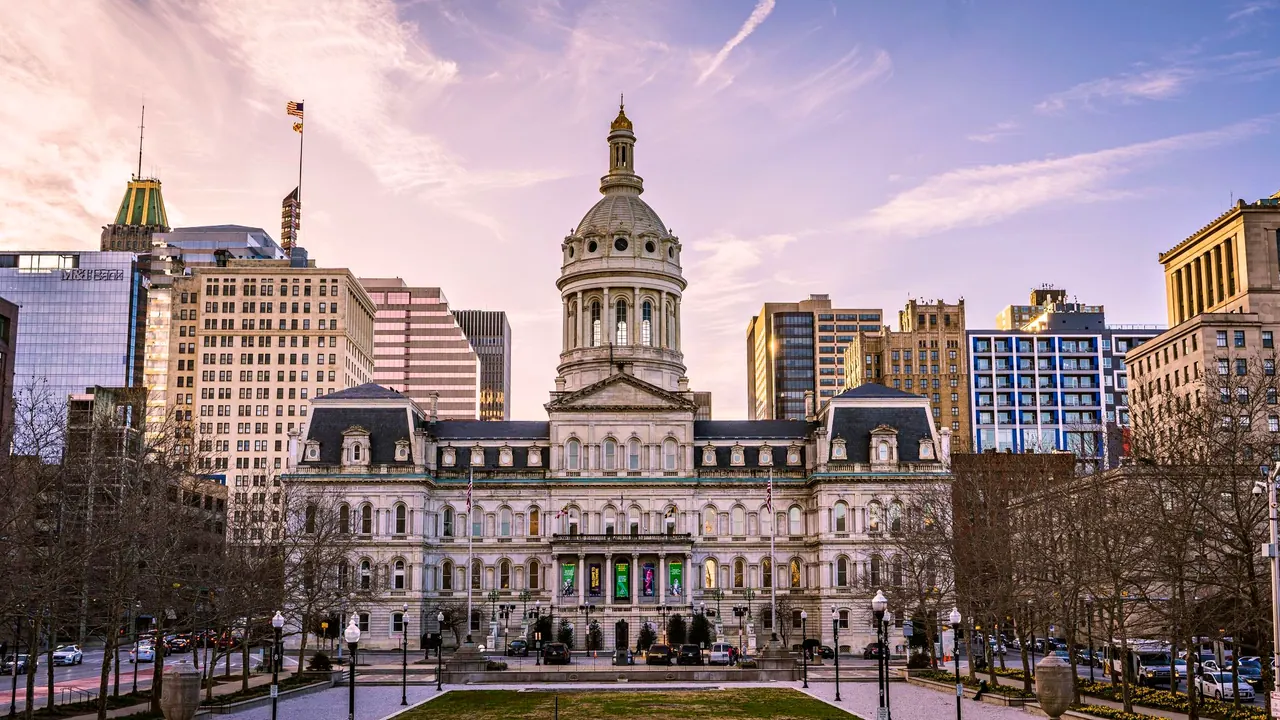
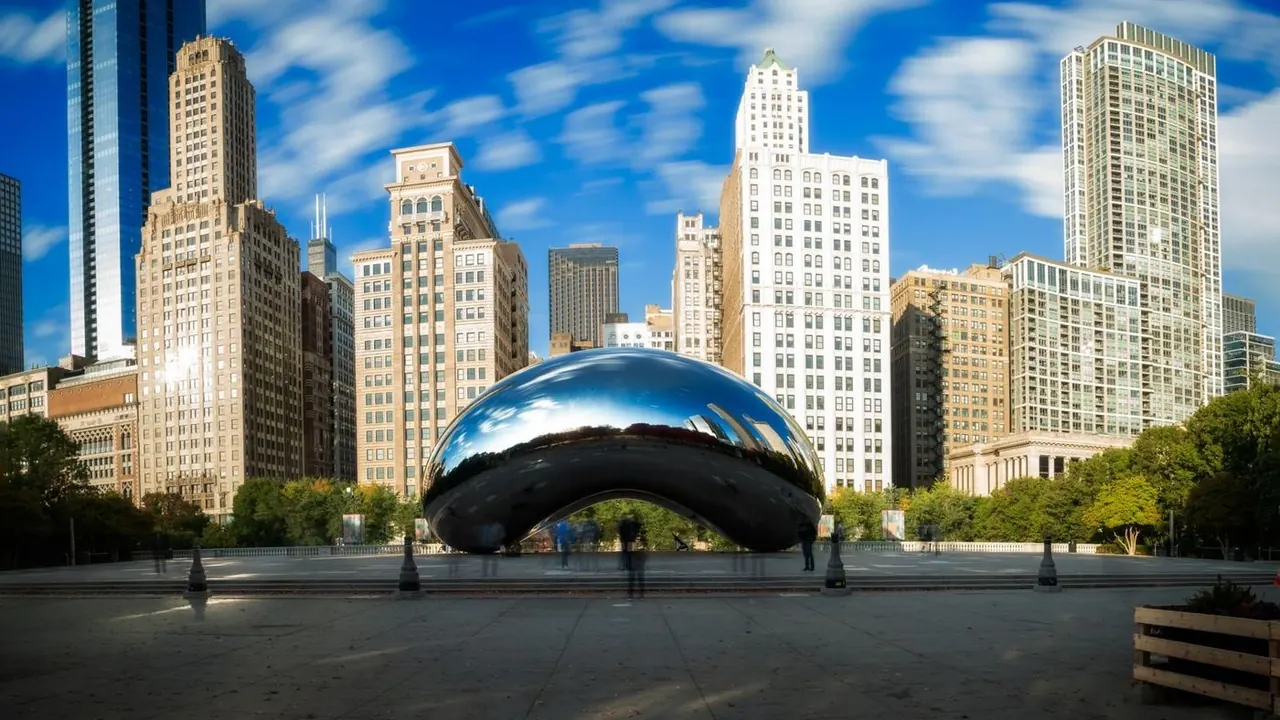
Photos: Baltimore by Styves Exantus, Pexels License; Chicago by Jesus Toledo, Pexels License.
Baltimore or Chicago?
Our verdict in twelve categories, each scored against the same fixed benchmark cities, and the climate month by month, so you can choose for your trip.
Choose Baltimore for
- day trips
- prices
- nature and the outdoors
Baltimore suits a traveller who wants a more affordable East Coast base and plans to range beyond it. Washington and Philadelphia are each about an hour away by train, and Annapolis, Gettysburg and Harpers Ferry are within easy driving distance. Back in town there are crab feasts, the free Matisse rooms of the Cone Collection and evenings in the old taverns of Fells Point. It works best as a few relaxed days on the harbour with outings in between.
Choose Chicago for
- shopping
- getting around
- nightlife
Chicago is the stronger choice when the city itself is the trip. It has more of almost everything a city visitor looks for: skyscraper architecture seen from the river, the Art Institute, a symphony and opera of real standing, nightly improv and blues, and food from deep-dish to West Loop tasting menus. Its bars stay open well past midnight, the shopping is serious, and the L means you can do all of it without a car.
Scoreboard
Twelve categories on one fixed scale from 0 to 100. The shaded stretch is the gap between the two.
Your match
Pick a travel style or drag the sliders, and both match scores follow your weighting.
Wins on day trips and prices with your weighting.
Wins on shopping and getting around with your weighting.
What matters to you?
Category by category
What the scores mean for a trip.
Beaches & swimming
Chicago has actual city beaches. Sandy strips run along Lake Michigan from Oak Street, right under the Gold Coast towers, to North Avenue's volleyball courts, and in midsummer you can walk from a museum to a lifeguarded swim. The fresh water is cooler than many expect, and a wind shift can chill it overnight.
Baltimore's water is a working harbour, so swimming means a forty-minute drive to Sandy Point on the Chesapeake. The brackish bay there is warmer than the lake, but sea nettles and closures after heavy rain take some of the shine off. The ocean beaches are about three hours away.
Food & drink
Baltimore's food is a regional speciality: blue crabs steamed with Old Bay and cracked with mallets in summer, lump crab cakes year-round, and oysters and coddies at Lexington Market. Add Little Italy's red-sauce restaurants and a few chef-led places in Hampden and Harbor East, and the range stops fairly soon.
Chicago goes much deeper. Its street canon of deep-dish, tavern-cut pizza, Italian beef and the dressed hot dog sits alongside one of the country's leading fine-dining scenes. Neighbourhoods such as Pilsen, Devon Avenue and Argyle Street add Mexican, South Asian and Vietnamese cooking that could fill a week of meals.
Culture & sights
Baltimore has more history on the ground: the 1814 defence of Fort McHenry, the colonial-era cobbles of Fells Point and street after street of marble-stooped rowhouses. Its two free art museums, with the Cone Collection's Matisse holdings and the Walters' antiquities, are well worth a visit. Two or three days covers it.
Chicago works on a bigger scale. The Loop is a lesson in how the skyscraper developed, best seen from a river cruise, and Wright's Prairie houses are close by. The Art Institute and the Museum Campus give it museum depth Baltimore cannot match, even though nothing in Chicago predates the 19th century.
Nightlife
Baltimore is a bar town with no club scene to speak of. The best of it is the old taverns around the cobbled square in Fells Point, plus rooftops and sports bars on Federal Hill, and everything closes at 2am.
Chicago gives you more choice and later nights, with many bars licensed until 4am. Wicker Park and Logan Square have cocktail and dive bars, River North has dance clubs, and house-music nights draw on the city's own history. Northalsted is one of the country's best-known gay districts.
Nature & outdoors
Neither city is an outdoors destination, and they offer different kinds of green space. Around Baltimore the land is wooded and hilly: river gorges in Patapsco Valley at the city's edge, trout streams along Gunpowder Falls, and sailing on the sheltered Chesapeake out of Annapolis, with the Blue Ridge about ninety minutes west.
Chicago's outdoors is mostly the lake. The shoreline path runs about 29km past beaches and parks, best covered by bike, and the dunes of Indiana Dunes and the sandstone canyons of Starved Rock are the main escapes from otherwise flat prairie.
Day trips
This is where Baltimore pulls well ahead. With Washington's Smithsonian and Philadelphia's Independence Hall each about an hour away by train, a stay here can take in three historic cities. By car, colonial Annapolis, the Gettysburg battlefield, Harpers Ferry and the Eastern Shore villages are all easy outings.
Chicago's surroundings ask more effort for less reward. Milwaukee by train and the Wright houses of Oak Park are the easy wins, while Lake Geneva and the Michigan harbour towns need a car and make pleasant rather than memorable days.
Good for families
Both cities have a first-rate aquarium, Baltimore's National Aquarium on the Inner Harbor and Chicago's Shedd on the lakefront. Baltimore's appeal is how compact it is: the aquarium, the science centre, Port Discovery and the historic ships sit close together around the water. Beyond the harbour, though, families tend to rely on cars.
Chicago gives children more to do. The Museum of Science and Industry, with its coal mine and U-boat, can take a whole day, the Field Museum has dinosaurs, Lincoln Park Zoo is free, and in summer there are lifeguarded lake beaches. All of it is reachable by train or on foot.
Getting around
In Baltimore, the waterfront from Federal Hill to Fells Point is easy to walk, and water taxis make the trip to Fort McHenry a pleasure. Away from the harbour, though, one metro line and one light rail line cover little that visitors need, so Hampden, the art museum and the zoo mean a taxi or a car.
Chicago works without a car. The L runs from both airports into a flat, gridded Loop where the main sights are a walk apart. The weak points are buses for trips across neighbourhoods and the long distances in a freezing January.
Shopping & style
Chicago is the place to shop. The Magnificent Mile's flagships and department stores, luxury labels on Oak Street, and the Tiffany ceiling of the old Marshall Field's on State Street are backed by independent fashion in Wicker Park and design and vintage shops in Andersonville.
Baltimore has no department store or luxury street in the city. Its shopping amounts to an afternoon on Hampden's Avenue among vintage clothes and kitsch, plus antiques and records in Fells Point and Old Bay souvenirs from the markets.
Affordability
Baltimore is the cheaper of the two, mainly because of hotels, which is why many visitors to Washington stay there. The Baltimore Museum of Art and the Walters are free. The catch is that taxis, which most visitors end up using, add to the daily spend.
Chicago's downtown hotels and high taxes make it dearer, especially in summer. Taquerias and hot dog stands, cheap L rides and free sights such as Millennium Park and Lincoln Park Zoo help, and staying outside the Loop saves more.
Live music & performing arts
Baltimore has a solid scene for its size: the Baltimore Symphony at the Meyerhoff, free student and faculty concerts at the Peabody Institute in Mount Vernon, touring shows at the Hippodrome, and indie and experimental bands in Station North clubs.
Chicago is one of the main reasons people go to the Midwest for the arts. It has the Chicago Symphony and the Lyric Opera, deep theatre from Steppenwolf and the Goodman down to storefront companies, nightly improv at Second City, electric blues and late jazz sets, and free summer concerts at the Pritzker Pavilion.
Wellness & relaxation
Neither city is somewhere to unwind, but Chicago has more to offer. Its century-old Russian-and-Turkish bathhouse in Wicker Park, a Korean-style jjimjilbang in the suburbs and the warm glasshouses of the Garfield Park and Lincoln Park conservatories give it real places to rest.
Baltimore's options are hotel spas and yoga studios, a quiet hour in Druid Hill Park or the Walters galleries, and a drive to the Eastern Shore for anything more restful.
When should you go?
Pick your month. The climate figures are measured averages, not a forecast.
Baltimore in July
Chicago in July
Daytime high, °C
Rainfall in the month, mm
Temperature and rainfall are climate normals, averaged over the years shown. Baltimore: 1991-2020 (sunshine 1971-2000) normals, Baltimore (0.4 km from centre). Chicago: 1991-2020 (sunshine 1961-1990) normals, Chicago Midway Airport (14.5 km from centre).
Both cities have hot summers and real winters, but the details differ. Baltimore runs hotter and stickier in July and August, with daytime highs around 31°C, which makes long walks hard work. Its best weather for walking the streets is May and from late September into October. Rain is spread evenly across the year, so no month is reliably dry. The bay warms to about 26°C by August, warm enough for a swim at Sandy Point.
Chicago's winter is harder, with January highs near 0°C and a raw wind off the lake, but its summer is a little milder and noticeably sunnier, with the longest sunny days in June and July. May and June are its wettest months, at up to 121mm. Lake Michigan only reaches about 23°C in August, so lake swimming fits a short window from late June to early September. For Chicago, aim for June to September. For Baltimore, spring and autumn are more comfortable than high summer.
Which traveller are you?
For a food and nightlife trip, Chicago is the clear pick. Pilsen's Mexican kitchens, Devon Avenue, Randolph Street tasting menus and Italian beef stands give far more range than Baltimore's crab houses, and bars pouring until 4am stretch the night well beyond Baltimore's 2am last call.
On a shopping trip, choose Chicago. The Magnificent Mile, the luxury labels on Oak Street and the old Marshall Field's store on State Street give it the big-city shopping Baltimore lacks. Baltimore offers vintage on Hampden's Avenue and little more.
For travellers who want to see Washington and Philadelphia on the same trip, Baltimore is the better base. Both cities are about an hour away by train, hotels cost less than in the capital, and Annapolis and Gettysburg are close by car. Chicago's outings are flatter and farther apart.
Before you go
| Measure | Baltimore | Chicago |
|---|---|---|
| Currency | US Dollar (USD) | US Dollar (USD) |
| Sockets | AB120 V, 60 Hz | AB120 V, 60 Hz |
| Driving side | Right | Right |
| Time zone | UTC-5, UTC-4 in summer | UTC-6, UTC-5 in summer |
| Emergency number | 911 | 911 |
| Elevation | 10 m | 179 m |
| Main airport | Baltimore/Washington International Thurgood Marshall Airport (BWI)13 km from centre89 non-stop destinations | Chicago O'Hare International Airport (ORD)25 km from centre275 non-stop destinations |
| Public holidays this year | 12 days | 13 days |
By the numbers
| Measure | Baltimore | Chicago |
|---|---|---|
| City population | 585,708 | 2,746,388 |
| People per km² | 2,457 | 4,529 |
| Museums within 10 km | 27 | 44 |
| UNESCO World Heritage sites within 50 km | 0 | 1 |
| Swim season, months above 21 °C | 3 months | 1 month |
Where else could you go?
Every comparison below shares a destination with this one, so you can follow Baltimore or Chicago somewhere new.
- Washington DCvs Baltimore
- Philadelphiavs Baltimore
- Rehoboth Beachvs Baltimore
- Bethany Beachvs Baltimore
- Ocean City, Marylandvs Baltimore
- Atlantic Cityvs Baltimore