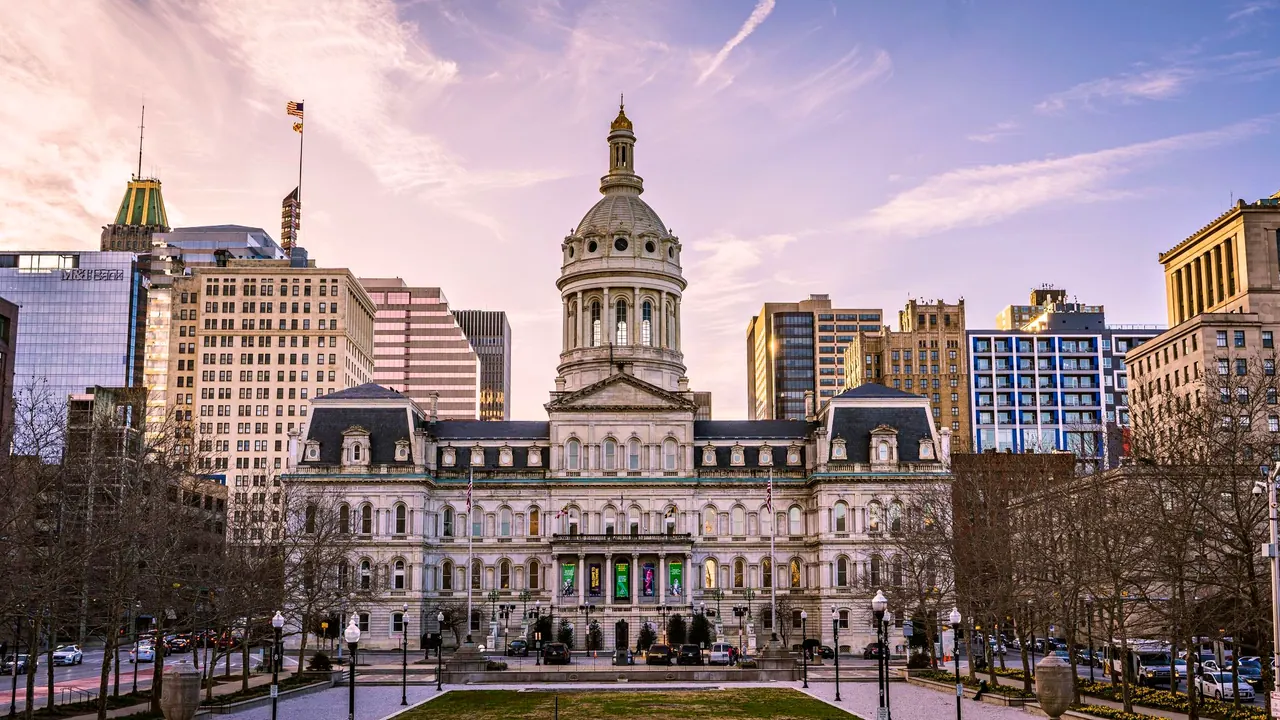
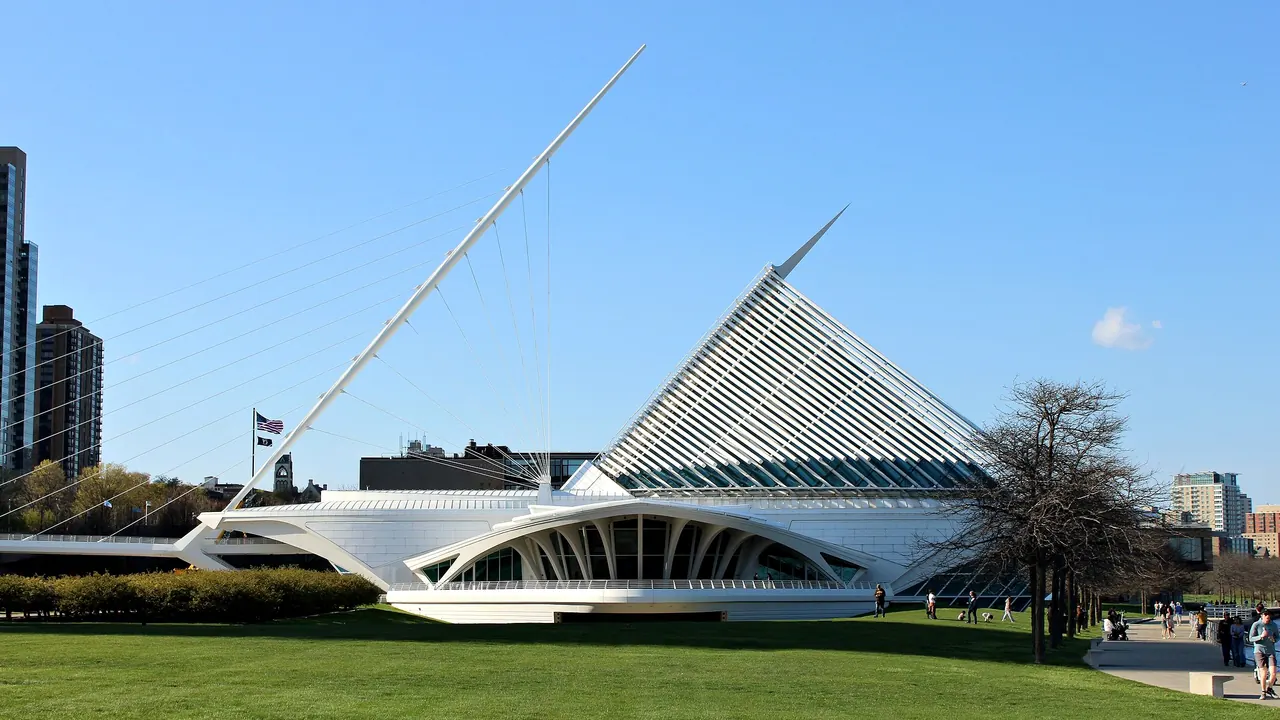
Photos: Baltimore by Styves Exantus, Pexels License; Milwaukee by Michael Barera, CC BY-SA 4.0, cropped.
Baltimore or Milwaukee?
Our verdict in twelve categories, each scored against the same fixed benchmark cities, and the climate month by month, so you can choose for your trip.
Choose Baltimore for
- day trips
- culture and sights
- food and drink
Baltimore suits the traveller who wants sightseeing with some depth and a base for exploring. Its free art museums, Fort McHenry and the rowhouse streets of Fells Point and Mount Vernon fill a few days. After that, Washington and Philadelphia are each about an hour away by train, which turns a short stay into a tour of the Mid-Atlantic. Crab feasts and harbour bars round out the evenings.
Choose Milwaukee for
- beaches
- wellness
- prices
Milwaukee is the gentler, more summery choice. The city sits on the open water of Lake Michigan, with a sandy beach and Olmsted's parkland right on the lakefront. The tavern culture and Friday fish fries are friendly, and the long run of lakeside festivals, Summerfest above all, makes a June to September visit lively. It costs a little less and moves at an easier pace, though Baltimore has more to see.
Scoreboard
Twelve categories on one fixed scale from 0 to 100. The shaded stretch is the gap between the two.
Your match
Pick a travel style or drag the sliders, and both match scores follow your weighting.
Too close to call, 1 point apart
Wins on day trips and culture and sights with your weighting.
Wins on beaches and wellness with your weighting.
What matters to you?
Category by category
What the scores mean for a trip.
Beaches & swimming
Milwaukee has the better beach, mainly because it is in the city. Bradford Beach sits below the East Side bluffs, with sand volleyball and a summer weekend crowd, and McKinley and South Shore stretch along the same lakefront. The catch is Lake Michigan itself: it is fresh water, rarely warm, and an offshore wind can chill it overnight.
Baltimore's harbour is for boats, not swimming. Sandy Point State Park, about forty minutes' drive away, has warmer water, but the bay is brackish, sea nettles drift in during summer and swimming sometimes closes after rain. The Atlantic surf is about three hours away, which makes it a separate trip.
Food & drink
The two are evenly matched, and each is built around one regional ritual. In Baltimore it is the blue crab, steamed and dusted with Old Bay, cracked with mallets on brown paper in summer, along with oysters at Lexington Market and red-sauce Italian cooking in Little Italy.
Milwaukee's ritual is the Friday fish fry, backed by supper clubs, frozen custard, bratwurst and cheese curds, with brewing heritage and taprooms in Walker's Point. Go to Baltimore for seafood and Milwaukee for beer and Central European comfort food.
Culture & sights
Baltimore has the deeper set of sights. The Baltimore Museum of Art's Cone Collection of Matisse and the Walters' range from Egyptian antiquities to Fabergé are both free, and Fort McHenry and the B&O roundhouse tie the city to national history. The cobbled streets of Fells Point and the townhouses of Mount Vernon reward walking between them.
Milwaukee's best sight is the Calatrava pavilion of the art museum on the lakefront, followed by the Harley-Davidson Museum. Brewing-era landmarks such as the Pabst Mansion and the Basilica of St Josaphat make up the rest. It is a good two days, with less weight behind it.
Nightlife
Both cities are bar towns rather than club towns, and both close around 2am. Baltimore's nights centre on districts: the old taverns around the cobbled square in Fells Point, the sports bars and rooftops of Federal Hill, and dive bars in Station North.
Milwaukee's character is the corner tavern with a pool table and a bar full of regulars, plus the Water Street strip, Third Ward taprooms and the city's main LGBTQ bars in Walker's Point. Its summer beer gardens are a highlight, but winter nights are quiet.
Nature & outdoors
Neither has dramatic scenery, and the two are close; what differs is the water. Baltimore looks to the Chesapeake, with kayaking on the harbour, sailing from Annapolis and ospreys and eagles in the marshes. Inland are the wooded gorges of Patapsco Valley and the Blue Ridge hills further west.
Milwaukee's outdoors is the open lake, Olmsted's Lake Park bluffs, long flat cycling trails and the glacial hills of Kettle Moraine about an hour out. Baltimore suits spring and autumn hikes, while Milwaukee is best from May to October.
Day trips
This is where Baltimore pulls well ahead. Washington and Philadelphia are both about an hour away by train, and Annapolis, Gettysburg, Harpers Ferry and the Eastern Shore villages are within an easy drive. Few American cities have so much major history within a day's reach.
Milwaukee has one big outing, Chicago, about an hour and a half by train. After that come smaller pleasures: Madison, the mills of Cedarburg, Frank Lloyd Wright's buildings in Racine and the mansions of Lake Geneva. Beyond them the countryside is mostly farmland.
Good for families
Both work well with children, in different ways. Baltimore puts nearly everything around the Inner Harbor: the National Aquarium with its rainforest and shark ring, the science centre, Port Discovery and the historic ships, all within walking distance. Beyond the harbour it is patchier, and summers are sticky.
Milwaukee is more spread out but easier going, with a large zoo, Discovery World's freshwater tanks, the Mitchell Park Domes for cold days, and the beach and festivals in summer. Its winters limit outdoor plans far more than Baltimore's do.
Getting around
Both have a walkable centre and thin transit beyond it. Baltimore's waterfront links the Inner Harbor, Fells Point and Federal Hill on foot, and water taxis run between the piers. Its single metro and light rail lines are of limited use, but its intercity rail is excellent for day trips.
Milwaukee's core is the Riverwalk and the short Hop streetcar, with no metro or commuter rail. Driving and parking are easy, which makes a car more natural there than in Baltimore.
Shopping & style
Neither is worth a trip for shopping, and they are close. Baltimore's highlight is the Avenue in Hampden, with kitsch, vintage clothing and local art, plus antiques and records in Fells Point.
Milwaukee's Third Ward warehouses hold design shops and galleries, and the Public Market makes it easy to take home cheese and sausage. In both, big brands are in the suburban malls.
Affordability
Milwaukee is a little easier on the budget. Its hotels are well below coastal prices, tavern beer and fish fries are cheap, and the lakefront and many festivals cost little, though big summer weekends push rooms up.
Baltimore is good value by East Coast standards, which is why many visitors to Washington stay there, and its two main art museums are free. Meals, harbour hotels and frequent taxis still add up.
Live music & performing arts
The time of year matters more here than how much is on. Baltimore's season peaks from autumn to spring, when the symphony plays at the Meyerhoff and Peabody students and faculty give concerts in Mount Vernon, many of them free. Its live music is small-venue and loud, with indie, punk and experimental bands in Station North, and there is no resident opera.
Milwaukee leans more classical, with its own opera, ballet and musical theatre companies alongside the symphony, and touring acts in the ornate 1895 Pabst Theater. Its peak comes in summer, when Summerfest fills the lakefront stages for weeks.
Wellness & relaxation
Neither city is a place to unwind, but Milwaukee is the calmer of the two. Its pace is easy, and walks along the lakefront and Riverwalk are restful. For a proper spa day, the resort village of Kohler is about an hour away.
Baltimore feels more urban and gritty. Beyond hotel spas, the quiet moments are a harbour walk at dawn, Druid Hill Park or the Walters galleries. Most visitors who want rest go across the Bay Bridge to the Eastern Shore.
When should you go?
Pick your month. The climate figures are measured averages, not a forecast.
Baltimore in July
Milwaukee in July
Daytime high, °C
Rainfall in the month, mm
Temperature and rainfall are climate normals, averaged over the years shown. Baltimore: 1991-2020 (sunshine 1971-2000) normals, Baltimore (0.4 km from centre). Milwaukee: 1991-2020 (sunshine 1981-2010) normals, Gen Mitchell International Airport (11.2 km from centre).
Baltimore has the longer warm season and the harder summer. July and August reach about 31°C with heavy humidity, which makes long days of walking tiring, and the Chesapeake warms to about 26°C for anyone heading out to Sandy Point. Rain is spread evenly through the year, so no month is reliably dry. The most comfortable months for sightseeing and hiking are May, September and October. Winters are chilly but rarely severe.
Milwaukee's summer is shorter and milder, peaking around 27°C, and June and July are its sunniest months by a clear margin. Lake Michigan stays cool, only about 21°C at its warmest in August, so swimming is limited to midsummer. Winter is the real difference: January highs sit around -1°C, and from November to March the lakefront and beer gardens empty out. June to September is the window.
Which traveller are you?
For a culture and arts trip, choose Baltimore. Its art museums and historic streets fill two or three full days, and Washington and Philadelphia are close enough by train to stretch that into a week of landmarks. Milwaukee runs out of sights sooner.
On a beach and sun trip, Milwaukee is the better of two weak choices. A summer stay can include easy afternoons on the sand without leaving town, if you see the lake as a place to cool off rather than swim. In Baltimore, a beach day takes planning.
For a relaxing and wellness trip, Milwaukee suits better because of its temperament. Days there settle into slow walks by the water and long lunches, and a spa resort is within reach. Baltimore suits travellers who unwind by staying busy.
Before you go
| Measure | Baltimore | Milwaukee |
|---|---|---|
| Currency | US Dollar (USD) | US Dollar (USD) |
| Sockets | AB120 V, 60 Hz | AB120 V, 60 Hz |
| Driving side | Right | Right |
| Time zone | UTC-5, UTC-4 in summer | UTC-6, UTC-5 in summer |
| Emergency number | 911 | 911 |
| Elevation | 10 m | 188 m |
| Main airport | Baltimore/Washington International Thurgood Marshall Airport (BWI)13 km from centre89 non-stop destinations | General Mitchell International Airport (MKE)12 km from centre34 non-stop destinations |
| Public holidays this year | 12 days | 12 days |
By the numbers
| Measure | Baltimore | Milwaukee |
|---|---|---|
| City population | 585,708 | 577,222 |
| People per km² | 2,457 | 2,302 |
| Museums within 10 km | 27 | 14 |
| UNESCO World Heritage sites within 50 km | 0 | 0 |
| Swim season, months above 21 °C | 3 months | 1 month |
Where else could you go?
Every comparison below shares a destination with this one, so you can follow Baltimore or Milwaukee somewhere new.
- Washington DCvs Baltimore
- Chicagovs Milwaukee
- Philadelphiavs Baltimore
- Rehoboth Beachvs Baltimore
- Cape Mayvs Baltimore
- Bethany Beachvs Baltimore