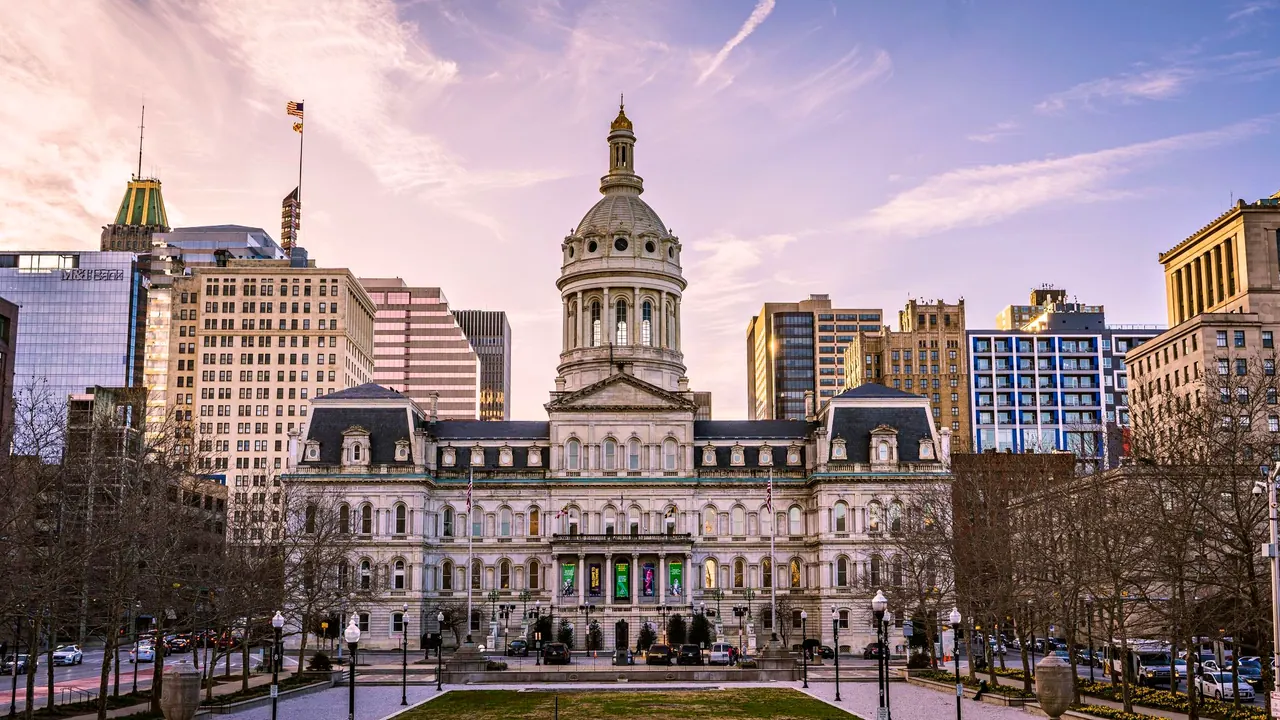
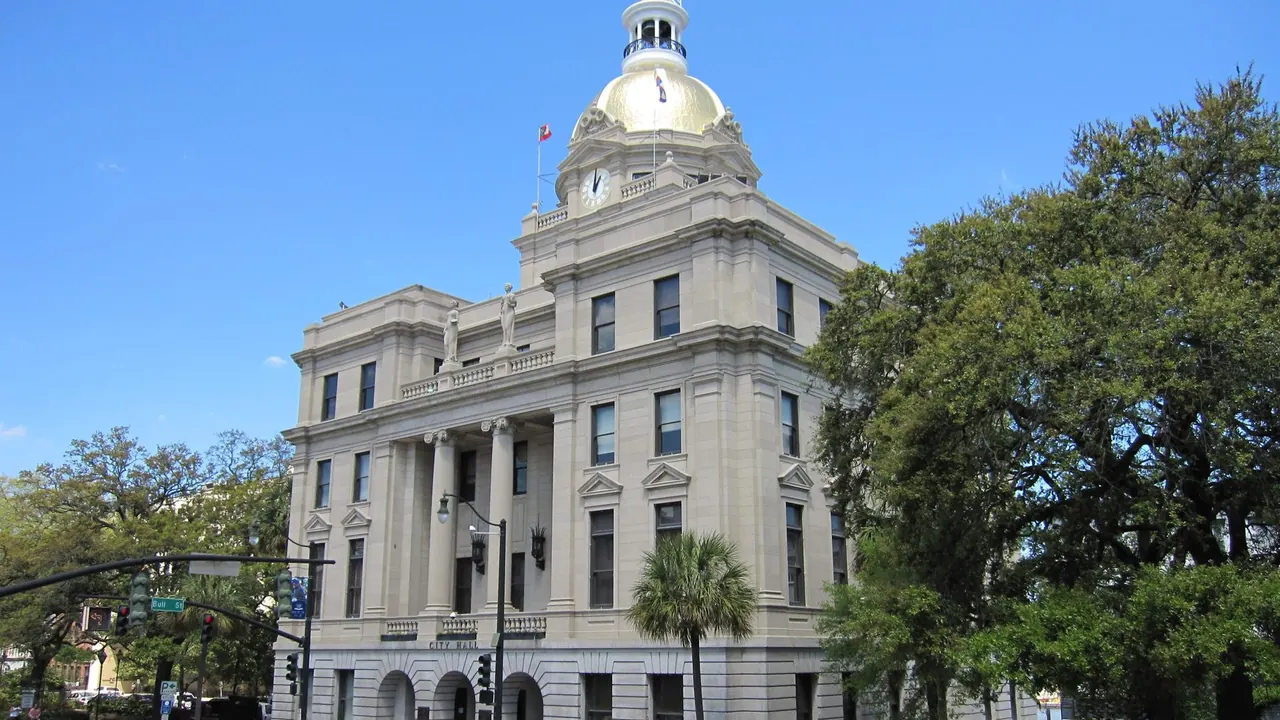
Photos: Baltimore by Styves Exantus, Pexels License; Savannah by Chris M Morris, CC BY 2.0, cropped.
Baltimore or Savannah?
Our verdict in twelve categories, each scored against the same fixed benchmark cities, and the climate month by month, so you can choose for your trip.
Choose Baltimore for
- day trips
- live music and the arts
- families
Baltimore suits travellers who want a base with reach. Washington and Philadelphia are an easy train ride away, and the harbour gathers an aquarium, a science centre and historic ships into an easy family day. The symphony, the Peabody concerts and touring Broadway shows give the evenings some substance. Choose it for a busy, varied week rather than a restful one.
Choose Savannah for
- beaches
- wellness
- getting around
For a slower trip with a strong sense of place, Savannah is the better pick. Its grid of oak-shaded squares is a sight in itself and easy to cover on foot, and Tybee Island gives you a proper Atlantic beach within half an hour. The unhurried pace of the historic district also makes it far easier to unwind. It rewards a long weekend of walking, eating and sitting still.
Scoreboard
Twelve categories on one fixed scale from 0 to 100. The shaded stretch is the gap between the two.
Your match
Pick a travel style or drag the sliders, and both match scores follow your weighting.
Wins on day trips and live music and the arts with your weighting.
Wins on beaches and wellness with your weighting.
What matters to you?
Category by category
What the scores mean for a trip.
Beaches & swimming
Neither city is on the open sea, but Savannah has a real beach within reach and Baltimore effectively does not. Sandy Point, forty minutes from Baltimore, is a strip of sand on the brackish bay facing the Bay Bridge. Sea nettles drift in during summer, swimming sometimes closes after rain, and the Atlantic is a three-hour trip.
Tybee Island, half an hour from Savannah, has wide, flat Atlantic sand and warm water all summer. The sea is tinted by the marshes rather than clear and the town is low-key, but it works as a beach day in a way Baltimore cannot match.
Food & drink
Both are seafood towns with a strong regional identity and little range beyond it, so the choice comes down to which kitchen appeals to you. Baltimore means blue crabs steamed with Old Bay and cracked with mallets on brown paper, crab cakes, and old market halls such as Lexington Market. Little Italy and the pit beef stands add some variety.
Savannah cooks Lowcountry food: shrimp and grits, she-crab soup, Lowcountry boil and oyster roasts in the cooler months, often served family-style at long tables. Its best chef-led cooking is in restored townhouses near Forsyth Park, while Baltimore's is in Hampden and Harbor East.
Culture & sights
Savannah has the edge, because the town itself is the attraction. Oglethorpe's plan of garden squares, live oaks and period houses turns every walk into sightseeing, and the Telfair Museums, the Owens-Thomas House and Bonaventure Cemetery round it out.
Baltimore is the other way round, with stronger collections but less of a single historic townscape. The Matisses of the Cone Collection at the Baltimore Museum of Art and the holdings of the Walters are both free to see, and Fort McHenry carries national history. The old streets survive in pockets such as Fells Point and Mount Vernon rather than across a whole district.
Nightlife
Both are bar towns with small club scenes, and the difference is in mood. Baltimore's evenings divide by neighbourhood: old taverns around the cobbled square in Fells Point, sports bars and rooftops in Federal Hill after Orioles and Ravens games, and dive bars in Station North.
In Savannah a night out is more of a stroll, because to-go cups let you drift between River Street, City Market and cocktail rooms in old townhouses. Weekends bring bachelorette parties, and St Patrick's Day turns the whole city into one large street party.
Nature & outdoors
The outdoors is gentle around both cities, but the landscape is different. Baltimore has the wooded river gorges of Patapsco Valley, trout streams on the Gunpowder and a large urban forest in Leakin Park. The Blue Ridge and the Appalachian Trail are about an hour and a half west for anyone who wants hills.
Savannah is surrounded by flat salt marsh, best seen from a kayak at high tide or on a dolphin-spotting boat, with wood storks and egrets in the creeks. Both are at their best in spring and autumn, and in Savannah biting insects add to the summer heat.
Day trips
Baltimore is the far better base for excursions. Washington DC and Philadelphia are each about an hour away by train. By car, Annapolis, Gettysburg, Harpers Ferry and the villages of the Eastern Shore are all within easy reach.
Savannah's best outing, Charleston, is two hours away by car. Beaufort, Hilton Head and Fort Pulaski are closer, and Jekyll and St Simons islands lie to the south. These are pleasant trips, but almost all of them need a car and none of them matches a day among the Smithsonian museums.
Good for families
Baltimore is better set up for children. The National Aquarium, the Maryland Science Center and Port Discovery are a short walk from each other on the Inner Harbor, with paddle boats and old ships in between, and the zoo and the train museum add more.
Savannah offers space and simple treats rather than big attractions: Forsyth Park, trolley tours, the free river ferry, ghost walks for older children and a gentle beach on Tybee. With no aquarium or large zoo, it suits families who are happy to wander.
Getting around
Savannah is easier on foot. The historic district is flat and laid out on a grid, nearly everything a visitor wants is within a short walk, and a free shuttle and a ferry fill the gaps. Tybee and Bonaventure still need a car, a taxi or a tour.
Baltimore's walkable core is a waterfront strip from the Inner Harbor to Fells Point, with water taxis across to Fort McHenry. Beyond it there is one metro line and one light rail line, so Hampden, the art museum and the zoo mean a bus or a taxi, and more of the stay depends on a car.
Shopping & style
Neither city is a shopping destination, but Savannah has a proper main street. The restored shopfronts of Broughton Street hold boutiques and home-goods shops, and the art school supplies shops selling work by its students and graduates.
Baltimore's best browsing is quirkier and more spread out: vintage clothes and kitsch on 36th Street in Hampden, records and antiques in Fells Point, and Old Bay souvenirs in the markets. For chain fashion, locals go to the suburban malls.
Affordability
Costs are broadly similar. Both are priced as American cities, where tax and tip add to every meal. Baltimore's advantages are hotels cheaper than nearby Washington and free entry to its two big art museums, though most visitors also end up paying for taxis.
Savannah's inns in the historic district are priced for a popular weekend destination and cost more on spring weekends, but its main pleasures, the squares, the park and the cemeteries, are free. Motels by the highway are cheaper, but then a car becomes part of the budget.
Live music & performing arts
Baltimore has the fuller calendar through the year. The symphony plays a full season at the Meyerhoff, the Peabody Institute puts on frequent concerts, many of them free, and the Hippodrome hosts touring Broadway shows. The small clubs of Station North cover indie and experimental music.
Savannah's offer is built around its festivals, above all the Savannah Music Festival each spring in historic theatres and churches, along with autumn jazz in Forsyth Park. Outside those dates there is little more than bar bands and buskers.
Wellness & relaxation
Savannah is the easier place to slow down. Neither city has a bathing tradition or much beyond hotel spas, but Savannah's historic district moves at an unhurried pace, with benches under the oaks and quiet inn courtyards. It is calmest midweek in spring or autumn.
Baltimore is gritty and urban. A morning on the harbour promenade or an hour in Druid Hill Park helps, but people who want real rest tend to leave for the Eastern Shore.
When should you go?
Pick your month. The climate figures are measured averages, not a forecast.
Baltimore in July
Savannah in July
Daytime high, °C
Rainfall in the month, mm
Temperature and rainfall are climate normals, averaged over the years shown. Baltimore: 1991-2020 (sunshine 1971-2000) normals, Baltimore (0.4 km from centre). Savannah: 1991-2020 (sunshine 1981-2010) normals, Savannah Airport (9.9 km from centre).
Baltimore has real seasons. Winters are cold, with daytime highs of around 5°C in December and January, and July and August reach 31°C with heavy humidity. Late spring and September to October are the times for walking the neighbourhoods and the river valleys. The bay is only warm enough to swim in during high summer, reaching about 26°C in August, and rain falls fairly evenly through the year.
Savannah is warmer in every month. Winter days are mild at around 16°C, which is good for walking the squares but too cool for the sea. The beach season on Tybee runs from about May to October, when the water is warm. Midsummer is the hard part, with heat in the low thirties and the wettest months of the year, when June brings about 169mm in thunderstorms. Its best stretches are March to May and October to November, and Baltimore's pleasant spring arrives a few weeks later.
Which traveller are you?
For a beach and sun trip, Baltimore offers little more than a brackish bay beach, with the ocean three hours away. Savannah has Tybee Island's warm Atlantic sand half an hour off, and the water stays warm from about May to October.
On a family trip with children, Baltimore copes better with a wet or sweltering day, because its main attractions are indoors and side by side. In Savannah most of the fun happens outdoors, which is pleasant in spring but tiring in summer heat.
For a relaxing and wellness trip, Baltimore asks more of you, because the days fill with museums and excursions and rest mostly means a hotel spa. In Savannah doing little is the point, with slow mornings in town and an afternoon on Tybee's sand.
Before you go
| Measure | Baltimore | Savannah |
|---|---|---|
| Currency | US Dollar (USD) | US Dollar (USD) |
| Sockets | AB120 V, 60 Hz | AB120 V, 60 Hz |
| Driving side | Right | Right |
| Time zone | UTC-5, UTC-4 in summer | UTC-5, UTC-4 in summer |
| Emergency number | 911 | 911 |
| Elevation | 10 m | 15 m |
| Main airport | Baltimore/Washington International Thurgood Marshall Airport (BWI)13 km from centre89 non-stop destinations | Savannah Hilton Head International Airport (SAV)12 km from centre39 non-stop destinations |
| Public holidays this year | 12 days | 12 days |
By the numbers
| Measure | Baltimore | Savannah |
|---|---|---|
| City population | 585,708 | 147,780 |
| People per km² | 2,457 | 524 |
| Museums within 10 km | 27 | 19 |
| UNESCO World Heritage sites within 50 km | 0 | 0 |
| Swim season, months above 21 °C | 3 months | 6 months |
Where else could you go?
Every comparison below shares a destination with this one, so you can follow Baltimore or Savannah somewhere new.
- Washington DCvs Baltimore
- Charlestonvs Savannah
- Philadelphiavs Baltimore
- Rehoboth Beachvs Baltimore
- Bethany Beachvs Baltimore
- Ocean City, Marylandvs Baltimore