
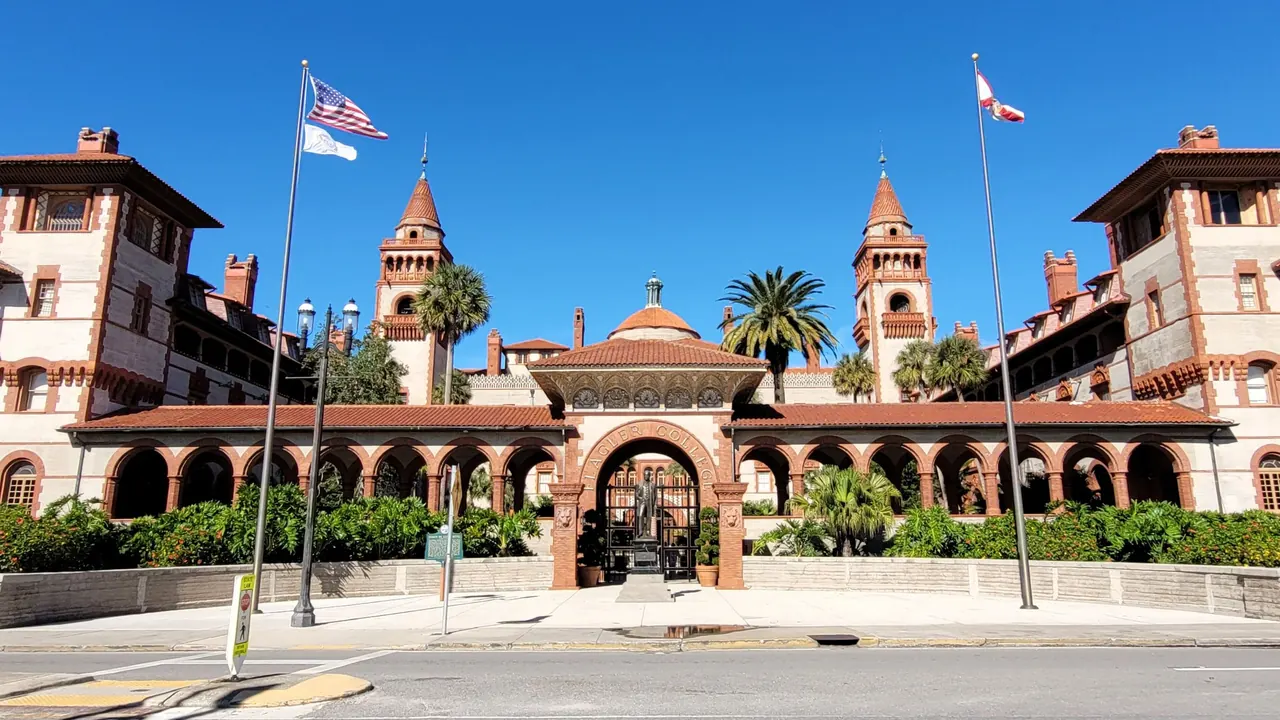
Photos: Baltimore by Styves Exantus, Pexels License; St. Augustine by Farragutful, CC BY-SA 4.0, cropped.
Baltimore or St. Augustine?
Our verdict in twelve categories, each scored against the same fixed benchmark cities, and the climate month by month, so you can choose for your trip.
Choose Baltimore for
- day trips
- live music and the arts
- food and drink
Baltimore is the better choice for a fuller city trip. You eat steamed crabs at market halls, spend evenings in the old taverns of Fells Point and hear the symphony or a Peabody concert. Its best card is its position: Washington and Philadelphia are both an easy train ride away, so a week here can take in three cities. The harbour is for looking at, though, not for swimming.
Choose St. Augustine for
- beaches
- wellness
St. Augustine suits travellers who want the beach and a historic town in the same stay. The Spanish colonial lanes and the Castillo sit a short drive from the wide sands of Anastasia Island, and the mild winters make it a gentle escape when the north is cold. Evenings are quieter, the food is narrower and the outings further afield take longer drives.
Scoreboard
Twelve categories on one fixed scale from 0 to 100. The shaded stretch is the gap between the two.
Your match
Pick a travel style or drag the sliders, and both match scores follow your weighting.
Wins on day trips and live music and the arts with your weighting.
Wins on beaches and wellness with your weighting.
What matters to you?
Category by category
What the scores mean for a trip.
Beaches & swimming
This is where the two part company most. Baltimore's waterfront is a working harbour, and the nearest sand is Sandy Point on the Chesapeake. It is fine for a family afternoon, but the water is brackish, there are sea nettles in summer and swimming sometimes closes after rain. The real Atlantic beaches are a three-hour trip.
St. Augustine has a proper ocean shoreline on its doorstep. Anastasia Island runs from the state park dunes through St. Augustine Beach to quieter Crescent Beach, all within a short drive of the fort. The surf is easy and swimming is comfortable from late spring to autumn, so a morning in the old town and an afternoon on the sand fit into the same day.
Food & drink
Baltimore eats with more range and more local character. The blue crab is the centrepiece, either steamed with Old Bay on paper-covered tables or as crab cakes made mostly of lump meat. Lexington Market and the other old market halls add oysters and coddies, and there are Italian kitchens in Little Italy and chef-led restaurants in Hampden and Harbor East.
St. Augustine's table is smaller and mostly seafood: local shrimp, fried fish and oysters by the marsh. Its one real signature is the Minorcan datil pepper, which goes into the chowder and the pilau. Beyond a handful of good restaurants, the old-town strip caters to passing visitors.
Culture & sights
The two are evenly matched for sightseeing, and both fill two or three days, but they offer different things. Baltimore's strength is its art museums. The Cone Collection of Matisse at the Baltimore Museum of Art and the Walters, from Egyptian antiquities to Fabergé, are both free. Around them are Fort McHenry, the railroad roundhouse and long streets of marble-stooped rowhouses.
St. Augustine is older and more concentrated. It has the coquina Castillo de San Marcos, Spanish lanes dating back to 1565, and a Gilded Age layer in Flagler's extravagant hotel, now a college, and the Lightner Museum. You walk through the history itself rather than looking at it in galleries.
Nightlife
Baltimore gives you more evenings out. Fells Point has a dense cluster of taverns around its cobbled square, Federal Hill fills its sports bars and rooftops after Orioles and Ravens games, and Station North draws an arty dive-bar crowd. Bars stay open until 2am, though clubs are few.
St. Augustine's evenings are a drink on a courtyard patio off St. George Street or at a beach bar on the island. It is lively on weekends, but most places wind down well before the small hours.
Nature & outdoors
Both offer gentle, green outdoors rather than drama, but the landscapes differ. Around Baltimore you find wooded river gorges in Patapsco Valley, trout streams along the Gunpowder Falls rail trail and sailing on the Chesapeake, with the Blue Ridge hills within reach for a longer day.
St. Augustine is completely flat and shaped by water: salt marsh, dunes and the Matanzas River. Kayak trips there often meet dolphins, and the Guana reserve is good for birding. Spring and autumn suit Baltimore best, while St. Augustine is most comfortable from late autumn through spring.
Day trips
Baltimore wins easily here. Washington and Philadelphia are each about an hour away by train, so a day at the Smithsonian or Independence Hall needs no car at all. With a car you can add Annapolis, Gettysburg, Harpers Ferry and the Eastern Shore villages.
From St. Augustine almost every outing means driving. Jacksonville and Daytona are within an hour, and Amelia Island is a pleasant longer run. The big names, Kennedy Space Center and the Orlando parks, each take about two hours each way.
Good for families
Children are well served in both, in quite different ways. Baltimore packs its attractions around the Inner Harbor: the National Aquarium's rainforest and shark ring, the science centre and Port Discovery, with the zoo and the train museum further out. Away from the water, most families get around by car or taxi.
St. Augustine pairs the Alligator Farm and cannon firings at the Castillo with lighthouse climbs and gentle summer surf. Its compact old centre is easy to manage with small children, though weekend crowds and summer heat can wear them out.
Getting around
Neither is easy without a car beyond its core, and the cores work differently. Baltimore's walkable stretch follows the waterfront from the Inner Harbor to Fells Point, with water taxis between the piers. A single metro line and a light rail line do little for visitors beyond the airport and stations.
St. Augustine's historic district is smaller and flatter, with sightseeing trolleys looping past the sights. The beaches and the lighthouse, though, need a car, a bike or a taxi.
Shopping & style
Baltimore's best browsing is vintage clothes, kitsch and local art on the Avenue in Hampden, a street that plays up its working-class roots. Fells Point adds antique and record shops on its old streets. There is no luxury street, though, and locals go to the suburban malls for chain fashion.
St. George Street in St. Augustine runs more to fudge, T-shirts and pirate souvenirs. The galleries and antique dealers on Aviles Street are more rewarding, and a bottle of datil-pepper sauce makes a good souvenir. For mainstream brands you drive out to the outlet mall by the interstate.
Affordability
Costs are similar, and both carry normal American prices with tips added to every meal. Baltimore has a slight edge because its hotels are cheaper than Washington's and its two main art museums are free, though taxis add up.
In St. Augustine, the walkable inns and B&Bs get expensive on weekends and in peak season. Staying midweek or in a highway motel helps, and the old streets and public beaches cost nothing.
Live music & performing arts
Baltimore has a real cultural calendar. The symphony plays a full season at the Meyerhoff, the Peabody Institute holds frequent concerts, many of them free, and touring Broadway shows come to the Hippodrome. Station North's small clubs handle indie and experimental music.
St. Augustine's main stage is the open-air amphitheatre in the woods on Anastasia Island, which hosts touring rock, country and folk acts. Beyond that it is mostly cover bands on bar patios, and serious theatre or orchestral music means driving to Jacksonville.
Wellness & relaxation
Neither is built for a restful retreat, but St. Augustine is the easier place to slow down. Quiet B&B verandas, courtyard gardens and an evening stroll along the bayfront seawall set a gentle pace, especially midweek.
Baltimore feels gritty and urban. Beyond hotel spas, the calm moments are a morning on the harbour promenade or a walk under the trees of Druid Hill, and locals who want to unwind head to the Eastern Shore.
When should you go?
Pick your month. The climate figures are measured averages, not a forecast.
Baltimore in July
St. Augustine in July
Daytime high, °C
Rainfall in the month, mm
Where the figures come from
St. Augustine has no rain gauge within 25 km of the centre, so its rainfall comes from a gridded climate dataset read at the city rather than from a gauge further away.
St. Augustine's sunshine is measured 73 km from the centre, at Jacksonville International.
Temperature and rainfall are climate normals, averaged over the years shown. Baltimore: 1991-2020 (sunshine 1971-2000) normals, Baltimore (0.4 km from centre). St. Augustine: 2006-2020 (sunshine 1991-2020, rainfall 1991-2020) normals, St Augustine / Kingsley Mobile Home Park (7.6 km from centre).
Baltimore has four clear seasons. Winters are cold, with highs around 5°C in December, and July and August reach 31°C with heavy humidity, which makes long walks hard going. Late spring and the stretch from September into October are the comfortable months for sightseeing and hiking. Rain is spread fairly evenly through the year, and the bay is only warm enough for a dip in high summer.
St. Augustine is warm all year. In January the days are around 18°C, which is pleasant for walking the old town, though the sea is then too cool for most swimmers. From June to September the Atlantic reaches about 28°C, but this is also the wet season, with afternoon storms that bring rain up to 173mm in September. April and May are the sweet spot. The days are warm, the sea is warming and the heavy summer rain has not yet set in, and May is the sunniest month of the year. That makes St. Augustine the better choice from winter through spring, while Baltimore comes into its own in autumn.
Which traveller are you?
On a beach and sun trip, St. Augustine is the clear pick. Anastasia Island's wide, gently shelving sands are minutes from the old town and the water is warm for half the year, while Baltimore's nearest beach is a brackish bay strip forty minutes away.
For a food and nightlife trip, Baltimore gives you more to work with. There are crab feasts, oysters in old market halls and Little Italy's red-sauce kitchens, and after dinner you can move between Fells Point taverns and Federal Hill rooftops. St. Augustine's courtyard bars mostly close early.
On a culture and arts trip, Baltimore edges ahead. Both have two or three days of strong sights, but Baltimore adds a full symphony season, free Peabody concerts and touring Broadway shows, and the Smithsonian is an hour away by train.
Before you go
| Measure | Baltimore | St. Augustine |
|---|---|---|
| Currency | US Dollar (USD) | US Dollar (USD) |
| Sockets | AB120 V, 60 Hz | AB120 V, 60 Hz |
| Driving side | Right | Right |
| Time zone | UTC-5, UTC-4 in summer | UTC-5, UTC-4 in summer |
| Emergency number | 911 | 911 |
| Elevation | 10 m | 152 m |
| Main airport | Baltimore/Washington International Thurgood Marshall Airport (BWI)13 km from centre89 non-stop destinations | Jacksonville International Airport (JAX)76 km from centre48 non-stop destinations |
| Public holidays this year | 12 days | 11 days |
By the numbers
| Measure | Baltimore | St. Augustine |
|---|---|---|
| City population | 585,708 | 14,329 |
| People per km² | 2,457 | 433 |
| Museums within 10 km | 27 | 12 |
| UNESCO World Heritage sites within 50 km | 0 | 0 |
| Swim season, months above 21 °C | 3 months | 8 months |
Where else could you go?
Every comparison below shares a destination with this one, so you can follow Baltimore or St. Augustine somewhere new.
- Washington DCvs Baltimore
- Daytona Beachvs St. Augustine
- Philadelphiavs Baltimore
- Rehoboth Beachvs Baltimore
- Orlandovs St. Augustine
- Bethany Beachvs Baltimore