Photos: Bamberg by Ermell, CC BY-SA 4.0, cropped; Cologne by Jörg Braukmann, CC BY-SA 4.0, cropped.
Bamberg or Cologne?
Our verdict in twelve categories, each scored against the same fixed benchmark cities, and the climate month by month, so you can choose for your trip.
Choose Bamberg for
- prices
- food and drink
- culture and sights
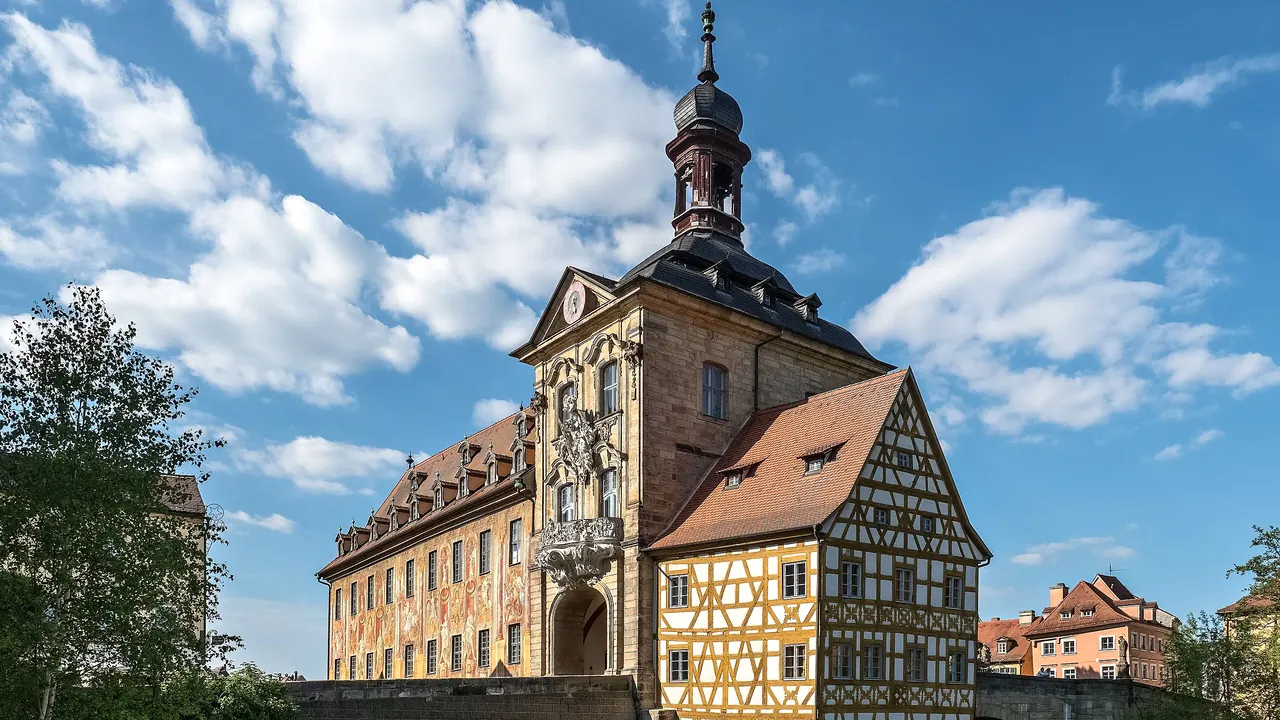
Bamberg suits travellers who want a historic town to wander rather than a list of sights to tick off. Its whole old centre survived the war, the island town hall, Little Venice and the cathedral hill are all minutes apart on foot, and evenings are spent over smoked beer in brewery taverns or hillside beer cellars. It costs a little less, the pace is slow, and it is a good base for Franconia. Choose it for a quiet, beer-focused few days with couples or friends.
Choose Cologne for
- nightlife
- families
- shopping
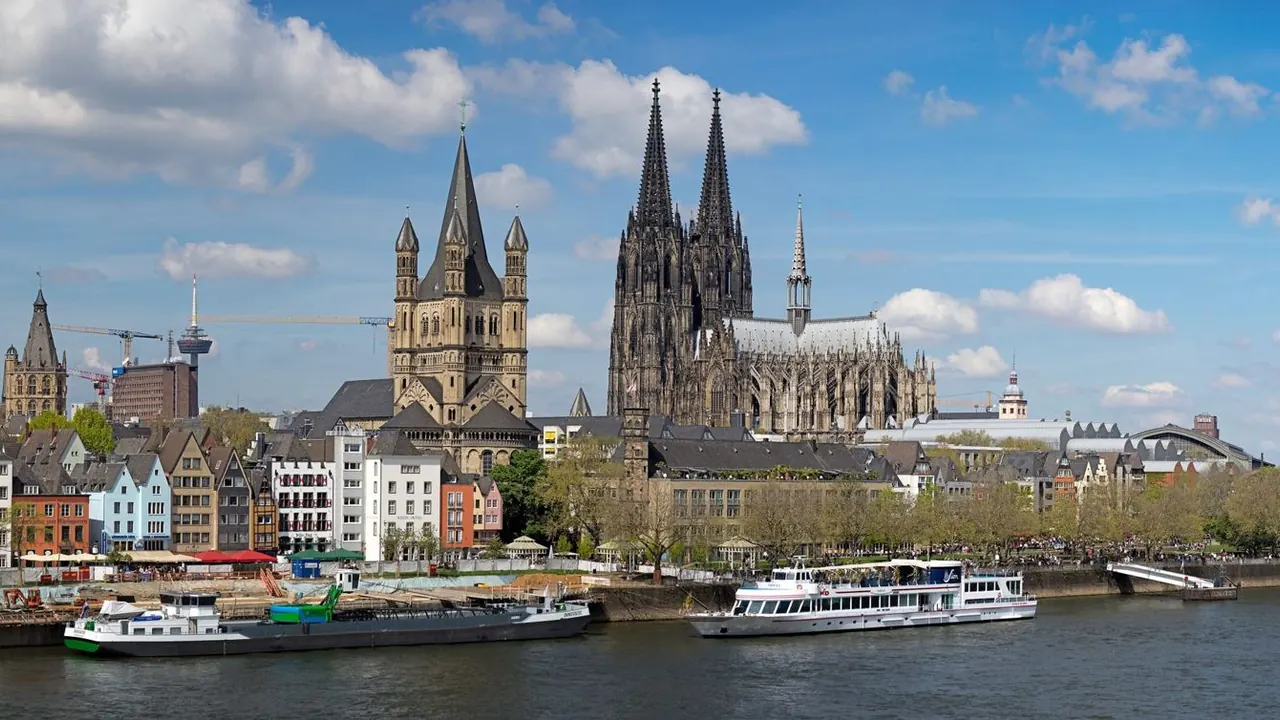
Cologne is the better pick for anyone who wants a full city around them. It has a much livelier night scene, a proper opera house and concert life, more shopping and far more for children, from the zoo and the Chocolate Museum to Phantasialand. Fast trains reach Bonn, Aachen, the Rhine Gorge and even Brussels. Its great cathedral and museums make up for a mostly rebuilt townscape, so it suits families, groups and people who like their evenings late.
Scoreboard
Twelve categories on one fixed scale from 0 to 100. The shaded stretch is the gap between the two.
Your match
Pick a travel style or drag the sliders, and both match scores follow your weighting.
Wins on prices and food and drink with your weighting.
Wins on nightlife and families with your weighting.
What matters to you?
Category by category
What the scores mean for a trip.
Beaches & swimming
Neither is a beach destination, and in both a summer swim means a gravel-pit lake on the edge of town. The difference is the river. In Bamberg you can swim in the Regnitz itself at the old bathing spot in the Hain park. In Cologne the Rhine is too fast and busy for swimming, so its sandy banks at Rodenkirchen are for sunbathing, and swimmers go to Fühlinger See or Otto-Maigler-See.
Food & drink
Bamberg comes out ahead for anyone who travels to eat and drink local. Its small breweries are packed closely together, smoky Rauchbier is poured from wooden barrels, and summer evenings in the chestnut-shaded Bierkeller are a highlight of the trip in their own right. Schäufele and the local Hörnla potatoes give the hearty Franconian cooking a clear identity.
Cologne's Brauhaus ritual, with the Köbes refilling small Kölsch glasses until you cover yours with a beer mat, is fun but more of a set piece. Where Cologne beats Bamberg is variety: Turkish food along Venloer Strasse, bistros in the Belgian Quarter and a few serious fine-dining kitchens.
Culture & sights
These two are about level, but you experience them in opposite ways. Bamberg's attraction is the whole town: an intact, UNESCO-listed centre spread over seven hills, with the Imperial Cathedral, the Old Town Hall on its island and Little Venice. Its museums are small, and the pleasure is in walking.
Cologne gives you landmark buildings and collections rather than a historic whole. The cathedral and its Shrine of the Three Kings, the ring of twelve Romanesque churches, Roman remains and Museum Ludwig, the Wallraf-Richartz and Kolumba make for full museum days, while the streets between them were mostly rebuilt after the war.
Nightlife
Cologne is far ahead after dark. A typical evening moves from the Altstadt brewhouses to cocktail bars in the Belgian Quarter, and then on to clubs in Ehrenfeld's old factories. There is also one of Germany's largest gay scenes around Rudolfplatz, and the street Carnival turns the whole city into a costumed party for days.
In Bamberg, the night is about beer and conversation. Brewery taverns and the Sand quarter's student bars are lively in term time, and the beer cellars stay busy on summer evenings, but the town is quiet before the small hours. Locals who want to go clubbing take the train to Nuremberg.
Nature & outdoors
The outdoors is evenly matched, with gentle hills and woods around both and no mountains near either. Bamberg's best landscape is Franconian Switzerland, with limestone valleys, caves and rock towers popular with climbers, and its walking paths link village breweries. Cologne has more green space inside the city in the Grüngürtel parks. Within an hour it also reaches the volcanic Siebengebirge with the Drachenfels crag, and the Eifel national park with its crater lakes.
Day trips
Both make good bases, but Cologne's trains reach more places, more quickly. Augustusburg palace at Brühl, Bonn and Düsseldorf are all under half an hour away. Aachen's Charlemagne chapel, the castle towns of the Rhine Gorge and even Maastricht and Brussels are easy outings.
From Bamberg, most of the big names take about an hour each way: Nuremberg's castle, the Würzburg Residence, Coburg and Bayreuth. The baroque basilica of Vierzehnheiligen is closer. Rothenburg is a long day out, so the range is strong but more regional.
Good for families
Cologne is well ahead for a family trip, because it has places built for children and Bamberg mostly does not. Bamberg's appeal is being small, safe and slow. Its riverside park and the pool with slides cover a day or two, but after that you are back among churches and townscape, and the cobbled climb to the cathedral is hard going with a pushchair.
Cologne can fill a longer stay without running out of ideas. Science centres, adventure playgrounds in the Grüngürtel, boat trips on the Rhine and long, traffic-free promenades by the water give children variety that Bamberg cannot match. Avoid Carnival week, though, when the crowds and drunken streets are no place for small children.
Getting around
Getting around is easy in both, in different ways. Bamberg is a town you cover entirely on foot or by bike. The only hard parts are the short, steep climbs and the walk in from the station. In Cologne you step out of the station beside the cathedral, but reaching Ehrenfeld, the Belgian Quarter or the zoo means using trams and light rail, which can be crowded and confusing at first.
Shopping & style
Cologne offers far more shopping. Schildergasse and Hohe Strasse are among the busiest high streets in Germany. Ehrenstrasse and the Belgian Quarter have independent fashion and design shops, and Eau de Cologne from the historic perfume houses on Glockengasse makes a classic souvenir.
Bamberg's shopping fills an hour between sights. There are chain stores and bookshops around Grüner Markt, antique dealers near the cathedral and bottles of smoked beer from the brewery shops, but little fashion and no design scene.
Affordability
Bamberg is the cheaper of the two. Tavern meals and local beer cost less, and you spend almost nothing on transport because you walk everywhere. Its rooms get dearer only at weekends and around the Christmas market. Cologne is fair on food, and the cathedral is free to enter, but hotel rates jump during the big Messe trade fairs and Carnival, so the dates you pick matter more there.
Live music & performing arts
Cologne has a much fuller stage life. Its own opera company and theatre, two orchestras and the WDR ensembles in the Philharmonie by the cathedral, jazz and electronic music in Ehrenfeld and the Südstadt, and the dialect songs of the Carnival sessions mean there is something on most nights.
Bamberg's strength is narrower but real. The Bamberg Symphony is an orchestra of international standing, and there are drama at the ETA Hoffmann Theatre and organ concerts in the cathedral. For opera, though, you go to the Bayreuth Festival.
Wellness & relaxation
Neither is a spa town, and they relax you in different ways. In Bamberg, the calm comes from the town itself: slow riverside mornings, long beer-garden afternoons and quiet streets once the day visitors leave, with the brine pools of Bad Staffelstein half an hour away. Cologne is busier, but it has better bathing on the doorstep. There are large German sauna complexes and a mineral-spring thermal bath in the Rheinpark facing the cathedral, and Aachen's hot springs are a short train ride away.
When should you go?
Pick your month. The climate figures are measured averages, not a forecast.
Bamberg in July
Cologne in July
Daytime high, °C
Rainfall in the month, mm
Temperature and rainfall are climate normals, averaged over the years shown. Bamberg: 1991-2020 normals, Bamberg (2.8 km from centre). Cologne: 1991-2020 (sunshine 1981-2010) normals, Köln-Stammheim (5.4 km from centre).
Both towns have the same broad shape of year: cold, dull winters and warm summers that are rarely too hot for walking. Late May to early September is the best time for either, and July and August are warm enough for an afternoon at the lakes. Spring and autumn are good for sightseeing, with mild days and fewer reasons to stay indoors. From November to February both are grey and chilly, and Christmas markets are the main draw.
The differences come from Bamberg sitting further inland. Its winters are a little colder, with January highs around 4°C against 6°C in Cologne, but its summers are sunnier, with about 230 hours of sunshine in July against 200. Bamberg is also the drier of the two for most of the year. Cologne gets rain more evenly, peaking at around 81mm in July and August and staying damp through the winter, so pack an umbrella there whatever the month.
Which traveller are you?
On a family trip with children, Cologne is the clear choice. The zoo, the Chocolate Museum, the cable car to the Rheinpark and Phantasialand nearby fill several days. In Bamberg, steep cobbles and church-focused sights soon wear young children out.
For a trip on a tight budget, Bamberg goes further. Brewery-tavern meals and local beer cost little, everything is reachable on foot, and you avoid the trade-fair and Carnival weeks that push Cologne's hotel rates up sharply.
For a food and nightlife trip, Cologne wins on evenings. Brauhaus rounds of Kölsch lead on to Belgian Quarter bars, Ehrenfeld clubs and the Zülpicher Strasse crowd. Bamberg's brewing is the deeper beer experience, but the town goes quiet early.
Before you go
| Measure | Bamberg | Cologne |
|---|---|---|
| Official language | German | German |
| Currency | Euro (EUR) | Euro (EUR) |
| Sockets | CF230 V, 50 Hz | CF230 V, 50 Hz |
| Driving side | Right | Right |
| Time zone | UTC+1, UTC+2 in summer | UTC+1, UTC+2 in summer |
| Emergency number | 112 | 112 |
| Elevation | 262 m | 59 m |
| Main airport | Nuremberg Airport (NUE)46 km from centre56 non-stop destinations | Cologne Bonn Airport (CGN)15 km from centre115 non-stop destinations |
| Public holidays this year | 12 days | 11 days |
By the numbers
| Measure | Bamberg | Cologne |
|---|---|---|
| City population | 77,218 | 1,025,523 |
| People per km² | 1,414 | 2,532 |
| Museums within 10 km | 11 | 40 |
| UNESCO World Heritage sites within 50 km | 1 | 3 |
Where else could you go?
Every comparison below shares a destination with this one, so you can follow Bamberg or Cologne somewhere new.
- Dusseldorfvs Cologne
- Nurembergvs Bamberg
- Rothenburg ob der Taubervs Bamberg
- Maastrichtvs Cologne
- Karlovy Varyvs Bamberg
- Frankfurtvs Cologne