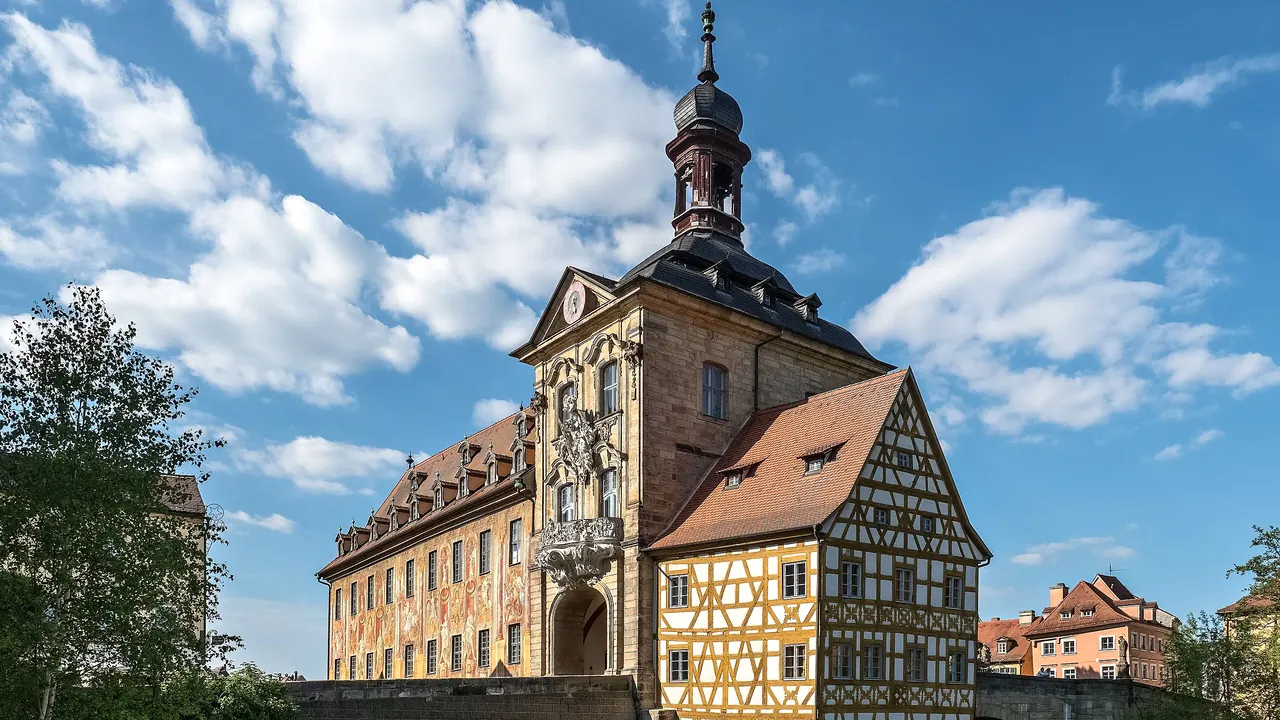
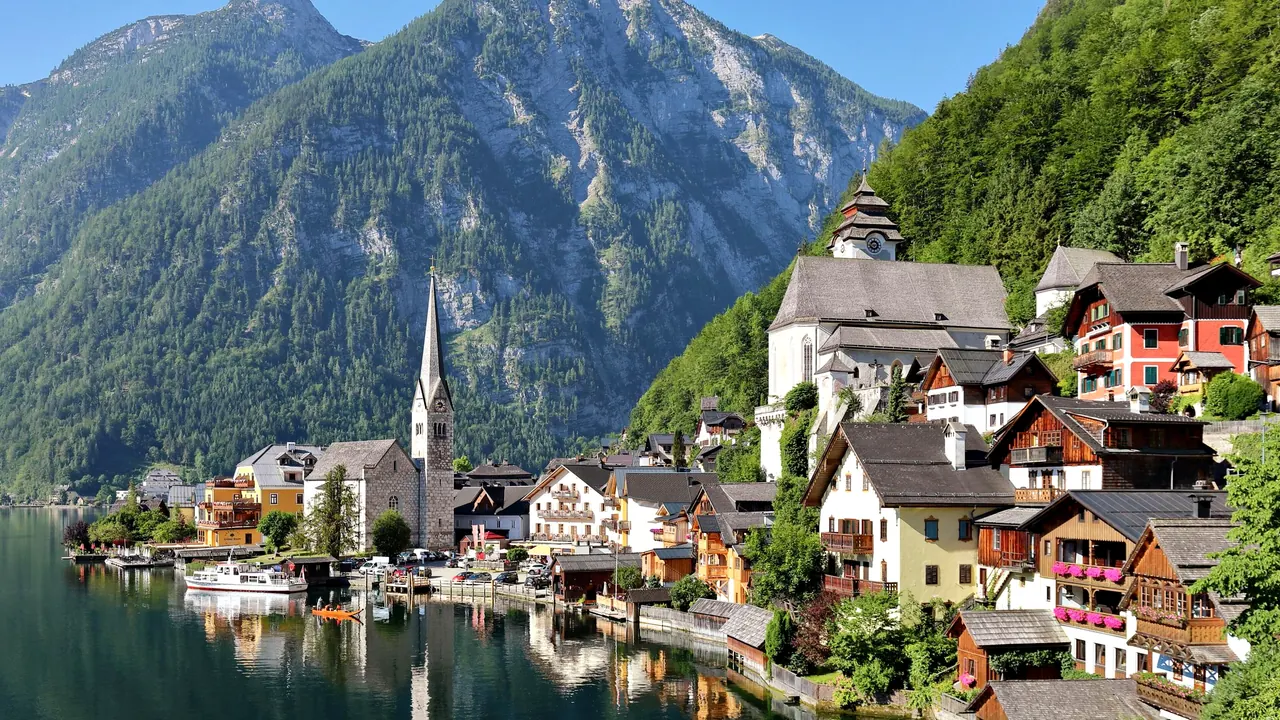
Photos: Bamberg by Ermell, CC BY-SA 4.0, cropped; Hallstatt by C.Stadler/Bwag, CC BY-SA 4.0, cropped.
Bamberg or Hallstatt?
Our verdict in twelve categories, each scored against the same fixed benchmark cities, and the climate month by month, so you can choose for your trip.
Choose Bamberg for
- food and drink
- live music and the arts
- culture and sights
Bamberg suits a traveller who wants a town to settle into for several days. It has brewery taverns and hillside beer cellars, a UNESCO-listed old town made for long walks, an orchestra of international standing and a main rail line that puts Nuremberg, Würzburg and Bayreuth within easy reach. It also costs noticeably less, and there is still some life in the evenings.
Choose Hallstatt for
- nature and the outdoors
- beaches
- families
Choose Hallstatt for the mountains. The lake beneath the Dachstein, the ice caves, the Krippenstein cable car and the walk to the Gosausee make it one of the finest outdoor bases in the Alps, and the village is at its loveliest in the still early morning. Expect to pay well for a room, eat simply and turn in early, because food, nightlife and evening culture barely exist here.
Scoreboard
Twelve categories on one fixed scale from 0 to 100. The shaded stretch is the gap between the two.
Your match
Pick a travel style or drag the sliders, and both match scores follow your weighting.
Wins on food and drink and live music and the arts with your weighting.
Wins on nature and the outdoors and beaches with your weighting.
What matters to you?
Category by category
What the scores mean for a trip.
Beaches & swimming
Neither place is for a beach trip, but Hallstatt at least has proper open water. Its deep, clear Alpine lake has a jetty bathing area in the village and a larger lido at Obertraun, though the water stays cold even in high summer. Bamberg has the river bathing spot in the Hain park, gravel-pit lakes and the town pools, which are fine for cooling off and little more.
Food & drink
Bamberg is by far the better place to eat and drink. Its brewery taverns pour Rauchbier from wooden barrels, the Bierkeller on the hillsides carry summer evenings, and the Franconian Schäufele with dumplings is hearty and satisfying, even if there is little international range.
Hallstatt offers a few guesthouse dining rooms serving Austrian standards. The one thing to seek out is char or whitefish from the lake. Kitchens close early once the day visitors go, so anyone keen on food drives to Bad Ischl for its imperial-era patisseries.
Culture & sights
Bamberg gives you a whole UNESCO-listed old town to explore over several days. There is the four-towered cathedral with the Bamberg Horseman, the Old Town Hall on its island in the Regnitz, the fishermen's houses of Little Venice and Michaelsberg Abbey on its hill.
Hallstatt's history goes much further back. It has seven thousand years of salt mining, the Iron Age burial finds that gave an era of European prehistory its name, and the painted skulls of the Beinhaus. Even so, the salt mine, the small museum and a stroll through the village fill a day at most.
Nightlife
Bamberg has a night out of sorts, while Hallstatt has hardly any. In Bamberg the brewery taverns fill after work, the student bars of the Sand quarter stay up late during term and summer nights carry on in the beer cellars, though clubbing means a train to Nuremberg. In Hallstatt the evening is dinner, a glass of wine by the water and a walk along the dark lake.
Nature & outdoors
Hallstatt has mountain country from the doorstep. There is the Dachstein massif, the Krippenstein cable car up to the Five Fingers platform, the Giant Ice Cave and the Mammoth Cave, the waterfalls of the Echerntal and the walk to the Gosausee. Summer brings via ferratas, and winter brings freeride and ski touring.
Bamberg's surroundings are gentler. The limestone valleys and rock towers of Franconian Switzerland begin under an hour east, the Steigerwald's beech forests lie to the west and cycle paths follow the Main. It is pleasant rolling country with breweries along the way, but it has no peaks or big views.
Day trips
Bamberg makes the easier base because the train does the work. Nuremberg, Würzburg's Residence, Coburg and Bayreuth are each around an hour away, and the basilica of Vierzehnheiligen is closer still.
Hallstatt's outings are lovely: Bad Ischl and the Kaiservilla, St Wolfgang's altarpiece, Gmunden on the Traunsee and Salzburg for a long day. But buses are sparse, and most of these trips go more smoothly with a car.
Good for families
Neither place is built for children, and each works in a different way. Bamberg is calm and safe, with playgrounds and boat hire in the Hain park, a leisure pool with slides for wet days, and beer gardens where children play among the tables.
Hallstatt has the bigger thrills: the salt mine with its wooden miners' slides and underground lake, and the cable car and ice caves for older children. Its steep, narrow lane is packed at midday, though, so families often stay in Obertraun, where there is more space, and come in for a few hours.
Getting around
Both centres can be crossed on foot in minutes, and both have short, steep climbs on steps or cobbles. The difference is arriving and moving on. Bamberg's station is on a main line, and buses and bicycles cover the flat lower town, so you never need a car.
Hallstatt's station is on the far shore, reached by a small boat across the lake. Buses to Obertraun, Gosau and Bad Ischl are thin outside summer, which is why many visitors hire a car.
Shopping & style
Neither is somewhere to plan a shopping trip around, but Bamberg gives you more to browse. It has pedestrian streets around Grüner Markt and Lange Strasse, independent bookshops, antique dealers near the cathedral and bottled Rauchbier to take home. Hallstatt has one lane of souvenir shops, and its one distinctive buy is salt from the mine, sold in grinders and bath mixes.
Affordability
Bamberg is much easier on the wallet. The local beer is cheap, tavern meals cost less than in big German cities, and the town is small enough to walk everywhere for free.
In Hallstatt, the small number of rooms draw visitors from around the world and are priced well above the Austrian average. Meals cost what they do in Alpine resorts, and the mine, the funicular and the cable car add up. Many visitors sleep in Obertraun or Bad Ischl and come in for the day.
Live music & performing arts
Bamberg has a real musical life for its size. At its centre is the Bamberg Symphony and its concert hall on the Regnitz, with drama at the ETA Hoffmann Theatre and organ concerts in the cathedral besides. Hallstatt offers the brass band on feast days and the occasional church concert, so an evening of music means Salzburg's season or Bad Ischl's summer operetta.
Wellness & relaxation
The two are evenly matched for rest, and both send you elsewhere for thermal water. From Bamberg it is half an hour by train to the brine pools of Bad Staffelstein, and from Hallstatt a similar trip to the historic baths of Bad Ischl or Bad Aussee.
What differs is the kind of calm. Bamberg is restful all day long, by the river and in its shaded beer gardens. Hallstatt is perfectly still at dawn and dusk, with mist on the lake, but crowded around midday, so it suits those who spend the busy hours on the water or in the hills.
When should you go?
Pick your month. The climate figures are measured averages, not a forecast.
Bamberg in July
Hallstatt in July
Daytime high, °C
Rainfall in the month, mm
Where the figures come from
Hallstatt's temperatures are measured 56 km from the centre, at Salzburg.
Hallstatt has no rain gauge within 25 km of the centre, so its rainfall comes from a gridded climate dataset read at the city rather than from a gauge further away.
Temperature and rainfall are climate normals, averaged over the years shown. Bamberg: 1991-2020 normals, Bamberg (2.8 km from centre). Hallstatt: 1991-2020 normals, Salzburg (55.5 km from centre).
The two places have almost the same temperatures through the year. Summer highs reach around 25°C and winter days stay only a few degrees above freezing, too cold for comfortable sightseeing from December to February. The real difference is rain. Hallstatt, under the Alps, gets more than twice as much, peaking at about 178mm in July against 79mm in Bamberg, so mountain days there often end in cloud and showers. Bamberg is also the sunnier of the two from May to August.
Bamberg is at its best from May to September, when it is warm enough to sit out late in the beer gardens, and July and August are the months for a dip in the Regnitz or the gravel-pit lakes. Hallstatt's season for hiking and cold lake swims runs from June to September, and September is a little drier than high summer. In winter the pattern reverses. Hallstatt gets more sunshine than Bamberg, where the months around December are short and grey.
Which traveller are you?
On an outdoors trip, Hallstatt wins easily. The Dachstein begins at the edge of the village, with cable cars, ice caves, hut-to-hut hiking and paddling on the lake. Bamberg's countryside is rolling woodland, better suited to gentle cycling between villages.
For a food and nightlife trip, choose Bamberg. Its brewery taverns, smoked beer, hillside beer cellars and student bars in the Sand quarter make for long evenings. Hallstatt serves simple dinners and goes silent once the day visitors leave.
On a tight budget, Bamberg goes much further. Rooms are moderately priced, tavern meals and local beer are cheap, and everything is within walking distance. In Hallstatt the scarce rooms, resort-level meals and paid attractions quickly add up.
Before you go
| Measure | Bamberg | Hallstatt |
|---|---|---|
| Official language | German | German, Austrian Sign Language |
| Currency | Euro (EUR) | Euro (EUR) |
| Sockets | CF230 V, 50 Hz | CF230 V, 50 Hz |
| Driving side | Right | Right |
| Time zone | UTC+1, UTC+2 in summer | UTC+1, UTC+2 in summer |
| Emergency number | 112 | 112 |
| Elevation | 262 m | 511 m |
| Main airport | Nuremberg Airport (NUE)46 km from centre56 non-stop destinations | Salzburg Airport (SZG)55 km from centre64 non-stop destinations |
| Public holidays this year | 12 days | 16 days |
By the numbers
| Measure | Bamberg | Hallstatt |
|---|---|---|
| City population | 77,218 | 741 |
| People per km² | 1,414 | 12 |
| Museums within 10 km | 11 | 3 |
| UNESCO World Heritage sites within 50 km | 1 | 2 |
Where else could you go?
Every comparison below shares a destination with this one, so you can follow Bamberg or Hallstatt somewhere new.
- Nurembergvs Bamberg
- Salzburgvs Hallstatt
- Rothenburg ob der Taubervs Bamberg
- Bledvs Hallstatt
- Grazvs Hallstatt
- Karlovy Varyvs Bamberg