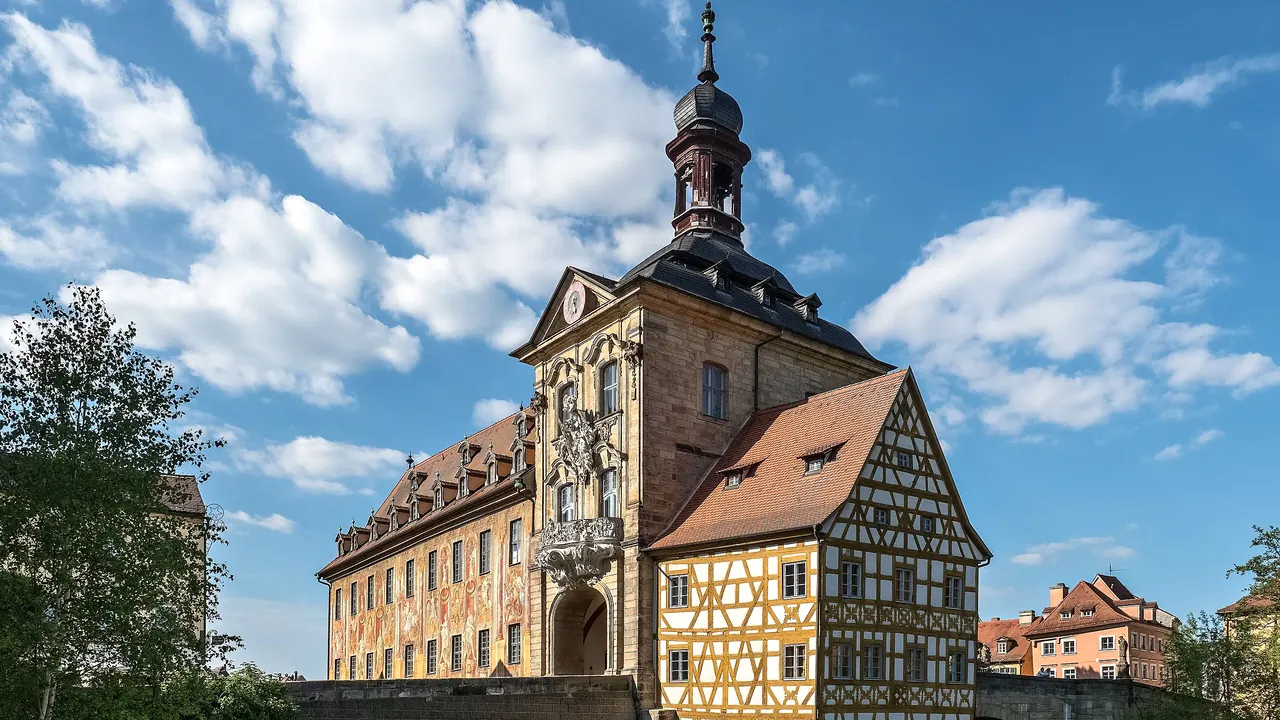
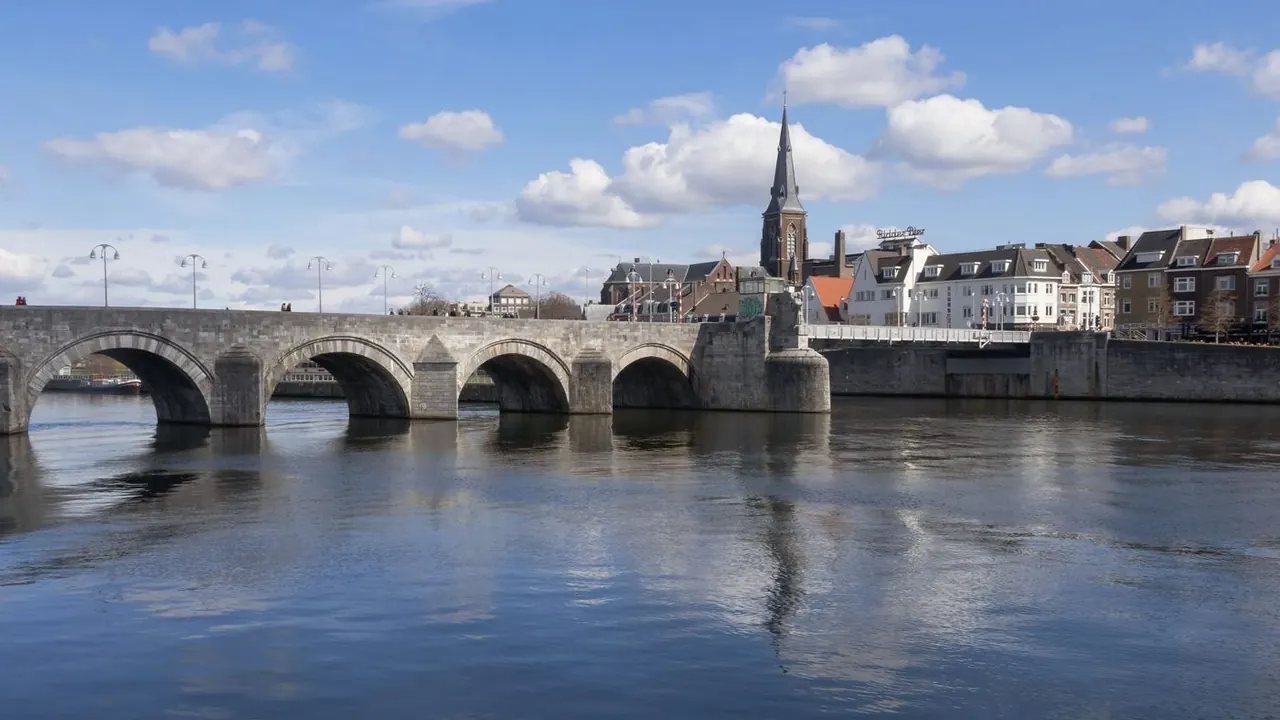
Photos: Bamberg by Ermell, CC BY-SA 4.0, cropped; Maastricht by Michielverbeek, CC BY-SA 4.0, cropped.
Bamberg or Maastricht?
Our verdict in twelve categories, each scored against the same fixed benchmark cities, and the climate month by month, so you can choose for your trip.
Choose Bamberg for
- prices
- culture and sights
- live music and the arts
Bamberg is for travellers who want to walk through an intact old town and spend the evenings in brewery taverns and hillside beer cellars, at a gentler cost. The cathedral hill, the town hall on its island and Little Venice make the townscape itself the main attraction. The main Franconian rail line puts Nuremberg, Würzburg and Bayreuth within easy reach. It suits a quiet stay built around history and beer, where shopping and late nights hardly matter.
Choose Maastricht for
- shopping
- families
- nightlife
Choose Maastricht for a livelier and more polished weekend. It offers boutique browsing in the Stokstraat quarter, terraces on the Vrijthof, café nights with a large student crowd and three countries within easy reach. It is also easier with children: the streets are flat and the caves at Valkenburg are close by. Thermal baths are a short trip away. The trade-off is that you pay Dutch prices for all of it.
Scoreboard
Twelve categories on one fixed scale from 0 to 100. The shaded stretch is the gap between the two.
Your match
Pick a travel style or drag the sliders, and both match scores follow your weighting.
Wins on prices and culture and sights with your weighting.
Wins on shopping and families with your weighting.
What matters to you?
Category by category
What the scores mean for a trip.
Beaches & swimming
Neither city is a place for a beach trip, and they are about equal here. Bamberg's swimming happens at the old river bathing spot in the Hain park on the Regnitz, at gravel-pit lakes on the edge of town and in public pools. Maastricht's gravel-pit lakes along the Maas, on both sides of the Belgian border, have small sandy shores and lifeguarded areas. Bamberg offers a dip in the river in a town park, and Maastricht offers sand underfoot. Either is fine for a hot afternoon and nothing more.
Food & drink
The two are evenly matched at the table, but they eat and drink differently. In Bamberg, beer is the cuisine. Rauchbier is poured from wooden barrels in old brewery taverns, and on summer evenings people head up to the Bierkeller under the chestnut trees. The food is hearty Franconian cooking: Schäufele, dumplings and Bratwurst.
Maastricht is more about good living at the table. You get Limburg dishes such as zuurvlees and vlaai, Belgian beer and white wines from the nearby hillsides, and a fine-dining tier that Bamberg lacks. Neither city has much international range, so go to both for their regional cooking.
Culture & sights
Bamberg has the more complete historic setting. It came through the war almost untouched, and its whole old town across the seven hills is listed by UNESCO. Highlights include the Imperial Cathedral with the Bamberg Horseman, the Neue Residenz, the frescoed town hall on its island and the market gardeners' quarter. The pleasure comes from walking it rather than from its small museums.
Maastricht has rich history in individual places rather than one unbroken townscape. These include the basilicas of Saint Servatius and Our Lady, the Helpoort and medieval walls along the Jeker, and the tunnels under the Sint-Pietersberg. Its Bonnefanten museum is better than anything in Bamberg, but nothing here matches the cathedral hill as a whole.
Nightlife
Maastricht has the more sociable evenings. Brown cafés around the Markt, the Platielstraat and the lanes off the Vrijthof stay busy late at weekends in term time. Carnival turns the whole city into a street party lasting several days.
Bamberg's nights centre on brewery taverns, the student bars of the Sand quarter and long summer evenings in the beer cellars. Most of the town is quiet well before the small hours. In both cities, anyone looking for clubs takes the train elsewhere.
Nature & outdoors
Both have gentle, pastoral countryside rather than mountains. The difference is what lies close by. From Bamberg, the limestone valleys, caves and rock towers of Franconian Switzerland are under an hour away, and the Steigerwald beech forests and village-to-village brewery walks offer quieter days.
Maastricht's green space starts at the edge of the city, with the marl cliffs of the Sint-Pietersberg and the Jeker valley. The sunken lanes and short steep climbs of the Heuvelland are a favourite with road cyclists. Across the border lie the heath of Hoge Kempen and the wooded Ardennes.
Day trips
Both are excellent bases, and the real difference is variety. From Bamberg, the trips stay within Franconia and mostly follow one rail line. Nuremberg, Würzburg's Residence, Coburg and Bayreuth are each about an hour away, with Vierzehnheiligen and Banz Abbey even nearer.
Maastricht changes country with almost every outing. Aachen's cathedral and the stairways of Liège are about half an hour away, Tongeren and Valkenburg are closer still, and Cologne, Brussels and Leuven are possible on longer days.
Good for families
Maastricht is the easier city with children. The centre is flat and suits a buggy, and the tunnel tour under the Sint-Pietersberg is an adventure. Valkenburg, about twenty minutes away, adds show caves, a cable car and a fairy-tale park, and there is a large zoo at Kerkrade.
Bamberg is safe and relaxed, with playgrounds and rowing boats in the Hain, a leisure pool with slides and beer gardens where children play among the tables. Its sights are mostly churches up steep cobbled lanes, which are hard work with a pushchair.
Getting around
Both are compact enough to explore on foot without a car, but the ground is different. Bamberg's lower town is flat and good for cycling, but the climbs up to the cathedral and Michaelsberg are short, steep and cobbled. Its station is a fair walk out. Maastricht is flat throughout, with many pedestrian streets and easy riverside cycling, and its station in Wyck is just over the bridge. Bamberg's rail links reach most of its excursions, while Maastricht's hill villages are easier to explore by bike or car.
Shopping & style
Maastricht is a real shopping destination, and neighbouring countries come for the weekend to browse it. The Stokstraat quarter's old houses hold fashion and designer boutiques, the Grote Staat has the main brands, and Wyck adds interiors, vintage and food shops. The Markt fills with the weekly market.
In Bamberg, shopping fills an hour between sights. There are chain stores on the pedestrian streets, a few independent bookshops, antique dealers near the cathedral and good things to take home, such as smoked beer and produce from the market gardens.
Affordability
Bamberg is noticeably cheaper. The local beer is inexpensive, a brewery-tavern plate of roast pork and dumplings costs less than in a big city, and guesthouses are moderately priced. The exceptions are weekends and the Christmas market season.
Maastricht charges Dutch prices for meals, terrace drinks and hotel rooms, and short-break visitors keep weekend rooms in demand. Bakery stops and brown-café beer help, and coming from Sunday to Thursday makes the biggest difference.
Live music & performing arts
The two are close, but the draw is different. Bamberg's strength is a single orchestra of international standing: the Bamberg Symphony, in its concert hall on the Regnitz. Drama at the ETA Hoffmann Theatre and church concerts add to it, but the town has no opera of its own, so opera lovers look to Bayreuth.
Maastricht puts more in one place. The theatre on the Vrijthof hosts the regional orchestra, an opera company, drama and dance. In summer the square becomes an open-air arena for large concerts, and jazz cafés and carnival brass bands fill in the rest of the year.
Wellness & relaxation
Maastricht has better access to proper spa days. The thermal spa above Valkenburg is about twenty minutes away, Aachen's baths are half an hour away, and the town of Spa itself is within an hour.
Bamberg relies on its pace for relaxation: mornings by the river, beer-garden afternoons and quiet evenings once the day visitors leave. The sauna at the leisure pool and the warm brine pools of Bad Staffelstein, half an hour away by train, cover the rest.
When should you go?
Pick your month. The climate figures are measured averages, not a forecast.
Bamberg in July
Maastricht in July
Daytime high, °C
Rainfall in the month, mm
Temperature and rainfall are climate normals, averaged over the years shown. Bamberg: 1991-2020 normals, Bamberg (2.8 km from centre). Maastricht: 1991-2020 normals, Maastricht Airport Zuid Limburg (10 km from centre).
Both are inland cities with four clear seasons, and both are best for walking from May to September. Bamberg has the bigger swings. Summer highs reach 26°C in July, with more sunshine than Maastricht from June to August, but its winters are colder, around 4°C in December and January. Maastricht is milder in winter at about 6°C and a little cooler at the height of summer. It is wetter for most of the year, and August is its wettest month at 84mm.
In either city, only July and August are warm enough to enjoy the swimming lakes. Bamberg's late winter and spring are noticeably dry, which makes March and April good months for walking its hills. Maastricht has steadier rain from autumn through winter, but slightly more sun than Bamberg in the darkest months.
Which traveller are you?
For a culture and arts trip, Bamberg is the better choice. Its whole old town is listed by UNESCO, from the four-towered cathedral to the town hall in the river, and the Bamberg Symphony makes for serious concert evenings. Maastricht's Bonnefanten is the stronger museum, but Bamberg's townscape wins overall.
On a shopping trip, Bamberg gives you little beyond a few souvenirs picked up between sights, and a bigger spree means taking the train to Nuremberg. Maastricht can fill a whole weekend. Plan around market day on the Markt, and rest between boutiques on a café terrace.
For a trip on a tight budget, Bamberg makes the money last longer. Make a brewery tavern your main meal, walk everywhere and take the regional trains for your outings. In Maastricht, expect to count every terrace round and every night's stay.
Before you go
| Measure | Bamberg | Maastricht |
|---|---|---|
| Official language | German | Dutch |
| Currency | Euro (EUR) | Euro (EUR) |
| Sockets | CF230 V, 50 Hz | CF230 V, 50 Hz |
| Driving side | Right | Right |
| Time zone | UTC+1, UTC+2 in summer | UTC+1, UTC+2 in summer |
| Emergency number | 112 | 112 |
| Elevation | 262 m | 49 m |
| Main airport | Nuremberg Airport (NUE)46 km from centre56 non-stop destinations | Maastricht Aachen Airport (MST)9 km from centre5 non-stop destinations |
| Public holidays this year | 12 days | 11 days |
By the numbers
| Measure | Bamberg | Maastricht |
|---|---|---|
| City population | 77,218 | 120,227 |
| People per km² | 1,414 | 2,000 |
| Museums within 10 km | 11 | 21 |
| UNESCO World Heritage sites within 50 km | 1 | 6 |
Where else could you go?
Every comparison below shares a destination with this one, so you can follow Bamberg or Maastricht somewhere new.
- Nurembergvs Bamberg
- Rothenburg ob der Taubervs Bamberg
- Dusseldorfvs Maastricht
- Colognevs Maastricht
- Brusselsvs Maastricht
- Antwerpvs Maastricht