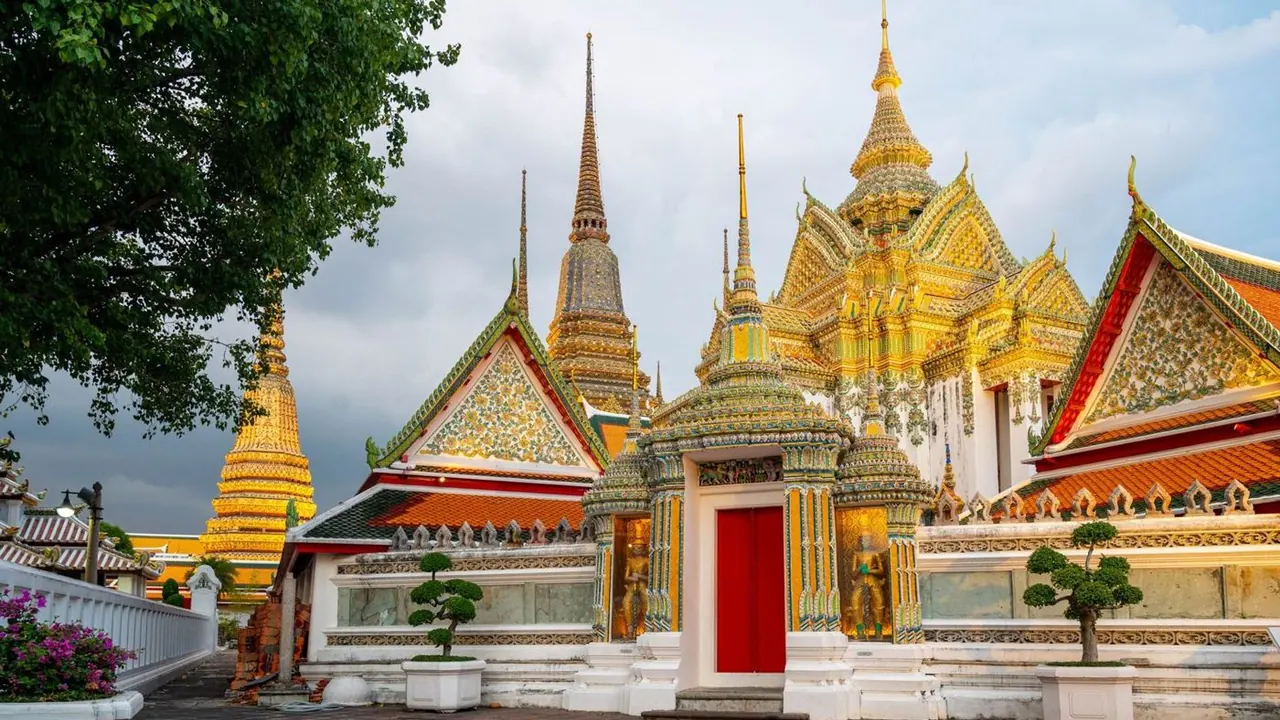
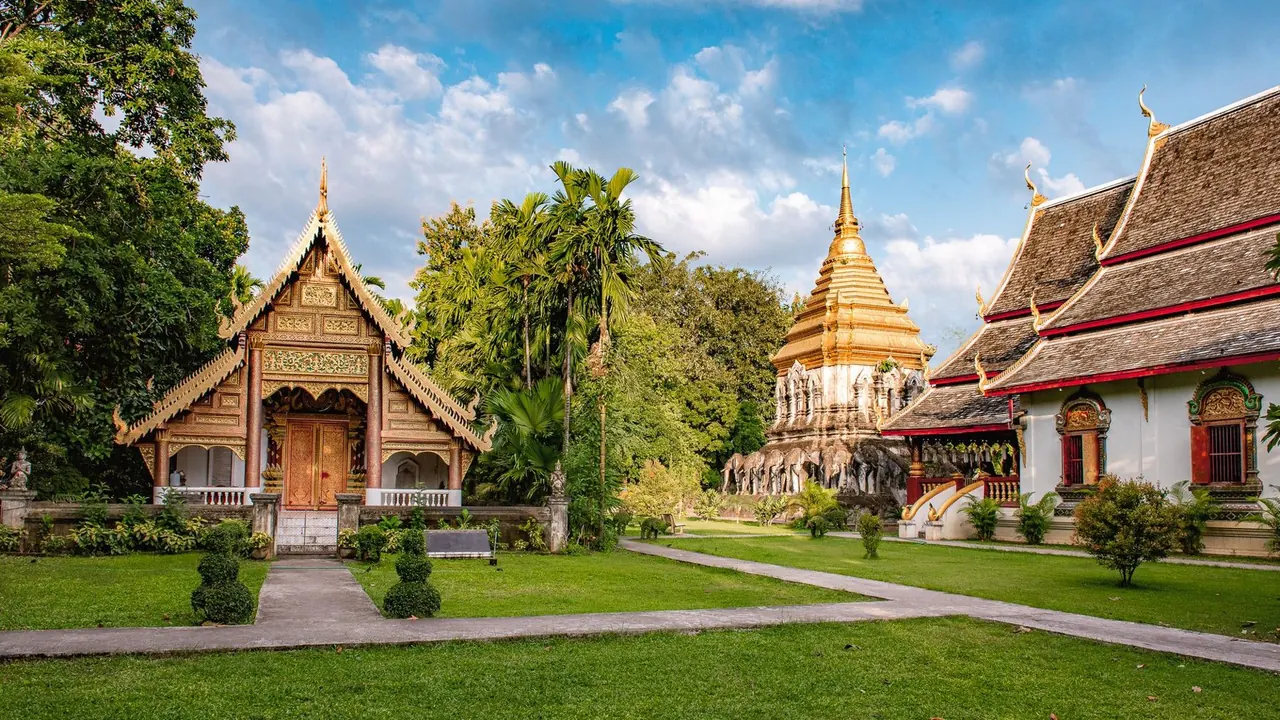
Photos: Bangkok by Lu Zhao, Pexels License; Chiang Mai by Gije Cho, Pexels License.
Bangkok or Chiang Mai?
Our verdict in twelve categories, each scored against the same fixed benchmark cities, and the climate month by month, so you can choose for your trip.
Choose Bangkok for
- nightlife
- day trips
- live music and the arts
Bangkok suits travellers who want a big Asian capital at full strength. It has some of the best eating anywhere, from Yaowarat's night kitchens to ambitious Thai restaurants, the gilded temples of Rattanakosin Island, late nights from Thonglor cocktail bars to Khao San Road, and malls and markets on a vast scale. Ayutthaya and the floating markets are both within a day's reach, so it fits a trip built around appetite, energy and a full list of sights.
Choose Chiang Mai for
- nature and the outdoors
- wellness
- families
If you would rather slow down, pick Chiang Mai. The moated old city is easy to walk, the forests of Doi Suthep begin at the edge of town, and days fill with temple lanes, waterfall trails, massage schools and meditation rather than traffic and late bars. It is gentler on the budget and calmer all round, which makes it the better base for a long, quiet stay or an active trip into the hills.
Scoreboard
Twelve categories on one fixed scale from 0 to 100. The shaded stretch is the gap between the two.
Your match
Pick a travel style or drag the sliders, and both match scores follow your weighting.
Wins on nightlife and day trips with your weighting.
Wins on nature and the outdoors and wellness with your weighting.
What matters to you?
Category by category
What the scores mean for a trip.
Beaches & swimming
Neither city is a beach destination, so in both you swim in a hotel pool and spend a few nights by the sea somewhere else. Bangkok has the edge on reach: Pattaya and Bang Saen make a long day out by road, and rooftop pools are a real part of its hotel scene.
Chiang Mai is a long day's travel from any coast, so swimming there means fresh water: the Huay Tung Tao reservoir below Doi Suthep, quarry lakes on the edge of town and pools beneath waterfalls.
Food & drink
Bangkok is the stronger eating city by some way. It offers the full range of central Thai cooking at almost any hour, from boat noodles and khao man gai to the open-air kitchens of Yaowarat Road and the produce halls of Or Tor Kor. On top of that come ambitious Thai restaurants, good Japanese and Chinese food and a serious cocktail culture.
Chiang Mai's food is narrower but distinctive, built on northern dishes such as khao soi, herb-packed sai ua sausage and nam prik noom with sticky rice, eaten at Warorot market and the Chang Phueak Gate stalls. Its cafés, roasting coffee from the surrounding hills, are a real pleasure, but most visitors eat Thai at nearly every meal because the international choice is limited.
Culture & sights
Bangkok's sights are grander and better known. The Grand Palace and Wat Phra Kaew, the Reclining Buddha at Wat Pho and the porcelain tiers of Wat Arun anchor several days in the old centre, and the National Museum and the Jim Thompson House add depth.
Chiang Mai offers a smaller and more intimate version of Thai temple culture. Wat Chedi Luang, Wat Phra Singh and dozens of teak-gabled monasteries lie within walking distance inside the moat, and Doi Suthep's temple looks down from the mountain. Museums are few, though, and two or three days covers the main sights.
Nightlife
Here the gap is wide. Bangkok has a night out for most tastes: polished cocktail bars and clubs in Thonglor and Ekkamai, the loud street party of Khao San Road, Silom's long-established gay scene and rooftop bars high above the river, most of it running until around two.
Chiang Mai is sociable rather than wild. You will find craft beer and cocktails in Nimmanhaemin and backpacker bars around Tha Phae Gate, but most places close around midnight. Come for a few drinks in good company, not for dancing until dawn.
Nature & outdoors
Chiang Mai wins easily. Doi Suthep-Pui National Park begins at the western edge of town, Doi Inthanon's cloud forest and waterfalls are about an hour and a half away, and the Mae Taeng valley adds rafting, treks to hill villages and sanctuaries where elephants are watched rather than ridden. The haze from field burning between February and April can spoil hikes, so the cool months are the time to go.
Bangkok's outdoor life comes down to its parks, from Lumphini with its monitor lizards to cycling on the raised paths of Bang Krachao. Real landscape, at Khao Yai or Kanchanaburi, needs an overnight stay.
Day trips
Bangkok has the better day trips. The ruined capital of Ayutthaya is the standout, an easy train ride north. To the west, the canal country offers the Amphawa floating market, the Maeklong railway market and the great stupa at Nakhon Pathom, and Kanchanaburi's Death Railway bridge makes a long day.
Chiang Mai's outings are smaller in scale: old Lamphun half an hour south, Lampang with its horse-drawn carriages and teak mansions, and craft villages such as Bo Sang. Its best-known names, the White Temple and Pai, are too far for a day, so most excursions head into the hills instead.
Good for families
For families the two balance out, but their appeal is different. Bangkok has the purpose-built attractions, including Sea Life Ocean World, Safari World, Dream World and KidZania, and the malls' indoor play areas are a refuge on hot afternoons. The catch is that traffic and crowded pavements turn every outing into an effort.
Chiang Mai is smaller and calmer, and its draws are mostly outdoors: feeding elephants at sanctuaries, the zoo on Doi Suthep, the Night Safari and quarry swimming parks. It runs out of things for children to do sooner, and young children should not visit in the hazy burning season.
Getting around
Bangkok is easier to cross without a car. The air-conditioned BTS Skytrain and MRT link Siam, Sukhumvit, Silom and Chinatown, river express boats stop at the Grand Palace and Wat Arun, and a rail link runs to Suvarnabhumi airport. Away from the stations, though, road traffic is slow and walking is tiring.
Chiang Mai has no metro or tram at all. The old city works on foot, and red songthaew pickups, tuk-tuks and ride-hailing cover the rest. For the hills you need a scooter, a hired driver or a tour.
Shopping & style
Bangkok is a shopping destination in its own right. It has the long chain of malls around Siam and Ratchaprasong, ICONSIAM on the river, Pratunam's wholesale clothing and the thousands of stalls at Chatuchak Weekend Market. Chiang Mai cannot match that range, and it has few luxury brands or fashion labels.
Chiang Mai's strength is buying handmade goods close to where they are made. The Sunday Walking Street and the Wualai Road Saturday market sell textiles, silver, carved wood and hill-tribe embroidery, and the villages of Bo Sang and San Kamphaeng make paper umbrellas and woven silk.
Affordability
Both are cheap places to travel well, and the difference between them is small. In Bangkok the costs build up at rooftop bars, international restaurants and the Grand Palace, and a room in Sukhumvit or on the river costs more than one in Banglamphu.
Chiang Mai stretches a budget a little further, with inexpensive teak guesthouses, temples that are free or close to it, and cheap songthaews. There, the money goes on organised outings such as sanctuary visits, treks and cooking classes.
Live music & performing arts
Bangkok has more to see on stage. Khon, the masked dance drama, at the Sala Chalermkrung Royal Theatre and the National Theatre is the highlight. The Thailand Cultural Centre hosts the symphony orchestra and touring productions, and Muay Thai at Rajadamnern and Lumpinee draws visitors for its ritual and music.
Chiang Mai has no formal season to speak of. Its evenings mean jazz jam sessions near the old city's north gate, Lanna dance with a khantoke dinner and, at Yi Peng, processions through the streets.
Wellness & relaxation
Chiang Mai is the better place to unwind. It is the country's best-known place to learn Thai massage, and it adds yoga studios, spas in old teak houses, meditation retreats at Wat Umong and Wat Suan Dok, and the San Kamphaeng hot springs, all in a slow, green city.
Bangkok has the famous massage school at Wat Pho and some of Asia's most refined hotel spas. Its heat, noise and traffic, though, mean that relaxation comes in short breaks between everything else.
When should you go?
Pick your month. The climate figures are measured averages, not a forecast.
Bangkok in July
Chiang Mai in July
Daytime high, °C
Rainfall in the month, mm
Temperature and rainfall are climate normals, averaged over the years shown. Bangkok: 1991-2020 normals, Bangkok (5.7 km from centre). Chiang Mai: 1991-2020 normals, Chiang Mai (0.6 km from centre).
Both cities are hot all year and follow the same pattern: dry from November to April, wet from May to October. Bangkok barely changes, with daytime highs from about 32°C in December to 36°C in April. The rain peaks in September at around 331mm, when grey skies and heavy downpours are common. November to February is the best stretch for walking the old city, with dry, sunny days and the heat at its mildest. The sea at the nearest beaches stays warm enough to swim in every month.
Chiang Mai has a clearer cool season. December and January are the most comfortable months, with highs near 29°C and long sunny days that suit temple walks and hill trails. It then heats up sharply to around 37°C in April, the hardest month to spend outdoors in either city. The rain arrives in May and is heaviest in August and September, which turns the hills green but makes them muddy.
Which traveller are you?
On a food and nightlife trip, Bangkok wins clearly. Yaowarat's street kitchens, shophouse curries and serious Thai restaurants lead on to Thonglor cocktail bars and rooftop bars above the river, and nights run on until closing. Chiang Mai's bars mostly wind down around midnight.
For an outdoors trip, Chiang Mai is the natural base. Forest trails on Doi Suthep start at the edge of town, Doi Inthanon's cloud forest is within reach, and rafting, ziplines and hill-village treks fill the nearby valleys. Bangkok has little beyond its city parks.
On a relaxing and wellness trip, Chiang Mai again comes out ahead. Thai massage courses, yoga, temple retreats and natural hot springs come with an unhurried pace and green lanes, while in Bangkok the heat and traffic squeeze rest into short breaks.
Before you go
| Measure | Bangkok | Chiang Mai |
|---|---|---|
| Official language | Thai | Thai |
| Currency | Baht (THB) | Baht (THB) |
| Sockets | ABCF220 V, 50 Hz | ABCF220 V, 50 Hz |
| Driving side | Left | Left |
| Time zone | UTC+7 | UTC+7 |
| Emergency number | Police 191, ambulance 1669, fire 199 | Police 191, ambulance 1669, fire 199 |
| Elevation | 2 m | 310 m |
| Main airport | Suvarnabhumi Airport (BKK)26 km from centre150 non-stop destinations | Chiang Mai International Airport (CNX)3 km from centre28 non-stop destinations |
By the numbers
| Measure | Bangkok | Chiang Mai |
|---|---|---|
| City population | 5,676,648 | 1,198,000 |
| People per km² | 3,619 | 2,958 |
| Museums within 10 km | 59 | 6 |
| UNESCO World Heritage sites within 50 km | 0 | 0 |
| Swim season, months above 21 °C | 12 months | - |
Where else could you go?
Every comparison below shares a destination with this one, so you can follow Bangkok or Chiang Mai somewhere new.