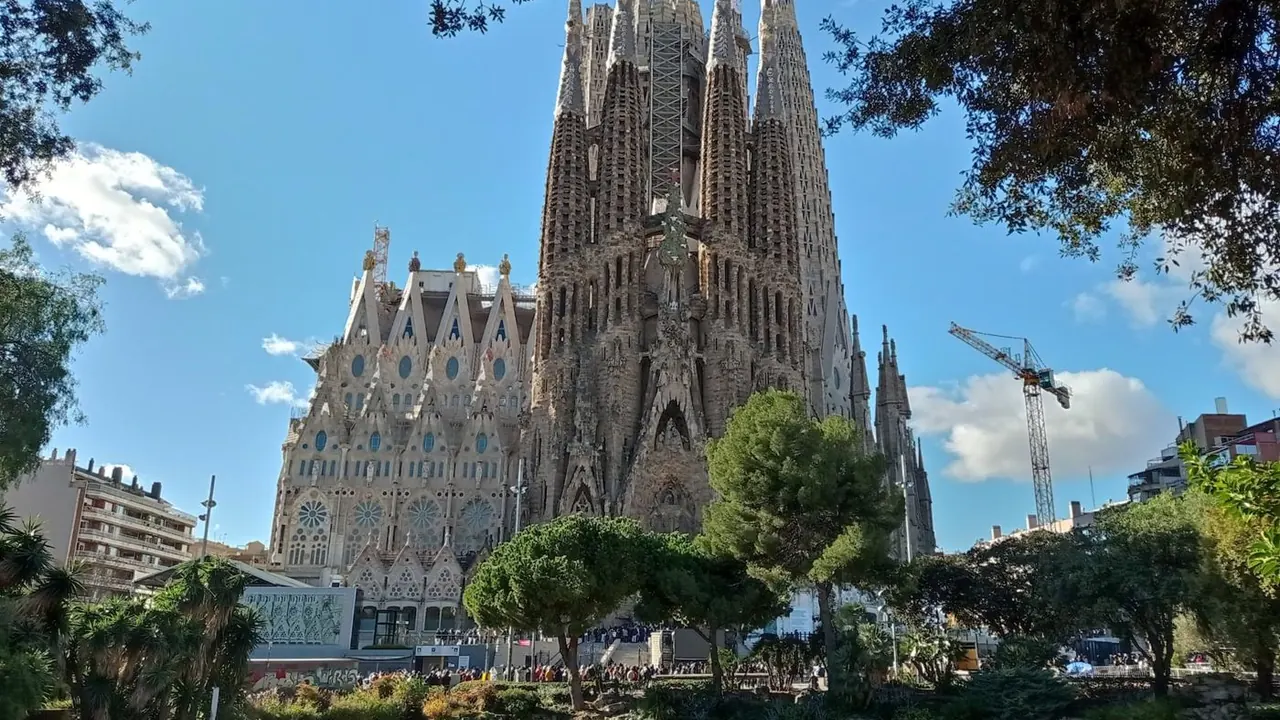
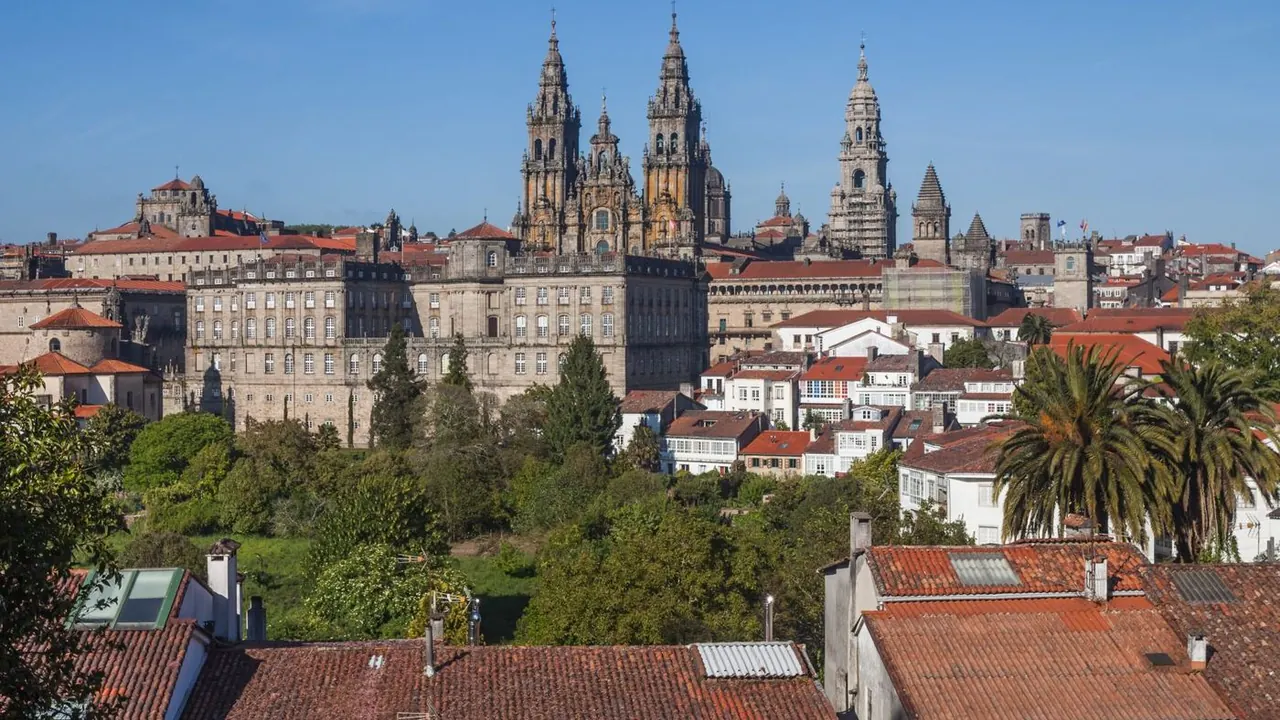
Photos: Barcelona by Canaan, CC BY-SA 4.0, cropped; Santiago de Compostela by Luis Miguel Bugallo Sánchez (Lmbuga), CC BY-SA 3.0, cropped.
Barcelona or Santiago de Compostela?
Our verdict in twelve categories, each scored against the same fixed benchmark cities, and the climate month by month, so you can choose for your trip.
Choose Barcelona for
- beaches
- shopping
- nightlife
Barcelona suits a longer, fuller trip: a week that mixes Gaudí's buildings and the Gothic Quarter with afternoons on a city beach, late dinners and later nights. It also works better with children, because there is far more built for them and a metro to take everyone between it all.
Choose Santiago de Compostela for
- prices
- wellness
Choose Santiago for a slower, cheaper few days built around one great cathedral, a granite old town and some of Europe's best seafood. It makes a good base for touring Galicia's coast and rías, and it rewards anyone arriving at the end of the Camino. Travellers after sun and swimming, though, should look to Catalonia.
Scoreboard
Twelve categories on one fixed scale from 0 to 100. The shaded stretch is the gap between the two.
Your match
Pick a travel style or drag the sliders, and both match scores follow your weighting.
Wins on beaches and shopping with your weighting.
Wins on prices and wellness with your weighting.
What matters to you?
Category by category
What the scores mean for a trip.
Beaches & swimming
Barcelona has sand at the end of a metro ride. The beaches from Barceloneta to Mar Bella are man-made and crowded in high summer, but you can swim in warm water from June to late September and still be back in the Born for dinner. Sitges and the Maresme give you more space within the hour.
Santiago is inland, so a swim means a trip out to the Ría de Muros e Noia or the Ría de Arousa. The white sand and sheltered water there are lovely, but the Atlantic stays cold and the summer is short, so treat the beach as an outing rather than a reason to go.
Food & drink
Both cities eat around a great covered market: the Boqueria, Santa Caterina and Sant Antoni in Barcelona, and the granite Abastos hall in Santiago. Barcelona has far more range, though. It offers Catalan home cooking, the vermouth and tapas habit, seafood rice by the sea and a serious tasting-menu scene, spread across Sant Antoni, Poble Sec, Gràcia and the Eixample.
Santiago's strength is narrower but very deep: octopus, scallops, razor clams and percebes with a glass of Albariño along Rúa do Franco. If one excellent seafood cuisine is enough for you, it delivers. If you want variety across a week, Barcelona wins.
Culture & sights
Barcelona has two layers of sights. The Modernista buildings of Gaudí and his contemporaries, from the Sagrada Família to the Palau de la Música, sit alongside a Gothic Quarter with Roman walls and Santa Maria del Mar. The Picasso Museum, the MNAC and the Fundació Miró add to that, and the whole easily fills a week.
Santiago puts its weight in one place: the cathedral with its Pórtico da Gloria and the shrine of Saint James, the Praza do Obradoiro and a compact UNESCO-listed old town of granite arcades and monasteries. It is deeply atmospheric, but two or three days are enough to see it.
Nightlife
Barcelona's nights run until dawn, and each district has its own style. There are cocktail bars in the Born's medieval cellars, scruffy bars in the Raval, outdoor drinking in Gràcia's squares, pintxos along Blai and serious electronic club nights. Summer weekends barely stop.
Santiago offers a university town's night out: wine along Rúa do Franco, pub-like bars around the Praza de Cervantes, Galician folk sessions and a few late clubs. It is friendly and lively in term time, but quiet in summer, when early-to-bed pilgrims take the students' place.
Nature & outdoors
Barcelona has more on its doorstep and more variety within reach. The wooded Collserola hills and the Carretera de les Aigües start at the city's edge, and there is sailing and windsurfing off Mar Bella. Further out are the pinnacles of Montserrat, the Garraf cliffs and the Costa Brava paths, with the Pyrenees at the edge of range.
Santiago's landscape is gentler and greener: rain-fed oak hills, Camino paths leading straight out of town, the cliffs of the Costa da Morte and the ancient woodland of the Fragas do Eume. There are no high mountains close by, so the walking is rolling rather than steep, and you will need a waterproof more often than shade.
Day trips
Both cities make good bases with fast trains, but Barcelona's list is longer and more varied. Girona's walled town is under forty minutes away, and Dalí's museum in Figueres, Roman Tarragona, the monasteries of Poblet and Montserrat, seaside Sitges and the cava cellars of the Penedès are all within reach.
Santiago opens up Galicia: the Tower of Hercules in A Coruña, Lugo's complete Roman walls, Pontevedra and Ourense by train, and the Albariño country and Fisterra further out. It is a strong list, but more of it depends on a car or a tour.
Good for families
Barcelona is far easier with children. The aquarium, CosmoCaixa, the Ciutadella zoo and the Tibidabo funfair fill whole days, the beaches are a metro ride away and PortAventura is an hour south. Crowds in the old town and the summer heat are the main drawbacks.
Santiago is safe and relaxed, but little is made for children beyond the Alameda and Bonaval parks. The cobbles are hard work with a pushchair and rain can last for days, so most families see the city in a day and then head for A Coruña or the coast.
Getting around
Santiago is the smaller place to walk: you can cross the whole historic centre in twenty minutes, though the granite gets slippery in the rain. Barcelona is bigger but still flat and easy on foot from the Gothic Quarter to Gràcia, and its metro, buses, trams and local trains share one ticket, which makes the outer sights simple to reach.
The gap shows beyond the centre. Barcelona's hilltops need a funicular or cable car, but you never need a car. Around Santiago, the beaches, wine villages and Costa da Morte are much easier to reach by car or with a tour.
Shopping & style
Barcelona is a real shopping city. It has luxury and Spanish fashion on the Passeig de Gràcia, independent designers in the Born, small craft shops in Gràcia, vintage shops in the Raval and the Els Encants flea market.
Santiago's shopping is about crafts and food: black jet in the Azabachería, Sargadelos ceramics, tetilla cheese and tinned seafood. The fashion shops in the Ensanche are ordinary, and much of the old town sells pilgrim souvenirs.
Affordability
Barcelona costs more, mainly because of hotels near the old town and seafront, the tourist tax and the steep entry fees at the Gaudí buildings. Set lunches and market counters help keep the spending down.
Santiago is clearly the cheaper stay. Tapas often arrive free with a drink, seafood and local wine cost less, the cathedral is free to enter, and pensiones and pilgrim hostels keep rooms cheap. The exception is the busy weeks around the feast of Saint James in July.
Live music & performing arts
Barcelona is the place for a night at the theatre or concert hall. There is opera and ballet at the Liceu, concerts under the stained glass of the Palau de la Música, the symphony at L'Auditori, jazz cellars and flamenco, and Sónar, Primavera Sound and the Grec festival in early summer.
Santiago has an orchestra at the Auditorio de Galicia and drama mostly in Galician, but no real opera. Its most distinctive music is bagpipe and folk sessions in old-town bars and student tunas singing in the streets in black capes.
Wellness & relaxation
Neither city has a bathing tradition of its own. Beyond hotel spas, Barcelona has a few Arab-style bath houses in the old town, and its calm comes from long lunches in Gràcia's squares or evening walks on the Collserola paths.
Santiago is quieter in itself once the day's pilgrims have arrived, and Galicia's hot springs are close: the spa towns of Caldas de Reis and Cuntis, and the riverside thermal pools of Ourense.
When should you go?
Pick your month. The climate figures are measured averages, not a forecast.
Barcelona in July
Santiago de Compostela in July
Daytime high, °C
Rainfall in the month, mm
Temperature and rainfall are climate normals, averaged over the years shown. Barcelona: 1991-2020 normals, Barcelona / Aeropuerto (14.4 km from centre). Santiago de Compostela: 1991-2020 normals, Santiago / Labacolla (8.4 km from centre).
Barcelona is the summer city. From June to late September the sea is warm enough for easy swimming, reaching about 25°C in August. June and July are the driest months. July and August are the sunniest and hottest, and highs near 29°C make midday sightseeing hard work. Spring and October are the best times to walk the streets, although September and October bring the year's heaviest rain. Winters are mild, with fewer hours of sun.
Santiago is cooler and much wetter. From October to January rainfall goes above 200mm a month, and spring stays damp, so the drier stretch from June to September is the time to go. It never gets too hot for walking the old town, but the sea stays near 17°C, which is cool for swimming even in August.
Which traveller are you?
On a beach and sun trip, Barcelona is the clear choice. You can swim from the city itself through a long, warm summer, while Santiago sits inland and its Atlantic rías stay cold even at their warmest.
On a family trip with children, choose Barcelona. Children can fill a week there without running out of things to do, while Santiago is a grown-up city of churches and museums, and its rain and cobbles wear small legs out within a day or two.
For a trip on a tight budget, Santiago is the sensible pick. Eating, drinking and sightseeing there cost a good deal less than in Barcelona, where rooms and the big sights quickly eat into the money. Just avoid the late-July feast.
Before you go
| Measure | Barcelona | Santiago de Compostela |
|---|---|---|
| Official language | Spanish | Spanish |
| Currency | Euro (EUR) | Euro (EUR) |
| Sockets | CF230 V, 50 Hz | CF230 V, 50 Hz |
| Driving side | Right | Right |
| Time zone | UTC+1, UTC+2 in summer | UTC+1, UTC+2 in summer |
| Emergency number | 112 | 112 |
| Elevation | 9 m | 260 m |
| Main airport | Josep Tarradellas Barcelona-El Prat Airport (BCN)13 km from centre235 non-stop destinations | Santiago-Rosalía de Castro Airport (SCQ)10 km from centre29 non-stop destinations |
| Public holidays this year | 14 days | 13 days |
By the numbers
| Measure | Barcelona | Santiago de Compostela |
|---|---|---|
| City population | 1,731,649 | 100,965 |
| People per km² | 17,094 | 459 |
| Museums within 10 km | 95 | 6 |
| UNESCO World Heritage sites within 50 km | 3 | 2 |
| Swim season, months above 21 °C | 3 months | None |
Where else could you go?
Every comparison below shares a destination with this one, so you can follow Barcelona or Santiago de Compostela somewhere new.