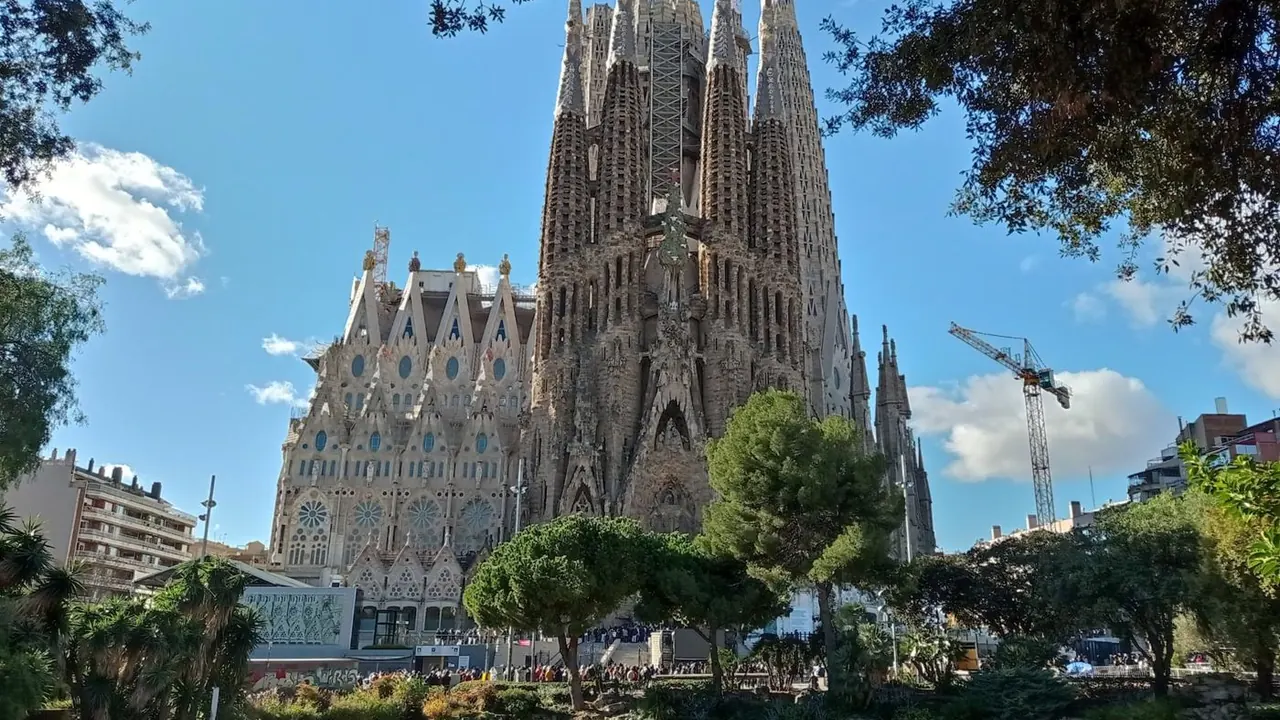
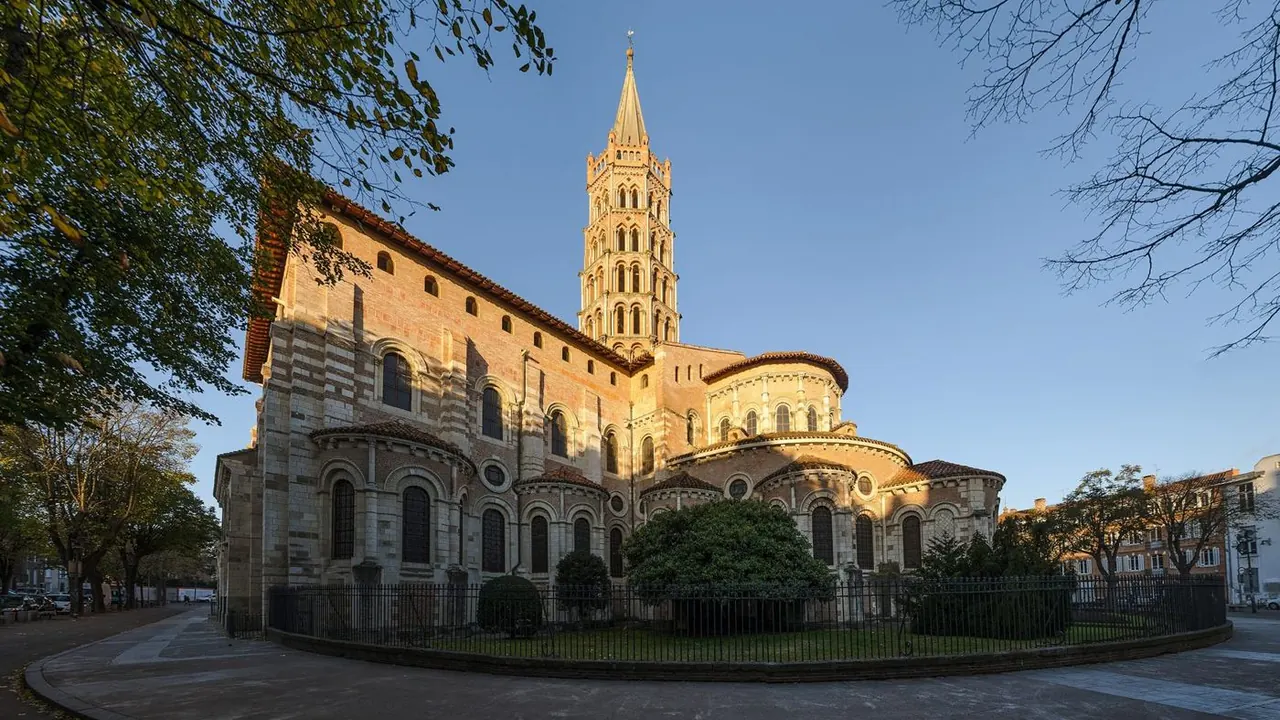
Photos: Barcelona by Canaan, CC BY-SA 4.0, cropped; Toulouse by ZbebVial, CC BY-SA 3.0, cropped.
Barcelona or Toulouse?
Our verdict in twelve categories, each scored against the same fixed benchmark cities, and the climate month by month, so you can choose for your trip.
Choose Barcelona for
- beaches
- nightlife
- shopping
Barcelona is for travellers who want a lot from one trip. Gaudí's buildings and the Gothic Quarter fill the days, sandy beaches are a short walk or a metro ride from the old town, the covered markets make lunch, and the nights run until dawn. It deserves a week, and it suits people who don't mind sharing it with a great many other visitors.
Choose Toulouse for
- prices
Toulouse is the smaller, quieter option: a rose-brick city of Romanesque churches, cassoulet and student terraces along the Garonne. Two days covers the centre, which leaves the rest of the stay free for Carcassonne, Albi and the Pyrenees. Choose it for southern France at an unhurried pace, as long as you can do without the sea.
Scoreboard
Twelve categories on one fixed scale from 0 to 100. The shaded stretch is the gap between the two.
Your match
Pick a travel style or drag the sliders, and both match scores follow your weighting.
Wins on beaches and nightlife with your weighting.
Wins on prices with your weighting.
What matters to you?
Category by category
What the scores mean for a trip.
Beaches & swimming
This is where the two cities differ most. Barcelona has several kilometres of sand on its own seafront, from Barceloneta to Mar Bella, so a swim fits into an ordinary summer sightseeing day. When the city beaches get crowded, quieter ones at Sitges or along the Maresme are a short train ride away.
Toulouse is inland on the Garonne. The nearest sea, around Narbonne and Gruissan, takes about two hours to reach and means a full day out. In the city, summer swimming means the supervised leisure lakes at Sesquières and La Ramée, or a hotel pool.
Food & drink
Barcelona has more range. Catalan cooking from suquet to calçots, tapas and vermouth bars, seafood rice by the sea and markets such as Santa Caterina and Sant Antoni sit alongside one of Europe's most serious tasting-menu scenes. Eating late is part of the routine.
Toulouse is narrower and heartier, built on cassoulet, duck confit and foie gras, with Fronton and Gaillac wines and Armagnac. A set lunch at the counters upstairs in the Victor Hugo market is a memorable meal. Beyond its south-western cooking, though, the city has little international food or top-end dining.
Culture & sights
Barcelona has more to see, and its sights come from a different age than Toulouse's. Its signature is the Modernista architecture of Gaudí and his contemporaries, from the Sagrada Família to the façades along the Passeig de Gràcia. Underneath that lie the Roman walls of the Gothic Quarter, Santa Maria del Mar, the Picasso Museum and the Romanesque frescoes of the MNAC, which together fill a week.
Toulouse is smaller and more of a piece. Its rose-red brick centre has Saint-Sernin, one of Europe's largest Romanesque churches, and the palm-tree vault of the Jacobins. The Augustins collections and the aerospace museums on the outskirts add to that, but two full days covers the essentials.
Nightlife
Barcelona's nights run longer and offer more variety. Dinner lasts until eleven and the clubs fill around two. Each district has its own scene, from cocktail cellars in the Born and scruffy Raval bars to outdoor drinking in Gràcia's squares and deep electronic club nights. Summer weekends barely end.
In Toulouse, going out mostly means the student terraces on Place Saint-Pierre beside the river, plus wine bars around Carmes for an older crowd. It is good fun for a regional city, but it quietens in July and August, the very months Barcelona is at its busiest.
Nature & outdoors
Barcelona has more outdoors right on its doorstep. Trails in the wooded Collserola hills start at the edge of Gràcia, the Carretera de les Aigües gives runners views over the whole city, and paddleboarding and windsurfing go out from Mar Bella. Montserrat's pinnacles are about an hour away and the Costa Brava's coastal paths within two.
Around Toulouse the land is gentle farm country. The Canal du Midi towpaths make long, flat bike rides. Its big asset is the Pyrenees, with serious hiking and cycling climbs, but they are one and a half to two hours away and best reached by car.
Day trips
Both cities make good bases, and Barcelona's excursions are more varied and faster to reach. High-speed trains reach Girona's Jewish quarter in under forty minutes. Figueres has the Dalí museum and Tarragona its Roman amphitheatre on the sea, while Sitges, the cava cellars of the Penedès and Montserrat are all close by.
Toulouse's best trips are medieval and brick: Carcassonne's ramparts and Albi's cathedral are each about an hour by train, with Moissac's cloister not far behind. Beyond those, places such as Cordes-sur-Ciel and Foix are much easier with a car.
Good for families
Barcelona gives children more to do. There are the aquarium, the CosmoCaixa science museum and the funicular up to the Tibidabo funfair, beaches are a metro ride away and PortAventura is an hour south. Restaurants are happy to see children even late in the evening. The crowded old town is hard work with a pushchair, though.
Toulouse's family appeal is narrower but very good: a full day at the Cité de l'espace among Ariane and Mir, a walk inside a Concorde and the giant mechanical creatures at Montaudran. Its flat, compact centre is easier going with small children.
Getting around
Both cities have flat centres that are pleasant on foot, but Barcelona's transport network covers more of what visitors want. The metro, trams and local trains reach the beaches, the Sagrada Família and the upper districts. Only Montjuïc, Park Güell and Tibidabo need a funicular, cable car or steep walk.
In Toulouse almost everything is inside the ring of boulevards, and two automated metro lines cross it. Beyond them it gets harder: the space centre, the leisure lakes and most countryside trips need a bus or, more often, a car.
Shopping & style
Barcelona is the better place to shop. The Passeig de Gràcia has Spanish and international fashion among Modernista façades, and the Born and Gràcia have independent designers. The Raval adds vintage and record shops, and Els Encants is a proper flea market.
Toulouse is mainstream: chains on Rue d'Alsace-Lorraine and a few boutiques and antiques shops in the lanes around Saint-Étienne. Its best buys are edible. Candied violets, duck confit and Armagnac from the markets, or the Sunday market around Saint-Sernin, make better souvenirs than anything on its shopping streets.
Affordability
Overall the two cost about the same, but the money goes in different places. In Barcelona the big costs are summer hotels near the old town or the seafront, the tourist tax and steep entry fees for the Gaudí buildings, which add up over a sightseeing week.
Toulouse's hotels are moderate except during big trade fairs, and some municipal museums are free on certain days. Dinner and wine by the bottle are where its costs mount. In both cities the weekday set lunch is the best-value way to eat well.
Live music & performing arts
Barcelona has the more varied stage. The Liceu has full opera and ballet seasons, and a concert under the stained glass of the Palau de la Música is an occasion in itself. Add jazz cellars, flamenco, Sónar and Primavera Sound in early summer and the Grec festival's open-air stage on Montjuïc.
Toulouse is strongest in classical music. The Théâtre du Capitole stages opera and ballet with its own company, the Orchestre National du Capitole plays in the round Halle aux Grains, and a piano festival fills the Jacobins cloister in late summer. Rio Loco brings world music to the riverbank.
Wellness & relaxation
Neither city is a place for a rest cure, but Barcelona is a little easier. The old town has Arab-style bath houses with warm pools, and evening walks in the Collserola hills or the Montjuïc gardens help calm things down. Quiet seaside towns such as Sitges are close by.
Toulouse offers hotel spas, a few hammam-style day spas and big open-air municipal pools in summer, along with slow rides beside the Canal du Midi. Real thermal bathing means going to Bagnères-de-Luchon or Ax-les-Thermes in the Pyrenees, which works best as an overnight trip.
When should you go?
Pick your month. The climate figures are measured averages, not a forecast.
Barcelona in July
Toulouse in July
Daytime high, °C
Rainfall in the month, mm
Temperature and rainfall are climate normals, averaged over the years shown. Barcelona: 1991-2020 normals, Barcelona / Aeropuerto (14.4 km from centre). Toulouse: 1991-2020 normals, Toulouse / Blagnac (7 km from centre).
Barcelona's good season is longer. The days are warm and fairly dry from May, and the sea is pleasant for swimming from June to late September, at about 25°C in August. September and October are its wettest months, each with over 80mm of rain. Winters are mild and reasonably sunny, so the cooler months still work well for sightseeing.
Toulouse has colder winters, around 10°C in December and January, and less sunshine than Barcelona in every month. Its rain is heaviest from April to June and peaks at 74mm in May. July and September are drier, and September is also cooler, which makes it the better month for walking. Both cities reach about 29°C in August, which is hot for long days on foot. In either city, late spring and early autumn are the most comfortable times to explore.
Which traveller are you?
On a beach and sun trip, Barcelona is the clear pick. A morning among Gaudí's façades can end with a swim and volleyball on the sand. Toulouse gets just as hot in summer, but it is inland, so cooling off means a lake or a pool.
For a shopping trip, Barcelona gives you days of browsing, from Spanish fashion houses to the calmer shops of the Rambla de Catalunya, with espadrilles, ceramics and turrón to take home. In Toulouse, a keen shopper soon runs out of streets beyond the chains.
On a trip on a tight budget, the two cost about the same, but you save in different ways. Barcelona rewards eating at market counters, drinking vermouth by the glass and being choosy about which Gaudí interiors you pay to see. Toulouse has cheap student bars and inexpensive public transport.
Before you go
| Measure | Barcelona | Toulouse |
|---|---|---|
| Official language | Spanish | French |
| Currency | Euro (EUR) | Euro (EUR) |
| Sockets | CF230 V, 50 Hz | CE230 V, 50 Hz |
| Driving side | Right | Right |
| Time zone | UTC+1, UTC+2 in summer | UTC+1, UTC+2 in summer |
| Emergency number | 112 | 112 |
| Elevation | 9 m | 115 m |
| Main airport | Josep Tarradellas Barcelona-El Prat Airport (BCN)13 km from centre235 non-stop destinations | Toulouse-Blagnac Airport (TLS)7 km from centre84 non-stop destinations |
| Public holidays this year | 14 days | 11 days |
By the numbers
| Measure | Barcelona | Toulouse |
|---|---|---|
| City population | 1,731,649 | 514,819 |
| People per km² | 17,094 | 4,352 |
| Museums within 10 km | 95 | 24 |
| UNESCO World Heritage sites within 50 km | 3 | 2 |
| Swim season, months above 21 °C | 3 months | - |
Where else could you go?
Every comparison below shares a destination with this one, so you can follow Barcelona or Toulouse somewhere new.