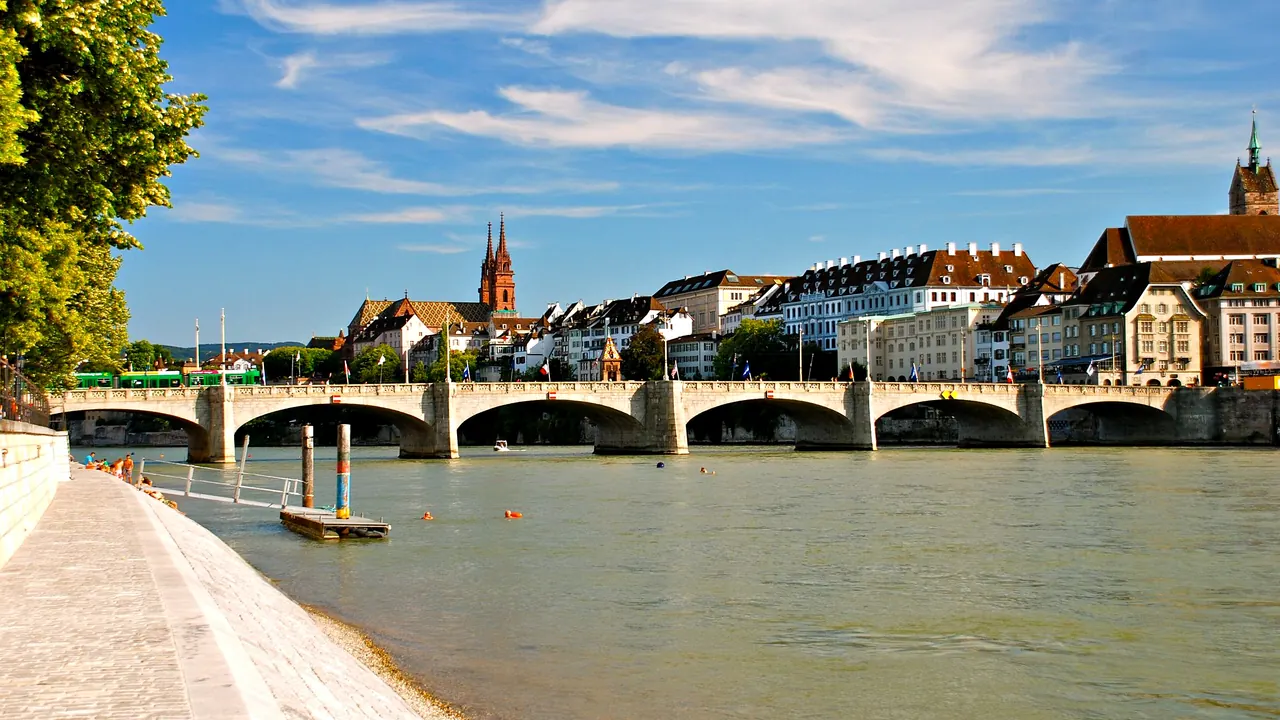
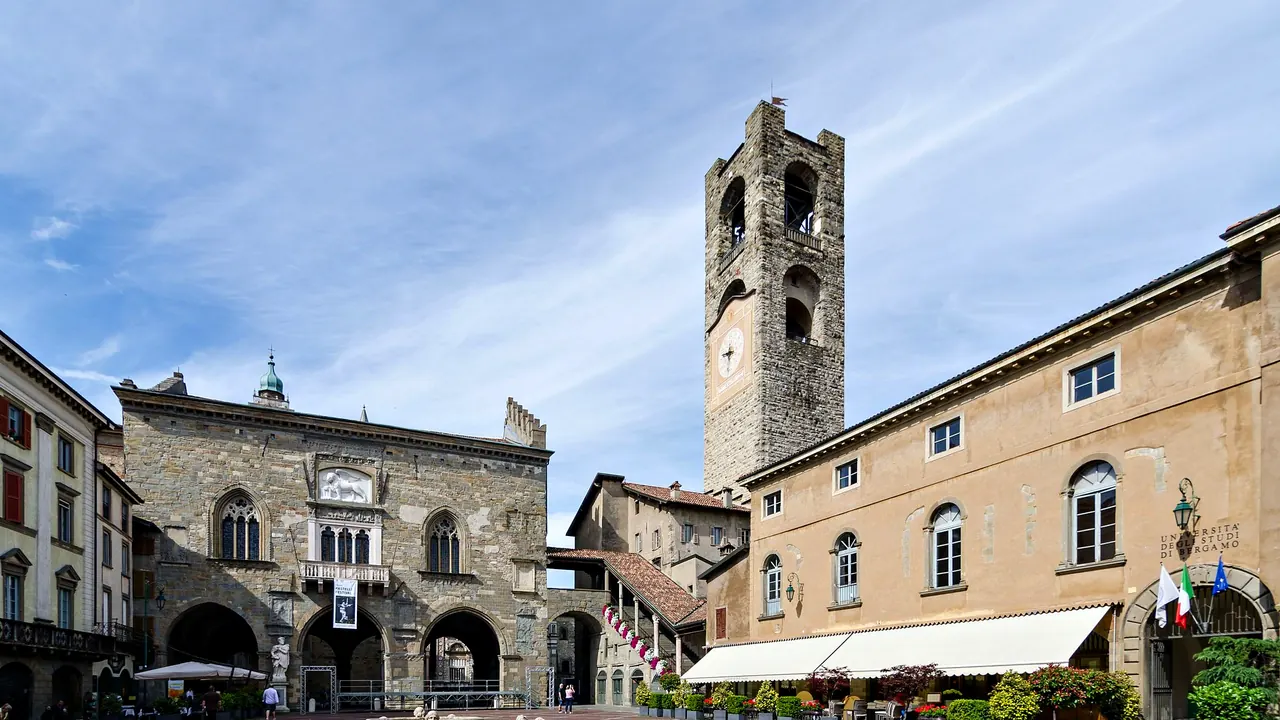
Photos: Basel by Lucazzitto, CC BY-SA 3.0, cropped; Bergamo by Steffen Schmitz, CC BY-SA 4.0, cropped.
Basel or Bergamo?
Our verdict in twelve categories, each scored against the same fixed benchmark cities, and the climate month by month, so you can choose for your trip.
Choose Basel for
- getting around
- live music and the arts
- families
Basel suits a traveller who puts art, music and easy movement first. Its museums and stage life are unusually serious for a city this size, the trams and trains make every journey simple, and three countries lie within an hour. It works best for a museum-led stay with day trips into Alsace and the Black Forest, as long as the budget can take Swiss prices.
Choose Bergamo for
- prices
- food and drink
- nature and the outdoors
For walkers, eaters and anyone watching costs, Bergamo is the better pick. The Città Alta is a complete walled hilltop town, and the Orobie Alps and the lakes are on the doorstep. Its cooking of polenta, casoncelli and valley cheeses has more character than Basel's. Rooms and meals cost far less, which makes it a sensible base for Milan and the rest of Lombardy.
Scoreboard
Twelve categories on one fixed scale from 0 to 100. The shaded stretch is the gap between the two.
Your match
Pick a travel style or drag the sliders, and both match scores follow your weighting.
Too close to call, level with your weighting
Wins on getting around and live music and the arts with your weighting.
Wins on prices and food and drink with your weighting.
What matters to you?
Category by category
What the scores mean for a trip.
Beaches & swimming
Neither city has a beach, and the summer water is quite different. In Basel you swim in the city itself, drifting down the Rhine past the old town on a strong current. It is only for confident swimmers, from June to early September.
In Bergamo, swimming means a trip out to the lidos and grassy shores of Lake Iseo or the Lecco arm of Lake Como, where the water is calm and a little warmer by July. It takes a journey, but it suits weaker swimmers and children far better.
Food & drink
Basel cooks carefully but takes much of its menu from Alsace and Baden, and everyday meals can feel expensive for what arrives. Its strengths are a small fine-dining tier, the Markthalle, the market on Marktplatz and the chance of a cheaper dinner in a wine village over the border.
Bergamo is the better place to eat because it has a cuisine of its own. There are casoncelli with butter and sage, polenta with braised meats and game, and cheeses such as Taleggio and Strachitunt from the valleys above. You drink Valcalepio and Franciacorta, and a long aperitivo in the lower town is part of the evening.
Culture & sights
The two are well matched but strong in different ways. Basel is a museum city: the Kunstmuseum's Holbeins, the Fondation Beyeler in its Renzo Piano building, the Tinguely and the Vitra campus. They sit around a compact old town of red sandstone and guild houses that rewards three or four days.
In Bergamo the main sight is the town itself, a walled hilltop town inside UNESCO-listed Venetian ramparts, with the Cappella Colleoni and Santa Maria Maggiore just off Piazza Vecchia. The Accademia Carrara gives it one gallery of real weight, and the whole visit fits into a day or two.
Nightlife
Neither city is a nightlife destination, but Basel offers a little more. On summer evenings people stay late on the steps by the Kleinbasel riverside kiosks, and the Kaserne area has bars all year. A few clubs in old harbour buildings play electronic music at weekends. Then there is Fasnacht, three days of drums and lantern processions that start at four in the morning, which has no equivalent in Bergamo.
An evening in Bergamo means a long aperitivo and then wine bars along Via XX Settembre or in Borgo Santa Caterina, usually over by midnight. For a proper night out, people go to Milan.
Nature & outdoors
Basel's surroundings are gentler: the wooded Jura, the Black Forest summits of the Feldberg and the Belchen, and the Vosges, with flat Rhine cycle paths running into two countries. It is good country for walkers and cyclists, but the real Alps are a couple of hours away.
Bergamo has wilder country right outside town. Paths climb straight from the Città Alta into the Colli di Bergamo, and beyond Val Brembana and Val Seriana the Orobie Alps have rifugi, high lakes and proper summer hiking. Lake Iseo and Lake Como add sailing and lakeside cycling, though a car makes the mountains much easier.
Day trips
Both cities are first-class bases, and the difference is variety against concentration. From Basel the trips cross borders: Colmar and the Alsace wine villages, Strasbourg's cathedral and Freiburg's minster, then Lucerne, Bern and Zurich, each about an hour by fast train. Over a week you can move between France, Germany and Switzerland, switching between French and German as you go.
Bergamo's trips stay inside northern Italy, with more lakes and Italian art. Milan's Duomo and Last Supper are under an hour away. Lake Como and Lake Iseo, with car-free Monte Isola, are closer still, and Crespi d'Adda, Brescia, Cremona and Verona fill further days. Expect lakeshores and historic towns rather than border crossings.
Good for families
Basel is the easier city with children. The Zolli, one of Europe's best zoos, is a short walk from the station, and the trams take prams without fuss. The Rhine ferries pulled across by the current and the free Lange Erlen animal park make easy afternoons, and Europa-Park is an hour's drive away.
Bergamo wins children over with its funiculars and a gelato on the walls, but the steep cobbles are hard work with a buggy. Its best outings, Leolandia and the Le Cornelle wildlife park, are outside the city. Calm lake water is the one thing it has that Basel's strong river cannot offer.
Getting around
Basel is about as easy as a city gets. Both banks are walkable, and green trams reach everywhere, some crossing into Germany and France. Hotel guests ride free, and trains for every day trip leave from one station, so a car is never needed.
Bergamo is easy on foot once you are in either part of town, but the city is split across two levels. The climb to the Città Alta means the funicular or a bus. Trains run to Milan, Brescia and Lecco, but the upper valleys and the lake shores are much easier with a car.
Shopping & style
Basel sells polish and Bergamo sells produce. Along Freie Strasse and Gerbergasse the shops run to Swiss watches, jewellery and chocolate. The lanes of Spalenberg have small design and craft shops, and the Christmas market around the Münster is one of the prettier ones in Switzerland. Many shoppers still cross into Germany for cheaper high streets.\n\nIn Bergamo the best buys are things to eat and drink. The main lane of the Città Alta is lined with cheese shops, delicatessens and wine sellers, so Taleggio, salumi and Valcalepio are the souvenirs to take home. The lower town's arcades have mid-range Italian fashion, and serious fashion shoppers take the train to Milan.
Affordability
This is the biggest gap between the two. Basel charges Swiss prices for rooms, meals, drinks and museums, and during art fairs hotels are scarce. The free transport card and cheaper meals over the border help, but it remains a very expensive stay.
Bergamo is moderate by northern Italian standards, with fairly priced lower-town hotels, reasonable trattorias and cheap buses and funiculars, so the same budget goes much further. Only rooms inside the Città Alta and summer weekends push the cost up.
Live music & performing arts
Basel has the fuller stage life. Theater Basel puts on opera, ballet and drama and is known for bold productions. The Stadtcasino is home to the Sinfonieorchester Basel and hosts the Kammerorchester Basel, and the city's early-music tradition adds historical concerts, all from autumn to early summer.
Bergamo's stage life centres on Donizetti, who was born here. The Teatro Donizetti's season and its autumn festival of his operas reward opera lovers, and Bergamo Jazz fills the spring. Otherwise the programme is that of a provincial city, though La Scala is an easy evening out in Milan.
Wellness & relaxation
In both cities, relaxing means an unhurried pace at home and a short trip out to a spa town. From Basel, the saline pools of Rheinfelden are twenty minutes away and the German-style spas of southern Baden are close behind. At home there are the summer river and quiet Sundays.
Bergamo's spas have more history: the Belle Époque spa at San Pellegrino Terme up Val Brembana and the sulphur springs of Trescore Balneario, used since Roman times. In town, the walls and the quiet early mornings in the Città Alta slow you down.
When should you go?
Pick your month. The climate figures are measured averages, not a forecast.
Basel in July
Bergamo in July
Daytime high, °C
Rainfall in the month, mm
Where the figures come from
Bergamo has no rain gauge within 25 km of the centre, so its rainfall comes from a gridded climate dataset read at the city rather than from a gauge further away.
Bergamo's sunshine is measured 64 km from the centre, at Lugano.
Temperature and rainfall are climate normals, averaged over the years shown. Basel: 1991-2020 (sunshine 1961-1990) normals, Basel / Binningen (1.9 km from centre). Bergamo: 1991-2020 normals, Bergamo / Orio Al Serio (3.9 km from centre).
Both are at their best from late spring to early autumn, but Bergamo is warmer and much sunnier. Basel is pleasant for walking from May to September and peaks at about 26°C in July. That is also the only stretch when the Rhine is warm enough to float in. Its wettest months are late spring and summer, so expect some showery afternoons whenever you go. Winter is cold and grey, with little sun from November to February.
Bergamo reaches 29°C in July and August, which makes the steep lanes of the Città Alta hot work at midday, though this is the season for the lakes. Late spring and September are the most comfortable months for walking. Autumn is its wet season, with around 125mm a month from September to November, more than Basel gets in any month. Its winters are a little milder than Basel's and get roughly twice as much sun.
Which traveller are you?
On a trip on a tight budget, Bergamo is the clear choice. Lower-town hotels and trattorias are fairly priced and buses and funiculars cost little. In Basel everything costs Swiss prices, and only the free transport card and cheaper meals over the border bring the bill down.
For an outdoors trip, Bergamo puts serious hiking within reach. Woodland paths climb from the upper town to San Vigilio, and Val Brembana and Val Seriana lead into the Orobie Alps. Basel's Jura, Black Forest and Rhine cycle paths suit gentler walkers and cyclists.
On a culture and arts trip, Basel comes out ahead. Both have fine old towns, but Basel adds the Kunstmuseum, the Fondation Beyeler and the Vitra campus. In the evenings, Theater Basel and the Stadtcasino offer far more than Bergamo's provincial stage calendar.
Before you go
| Measure | Basel | Bergamo |
|---|---|---|
| Official language | French, German, Italian, Romansh | Italian |
| Currency | Swiss Franc (CHF) | Euro (EUR) |
| Sockets | CJ230 V, 50 Hz | CFL230 V, 50 Hz |
| Driving side | Right | Right |
| Time zone | UTC+1, UTC+2 in summer | UTC+1, UTC+2 in summer |
| Emergency number | 112 | 112 |
| Elevation | 247 m | 249 m |
| Main airport | EuroAirport Basel–Mulhouse–Freiburg (BSL)7 km from centre112 non-stop destinations | Il Caravaggio International Airport (BGY)4 km from centre146 non-stop destinations |
| Public holidays this year | 10 days | 13 days |
By the numbers
| Measure | Basel | Bergamo |
|---|---|---|
| City population | 176,329 | 119,534 |
| People per km² | 7,378 | 2,973 |
| Museums within 10 km | 61 | 21 |
| UNESCO World Heritage sites within 50 km | 2 | 6 |
Where else could you go?
Every comparison below shares a destination with this one, so you can follow Basel or Bergamo somewhere new.