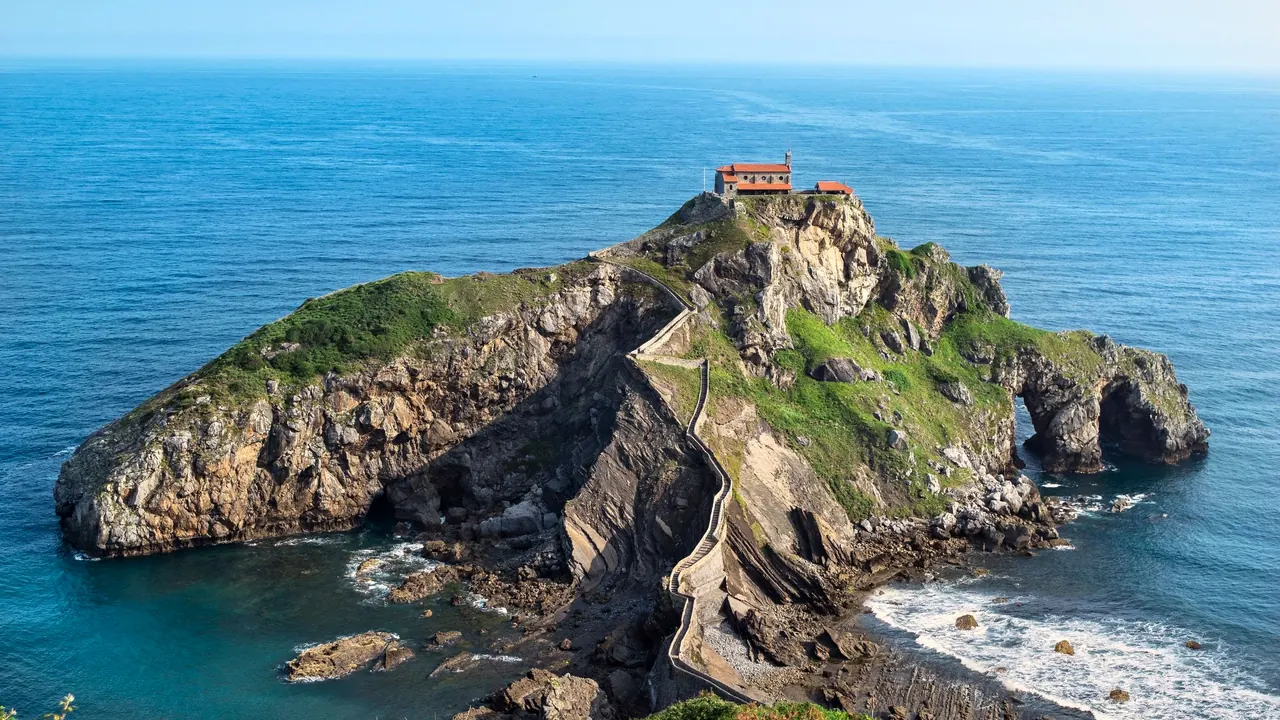
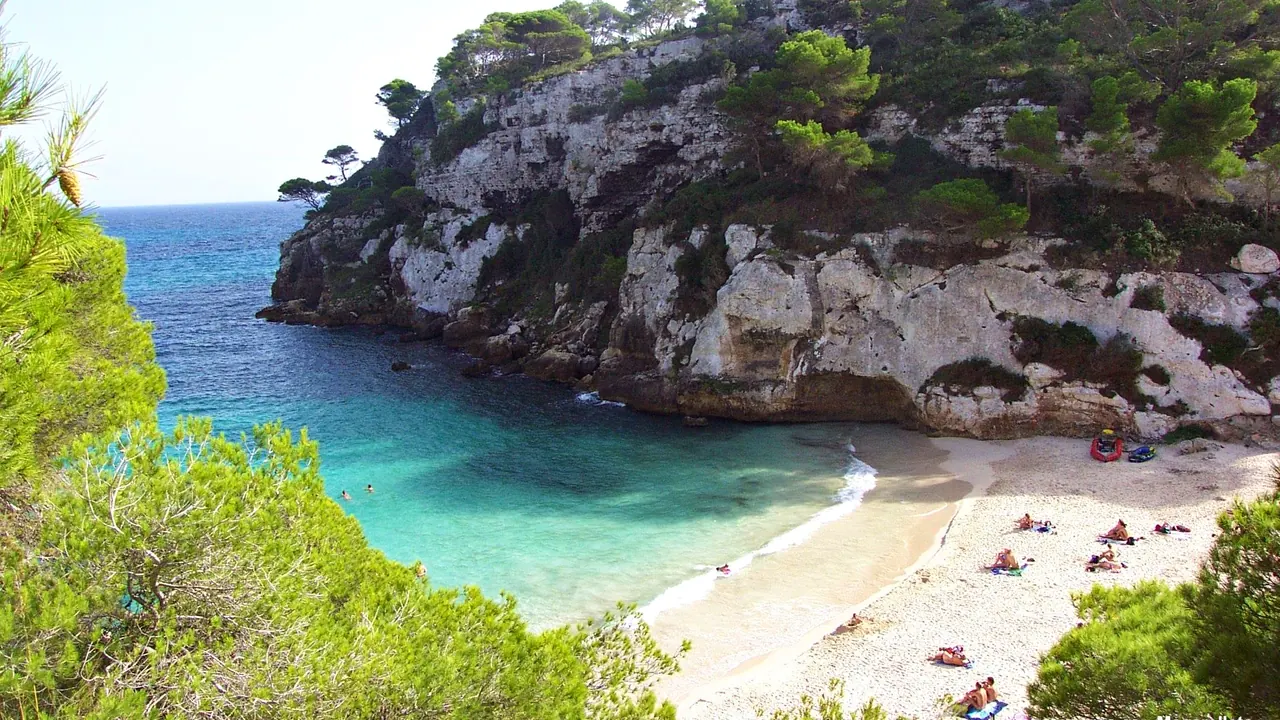
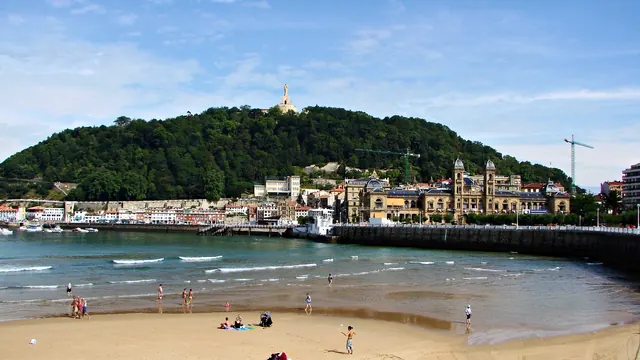
Photos: Basque Country by Enrique, Pexels License; Menorca by Turismo Menorca from Menorca, España, CC BY 2.0, cropped.
Basque Country or Menorca?
Our verdict in twelve categories, each scored against the same fixed benchmark cities, and the climate month by month, so you can choose for your trip.
Choose Basque Country for
- day trips
- food and drink
- nightlife
The Basque Country is the choice for travellers who plan their days around eating and seeing things. It has pintxos counters in San Sebastián and Bilbao, the Guggenheim, a run of fishing ports along the coast, and Rioja Alavesa and the French Basque towns within easy reach. It works as a moving trip between three compact cities. San Sebastián's beaches are a summer pleasure rather than the point, and you give up reliable sun in return for green hills and the odd grey day.
Choose Menorca for
- beaches
- families
Menorca is a beach island before anything else. The south coast has white-sand coves in clear turquoise water, the sea is warm enough for long swims all summer, and the dry, sunny weather makes the plan easy to keep. In return, evenings are quiet, the food is local but narrow in range, and there is little to do beyond the island. That suits anyone who wants to slow down by the water, and it frustrates anyone who needs a full programme.
Scoreboard
Twelve categories on one fixed scale from 0 to 100. The shaded stretch is the gap between the two.
Your match
Pick a travel style or drag the sliders, and both match scores follow your weighting.
Wins on day trips and food and drink with your weighting.
Wins on beaches and families with your weighting.
What matters to you?
Category by category
What the scores mean for a trip.
Beaches & swimming
Menorca is the far better beach destination. The Basque Country's best is a town beach: La Concha in San Sebastián is a sheltered curve of pale sand, calm enough for children and long swims. Zurriola and Zarautz take the surf. But the Biscay water stays cool, and grey spells interrupt even July and August.
Menorca offers a whole coastline to choose from: Macarella, Turqueta and Mitjana on the south coast, set between pine-topped cliffs, and the reddish sand of Cala Pregonda in the north. The sea is several degrees warmer. The catch is that the best coves have no facilities and fill by late morning in high summer.
Food & drink
Food is where the Basque Country pulls furthest ahead. It is a reason to make the trip in itself. Evenings are spent moving from one pintxos counter to the next in San Sebastián and Bilbao, and the hills around San Sebastián hold a cluster of the country's most celebrated restaurants. You can also have grilled turbot in Getaria and cider-house menus in Astigarraga.
Menorca has a few good things, such as caldereta de langosta in Fornells, Mahón cheese, and a glass of pomada on the quay. Beyond those, the range is thin, and the resort strips serve tourist menus. Many kitchens also close once the summer season ends.
Culture & sights
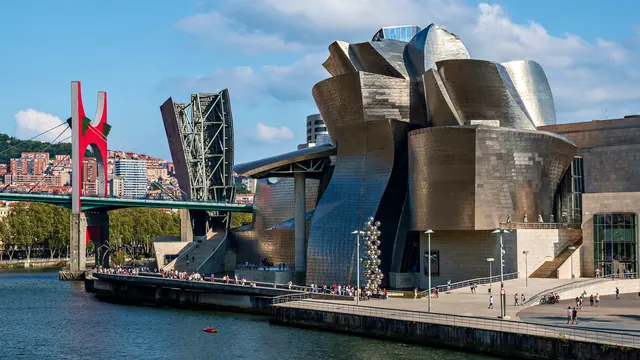
The Basque Country has more to see and more variety. The Guggenheim and the Fine Arts Museum in Bilbao, the Vizcaya Bridge at Portugalete, Vitoria's ring-shaped medieval hill town and the Belle Époque seafront of San Sebastián can fill a week.
Menorca's heritage is narrower but found nowhere else. Its UNESCO-listed Talayotic sites, such as the Naveta des Tudons and the taulas of Torralba d'en Salord, stand open in farmland. Georgian Mahón, above its deep harbour, and Gothic Ciutadella round it out. The museums are small, and most visitors have seen the main sights in a few days.
Nightlife
The Basque Country is clearly livelier after dark. The bar round in the old towns carries on into cocktail bars and late pubs, Bilbao has the widest choice, and some clubs run until dawn at weekends. In August, the fiestas in Bilbao and San Sebastián fill the streets until the early hours.
Menorca's nights are spent over drinks on the harbour fronts of Ciutadella and Mahón, with one cave club in the cliffs near Cala en Porter for sunset. The big exception is Sant Joan in Ciutadella in June, but most nights the resorts go quiet early.
Nature & outdoors
The Basque landscape is steeper and more dramatic. It has the tilted flysch cliffs of the Geopark between Zumaia and Deba, the island hermitage of San Juan de Gaztelugatxe, and ridge walks to around 1,500m in Gorbeia and Aizkorri. Mundaka's wave and the learner breaks at Zarautz add surfing.
Menorca is gentle and low, and its outdoor life is about the coast. You can walk stages of the Camí de Cavalls round the shore or watch birds at S'Albufera des Grau. Its clear, warm water also makes it the better place of the two for snorkelling, diving and sea kayaking.
Day trips
The Basque Country has a far wider choice of outings. Biarritz, Bayonne and Saint-Jean-de-Luz are under an hour from San Sebastián, and the cellars of Laguardia in Rioja Alavesa are about an hour from Vitoria. Pamplona and Burgos are also within reach, and the fishing ports in between make easy half-days.
On Menorca, a day out usually means driving to the other end of the island, to Ciutadella or Mahón, or to Fornells and Binibeca. The only trip off the island is the ferry to Alcúdia on Mallorca, a long day with about an hour and a half or more each way at sea.
Good for families
Both work well with children, but they offer different kinds of family stay. In the Basque Country, the base is San Sebastián, a city with calm water at La Concha, an aquarium, the Eureka science museum and a funicular up to the small amusement park on Monte Igueldo. The frequent rain means you need a few indoor plans.
Menorca is a beach-and-resort family vacation. It has shallow, sheltered bays such as Cala Galdana and Son Bou, low-rise resorts and short drives. It has fewer attractions built for children, and the prettiest southern coves mean a walk carrying all the beach gear.
Getting around
The Basque Country is easier to get around without a car. Bilbao, San Sebastián and Vitoria are about an hour apart by frequent coach, all three centres are walkable, and Bilbao has its Foster-designed metro and riverside tram. You need a car only for wine country and the hill parks.
On Menorca, a hire car is close to essential. Distances are short along the one main road, but the summer buses reach few of the wild coves. At the popular southern beaches, car parks fill early or access is controlled, so the last stretch is by shuttle or on foot.
Shopping & style
Neither is a shopping destination, but the Basque Country gives you more to browse. Bilbao's Gran Vía has the Spanish chains and a department store, and San Sebastián's Centro has independent boutiques. The best buys are edible: Getaria anchovies, Idiazabal cheese and txakoli.
Menorca's shopping comes down to local crafts and produce. You can buy avarques sandals and leather goods from the old shoemaking towns of Ciutadella and Alaior, along with Mahón cheese and gin, and browse the summer craft markets. There is no fashion street to speak of.
Affordability
Both are among the dearer parts of Spain, but the Basque Country is easier on the budget. San Sebastián in summer is costly. Bilbao and Vitoria are cheaper bases, an evening of pintxos is a good way to eat well for less, and the trains, buses and metro are inexpensive.
On Menorca, summer pushes up the cost of rooms, villas and car hire all at once. The usual ways to save are renting an apartment, cooking with produce from the market and coming in June or September. Most beaches cost nothing, and admission to the prehistoric sites is modest.
Live music & performing arts
The Basque Country has a real music calendar. Jazzaldia brings jazz to the beach and the Kursaal in July, the Quincena Musical fills August with orchestras, and BBK Live brings rock and pop to the hillside above Bilbao. Outside summer, ABAO's opera season and two orchestras keep Bilbao busy through the year.
Menorca has the historic Teatre Principal in Mahón, summer organ recitals at Santa Maria and a classical festival in Ciutadella. Outside summer, there is little on stage.
Wellness & relaxation
Neither has a strong spa culture, and in both places rest comes mainly from the pace. The Basque Country has a little more in the way of actual bathing: the seawater pools in the old pavilion on La Concha and the warm springs at Zestoa.
Menorca relies on calm. It has converted farmhouses, quiet low-rise resorts, summer yoga and massage, and the warm, dry weather that makes doing nothing easy. Its quiet suits a slow week best in June or September.
When should you go?
Pick your month. The climate figures are measured averages, not a forecast.
Basque Country in July
Menorca in July
Daytime high, °C
Rainfall in the month, mm
Where the figures come from
Basque Country's station stands 253 m above the place it is measured for, so that place is likely a little warmer than the figures say.
Temperature and rainfall are climate normals, averaged over the years shown. Basque Country: 1991-2020 normals, San Sebastian / Igueldo (10 km from centre). Menorca: 1991-2020 normals, Menorca / Mahon (3.7 km from centre).
The two climates are very different. The Basque coast never gets truly hot. Even in August the afternoons peak around 23°C, which is fine for walking all day. The Bay of Biscay warms enough for comfortable swimming only from July to early September, and rain falls in every month. Late autumn and winter are the wettest stretch, with November bringing about 203mm, so the green hills come at a cost. From late spring to early autumn there is decent sunshine, but you should expect some grey days whenever you go.
Menorca is the sunnier and drier of the two. July is close to rainless, at around 6mm, and August afternoons reach about 30°C, with the sea at about 26°C. That makes June to October the swimming season. Midsummer is too hot to enjoy a long walk on the coastal path, so spring and autumn are better for exploring on foot. The island turns wetter from September into November, but it stays milder in winter than the Basque Country.
Which traveller are you?
For a beach and sun trip, Menorca is the clear pick. Its southern coves of white sand and turquoise water, warmer sea and long dry summers beat the Basque coast. There, beach days depend on Biscay weather and a cooler sea.
On a food and nightlife trip, the Basque Country wins easily. Evenings move from one pintxos bar to the next through San Sebastián's Parte Vieja and Bilbao's Casco Viejo, then on to late bars. Menorca's quiet harbour fronts and narrow menus cannot compete.
For a culture and arts trip, choose the Basque Country. It has the Guggenheim, Bilbao's Fine Arts Museum, Vitoria's medieval core and a year-round season of opera and orchestras. Menorca's Bronze Age monuments are unique, but they fill only two or three days.
Before you go
| Measure | Basque Country | Menorca |
|---|---|---|
| Official language | Spanish | Spanish |
| Currency | Euro (EUR) | Euro (EUR) |
| Sockets | CF230 V, 50 Hz | CF230 V, 50 Hz |
| Driving side | Right | Right |
| Time zone | UTC+1, UTC+2 in summer | UTC+1, UTC+2 in summer |
| Emergency number | 112 | 112 |
| Main airport | Bilbao Airport (BIO)73 non-stop destinations | Menorca Airport (MAH)72 non-stop destinations |
| Public holidays this year | 13 days | 13 days |
By the numbers
| Measure | Basque Country | Menorca |
|---|---|---|
| Population | 3,193,513 | 100,323 |
| People per km² | - | 145 |
| Swim season, months above 21 °C | 2 months | 5 months |
Where else could you go?
Every comparison below shares a destination with this one, so you can follow Basque Country or Menorca somewhere new.
- Mallorcavs Menorca
- Bordeauxvs Basque Country
- Costa Bravavs Menorca
- Ibizavs Menorca
- Formenteravs Menorca
- Dordognevs Basque Country