Spain
San Sebastian
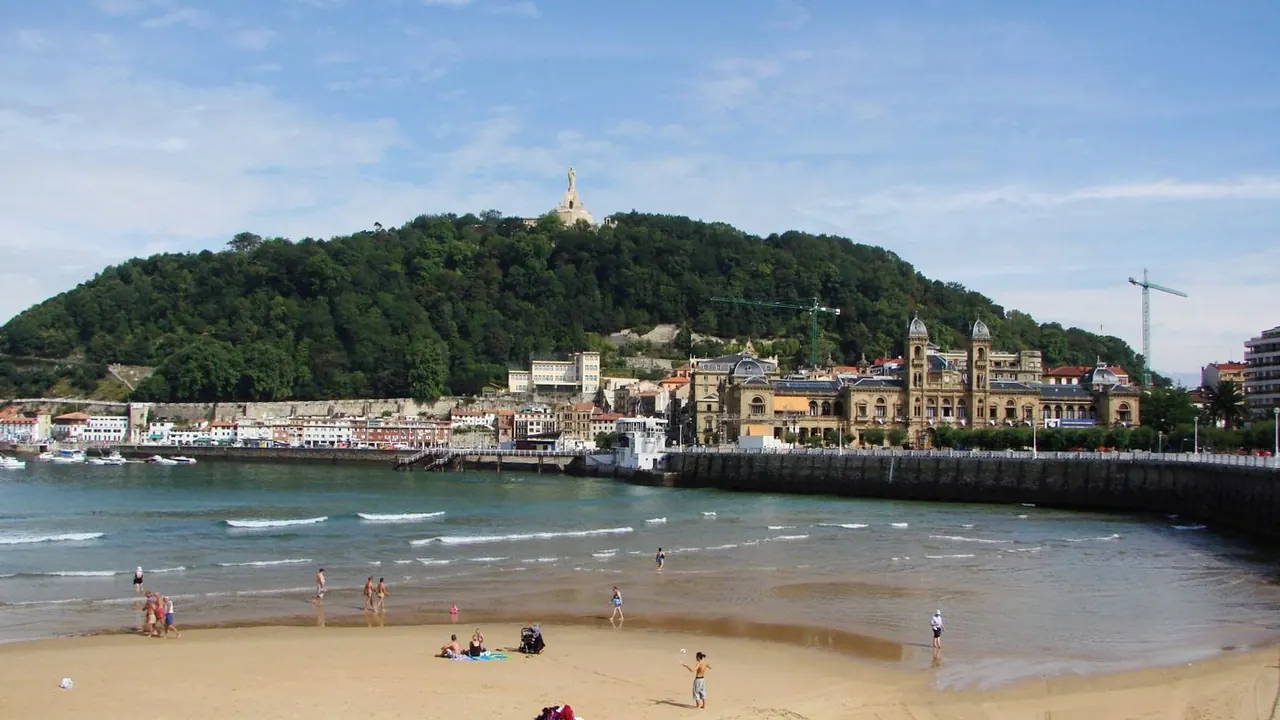
La Concha beach and Monte Urgull
- Food & drink88
- Day trips80
- Getting around80
Photo: Guérin Nicolas, CC BY-SA 3.0, cropped
Match
60
Every category weighted equally
- Beach & sun61
- Culture & arts60
- Food & nightlife60
- Family trip63
- Outdoors65
- Relax & unwind62
- Shopping & style59
- On a budget57
San Sebastian in twelve categories
Our verdict on each, scored 0 to 100 against the same fixed benchmark cities, so a score means the same thing on every page.
Beaches & swimming. Scores 68 out of 100.
Food & drink. Scores 88 out of 100.
Culture & sights. Scores 52 out of 100.
Nightlife. Scores 44 out of 100.
Nature & outdoors. Scores 72 out of 100.
Day trips. Scores 80 out of 100.
Good for families. Scores 66 out of 100.
Getting around. Scores 80 out of 100.
Shopping & style. Scores 40 out of 100.
Affordability. Scores 32 out of 100.
Live music & performing arts. Scores 45 out of 100.
Wellness & relaxation. Scores 50 out of 100.
San Sebastian category by category
Beaches & swimming
68Few cities have a beach like La Concha: a shell-shaped bay of pale sand right in the centre, sheltered by Santa Clara island and the two headlands, with calm water and a promenade where half the city spends its summer evenings. Ondarreta continues it towards Monte Igueldo and is quieter, a favourite with local families. Across the river, Zurriola faces the open Atlantic and is the surfers' beach.
This is the Bay of Biscay, though, not the Mediterranean. The sea reaches about 21°C to 22°C in August, the season is short, and grey, rainy days come even in summer. In July and August the beaches are full and lovely. Outside those months they are for walking. A short boat ride to Santa Clara island gives a small extra beach, and Zarautz's long strand is close by along the coast.
Food & drink
88Eating is the reason many people come. In the Parte Vieja and in Gros, bar counters are lined with pintxos, small bites on bread or made to order, and the evening is spent moving from one bar to the next with a glass of txakoli, the sharp local white poured from height, or a small beer. Each bar has its own speciality, from grilled foie and squid to anchovies and wild mushrooms. The covered market at La Bretxa and the San Martin market show off the fish, peppers and cheeses behind it all.
Above the bars sits a fine-dining tier that has few equals for a city of this size, with several of Spain's most celebrated restaurants in the hills around town. From January to spring the cider houses in nearby Astigarraga serve cider straight from the barrel with salt-cod omelette and huge steaks. What the city lacks is range: the cuisine is overwhelmingly Basque, with little from elsewhere.
Culture & sights
52The city is best seen as a whole rather than a list of sights. Elegant late 19th-century streets around the Buen Pastor cathedral and the river face the tight grid of the Parte Vieja, rebuilt after the fire of 1813, with the baroque Basilica of Santa Maria at its end. Monte Urgull rises behind, crowned by the castle and its small history museum. The Miramar Palace sits above La Concha, and the city hall occupies the old casino.
The San Telmo Museum, in a former convent, tells the story of Basque society and holds a fine set of murals. Eduardo Chillida's Peine del Viento, iron sculptures set into the rocks at the end of Ondarreta, is the city's best-loved artwork. Two or three days cover it comfortably.
Nightlife
44Evenings start well. The pintxo bars of the Parte Vieja fill up from early evening and the streets around them stay noisy and sociable until late, especially on Fridays and Saturdays. After that the choice narrows: a handful of late bars in the old town and Gros, a few clubs, some along the bay, and a student crowd that keeps things going on weekends.
In summer, and during the August Semana Grande with its nightly fireworks over the bay, the city goes out much later. Outside the season and midweek it is a calm place where a night out mostly means dinner and drinks. Those after big clubs or a real late-night scene will find it limited.
Nature & outdoors
72The city sits in a ring of green hills on the sea. Monte Igueldo, reached by an old funicular, and Monte Urgull give the classic views over the bay, while Monte Ulia to the east starts a fine coastal path through woods and over cliffs to the fishing port of Pasaia. Beyond it, the walk over Mount Jaizkibel to Hondarribia is one of the best stretches of coast in northern Spain, with sandstone formations and steep drops to the sea.
Inland, the Aiako Harria natural park and the limestone ridges of the Basque mountains are within an hour, good for walking rather than high peaks. Zurriola and the beaches along the coast suit surfers, and kayaking and paddleboarding are easy in the bay. The landscape is green because it rains a lot, in every season.
Day trips
80Being on the edge of two countries makes this an excellent base. Bilbao, with the Guggenheim and its old town, is about an hour and a quarter by bus. The walled town of Hondarribia, with its colourful fishermen's quarter, is half an hour away, and across the border Saint-Jean-de-Luz, Biarritz and Bayonne bring the French Basque coast within an hour. Pamplona, the city of San Fermin, is about an hour by road.
Along the coast to the west, Getaria and Zarautz are short hops, and the Sanctuary of Loyola and the town of Gernika are easy inland outings. Wine lovers can reach Laguardia and the Rioja Alavesa vineyards in under two hours, and Pasaia and its old village make a short boat-and-walk trip from town.
Good for families
66This is an easy city with children. La Concha and Ondarreta are calm, sheltered beaches in the centre, the promenade is flat and car-free, and the old town is safe and compact. The aquarium at the harbour has a walk-through tunnel, the Eureka science museum in Miramon is hands-on, and the old funicular up Monte Igueldo leads to a small, old-fashioned funfair with sea views.
Basque culture is welcoming to children, who are part of the evening scene in the squares. The limits are the weather, which can rule out the beach for days, and the fact that the main attractions are few: after three or four days most families will be heading out on excursions.
Getting around
80The city is small, flat and made for walking. The Parte Vieja, the centre, La Concha, Gros and Zurriola are all within a few minutes of one another along the river and the promenade, and a walk from one end of the bay to the other takes under an hour. Wide bike lanes run along the waterfront for anyone who prefers to cycle.
City buses fill the gaps, reaching the funicular, Eureka and the outer districts. The Euskotren lines run east to the French border at Hendaye and west towards Bilbao, and coaches reach the rest of the Basque Country. A car is only needed for rural cider houses and the inland hills.
Shopping & style
40Shopping is pleasant but limited. The grid of streets in the Centro, around the cathedral, holds Spanish fashion chains and some well-kept independent boutiques, and the Parte Vieja has small shops selling Basque products: espadrilles, berets, linen, and cans of anchovies and bonito. Gros has surf shops and a few design stores.
The best things to take home are edible: txakoli, Idiazabal cheese, peppers and preserved fish from the La Bretxa and San Martin markets or old-style grocers. Luxury labels and big department stores are thin.
Affordability
32This is one of the most expensive cities in Spain to stay in. Hotel rooms are scarce relative to demand and summer and festival weeks push them to levels found in the big capitals of Europe. The famous restaurants are a serious splurge.
Other costs are milder. A pintxo crawl can be a reasonable way to eat if you choose with care, though it adds up quickly over a long evening. Buses are cheap, the beaches and walks are free, and museums are modestly priced. Staying outside the summer peak makes the biggest difference.
Live music & performing arts
45Two long-running summer festivals give the city its musical reputation. Jazzaldia, held every July since the 1960s, brings international jazz names to the Kursaal and free concerts to Zurriola beach, while the Quincena Musical, founded in 1939, fills August with orchestral music, opera and chamber concerts.
The rest of the year is quieter. The Kursaal, Rafael Moneo's pair of glass cubes at the mouth of the river, hosts the Basque National Orchestra and touring productions, and the Teatro Victoria Eugenia, an ornate theatre from 1912, puts on plays, dance and concerts. Small venues in the old town offer local bands, and Basque folk dance and choirs appear at festivals.
Wellness & relaxation
50The city's wellness tradition goes back to its days as a royal seaside resort, when sea bathing was prescribed for health. The historic bathing pavilion on the La Concha promenade continues it as a seawater thalassotherapy spa, with pools, jets and treatments looking straight onto the bay. Beyond that, the offer is mostly hotel spas.
The pace helps. The city is small, calm and orderly, evenings are spent strolling the promenade, and long lunches are part of the culture. It is a restful place to stay, though there is no thermal bath or hammam culture to build a trip around.
When should you go?
Pick a month to see what it is like. The climate figures are measured averages, not a forecast.
San Sebastian in July
Daytime high, °C
Rainfall in the month, mm
The whole year
Shaded against this city’s own year: the deepest cell is its best month for that figure and the palest its weakest.
Where the figures come from
San Sebastian's station stands 252 m above the city centre, so the centre is likely a little warmer than the figures say.
Temperature and rainfall are climate normals, averaged over the years shown. San Sebastian: 1991-2020 normals, San Sebastian / Igueldo (6.1 km from centre).
Before you go
| Measure | San Sebastian |
|---|---|
| Official language | Spanish |
| Currency | Euro (EUR) |
| Sockets | CF230 V, 50 Hz |
| Driving side | Right |
| Time zone | UTC+1, UTC+2 in summer |
| Emergency number | 112 |
| Elevation | 6 m |
| Main airport | San Sebastián Airport (EAS)16 km from centre11 non-stop destinations |
| Public holidays this year | 13 days |
By the numbers
| Measure | San Sebastian |
|---|---|
| City population | 189,866 |
| People per km² | 3,118 |
| Museums within 10 km | 14 |
| UNESCO World Heritage sites within 50 km | 3 |
| Swim season, months above 21 °C | 2 months |
Compare San Sebastian with
Every comparison with a written verdict behind it.