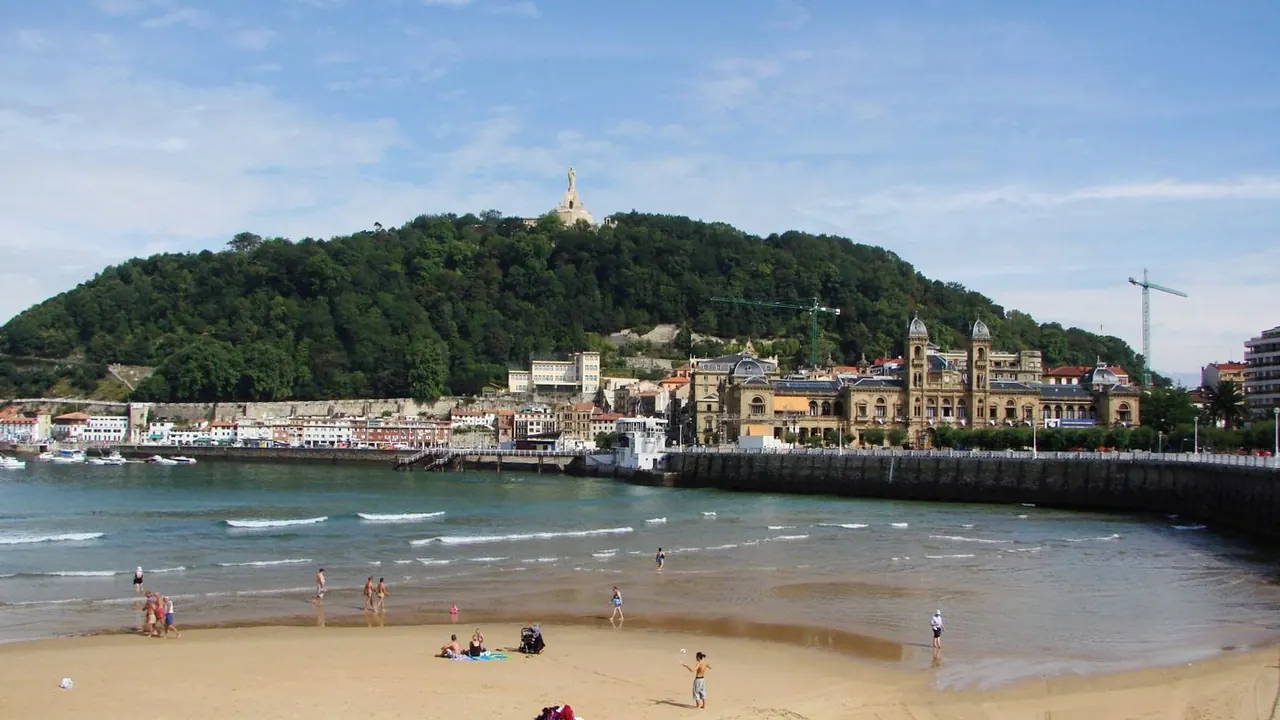
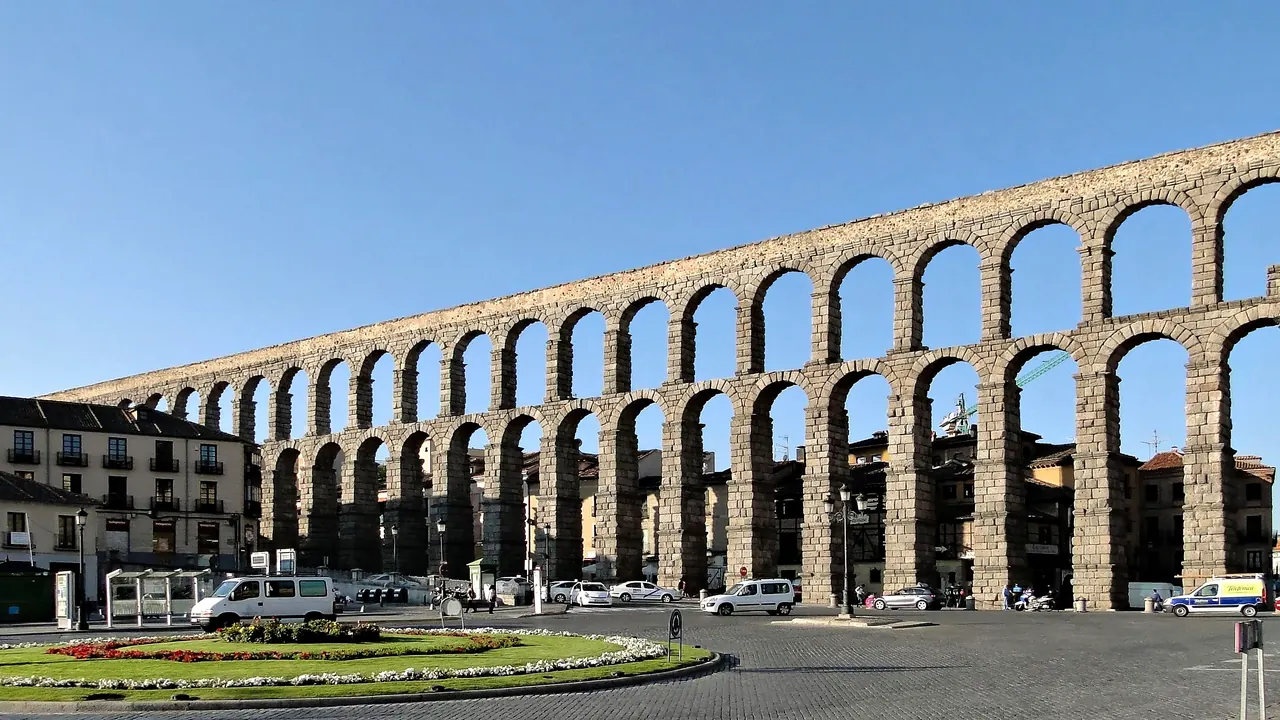
Photos: San Sebastian by Guérin Nicolas, CC BY-SA 3.0, cropped; Segovia by Bernard Gagnon, CC BY-SA 3.0, cropped.
San Sebastian or Segovia?
Our verdict in twelve categories, each scored against the same fixed benchmark cities, and the climate month by month, so you can choose for your trip.
Choose San Sebastian for
- beaches
- food and drink
- families
San Sebastian is the pick for travellers who plan their days around meals and the sea. The pintxo counters of the Parte Vieja and Gros, the fine-dining restaurants in the hills and La Concha's sheltered sand make it a summer seaside trip built around eating. Families and coastal walkers do well here too. Expect to pay for it, and pack for rain.
Choose Segovia for
- prices
- culture and sights
Segovia is for history laid out along a single ridge: the Roman aqueduct, the Romanesque churches, the cathedral and the Alcázar above two rivers. It suits an unhurried stay of looking, a roast lunch and an evening tapas round. It costs noticeably less and keeps Madrid and the Guadarrama mountains close. There is no sea, though, and evenings end early.
Scoreboard
Twelve categories on one fixed scale from 0 to 100. The shaded stretch is the gap between the two.
Your match
Pick a travel style or drag the sliders, and both match scores follow your weighting.
Wins on beaches and food and drink with your weighting.
Wins on prices and culture and sights with your weighting.
What matters to you?
Category by category
What the scores mean for a trip.
Beaches & swimming
San Sebastian has one of the great city beaches in La Concha, a pale, sheltered bay right in the centre. Ondarreta beside it is quieter and suits families, and Zurriola across the river takes the Atlantic surf. The Bay of Biscay keeps the swimming season to July and August.
Segovia sits on the Castilian plateau, a long day's drive from any coast. Summer swimming there means hotel pools or cold reservoirs in the Guadarrama foothills.
Food & drink
Food is San Sebastian's strongest card. An evening means grazing pintxos with txakoli along the bars of the Parte Vieja and Gros, and the markets at La Bretxa and San Martin show off the produce behind them. For a city this small, its fine dining is exceptional, with several of Spain's most celebrated restaurants in the surrounding hills. From January into spring, the cider houses at Astigarraga give another reason to go.
Segovia eats well in a narrower, heavier way. The meal is built around wood-roasted cochinillo and lechazo, judiones beans from La Granja and a tapas round with Ribera del Duero. It makes for a memorable lunch rather than a whole food trip. Neither city offers much beyond its own regional cooking.
Culture & sights
Segovia has the more remarkable sights. There is the Roman aqueduct and the UNESCO-listed old town climbing to the cathedral and the Alcázar. There are Romanesque churches with arcaded porches, the Jewish quarter and the twelve-sided Vera Cruz. The essentials take a day, and a second day lets you see them slowly.
San Sebastian appeals more as a townscape than for its monuments. Its highlights are the late 19th-century streets around Buen Pastor, the Parte Vieja grid, the castle on Monte Urgull, the San Telmo Museum and Chillida's Peine del Viento on the rocks. It is a pleasure to wander, but it has fewer landmarks.
Nightlife
Neither is a clubbing city, but San Sebastian has the longer night. The pintxo crawl keeps the Parte Vieja loud and sociable until late, and a few late bars and clubs in the old town, Gros and along the bay take over afterwards. In summer, and above all during Semana Grande, the city stays out much later.
Segovia's evening is a tapas round off Plaza Mayor, with a few student bars at weekends. On weeknights and in winter the old town goes quiet early, and a real late night means Madrid.
Nature & outdoors
Both have mountains on the doorstep, but of different kinds. San Sebastian's are green coastal hills: the funicular up Monte Igueldo, the cliff path from Monte Ulia to Pasaia and the Jaizkibel walk to Hondarribia. Surfing and paddleboarding in the bay complete the picture, and so does frequent rain.
Segovia looks up at the Sierra de Guadarrama. It has the pine forests of Valsaín, high passes with trails towards Peñalara at 2,428m, snow in winter and the Hoces del Duratón gorge with its griffon vultures. Pick the Basque coast for sea views, and the sierra for higher, drier walking.
Day trips
From San Sebastian the outings run along the Basque coast and over the border into France. Bilbao and the Guggenheim, walled Hondarribia, Getaria, Pamplona and the Rioja Alavesa vineyards are all within easy reach. Saint-Jean-de-Luz, Biarritz and Bayonne are on the French side.
Segovia's reach is royal and Castilian. The palace gardens of La Granja and Riofrío are close by, Madrid is a short fast-train ride away, and Ávila, El Escorial and the walled villages of Pedraza and Sepúlveda are all in range. Around Segovia you need a car more often, while on the Basque side buses and trains do most of the work.
Good for families
San Sebastian is the easier choice with children. It has calm, sheltered beaches in the centre and a flat, car-free promenade. There is an aquarium with a walk-through tunnel, the hands-on Eureka science museum and the old funfair at the top of the Igueldo funicular. Rainy days are the main risk.
Segovia has a real castle on a cliff in the Alcázar, and children love the giant arches of the aqueduct, but there is little else made for them. The steep cobbles are hard going with a pushchair. A day or two works well, with La Granja's gardens giving children room to run.
Getting around
San Sebastian is flat and compact. The old town, the bay, Gros and Zurriola are a short walk apart, and bike lanes run along the waterfront. Euskotren trains run to the French border and towards Bilbao, so a car is rarely needed.
Segovia's sights are also walkable, strung along one ridge, but the streets are steep and cobbled. The high-speed station is about fifteen minutes out by bus, and the villages and mountain trailheads really call for a car.
Shopping & style
San Sebastian gives a browser more to work with, though luxury labels and big department stores are thin. The Centro has Spanish chains and independent boutiques, the Parte Vieja sells espadrilles, berets and linen, and Gros has surf and design shops. The best things to take home come from the markets: txakoli, Idiazabal cheese and tinned anchovies.
In Segovia, shopping is mostly souvenirs along Calle Real, plus some local ceramics, embroidery and boxed ponche or La Granja beans. For anything more, you go to Madrid.
Affordability
Segovia is clearly the cheaper place to stay. Family-run hotels and guesthouses keep room rates moderate, and the tapas bars of the newer town are fair value. Midweek and in winter it is inexpensive. Only the famous roasts by the aqueduct and summer weekends cost noticeably more.
San Sebastian is one of the most expensive cities in Spain to sleep in. Rooms are scarce and climb steeply in summer and festival weeks, and the celebrated restaurants are a serious outlay. Free beaches and walks and cheap buses soften the cost, and going out of season helps most.
Live music & performing arts
San Sebastian has the stronger musical calendar. Jazzaldia comes in July, with free concerts on Zurriola beach, and the Quincena Musical fills August with orchestral music and opera. Moneo's glass cubes at the Kursaal and the ornate Teatro Victoria Eugenia keep a programme going for the rest of the year.
Segovia's highlight is Titirimundi, the puppet festival that fills its squares and courtyards in spring. Summer brings concerts to churches and palace gardens, and Teatro Juan Bravo hosts touring shows. Outside festival time little is on.
Wellness & relaxation
San Sebastian has a real seawater tradition dating from its days as a royal resort. The historic bathing pavilion on La Concha keeps it going as a thalassotherapy spa looking onto the bay, and the calm, orderly pace adds to the effect.
Segovia has no bathing culture and only a few hotel spas. It is restful in a different way: the old town is quiet once the day visitors leave, there are slow lunches and walks along the walls, and the air carries pine from the sierra.
When should you go?
Pick your month. The climate figures are measured averages, not a forecast.
San Sebastian in July
Segovia in July
Daytime high, °C
Rainfall in the month, mm
Where the figures come from
San Sebastian's station stands 252 m above the city centre, so the centre is likely a little warmer than the figures say.
Temperature and rainfall are climate normals, averaged over the years shown. San Sebastian: 1991-2020 normals, San Sebastian / Igueldo (6.1 km from centre). Segovia: 1991-2020 normals, Segovia (0.3 km from centre).
San Sebastian is mild and damp all year. Summer days rarely go much past 23°C, so July and August are comfortable for the beach and for walking the streets. The sea warms to about 22°C in August, and that short stretch is the only time swimming is a real pleasure. Rain falls in every month and is heaviest from October to January. November is the wettest month at around 203mm, and the winter months are grey with little sunshine.
Segovia's year swings much further. July and August reach 30°C with long hours of sun and very little rain, which makes the cobbled streets hot going at midday. Winter days on the high plateau stay near 8°C. The best walking months are June and September, which are warm, bright and among the driest of the year. May and October are milder still but bring the city's heaviest rain, though far less than the Basque coast gets. Segovia is the better choice in spring and autumn, and San Sebastian in high summer.
Which traveller are you?
For a beach and sun trip, San Sebastian is the only real option. La Concha and Ondarreta give calm, sheltered sand in the city centre and Zurriola has surf. Landlocked Segovia offers only pools and chilly mountain reservoirs.
On a culture and arts trip, Segovia has more to see. A Roman aqueduct, a UNESCO-listed old town, a late Gothic cathedral, the Alcázar and many Romanesque churches share one ridge. San Sebastian offers handsome streets and the San Telmo Museum.
On a tight budget, Segovia is far easier. Small family-run hotels are moderately priced and lunch menus in the newer town are fair value. San Sebastian is among Spain's priciest places to sleep, and its famous restaurants are a splurge.
Before you go
| Measure | San Sebastian | Segovia |
|---|---|---|
| Official language | Spanish | Spanish |
| Currency | Euro (EUR) | Euro (EUR) |
| Sockets | CF230 V, 50 Hz | CF230 V, 50 Hz |
| Driving side | Right | Right |
| Time zone | UTC+1, UTC+2 in summer | UTC+1, UTC+2 in summer |
| Emergency number | 112 | 112 |
| Elevation | 6 m | 1,002 m |
| Main airport | San Sebastián Airport (EAS)16 km from centre11 non-stop destinations | Adolfo Suárez Madrid–Barajas Airport (MAD)68 km from centre241 non-stop destinations |
| Public holidays this year | 13 days | 12 days |
By the numbers
| Measure | San Sebastian | Segovia |
|---|---|---|
| City population | 189,866 | 52,375 |
| People per km² | 3,118 | 320 |
| Museums within 10 km | 14 | 11 |
| UNESCO World Heritage sites within 50 km | 3 | 2 |
| Swim season, months above 21 °C | 2 months | - |
Where else could you go?
Every comparison below shares a destination with this one, so you can follow San Sebastian or Segovia somewhere new.
- Biarritzvs San Sebastian
- Madridvs Segovia
- Bilbaovs San Sebastian
- Toledovs Segovia
- Salamancavs Segovia
- Bordeauxvs San Sebastian