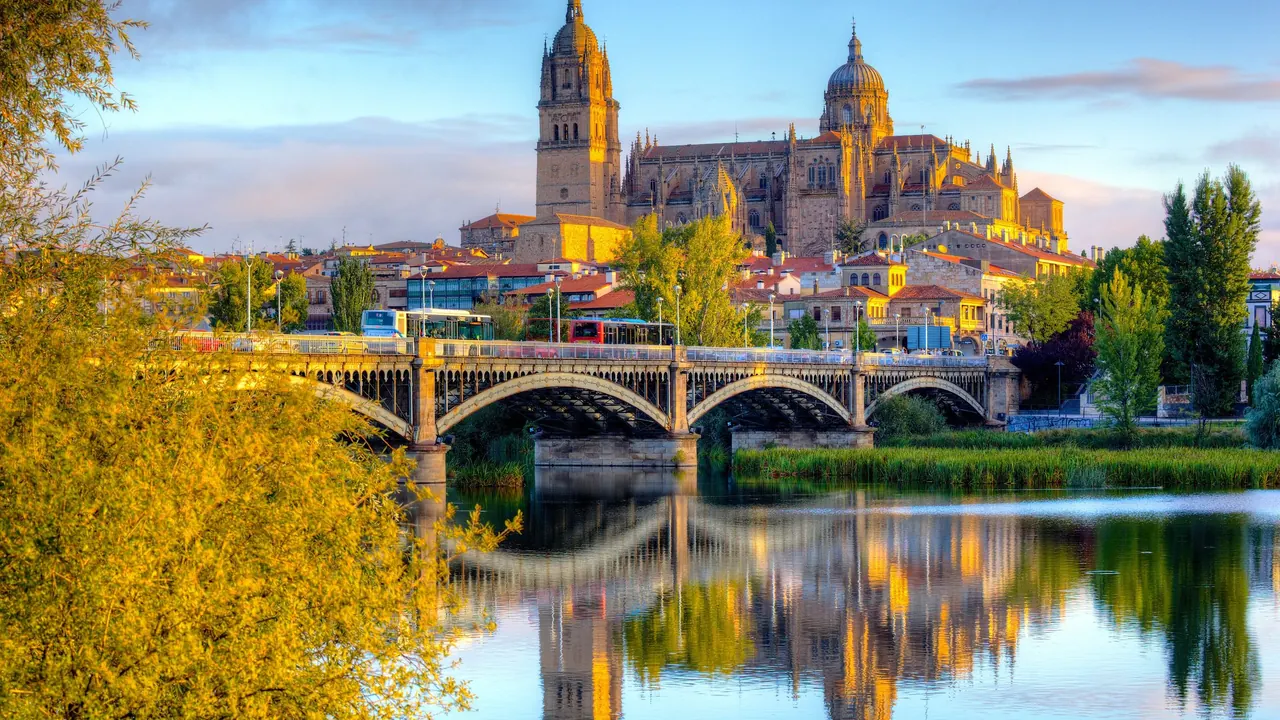
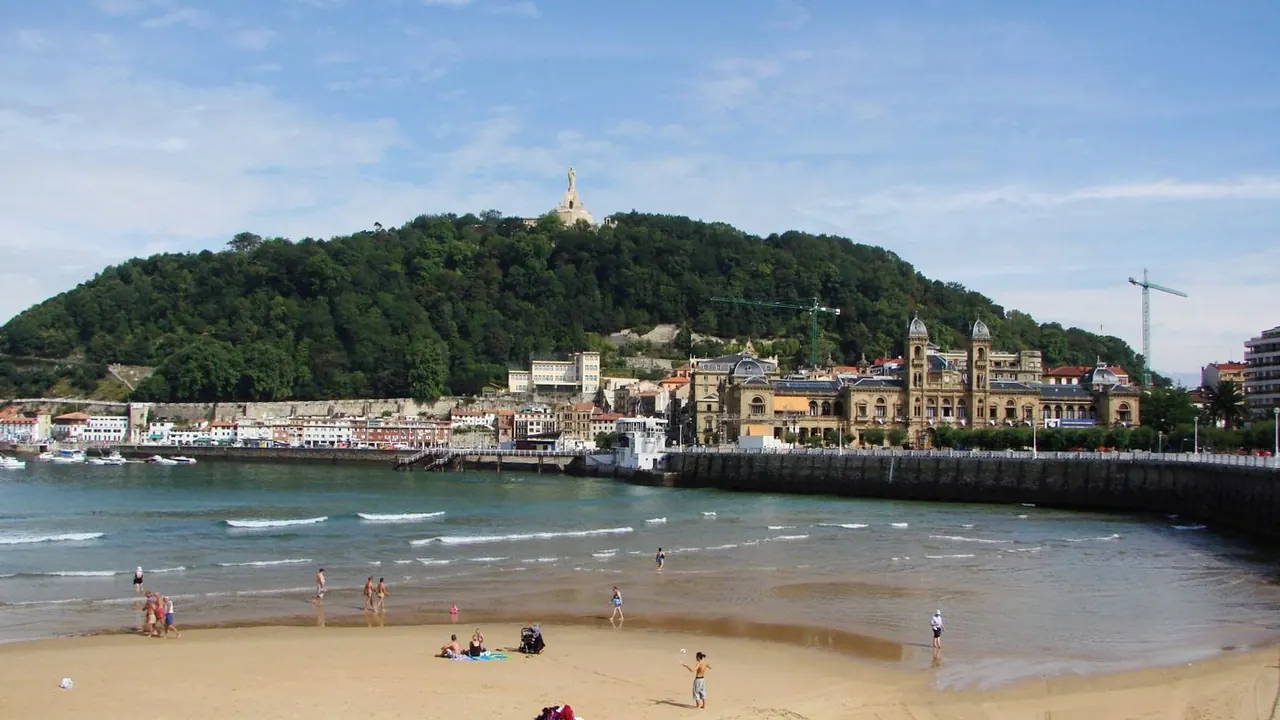
Photos: Salamanca by Jiuguang Wang, CC BY-SA 3.0 ES, cropped; San Sebastian by Guérin Nicolas, CC BY-SA 3.0, cropped.
Salamanca or San Sebastian?
Our verdict in twelve categories, each scored against the same fixed benchmark cities, and the climate month by month, so you can choose for your trip.
Choose Salamanca for
- prices
- culture and sights
- nightlife
Salamanca suits the traveller who wants a historic city to walk and look at, on a modest budget. The golden sandstone old town, the University and the two cathedrals fill two or three days of sightseeing. Student bars keep evenings cheap and late, and with a car you can reach Ávila, Zamora and the mountain villages.
Choose San Sebastian for
- beaches
- food and drink
- families
Choose San Sebastian if eating is the point of the trip, or if you want the sea on your doorstep. The pintxo bars of the Parte Vieja, its well-known restaurants, the sheltered sand of La Concha and the coastal walks over green hills make for a fuller all-round vacation, especially with children. Rooms and restaurants cost much more, though, and rain is never far away.
Scoreboard
Twelve categories on one fixed scale from 0 to 100. The shaded stretch is the gap between the two.
Your match
Pick a travel style or drag the sliders, and both match scores follow your weighting.
Wins on prices and culture and sights with your weighting.
Wins on beaches and food and drink with your weighting.
What matters to you?
Category by category
What the scores mean for a trip.
Beaches & swimming
There is no real contest. Salamanca lies far inland on the Castilian plain. A summer swim there means a municipal pool or a river beach on the Tormes, fine for an afternoon and no more.
San Sebastian has one of the great city beaches in La Concha, a sheltered bay of pale sand a few minutes from the old town. Quieter Ondarreta sits beside it, and Zurriola faces the open sea for surfers. The catch is the Atlantic: the season is really only July and August, and grey days interrupt it.
Food & drink
Salamanca eats heartily but simply. Its table is built on pork and the plain, with Guijuelo ibérico ham, hornazo and roast suckling pig served in generous portions at student-filled counters around the Plaza Mayor, and fish barely features.
San Sebastian is in another league, and many visitors plan their whole trip around its meals. Where Salamanca slices ham, the bars of the Parte Vieja cook small dishes to order from what the Bay of Biscay brings in, such as anchovies and squid. Above the counters there are more top-flight restaurants than you would expect in a city this size. Both kitchens stay firmly regional, so neither is the place for food from elsewhere.
Culture & sights
Salamanca is the better place for sightseeing. The whole old city is a World Heritage Site built of golden sandstone. Within a few streets stand the baroque Plaza Mayor, the Plateresque University façade, the Old and New Cathedrals, the Clerecía and San Esteban, all floodlit after dark. The museums are modest, with Casa Lis the exception.
San Sebastian offers an attractive townscape more than a set of monuments: elegant 19th-century streets, the Parte Vieja rebuilt after 1813, the Miramar Palace and the castle on Monte Urgull. The San Telmo Museum and Chillida's Peine del Viento are its highlights. Two or three days cover either city.
Nightlife
Salamanca has the bigger night out. Tens of thousands of students fill the bars around the Plaza Mayor, Calle Bordadores and Gran Vía from Thursday to Saturday, and the night ends in dance bars and small clubs well past 3am. It is aimed at a young crowd and goes quiet in high summer.
In San Sebastian the evening is a pintxo crawl, sociable and noisy in the Parte Vieja, but there are few places to go once the bars close. The city stays out later in summer and during Semana Grande, which is exactly when Salamanca's students have gone home.
Nature & outdoors
San Sebastian has the landscape on its doorstep. Green hills ring the bay, and Monte Igueldo and Monte Urgull give the classic views. The cliff path from Monte Ulia to Pasaia, and on over Jaizkibel to Hondarribia, is superb coastal walking, with surfing and paddleboarding in the water below.
Around Salamanca the land is the flat, wheat-coloured Meseta, with paths along the Tormes for a stroll. The more rewarding country starts about an hour out and needs a car: the chestnut forests of the Sierra de Francia, the higher Sierra de Béjar and the granite canyon of the Arribes del Duero.
Day trips
Both make good bases, for different kinds of outing. Salamanca is the base for walled and Romanesque Castile. Ávila and Zamora are about an hour away, Ciudad Rodrigo lies towards Portugal, and the villages of La Alberca and Mogarraz are well preserved but awkward to reach without a car.
San Sebastian offers a wider choice that is easier to reach. Bilbao and the Guggenheim, Hondarribia, Pamplona and the French Basque coast at Biarritz and Saint-Jean-de-Luz are all an hour or so away, much of it by bus or train. The Rioja Alavesa vineyards are under two hours away, so a second country and a wine region both fit easily into a week.
Good for families
San Sebastian is the easier choice with children. Calm beaches in the centre, a flat car-free promenade, the aquarium's walk-through tunnel, the hands-on Eureka museum and the funicular up to a small funfair keep them busy for several days. Rain is the main thing that can spoil it.
Salamanca is safe and largely pedestrian, and children enjoy finding the frog and the astronaut carved in the stone. There is no zoo, aquarium or beach, though, and summer afternoons are fiercely hot. It works best as a stop on a longer family trip.
Getting around
You can see either city on foot. Salamanca's sights sit in a compact, mostly pedestrian old town about 20 minutes across. Its cobbles and slopes need care with a pushchair, and getting into the sierras really means hiring a car.
San Sebastian is flatter and has bike lanes along the waterfront. The Euskotren runs to the French border and towards Bilbao, so you can see more of the region without driving.
Shopping & style
Neither is a shopping destination, and in both the best things to take home are edible. Salamanca has high-street chains on Calle Toro and Calle Zamora, ibérico ham and cheese from the Mercado Central, and charro silver filigree jewellery as its one distinctive craft.
San Sebastian has a little more to browse: independent boutiques in the Centro, surf and design shops in Gros, and espadrilles, berets and tinned anchovies in the Parte Vieja.
Affordability
Salamanca costs far less. Students keep bar prices low, a drink often comes with a free tapa, and old-town rooms are moderately priced. Entry to the cathedrals and the university is the main extra cost.
San Sebastian is one of the most expensive places to stay in Spain, especially in summer, and its famous restaurants are a serious splurge. The beaches, walks and buses cost little, and coming outside the summer peak saves the most.
Live music & performing arts
San Sebastian has more to offer, mostly in summer. Jazzaldia takes over July, and the Quincena Musical brings orchestral music and opera in August. Outside the festivals, the Kursaal hosts the Basque National Orchestra and the ornate Teatro Victoria Eugenia stages plays and concerts.
Salamanca relies on the Teatro Liceo, touring productions and the university's choral concerts. Its best-loved music comes from the caped tunas singing under the Plaza Mayor arcades, which is charming street music, not a concert season.
Wellness & relaxation
San Sebastian has the only real bathing institution of the two: the historic pavilion on La Concha, which carries on the old sea-bathing tradition as a thalassotherapy spa looking onto the bay. Promenade strolls add to the calm.
In Salamanca itself there are only hotel spas and small Arab-style baths, with the mineral springs of Ledesma and Baños de Montemayor a drive away. Its restfulness comes from quiet cloisters, siestas and long lunches.
When should you go?
Pick your month. The climate figures are measured averages, not a forecast.
Salamanca in July
San Sebastian in July
Daytime high, °C
Rainfall in the month, mm
Where the figures come from
San Sebastian's station stands 252 m above the city centre, so the centre is likely a little warmer than the figures say.
Temperature and rainfall are climate normals, averaged over the years shown. Salamanca: 1991-2020 normals, Salamanca / Matacan (13.9 km from centre). San Sebastian: 1991-2020 normals, San Sebastian / Igueldo (6.1 km from centre).
Salamanca has a high-plateau climate of extremes. July reaches about 31°C with almost no rain and very long sunny days, so afternoons are too hot for comfortable sightseeing. Winter highs fall to around 9°C, with clear but cold days. The best months for walking the old town are May and June, then September and early October. October brings the most rain, but even then it is modest.
San Sebastian is mild all year and never gets very hot or very cold, but it is wet in every month. November is the wettest, at about 203mm. The beach season is July and August, when the sea reaches about 22°C and the sun is most reliable, though it has fewer sunny hours than Salamanca. Spring and autumn are cooler and good for coastal walks if you pack a waterproof. If you dislike heat, choose San Sebastian in summer. If you dislike rain, Salamanca is the safer bet in almost any month.
Which traveller are you?
For a culture and arts trip, Salamanca is the one to pick, especially if you prefer architecture and history to galleries. Spend two or three slow days there, then add Segovia or Valladolid for a week in Old Castile. In San Sebastian, culture is mostly an extra alongside the eating.
On a trip on a tight budget, Salamanca lets you stay longer for the same money, and eating at the bar counter keeps every evening cheap. In San Sebastian, the pintxo crawl is the city's main pleasure, and it adds up quickly over a long night.
On a family trip with children, San Sebastian can hold a whole week, especially with younger children who want sand and water. On wet days you can take the train along the coast or across into France. Salamanca suits older children who like history, and it is best in spring or autumn.
Before you go
| Measure | Salamanca | San Sebastian |
|---|---|---|
| Official language | Spanish | Spanish |
| Currency | Euro (EUR) | Euro (EUR) |
| Sockets | CF230 V, 50 Hz | CF230 V, 50 Hz |
| Driving side | Right | Right |
| Time zone | UTC+1, UTC+2 in summer | UTC+1, UTC+2 in summer |
| Emergency number | 112 | 112 |
| Elevation | 798 m | 6 m |
| Main airport | Adolfo Suárez Madrid–Barajas Airport (MAD)184 km from centre239 non-stop destinations | San Sebastián Airport (EAS)16 km from centre11 non-stop destinations |
| Public holidays this year | 12 days | 13 days |
By the numbers
| Measure | Salamanca | San Sebastian |
|---|---|---|
| City population | 146,110 | 189,866 |
| People per km² | 3,690 | 3,118 |
| Museums within 10 km | 13 | 14 |
| UNESCO World Heritage sites within 50 km | 1 | 3 |
| Swim season, months above 21 °C | - | 2 months |
Where else could you go?
Every comparison below shares a destination with this one, so you can follow Salamanca or San Sebastian somewhere new.
- Biarritzvs San Sebastian
- Bilbaovs San Sebastian
- Madridvs Salamanca
- Toledovs Salamanca
- Bordeauxvs San Sebastian
- Zaragozavs San Sebastian