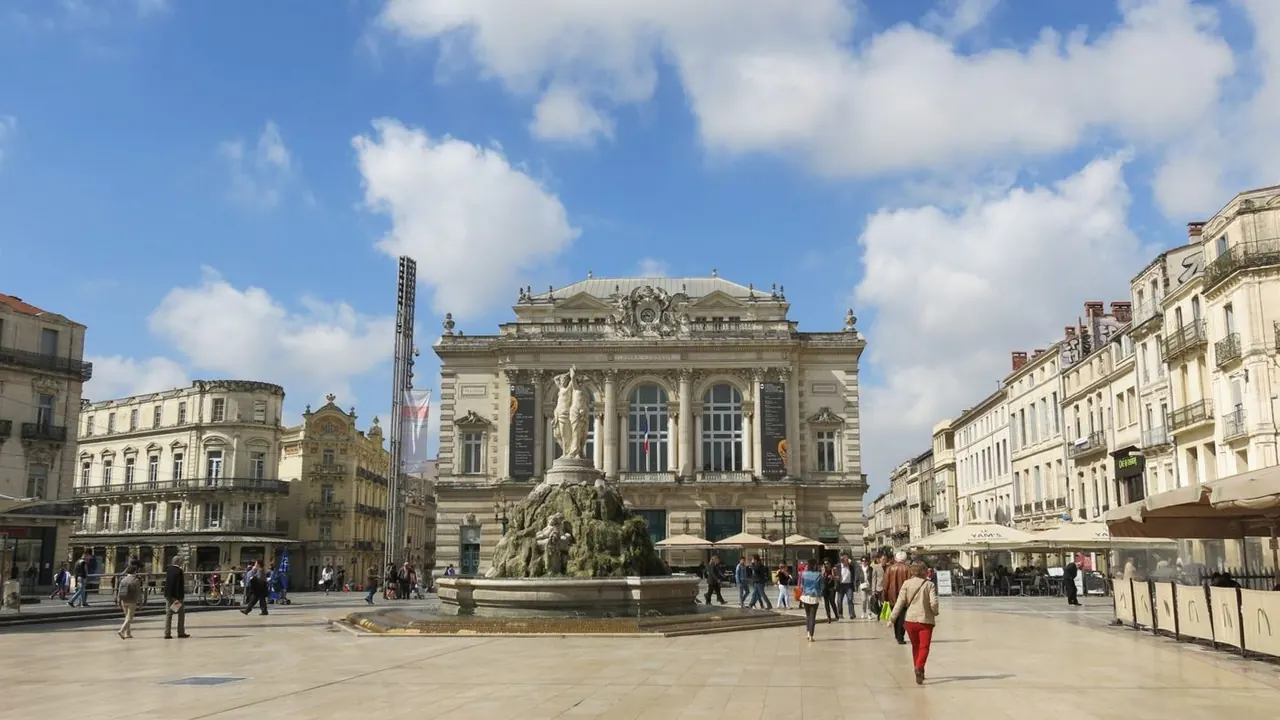
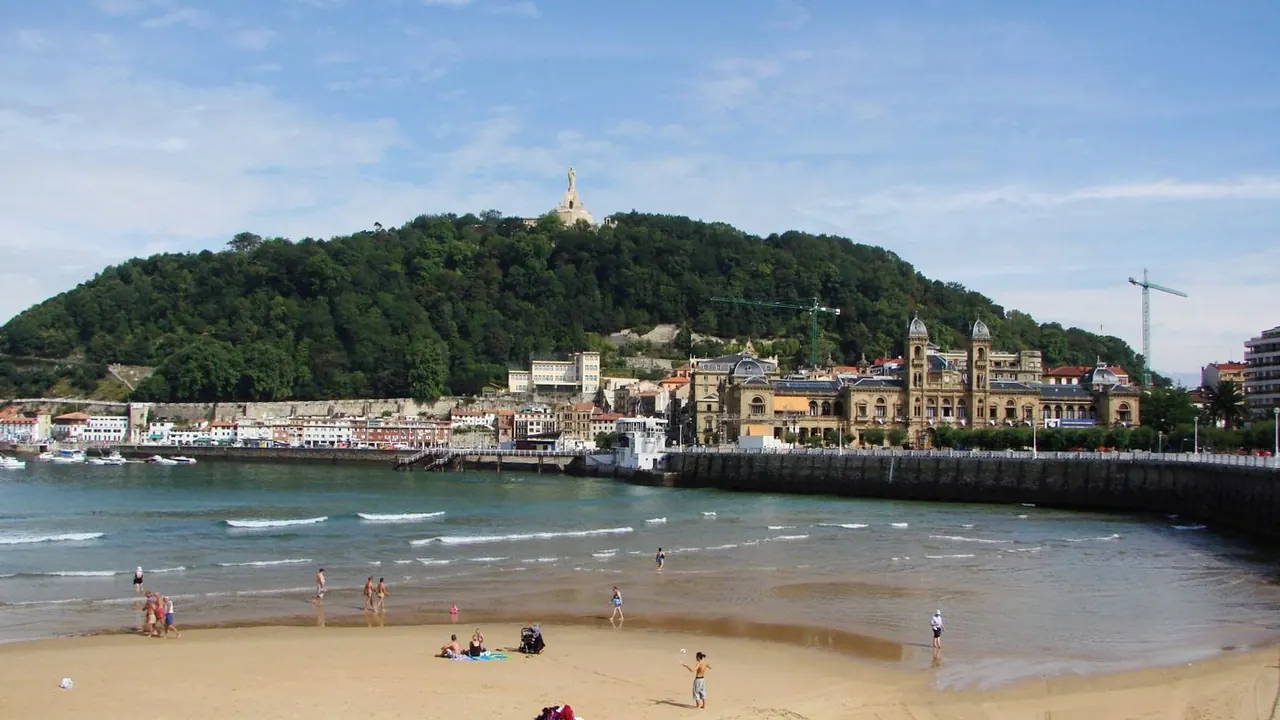
Photos: Montpellier by Peter, CC BY 2.0, cropped; San Sebastian by Guérin Nicolas, CC BY-SA 3.0, cropped.
Montpellier or San Sebastian?
Our verdict in twelve categories, each scored against the same fixed benchmark cities, and the climate month by month, so you can choose for your trip.
Choose Montpellier for
- prices
- live music and the arts
- nightlife
Montpellier suits the traveller who wants a full southern French city on a moderate budget. It has a medieval old town to wander, a first-rate painting collection in the Musée Fabre and a real stage for opera and contemporary dance. Summers are long, hot and sunny, and fast trains reach the Roman monuments of Nîmes, Arles and Avignon. It is livelier after dark and noticeably cheaper to stay in, though the beach is a short trip out of town rather than at your door.
Choose San Sebastian for
- food and drink
- wellness
- getting around
San Sebastian is the place to go if eating is the point of the trip. A pintxo crawl through the Parte Vieja and a fine-dining table in the hills are reason enough to come. The rest is compact and easy: a sheltered sandy bay in the middle of town, a flat promenade to walk end to end, and green coastal hills for walking. Expect to pay more for the room, and to see grey skies and rain even in summer.
Scoreboard
Twelve categories on one fixed scale from 0 to 100. The shaded stretch is the gap between the two.
Your match
Pick a travel style or drag the sliders, and both match scores follow your weighting.
Too close to call, 2 points apart
Wins on prices and live music and the arts with your weighting.
Wins on food and drink and wellness with your weighting.
What matters to you?
Category by category
What the scores mean for a trip.
Beaches & swimming
The two are about equal for beaches, but the experience is very different. Montpellier's coast is a trip out of town, about 11km by tram and bus. It is a long, flat strip of fine sand running from Palavas past La Grande-Motte to the wild dunes of l'Espiguette, with shallow, warm water and the steadier Mediterranean summer.
San Sebastian has its beach right in the city. La Concha is a sheltered shell of sand you can walk to from your hotel, Ondarreta is quieter and Zurriola has Atlantic surf. The trade-off is the Bay of Biscay climate, with a short season and grey days that can rule out swimming even in July.
Food & drink
For food, San Sebastian is in a different class. The evening is spent going from counter to counter in the Parte Vieja and Gros for pintxos and txakoli. Above that sits a cluster of famous fine-dining restaurants, and in winter the cider houses of Astigarraga open. The only weakness is that almost everything on offer is Basque.
Montpellier eats well rather than memorably. Its strengths are Languedoc wine, oysters from the Thau lagoon, tielle from Sète and good bistros. The best of it is in the markets of the Halles Castellane and under the Arceaux aqueduct, but it has nothing to match the depth found in San Sebastian.
Culture & sights
Montpellier has more to see. The Musée Fabre has a serious collection of European painting that San Sebastian cannot match. Around it are the car-free Écusson with its courtyard mansions, the Peyrou terrace and aqueduct, the oldest botanical garden in France and Bofill's neoclassical Antigone district.
San Sebastian is better enjoyed as a townscape than as a list of sights. It offers the belle époque streets around Buen Pastor, the Parte Vieja below Monte Urgull and the San Telmo Museum on Basque society. Its best-loved work of art is Chillida's Peine del Viento, set into the rocks by the sea.
Nightlife
Montpellier keeps going later. One of France's largest student populations fills the bars around Place Jean-Jaurès on weeknights as well as weekends. After closing time the crowd takes taxis to the clubs out towards Lattes and the coast.
San Sebastian's best nights are early ones. The pintxo bars are full and sociable from early evening, but after that only a few late bars and clubs remain, except during the August Semana Grande. The difference narrows in summer, when Montpellier's centre empties as students leave.
Nature & outdoors
Montpellier's outdoors is dry and southern, while San Sebastian's is green and Atlantic. South of Montpellier, flamingos and herons wade in the shallow lagoons behind the coast, and the Camargue is about an hour away. To the north, the garrigue climbs through vineyards to the summit walk on Pic Saint-Loup. The Hérault gorges near Saint-Guilhem-le-Désert are good for canoeing, and the windy coast suits kitesurfers. Because summers are hot, spring and autumn are the seasons for walking.
San Sebastian's hills run straight down to the sea. The coastal path leads from Monte Ulia through woods to Pasaia, then over Jaizkibel to Hondarribia past sandstone cliffs, and the Aiako Harria park is within an hour inland. Zurriola has surf, and the bay suits kayaks and paddleboards. The hills are green because it rains in every season, so pack a waterproof whatever the month.
Day trips
Montpellier's day trips take you into Roman and papal Provence, and San Sebastian's take you across a border into the French Basque Country. Montpellier has a slight edge in the sheer weight of history. Trains reach Nîmes, with its arena and temple, in about half an hour, and Arles, Avignon and walled Carcassonne are easy rail trips. The Pont du Gard is a short drive beyond Nîmes. Closer in are Sète, Aigues-Mortes and Saint-Guilhem-le-Désert, though the smaller villages are far easier with a car.
From San Sebastian, Bilbao and the Guggenheim lie to the west, and Biarritz, Bayonne and Saint-Jean-de-Luz are within an hour to the east. The fishing towns of Hondarribia and Getaria are short hops, and Pamplona is about an hour by road. The Rioja Alavesa vineyards make a longer outing for wine lovers.
Good for families
Both are easy with children. The main difference is where the beach is. In San Sebastian, calm La Concha and Ondarreta are right in town beside a flat, car-free promenade, and there are the harbour aquarium, the hands-on Eureka museum and the funfair at the top of the Igueldo funicular. Rainy spells are the catch.
Montpellier has warmer, gently shelving sea and drier weather, but reaching the coast takes a tram and a bus. In town there are the Lunaret zoo in its wooded park and the aquarium and planetarium side by side at Odysseum, which make good indoor escapes from the midsummer heat.
Getting around
San Sebastian is slightly easier to get around. It is small and flat, with the old town, the bay and Gros strung along the river and promenade, so walking covers nearly everything. The Euskotren lines run to the French border and towards Bilbao.
Montpellier's car-free centre is compact too, but it sits on a low hill with uneven paving. You will use the trams more to reach Antigone, Odysseum and the station, and getting to the beach is slow. For the gorges and the Camargue, a hire car helps.
Shopping & style
Montpellier has a little more variety. There are boutiques and bookshops in the Écusson lanes, the large Polygone mall next to the Comédie and more brands at Odysseum. San Sebastian has fashion chains in the Centro and surf shops in Gros, plus a stronger line in local goods such as espadrilles, berets and tinned anchovies. In both cities the best souvenirs are edible: Languedoc wine and olive oil in one, txakoli and Idiazabal cheese in the other.
Affordability
Montpellier is clearly the cheaper city. Rooms in the centre are moderately priced for most of the year, and the student crowd keeps cheap counters and bars plentiful. Costs only climb in July and August, especially along the coast.
San Sebastian is among the most expensive places to stay in Spain. Rooms are scarce and summer prices match the big capitals, and a pintxo crawl adds up quickly over an evening. The free beaches and walks help, but going outside the peak season saves the most.
Live music & performing arts
Montpellier has the deeper programme. The horseshoe Opéra Comédie and the Opéra Berlioz host opera, ballet and the national orchestra through the season, and contemporary dance is a real speciality, led by Montpellier Danse. The Radio France festival adds free classical and jazz concerts each summer.
San Sebastian's musical reputation rests on two summer events: Jazzaldia in July, with free concerts on Zurriola beach, and the Quincena Musical in August. Outside those weeks the Kursaal and the Victoria Eugenia theatre offer a good but modest season.
Wellness & relaxation
San Sebastian is the more restful stay. It has a real seaside spa tradition: the old bathing pavilion on La Concha offers seawater pools and treatments looking over the bay. The small, orderly city and the evening walk along the promenade add to the calm.
Montpellier's lively, student-filled centre is less soothing. Inside the city wellness means hotel spas. For thermal water you have to go half an hour to Balaruc-les-Bains on the Thau lagoon.
When should you go?
Pick your month. The climate figures are measured averages, not a forecast.
Montpellier in July
San Sebastian in July
Daytime high, °C
Rainfall in the month, mm
Where the figures come from
San Sebastian's station stands 252 m above the city centre, so the centre is likely a little warmer than the figures say.
Temperature and rainfall are climate normals, averaged over the years shown. Montpellier: 1991-2020 normals, Montpellier (7.8 km from centre). San Sebastian: 1991-2020 normals, San Sebastian / Igueldo (6.1 km from centre).
Montpellier has a true Mediterranean summer. From June to August it is hot and dry, with highs around 30°C in July and much more sunshine than the Basque coast. That is good for the beach but tiring in the stone streets at midday. May and late September are the most comfortable months for sightseeing. The rain arrives in autumn, and October is the wettest month at about 93mm. Winters are cool but often bright.
San Sebastian never gets truly hot. August highs reach only about 23°C, which makes summer pleasant for walking the city, though the beach days are fewer and less reliable. Rain falls in every month and the late autumn is very wet, with November near 203mm. In both places the sea is at its warmest in August at around 22°C. The sunnier, more dependable beach weather is in Montpellier, while San Sebastian is the milder choice in the height of summer.
Which traveller are you?
For a culture and arts trip, Montpellier is the stronger choice. It has the Musée Fabre and the medieval lanes of the Écusson, and its two opera houses share a season with the national orchestra. Its summer dance festival is among the most respected in Europe.
On a trip on a tight budget, go to Montpellier. Hotel rooms cost much less than in San Sebastian, where rooms are scarce and expensive. Montpellier's large student crowd also keeps plenty of cheap places to eat and drink, and the market halls help a budget go further.
For a food and nightlife trip built around eating, San Sebastian is the clear pick. You can spend whole evenings on pintxos and txakoli, and some of Spain's most celebrated restaurants are nearby. Anyone who wants to stay out into the small hours will find more of that in Montpellier.
Before you go
| Measure | Montpellier | San Sebastian |
|---|---|---|
| Official language | French | Spanish |
| Currency | Euro (EUR) | Euro (EUR) |
| Sockets | CE230 V, 50 Hz | CF230 V, 50 Hz |
| Driving side | Right | Right |
| Time zone | UTC+1, UTC+2 in summer | UTC+1, UTC+2 in summer |
| Emergency number | 112 | 112 |
| Elevation | 7 m | 6 m |
| Main airport | Montpellier-Méditerranée Airport (MPL)8 km from centre41 non-stop destinations | San Sebastián Airport (EAS)16 km from centre11 non-stop destinations |
| Public holidays this year | 11 days | 13 days |
By the numbers
| Measure | Montpellier | San Sebastian |
|---|---|---|
| City population | 310,240 | 189,866 |
| People per km² | 5,452 | 3,118 |
| Museums within 10 km | 14 | 14 |
| UNESCO World Heritage sites within 50 km | 2 | 3 |
| Swim season, months above 21 °C | 2 months | 2 months |
Where else could you go?
Every comparison below shares a destination with this one, so you can follow Montpellier or San Sebastian somewhere new.