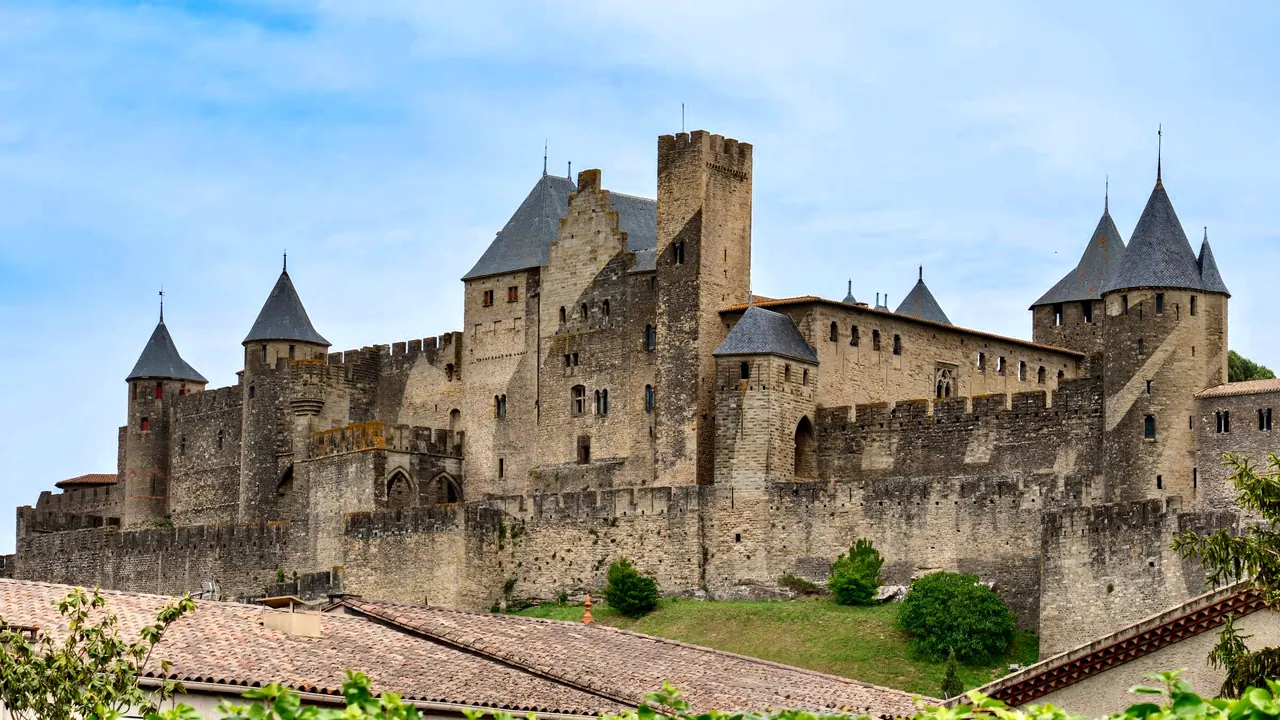
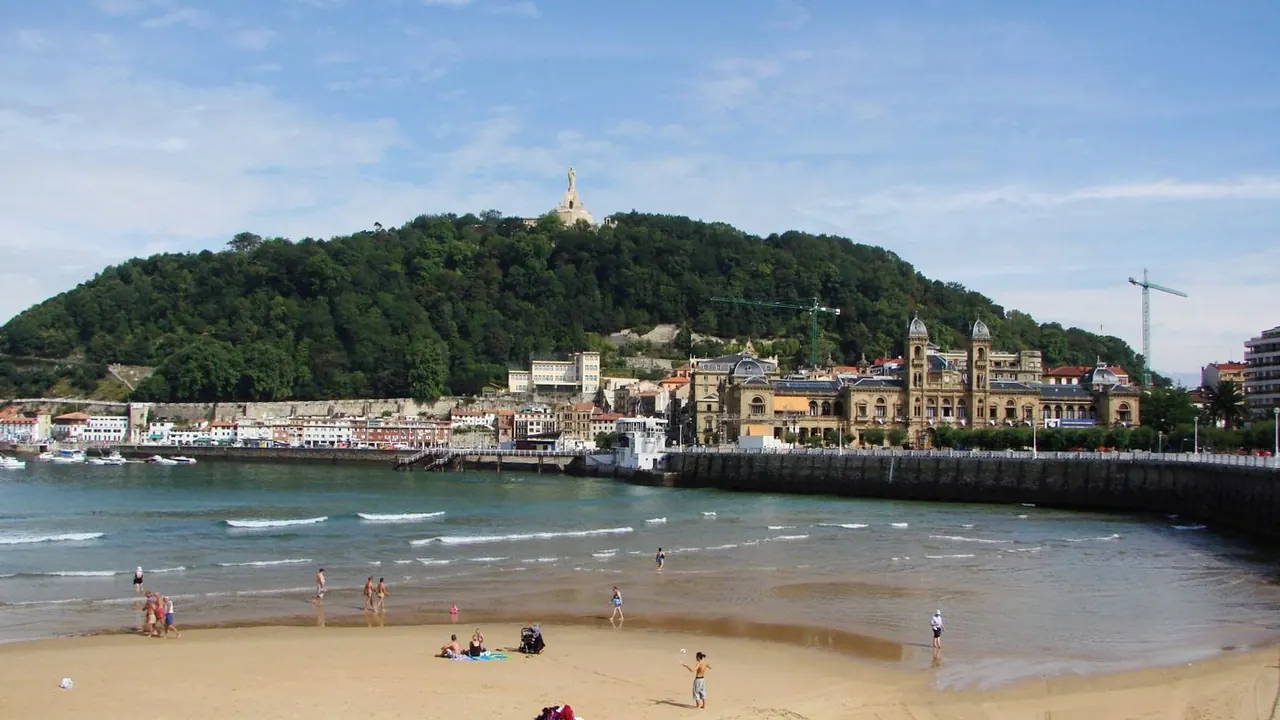
Photos: Carcassonne by Susanne Jutzeler, suju-foto, Pexels License; San Sebastian by Guérin Nicolas, CC BY-SA 3.0, cropped.
Carcassonne or San Sebastian?
Our verdict in twelve categories, each scored against the same fixed benchmark cities, and the climate month by month, so you can choose for your trip.
Choose Carcassonne for
- prices
- culture and sights
Carcassonne suits a traveller who wants history at the centre of the trip. The walled Cité, the Cathar castles on their limestone ridges and a run of wine villages fill the days, the summers are dry and sunny, and the bill is lower than on the Basque coast. It works best for a few days with a car, for people happy with quiet evenings.
Choose San Sebastian for
- food and drink
- getting around
- beaches
For eating, swimming and walking without a car, San Sebastian is the pick. The pintxo bars of the Parte Vieja, a sheltered beach in the middle of town and cliff paths over green headlands keep every day full, and the evenings run late. In return, expect more rain and higher hotel costs.
Scoreboard
Twelve categories on one fixed scale from 0 to 100. The shaded stretch is the gap between the two.
Your match
Pick a travel style or drag the sliders, and both match scores follow your weighting.
Wins on prices and culture and sights with your weighting.
Wins on food and drink and getting around with your weighting.
What matters to you?
Category by category
What the scores mean for a trip.
Beaches & swimming
Carcassonne is inland. Swimming there means the Lac de la Cavayère, a reservoir with lifeguards just east of the Cité, or a drive of about an hour to the long sandy beaches at Gruissan and Narbonne-Plage, where the tramontane wind can make the sea choppy.
San Sebastian has the sea in the middle of town. La Concha's sheltered bay and the quieter Ondarreta are a short walk from anywhere central, and Zurriola takes the Atlantic surf. The Biscay water is a little cooler and the season short, but for swimming every day there is no contest.
Food & drink
Each town has a cooking style that defines it, but the depth is very different. In Carcassonne that means cassoulet and good local wines from Corbières, Minervois and Limoux. The best places to eat them are in the Bastide around Place Carnot, not at the set menus inside the Cité walls.
In San Sebastian, food is a reason to travel in itself. The pintxo counters of the Parte Vieja and Gros, the markets at La Bretxa and San Martin, the celebrated restaurants in the hills and, in season, the Astigarraga cider houses all go much further, though both towns stay firmly regional in what they cook.
Culture & sights
Carcassonne has the bigger single sight. La Cité, with its double walls, fifty-two towers, the Château Comtal and the stained glass of Saint-Nazaire, is a landmark on a European scale, and the arcaded Bastide and the Canal du Midi add more below the hill.
San Sebastian's appeal is the city as a whole: the late nineteenth-century streets around the Buen Pastor cathedral, the Parte Vieja rebuilt after 1813, the San Telmo Museum and Chillida's Peine del Viento on the rocks. Neither town has much in the way of large museums.
Nightlife
Carcassonne goes quiet once the day visitors leave. An evening there means a walk on the floodlit walls, a glass on a terrace or the bars around Place Carnot on a summer weekend. Anyone wanting more drives to Toulouse or Montpellier.
San Sebastian has a proper evening, built around going from one pintxo bar to the next, and the streets stay noisy until late at weekends. Late bars and a few clubs follow, and in August people stay out much later. It is not a clubbing city, but it has far more going on after dark.
Nature & outdoors
Carcassonne's countryside is dry and southern. It has garrigue and vineyards in the Corbières, beech forest in the Montagne Noire, gorges and summer rafting in the upper Aude, and the flat, shaded Canal du Midi towpath for cycling. Almost all of it beyond the canal needs a car.
San Sebastian's walks start at the edge of town. The cliff path from Monte Ulia to Pasaia and on over Jaizkibel to Hondarribia, the views from Igueldo and Urgull, and surfing and paddleboarding in the bay make it the stronger choice outdoors. The green hills come with frequent rain.
Day trips
Both towns are excellent bases, and what differs is the kind of day out. From Carcassonne you go to castles and villages: Peyrepertuse and Quéribus on their ridges, Lagrasse, Minerve and the wine estates. Nearly all of these need a car, though Toulouse and Narbonne are easy by train.
From San Sebastian you go to towns and coastline, many of them by bus or train: Bilbao and the Guggenheim, Hondarribia, Biarritz and Saint-Jean-de-Luz across the border, and the Rioja Alavesa for wine.
Good for families
Children love Carcassonne's Cité, with its drawbridges, ramparts and summer jousting, and the lake beach and the animal park with kangaroos fill another day. But pushchairs struggle on the steep cobbles, and the summer heat wears out small walkers.
San Sebastian is the easier base with children. It has calm beaches in town, a flat promenade free of cars, the aquarium, the Eureka science museum and the old funfair at the top of the Igueldo funicular. Runs of rainy days are its weak point.
Getting around
On foot, Carcassonne is really two places: the flat Bastide below and the Cité about twenty-five minutes' walk up the hill. Beyond town you need a car or a tour.
San Sebastian is flatter and more connected. The old town, the bay, Gros and Zurriola sit close together, bike lanes run along the seafront, and Euskotren trains and coaches reach the French border and Bilbao without any driving.
Shopping & style
Neither town is a shopping destination. Carcassonne has souvenir stalls in the Cité and a provincial high street, and its best buys are wine, blanquette and tinned cassoulet. San Sebastian has more to browse, with independent boutiques in the Centro, espadrilles and berets in the Parte Vieja and surf and design shops in Gros, though big department stores are scarce.
Affordability
Carcassonne is the cheaper stay by some way, especially in spring and autumn, when rooms in the Bastide and along the canal are easy to find. The costs to watch are the premium for sleeping or eating inside the Cité and the car hire most visitors need.
In San Sebastian, hotel rooms in summer and festival weeks can cost as much as in Europe's big capitals, and the famous restaurants are a serious outlay. The free beaches and walks and the cheap buses help, but the overall bill is much higher.
Live music & performing arts
Carcassonne's stage life is concentrated in July, when the Festival de Carcassonne puts concerts, theatre and dance on the open-air stage inside the walls. On Bastille Day there are fireworks over the ramparts. The rest of the year is a modest programme at the municipal theatre.
San Sebastian has more, over a longer season. Jazzaldia comes in July and the Quincena Musical brings orchestral music and opera in August. The rest of the year, the Kursaal and the Teatro Victoria Eugenia host the Basque National Orchestra and touring shows.
Wellness & relaxation
Carcassonne's calm comes from its pace outside high summer: slow lunches and walks along the canal. Its only spa waters are in small thermal villages such as Rennes-les-Bains, within an hour's drive. San Sebastian has a real seaside bathing tradition, kept alive by the thalassotherapy spa in the old bathing pavilion on La Concha, and its orderly days spent strolling the promenade are restful.
When should you go?
Pick your month. The climate figures are measured averages, not a forecast.
Carcassonne in July
San Sebastian in July
Daytime high, °C
Rainfall in the month, mm
Where the figures come from
Carcassonne has no rain gauge within 25 km of the centre, so its rainfall comes from a gridded climate dataset read at the city rather than from a gauge further away.
Carcassonne's sunshine is measured 68 km from the centre, at Perpignan.
San Sebastian's station stands 252 m above the city centre, so the centre is likely a little warmer than the figures say.
Temperature and rainfall are climate normals, averaged over the years shown. Carcassonne: 1999-2020 (sunshine 1991-2020, rainfall 1991-2020) normals, Carcassonne (2.8 km from centre). San Sebastian: 1991-2020 normals, San Sebastian / Igueldo (6.1 km from centre).
Carcassonne has a proper southern summer. July and August reach about 29°C with little rain, July bringing only about 22mm. That is ideal for the lake and the Mediterranean coast, but it makes midday on the ramparts hard going. May, June and September are the best months for walking the Cité and the hills, warm and sunny without the peak heat. October and November are the wettest stretch, and winter is cool but rarely harsh.
San Sebastian is milder and much wetter all year. Summer peaks at around 23°C in August, when the sea reaches about 22°C and La Concha is at its best. Rain falls in every month, though, and is heaviest in November at about 203mm. Spring and early autumn are pleasant for walking if you pack a raincoat, and in every season the city gets noticeably less sunshine than Carcassonne.
Which traveller are you?
On a beach and sun trip, San Sebastian is the clear choice. La Concha and Ondarreta lie right in town with calm water, and Zurriola adds surf. Carcassonne gets more sun, but it has only a reservoir nearby and the sea an hour's drive away.
For a food and nightlife trip, San Sebastian wins easily. Evenings spent moving between pintxo counters in the Parte Vieja and Gros, with txakoli poured from height, outclass Carcassonne's cassoulet and early nights, and the streets stay sociable far later.
On a trip on a tight budget, Carcassonne makes the money go further. It is priced like a provincial French town, it is small enough to walk everywhere and its wines cost little. San Sebastian's hotels are among the dearest in Spain, and a long pintxo crawl soon adds up.
Before you go
| Measure | Carcassonne | San Sebastian |
|---|---|---|
| Official language | French | Spanish |
| Currency | Euro (EUR) | Euro (EUR) |
| Sockets | CE230 V, 50 Hz | CF230 V, 50 Hz |
| Driving side | Right | Right |
| Time zone | UTC+1, UTC+2 in summer | UTC+1, UTC+2 in summer |
| Emergency number | 112 | 112 |
| Elevation | 81 m | 6 m |
| Main airport | Carcassonne Salvaza Airport (CCF)4 km from centre10 non-stop destinations | San Sebastián Airport (EAS)16 km from centre11 non-stop destinations |
| Public holidays this year | 11 days | 13 days |
By the numbers
| Measure | Carcassonne | San Sebastian |
|---|---|---|
| City population | 46,080 | 189,866 |
| People per km² | 708 | 3,118 |
| Museums within 10 km | 6 | 14 |
| UNESCO World Heritage sites within 50 km | 2 | 3 |
| Swim season, months above 21 °C | - | 2 months |
Where else could you go?
Every comparison below shares a destination with this one, so you can follow Carcassonne or San Sebastian somewhere new.
- Biarritzvs San Sebastian
- Bilbaovs San Sebastian
- Toulousevs Carcassonne
- Montpelliervs Carcassonne
- Gironavs Carcassonne
- Bordeauxvs San Sebastian