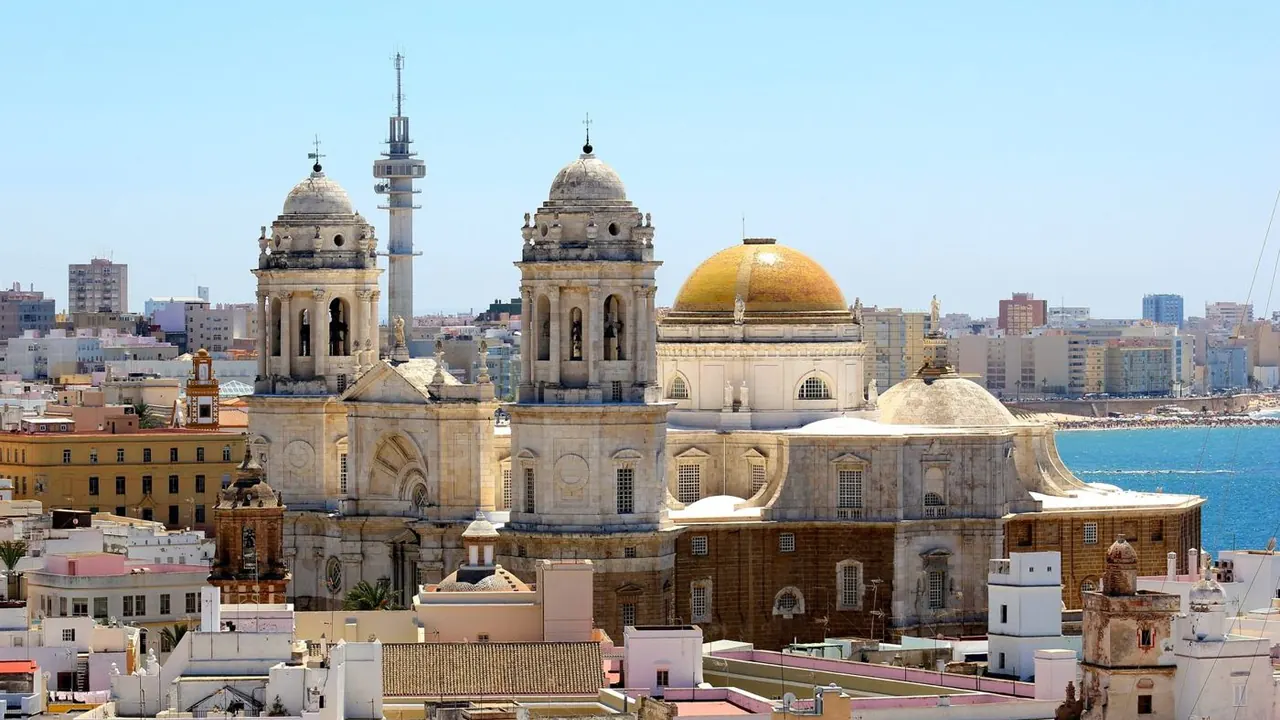
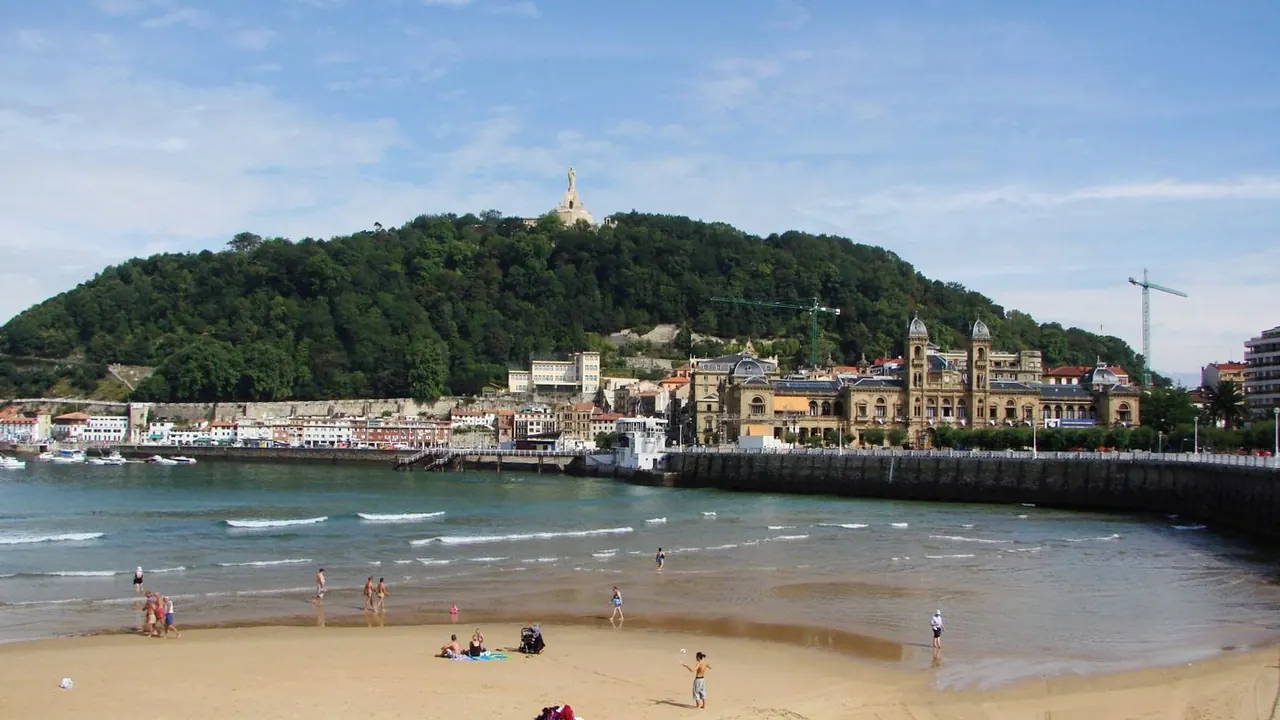
Photos: Cadiz by Bronch, CC BY-SA 3.0 ES, cropped; San Sebastian by Guérin Nicolas, CC BY-SA 3.0, cropped.
Cadiz or San Sebastian?
Our verdict in twelve categories, each scored against the same fixed benchmark cities, and the climate month by month, so you can choose for your trip.
Choose Cadiz for
- prices
- beaches
- culture and sights
Cadiz suits travellers who want a proper sun-and-sea vacation with history on the side and a budget that stretches further. The summers are long and dry, the beaches run from a little cove in the old town to the empty strands of the Costa de la Luz, and the Phoenician and Atlantic-trade past gives a few days of sightseeing. Flamenco in the peñas and a February Carnival add something San Sebastian has no equivalent for.
Choose San Sebastian for
- food and drink
- getting around
- wellness
San Sebastian is the choice for anyone who travels to eat. The pintxo bars of the Parte Vieja and Gros and the celebrated restaurants in the hills make it one of Europe's great food cities. It is also easier on foot, greener and better stocked for children on a rainy day. The trade-off is cost and weather: rooms are expensive, and rain comes in every month.
Scoreboard
Twelve categories on one fixed scale from 0 to 100. The shaded stretch is the gap between the two.
Your match
Pick a travel style or drag the sliders, and both match scores follow your weighting.
Too close to call, level with your weighting
Wins on prices and beaches with your weighting.
Wins on food and drink and getting around with your weighting.
What matters to you?
Category by category
What the scores mean for a trip.
Beaches & swimming
Cadiz is the stronger beach city. It is surrounded by the sea, and in town you can choose between the sheltered cove of La Caleta and the long golden sand of Playa Victoria. Within an hour you reach the empty strands of El Palmar, Zahara and Bolonia, and the swimming season runs from June into October. The levante wind is the one drawback, as it can whip sand across the beaches for days.
San Sebastian has La Concha, a calm, beautiful bay right in the centre, along with Ondarreta for families and Zurriola for surfers. On the Bay of Biscay, though, good beach days are mostly limited to July and August, and rain can interrupt even those.
Food & drink
San Sebastian is well ahead here, and for many visitors its food is the reason to go. You spend the evening moving between pintxo counters in the Parte Vieja and Gros, the La Bretxa market supplies the bars, and some of Spain's most celebrated restaurants are in the surrounding hills. In late winter the cider houses at Astigarraga are a further draw.
Cadiz eats very well, but its range is narrower: fried fish from the freidurías, tortillitas de camarones, almadraba tuna in the La Viña bars, and manzanilla to drink with it. It is excellent for seafood and tapas, but there are few ambitious restaurants to book.
Culture & sights
Cadiz has more history to see. There are Phoenician sarcophagi in the Museo de Cádiz, a Roman theatre in the Barrio del Pópulo, the gold-domed cathedral with its bell tower, and the oratory where the 1812 constitution was signed. All of this sits in an old town of watchtowers built on the trade with the Americas.
San Sebastian is better enjoyed as a townscape than as a list of sights: the Belle Époque streets, the Parte Vieja, the San Telmo Museum and Chillida's Peine del Viento on the rocks. Each city fills two or three days, but Cadiz goes back much further.
Nightlife
Nights out are similar in both cities: they centre on bars, they start with food, and they run thin on clubs. In Cadiz the life is in the tapas bars of La Viña and on the summer terraces along Playa Victoria, and February's Carnival turns the whole city into an all-night street party.
San Sebastian's evenings start earlier, with crowds moving between pintxo bars in the Parte Vieja, and they peak during August's Semana Grande, when there are fireworks over the bay. Outside summer and weekends, both cities are quiet.
Nature & outdoors
San Sebastian has more to offer outdoors, and it starts from the doorstep. Monte Igueldo, Urgull and Ulia surround the bay, a cliff path leads to Pasaia and over Jaizkibel to Hondarribia, and the surf at Zurriola is in town. The landscape stays green because it rains so much.
Cadiz itself is flat, but it is close to wildlife and wind. The salt pans of the Bahía de Cádiz are full of flamingos and spoonbills, and Tarifa offers kitesurfing and whale-watching in the Strait. For mountain walking you go to the Sierra de Grazalema, about two hours inland.
Day trips
Both cities make excellent bases for day trips, but they open onto very different regions. From Cadiz the trips are Andalusian: sherry bodegas in Jerez and Sanlúcar, Seville by train, the hilltop white towns of Vejer and Arcos, and the Roman ruins at Bolonia.
From San Sebastian you can cross a border. Biarritz, Bayonne and Saint-Jean-de-Luz on the French Basque coast are within an hour, the Guggenheim in Bilbao is a short bus ride away, and walled Hondarribia, Pamplona and the Rioja Alavesa vineyards are all easy outings.
Good for families
San Sebastian is the easier choice with children, mainly because it has more to do when the beach is out of the question. There is a harbour aquarium with a walk-through tunnel, the hands-on Eureka museum, and the funicular up to the old funfair on Igueldo, and La Concha and Ondarreta are calm for small swimmers.
Cadiz has the more dependable beach weather and a flat, car-light old town with shady parks, but almost nothing is built for children. Midday heat and the levante also need planning around.
Getting around
Both centres are flat and easy to walk, but San Sebastian links its districts more smoothly. The old town, La Concha, Gros and Zurriola are minutes apart along the river and the promenade, with bike lanes by the water. The Euskotren goes to the French border and towards Bilbao, so you rarely need a car.
In Cadiz the old town is just as walkable, and trains and the bay catamaran cover Jerez, Seville and El Puerto. The Costa de la Luz beaches and the white villages, though, really need a hire car.
Shopping & style
Neither city is a shopping destination, and the difference is in what you bring home. In Cadiz that means fans, ceramics, flamenco fashion and sherry from around Calle Ancha and the Mercado Central, and for anything bigger you go to Seville.
San Sebastian has a few more independent boutiques in the Centro and surf and design shops in Gros. Its best buys are espadrilles, berets, Idiazabal cheese and tinned anchovies from the markets.
Affordability
Cadiz is much cheaper. Fried fish, tapas, sherry, local trains and the bay ferry all cost little, and rooms only become expensive in the old town during high summer and Carnival.
San Sebastian is one of the most expensive places in Spain to stay, with few rooms to meet demand and summer prices that match major European capitals. A pintxo crawl can be reasonable if you choose carefully, and the walks and beaches are free, but most budgets will feel the difference.
Live music & performing arts
Cadiz has the more distinctive live tradition. It is a cradle of flamenco, and its alegrías can be heard in the members' peñas of the Santa María quarter. At Carnival, the Gran Teatro Falla stages the contest of satirical chirigotas and comparsas, and it hosts an Ibero-American theatre festival every autumn.
San Sebastian's music comes in summer festivals: Jazzaldia in July, with free concerts on Zurriola beach, and the Quincena Musical in August, which brings opera and orchestras that Cadiz lacks. For the rest of the year, the Kursaal and the Victoria Eugenia theatre keep a steadier, quieter programme going.
Wellness & relaxation
San Sebastian has a real tradition of seaside bathing, going back to its royal resort days. The historic pavilion on La Concha is a seawater thalassotherapy spa, with pools looking straight onto the bay.
Cadiz has no spa culture of its own. For treatments you drive to the resort spas at Novo Sancti Petri or to the Arab-style baths in Jerez. Its restful side is in the pace of the day: a siesta through the heat and a sunset walk over La Caleta.
When should you go?
Pick your month. The climate figures are measured averages, not a forecast.
Cadiz in July
San Sebastian in July
Daytime high, °C
Rainfall in the month, mm
Where the figures come from
San Sebastian's station stands 252 m above the city centre, so the centre is likely a little warmer than the figures say.
Temperature and rainfall are climate normals, averaged over the years shown. Cadiz: 1991-2020 normals, Cadiz Bay / Puntales (5.2 km from centre). San Sebastian: 1991-2020 normals, San Sebastian / Igueldo (6.1 km from centre).
Cadiz is the reliable summer choice. From June to September it is hot and almost completely dry, with highs around 28°C in July and August and the sea warm enough for long swims. May and early October give warm days that are better for walking the old town, and the rain arrives in late autumn, peaking in November at about 89mm. Winters are mild, with plenty of sunshine for a walking break even in January.
San Sebastian is cooler and much wetter all year. Summer highs sit in the low twenties and the sea reaches about 22°C in August, so the beach season is really July and August, and even then grey days are common. Rain is heavy in every month and passes 200mm in November, so spring and early autumn suit walking better than winter, and sunshine is roughly half what Cadiz gets.
Which traveller are you?
On a beach and sun trip, Cadiz is the clear pick. Its summers are long and dry, Playa Victoria and La Caleta are right in town and the Costa de la Luz is close, while San Sebastian's swimming season is short and often rained on.
For a food and nightlife trip, San Sebastian comes out ahead. Cadiz's fried fish and tapas are excellent but narrow, whereas the pintxo bars of the Parte Vieja and Gros, with fine dining beyond, are hard to match. Neither city has a big club scene.
On a trip on a tight budget, Cadiz goes much further. Tapas, freidurías, sherry and local transport all cost little, and rooms near Playa Victoria stay reasonable, while San Sebastian is among Spain's most expensive places to sleep and its pintxo crawls soon add up.
Before you go
| Measure | Cadiz | San Sebastian |
|---|---|---|
| Official language | Spanish | Spanish |
| Currency | Euro (EUR) | Euro (EUR) |
| Sockets | CF230 V, 50 Hz | CF230 V, 50 Hz |
| Driving side | Right | Right |
| Time zone | UTC+1, UTC+2 in summer | UTC+1, UTC+2 in summer |
| Emergency number | 112 | 112 |
| Elevation | 11 m | 6 m |
| Main airport | Jerez Airport (XRY)31 km from centre25 non-stop destinations | San Sebastián Airport (EAS)16 km from centre11 non-stop destinations |
| Public holidays this year | 12 days | 13 days |
By the numbers
| Measure | Cadiz | San Sebastian |
|---|---|---|
| City population | 109,950 | 189,866 |
| People per km² | 9,087 | 3,118 |
| Museums within 10 km | 11 | 14 |
| UNESCO World Heritage sites within 50 km | 0 | 3 |
| Swim season, months above 21 °C | 3 months | 2 months |
Where else could you go?
Every comparison below shares a destination with this one, so you can follow Cadiz or San Sebastian somewhere new.